This is the next part of a continuing (not contiguous) series of posts about the once oft-employed, now rarely discussed saxophonist Larry Binyon. For parts one and two, please see here and here respectively.
Much to Ben Pollack’s short-term benefit, his band and Larry Binyon parted ways following their December 7, 1927 recording session. Variety’s issue of January 25, 1928 reported that the band had already started a residency at the Club Bagdad in Chicago’s Pershing Hotel. By February 25 it had closed at the Bagdad and was onto New York City. Binyon might have played with the Pollack band during its remaining time in Chicago, but apparently Pollack had another saxophonist in mind for its next move.
Bud Freeman explains that Pollack first heard him play at a late-night jam session in Chicago, and was so impressed by the saxophonist’s solos with McKenzie and Condon’s Chicagoans that he asked Freeman join the Pollack band in New York. These now-famous recordings are widely considered the birth of the “Chicago style.” Yet it’s hard to believe their loose format was a decisive factor in Pollack’s decision. Pollack was running a jazz-infused dance orchestra, not a jam-oriented jazz band. He needed musicians with the ability and discipline to read written arrangement as well as improvise solos. Freeman never hid his distaste for dance band work and didn’t like New York. Pollack fired Freeman after three months for clowning around on the bandstand and then rehired him for an Atlantic City engagement in July, only to have Freeman quit at the end of the month.
Pollack Reed Section c. 1927: Benny Goodman, Fud Livingston and Gil Rodin
After some traveling gigs and a brief dry spell, the Pollack band began a long-term engagement at the prestigious Park Central Hotel on September 28. Pollack already had Jimmy McPartland, Benny Goodman and Jack Teagarden (who had joined in June) to contribute hot solos. By this point he was probably willing to sacrifice some improvisational fire for a third saxophonist who could, and would, do the job. That included doubling the numerous other reed instruments that Pollack, apparently inspired by bands such as Roger Wolfe Kahn’s, wanted to show off.
Binyon probably continued to work with Beasley Smith’s band or one of several bands in Chicago while Pollack was in New York. It’s uncertain when Binyon got to New York, whether Pollack sent for him or if he just happened to be one of the many musicians starting to move to the musical epicenter, but by October 1, 1928 Binyon was back on record with the Pollack band in New York.
With three powerful soloists and the band’s tendency to rely on written arrangements, Binyon didn’t get many solos on record with Pollack. With Benny Goodman frequently doubling alto and baritone saxes, he wasn’t even the only saxophone soloist. Pollack instead capitalized on Binyon’s strength as an ensemble player.
A lush waltz like “Forever” or the muted trumpets, violins and (most likely Binyon’s) flute on “Let’s Sit And Talk About You” might not interest jazz listeners but the records work on strictly musical terms. Attention to dynamics, ensemble balance and lyricism are fairly consistent through even the Pollack’s band’s most commercial dates. Its sax section of Binyon, Goodman and lead alto Gil Rodin play with a bright, creamy blend, for example answering the full band on the Victor recording of “Futuristic Rhythm”:
or “From Now On,” on which they achieve an especially transparent sound, right down to Binyon’s purring tenor:
Talented musicians, a steady gig at a famous venue and sheer hustle helped the Pollack band grow incredibly popular, allowing them to move onto radio work, Broadway, various touring appearances and a few short films. The band is featured exclusively on a Vitaphone film shot on July 29, 1929. Binyon is seen in the middle of the sax section, soprano sax, clarinet and flute impressively displayed in front of him while he plays tenor throughout:
Pollack obviously liked Binyon; he appears on every title cut under Pollack’s name (save for one small group session by “Ben’s Bad Boys” in January 1929). Yet a dependable player from a well-known band who could read, double and improvise was bound to get additional offers. Based on his discography, Larry Binyon was more than happy to work on the side.
The next part of this Larry Binyon story will concentrate on his solo work with various Irving Mills pickup groups during the late twenties as well as sessions with Fats Waller and Red Nichols. It won’t be a complete solography, but it will make a very enjoyable Larry Binyon playlist.
The Capitol Palace in Harlem was a late-night, after-hours club that is now (in a delicious bit of municipal irony) the site of a playground. At least some of the music of its house band lives on through records.
Bandleading brothers Lloyd and Cecil Scott started out in their hometown of Springfield, Ohio, competing with the nascent McKinney’s Cotton Pickers and eventually making their way from the Buckeye State to the then-jazz capitol of the world. The band developed a significant fan base there by subbing for some of the best-known groups in the city. Those jobs were early enough in the evening for the band to make its regular gig at the Capitol.
Sides from the group’s first record session capture a late-night air of experimentation and inebriation that must have made the Capitol a very interesting place to play. “Symphonic Scronch,” for example, sounds like something Salvador Dali might have composed had he skipped art school and opted for a career in hot dance music:
Trumpeter and historian Randy Sandke points to the clarinets voiced in creaky major seconds in the introduction, as well as the sudden interpolation of 5/4 meter (in 1927!) during the succeeding chorus for banjo, piano and drums. Sandke also admits he can only “approximately transcribe” that passage, yet the whole chorus is barely even hummable. It just bumps along, refusing to tell a little story, before the brass transition into a sax chorus that feels like it’s going to topple or explode at any moment. Kenneth Roane’s muted trumpet sounds similarly disembodied. Sometimes he floats on the clockwork backbeat, other times he sardonically leans into his phrases. Dicky Wells, appearing on his first record session, reprises Charlie Green’s ominous vamp from “The Gouge of Armour Avenue.”
“Symphonic Scronch” might be a reference to the Scott brothers’ earliest band, the Symphonic Syncopators. Phil Schaap explains that a “scronch” is a type of dance step. Yet the title as well as all of those dissonances and jagged rhythms also suggest some uncanny mutation of Paul Whiteman’s “symphonic jazz.” Whatever the meaning, it’s fun to imagine perplexed Harlemites making sense of this arrangement on the dance floor.
“Harlem Shuffle” (with an arrangement by Roane) smoothens the rhythm yet includes quirky touches like the fluttering, slightly off-kilter brass introduction and some unexpected double-time tantrums:
Hubert Mann’s banjo and Lloyd Scott’s drums are a huge part of the band’s sound. Lloyd’s press rolls accent Don Frye’s piano solo, and Mann is both rhythmic and harmonic accompaniment as well as a textural foil underneath Cecil Scott’s massive baritone sax. He’s also a reminder not just of the banjo’s ability to slice through a group without amplification, but of the unique flavor that the instrument can bring to an ensemble (when the audience isn’t distracted by straw hats or hokey music, that is). Cecil’s sound is refreshingly archaic: metallic, angular and visceral, like Pharoah Sanders thrown backwards in time. The baritone sax faded as a solo instrument during the swing era, only to come back much faster, lighter and higher during the bop era. Cecil’s baritone comes from an earlier approach to the instrument, one that stressed a thick, dark tone and percussive attack (also listen to Jack Washington in Bennie Moten’s band or Coleman Hawkins’ flirtation with bass sax in the Fletcher Henderson orchestra).
Chameleon-like, on “Happy Hour” Cecil contributes both his gutty baritone and his piercing clarinet. On the smaller horn, he winds out the band’s first chorus like a man who gets this chart’s title all too well:
The arrangement revolves around a repeating two bar vamp for the rhythm section, an eight bar blowing section and a four-bar, seven-chord descending theme. Don Frye’s arrangement mines a lot of variety from its three sections and ten players:
First, the vamp and theme mirror themselves around Scott’s clarinet, then the theme alternates with ensemble sections and solos. The offbeat accents during the brass chorus followed by the stop-time feel for Wells’ solo make for a clever touch of orchestral déjà vu.
The four-bar theme in turn captures that magic moment in the evening when it’s too late to catch the train, there’s no more liquor left to be poured and the last girl on the dance floor isn’t asking but telling people to dance. It’s a musical depiction of a scene that the Scott brothers had probably witnessed far too often on the job. The record closes with saxes chanting over the vamp. Two drum hits in Charleston rhythm cut things off but it feels as though the band could go on vamping into other, still stranger episodes.
This first session and these three charts (two with alternate takes) were the only recordings made under Lloyd’s name before he moved from drumming to managing the band. The band would continue as Cecil Scott and His Bright Boys, recording sporadically but continuing to play throughout New York and counting Wells, Frankie Newton (who can be heard on this session), Roy Eldridge, Johnny Hodges and other legends-to-be in its ranks. Yet aside from historical dates and famous alumni, this session yielded some of the most original, atmospheric music of its time or any other. Just another night at 575 Lenox Avenue.
Photo from Timeless CD CBC 1-090 courtesy of @onlyapaprmoon
Like most early jazz drummers, Stan King was not well served by technology. He first appeared on hundreds of sessions with the California Ramblers, including the band’s numerous offshoots for different labels, starting in the early twenties. Acoustic recording techniques at that time limited the equipment that drummers could use, and the technology wasn’t kind to what remained of the kit. King does manage to burst out of the Five Birmingham Babies (a.k.a. the California Ramblers) on “Arkansas” and bang out some springy drum rudiments on Ray Kitchingham’s banjo:
Unfortunately, outbursts like this one were rare. King didn’t use the standard acoustically sanctioned percussion (like cymbals and blocks) as much as his contemporaries Zutty Singleton, Baby Dodds, and Chauncey Morehouse. So despite all the records, it’s hard to hear what or how King was playing early on his career. Either way, it got him plenty of work! He must have been doing something worth hearing.
Based on slightly later recordings, it involved plenty of snare drum. Jazz drumming now often tends to emphasize metal as the primary beat maker. Yet as “Broken Idol” with the Ramblers shows, King could move a band with “just” drum skins. It’s a pity he was so skilled with what amounted to kryptonite for most recording engineers of the twenties:
Aside from a few cymbal crashes, the “exotic” blocks, and tom-toms, King’s main rhythmic medium here is his snare and bass drum. He keeps up a simple but buoyant bounce alongside Tommy Felline’s banjo and then steps out behind Pete Pumiglio’s red hot alto sax solo. The brushes are pure momentum, more than compensating for Ward Lay’s slightly ponderous tuba. There’s none of the military-style heft that so many historians associate with prewar, snare-centric jazz drumming.
King’s work with Frank Trumbauer’s orchestra demonstrates his light but propulsive touch on drum heads while never drawing too much attention to the wheels moving the band. “Futuristic Rhythm” includes a head-bobbing rhythm in the first chorus and percolating accompaniment to the leader’s vocal and cymbals behind Bix Beiderbecke:
King’s airtight press rolls and last chorus backbeat on “I Like That” (a.k.a. “Loved One“) are simple, impeccably timed, and very effective:
Listening to King nearly 60 years later, renowned drummer Mel Lewis pointed to King’s “clean” style with definite praise. A crisp, precise, and utterly unobtrusive approach defines King’s style more than any part of the drum set. He was above all an ensemble player who rarely soloed but always made sure that the band was “well fed” (to paraphrase bass sage Walter Page describing the role of the rhythm section).
With the Charleston Chasers, King leaves most of the rhythmic heavy lifting on “Loveable and Sweet” and “Red Hair and Freckles” (what were these guys thinking about on this session?) to pianist Arthur Schutt and bassist Joe Tarto:
Dancers and jazz aficionados may not be listening for King’s sizzling brushes and tapping rims or how his drums click in with Tarto’s bass to produce a deliciously buzzy sonority or for his simple but firm beat. Listening to those touches reveals how subtly King could color and catalyze a band. It also points to an attention to detail and a knack for musical nuance that might not be heard could be felt. For example, while many drummers use press rolls, and King relied on them throughout his career, the way that he loosens his press rolls up behind Tommy Dorsey’s trumpet solo on “Hot Heels” with Eddie Lang makes a difference:
Audio wizard, historian, and trombonist David Sagerrecalls an “old-time drummer” he met at a gig in California “who nearly shouted when he said, ‘Stan King had the best press roll in the business!’” King’s press rolls with none other than Louis Armstrong on Seger Ellis’ “S’Posin” might not impress on their own, but Armstrong scholar Ricky Riccardiexplains that “Armstrong liked loud, emphatic drumming, and he obviously dug what King was putting down.”
[Listen to “S’Posin” via Riccardi’s outstanding blog here, and subscribe while you’re at it.]
According to Richard Sudhalter, King didn’t read music. His “natural drive and quick ear” were enough to make him one of the most in-demand drummers in New York during the twenties and thirties, performing with Paul Whiteman, Jean Goldkette, the Boswell Sisters, Ben Selvin, the Dorsey Brothers, and Benny Goodman among others. A session directed by bass saxophonist Adrian Rollini finds King with the cream of the New York jazz crop at that time on standards such as” Sugar” and “Davenport Blues”:
On “Somebody Loves Me,” King lays out behind George Van Eps’s solo, which allows the guitar to get heard and changes up the ensemble texture, but digs in behind Goodman’s clarinet and Arthur Rollini’s tenor saxophone while easing back behind trumpeter Mannie Klein and trombonist Jack Teagarden. It’s a model of sensitive, rhythmic jazz drumming (or “dance band” drumming, depending on one’s preferred pigeonhole):
King could also turn up the heat on his own. On “The Man From The South” with Rube Bloom, he locks in with Adrian Rollini, tossing out fast snappy fills and bearing down just a little harder behind Goodman before making room for Rollini’s solo:
On “Here Comes Emily Brown”—again with the Charleston Chasers but without Joe Tarto’s booming slap bass—King add a sizzle to his shuffle behind Tommy Dorsey’s trombone while his cowbell accents practically kick Benny Goodman from behind. Fills and backbeat on the out chorus also boot the ensemble:
King even gets some spotlight in a call and response episode with the ensemble on “Freeze and Melt” with Lang:
Occasionally, King would get away from a steady beat and toss out unexpected accents and syncopations, for example early on his career behind Bobby Davis’ alto solo on “That Certain Party” with the Goofus Five (a.k.a. the California Ramblers):
or his offbeat rim “bombs” behind Jimmy Dorsey’s alto on “You’re Lucky To Me”:
Yet it’s all within the context of the band. Record after record shows King to be a clean, precise, utterly musical drummer. His preferred instrumentation may have limited his recorded legacy, and his unflashy style may have hindered his historical one. Singer Helen Ward, speaking about King’s tenure with Benny Goodman’s band, said “we called him strictly a society type of musician. Everything he played was ‘boom-cha, boom-cha.’ There was no fire there.” Goodman described King as “merely adequate.”
The entry for King in the Encyclopedia of Popular Music describes “an exceptionally good dance band drummer with meticulous time [whose] jazz work always left something to be desired. Listening to, for example, Goodman’s recordings in late 1934 will reveal how King’s playing never lifts the band in the way Gene Krupa did when he took over as drummer…” John Chilton describes Louis Armstrong’s “I’m Putting All My Eggs In One Basket” as a “typical example of [King’s] somewhat foursquare playing:
King isn’t Krupa, Dodds, Sid Catlett (or for that matter Elvin Jones), but it’s easy to imagine any of those players taking the same approach that King does given the thin material, flimsy arrangement, and the fact that this is really Armstrong’s show. Riccardi astutely points out King’s “tasty” accents during Armstrong’s opening trumpet chorus and the fact that “relaxation is the key” here. There’s a difference between playing stiffly and playing appropriately, a difference King was more than experienced enough to understand.
In the stylistic wake of louder, better-recorded, and busier drummers, it is easy to overlook someone like King, who performed an essential role seamlessly and without drawing attention to his work. What some overlook, others celebrated. Drummer Chauncey Morehouse would praise King for his solid time years after his colleague’s death. When Morehouse led his own date playing his patented N’Goma drums, he chose King to handle traps duty. Fud Livingstonthought King was “the world’s greatest drummer!” Saxophonist and historian Loren Schoenberg noted how King continued to get work despite his well-known status as a “fall-down drunk.” It didn’t seem to matter: King got the job done.
Jazz historian Scott Yanow, who credited King for his “fresh” sound, explains that King’s alcoholism finally did get the best of him. King eventually took a low-key job with former California Ramblers sideman Chauncey Grey before fading from attention and passing away in 1949. King made his last recordings ten year earlier, with pianist (and fellow victim of alcoholism) Bob Zurke. “I’ve Found A New Baby” wasn’t the last thing King recorded but it provides explosive closure:
Fud Livingston’s arrangement gives King and the rest of the band plenty of room. King is a force of nature, crisp and light as always but distinctly forward in the mix, perhaps the influence of what Krupa and Chick Webb were bringing to the table at the time. King still remains his own man, with press rolls in first chorus and rim shots and backbeats egging on Zurke’s contrapuntal flurries and Sterling Bose’s trumpet. At a time when most drummers were emphasizing cymbals and a steady horizontal flow, King stuck to skins and a charging but tight vertical feel. He had something unique to contribute and put the needs of the band first. That certainly sounds like a jazz drummer, or maybe a just a good band drummer, but definitely a drummer worth hiring and hearing.
Full drum kits were rarely heard on records made before 1927. Only the most skilled (and confident) audio engineers were able to compensate so that a low frequency “boom” wouldn’t throw off the recording. Drummers were left to work with cymbals, blocks and anything else they were permitted to bring into the studio.
Adding in the already difficult sonics of many early records and the fact that drummers rarely soloed during the twenties, listening to jazz drums on recordings from this period may seem like an arduous, even fruitless exercise. It’s not quite like a needle in a haystack: instead, the needle has been chopped into several pieces, with only a few of the pieces actually getting mixed into the hay, while the haystack itself is kept in a very dark barn.
Smaller kits, smaller technological resources and smaller role notwithstanding, the best twenties jazz drummers produced imaginative sounds and perhaps most importantly in jazz, a lot of rhythm. As Dr. Lewis Porter points out, early jazz drummers were not just timekeepers. Mark C. Gridley notes that they actually had a very high level of interaction with the rest of the band, something usually associated with much later styles. Drummer, bandleader and percussion historian Josh Duffee describes traditional jazz drumming as “an art form that tests how musical a drummer can be with limited and very unique instruments.” It turns out that these needles were actually crafted by talented, imaginative needle makers, and it’s time to start digging.
For my own survey of this art form, I’m starting with Chauncey Morehouse. He’s the most familiar to me, and probably to even occasional early jazz listeners. Anyone who has taken a Jazz 101 course has heard Morehouse’s cymbal backbeat on Bix Beiderbecke and Frank Trumbauer’s seminal “Singin’ the Blues.” His collaborations with “Bix” and “Tram” in the Jean Goldkette orchestra and on numerous studio dates with the famous duo make him one of the most frequently encountered drummers of the twenties. It’s a little trickier to hear his drums but feeling them is no problem, for example on Morehouse’s own composition “Three Blind Mice” with a Trumbauer-led group:
Morehouse doesn’t play all the way through (at least not audibly), yet when he does it’s simply but confidently. Cymbal syncopations such as those in the second chorus kick things forward like a riding crop. He also clearly enjoys supporting and interacting with Beiderbecke during the cornetist’s solo. His approach is different than the Jones/Webb/Krupa via Dodds and Singleton style that would influence the course of jazz. He punctuates and pushes the beat rather than rides it. John Petters chides Morehouse and his contemporary Vic Berton for their “cumbersome choked cymbal beats, which served only to break up the rhythm, instead of laying it down,” yet he judges these drummers according to a later standard, like criticizing the ancient Greek playwrights for not writing any novels. Morehouse is simply his own man rhythmically.
At the same time Morehouse plays with the creativity and sensitivity associated with the best drummers of any era. He varies his patterns, listens to his band mates, fills in between phrases, sets up ensemble hits and lays out when needed to allow instrumental balance as well as textural contrast. The six sides Morehouse made with Bix Beiderbecke and His Gang (a.k.a. the New Orleans Lucky Seven) highlight his taste as well as his resourcefulness with the limited instrumentation available to drummers at that time. In addition to his cymbals popping behind soloists, Morehouse orchestrates the beat using woodblocks and a brassy cowbell on “At The Jazz Band Ball”:
On “Goose Pimples,” Morehouse taps the melody under Beiderbecke’s lead, fashioning a harmony in rhythm and becoming as much of a partner in the collective improvisation as any of the horns:
His rapid-fire “click-clack” perfectly captures the tense, madcap energy of “Original Dixieland One-Step” with a Red Nichols group:
Morehouse’s earliest records with the Georgians may be the best illustration of his doing a lot with very little. The “band within a band” of the Paul Specht dance orchestra, their acoustically recorded performances and dense (but driving) polyphony make it difficult to hear the drums. Yet Morehouse is there for all forty-six sides, the sense of time that earned him lifelong praise palpably, if not always audibly, moving the ensemble. His wood and temple blocks cut through for an especially dynamic impact on “I Wish I Could Shimmy Like My Sister Kate,” “Chicago” and “You’ve Got To See Mama Every Night,” and his playing is half underpinning, half counterpoint on “I’m Sitting Pretty In A Pretty Little City”:
Plenty of soggy Dixieland ensembles have made woodblocks, cowbells, drum rims, and washboards sound corny, yet for Morehouse and his contemporaries, these things were instruments rather than novelties. Morehouse knew how to add color as well as rhythm using equipment that most drummers would now classify under “auxiliary percussion.” “Margie,” once again with Nichols, contains a range of percussive timbres, from wire brush backbeat in the opening ensemble through cymbals behind the mellophone and woodblock “bombs” behind the clarinet, to the panoply of sounds heard during the final chorus:
Less lucid but just as effective, Morehouse’s percussion helps the unpromisingly titled “Add A Little Wiggle” with a Nat Shilkret’s All Star Orchestra pick up considerable heat. It is difficult to hear what he’s doing behind the full ensemble but it clearly works, and his cymbals step out to dialog with the soloists:
Shilkret’s “Chloe” stays pretty commercial and tame, until Miff Mole’s trombone solo and the ensuing hot small group burst out of the orchestra. Morehouse also bears down, this time on drum skins as well as cymbals:
By the time Morehouse recorded his composition “Harlem Twist” with Red Nichols and His Orchestra, there’s a lot more snare and bass drum in his playing. They add plenty “thwack” but without any sense of military-style heft. Morehouse continues to lift and converse with the rest of the band:
Morehouse’s skins on “Bessie Couldn’t Help It” with Hoagy Carmichael’s band are slightly louder and he uses more regularly recurring beats. That may be a sign of changing styles, or technology catching up with the way Morehouse had been playing on a full kit from the beginning. Either way he remains his same effective but subtle self:
Morehouse’s taste, as well as his time and punch, might have been one of the reasons he ended up performing what some consider the first recorded jazz drum solo while he was still a young man playing with The Georgians, on “Land of Cotton Blues”:
It’s not a Chicago-style explosion, and it’s even further removed from an Elvin Jones odyssey. Morehouse’s solo is short, sweet and spurring. Mel Lewis’ description of the “tap dances” that early jazz drummers spontaneously composed comes to mind. At a time when engineers were wary of drummers and audiences didn’t see them as soloists, Morehouse surprised everyone.
c/o impulsebrass.com
Lewis doesn’t mention Morehouse in a discussion of jazz drummers he delivered on radio several years ago. A part from his association with better-known musicians such as Beiderbecke, Morehouse’s name doesn’t come up very often in jazz histories. He was obviously well respected but is rarely listed as an actual influence on any players. Yet it’s that lack of influence that makes his work so unique. There are no stylistic links with later drummers to make his approach sound basic or cliché, no ideas he originated that have become so commonplace as to seem unremarkable. Morehouse played rhythm and did it in his own way, and he made the band sound better along the way. That has to count for something in jazz.
Jazz writer Warren Vaché describes Morehouse joining an impromptu jam session at a New Jersey Jazz Society picnic, drumming with just two spoons on a plastic beverage tray and bringing the house down. He also recalls Morehouse’s joyous playing with a reconstituted Jean Goldkette orchestra concert sponsored by the New York Jazz Repertory Company. Despite the loss of one leg, the drummer left an impression on Vaché over twenty years later. The man really could make rhythm any time and with anything!
In honor of Bob Crosby‘s birthday, here’s a side that’s probably not as familiar as “South Rampart Street Parade,” “Big Noise from Winnetka” or other tunes usually associated with his band:
At a time when most big bands were taking their cues from Harlem, Bob Crosby and His Orchestra found inspiration by looking a little further back to Chicago and New Orleans. The band was fairly popular during the swing era despite (or maybe because of) their allegiances to earlier repertoire and styles, yet this side is an intriguing hybrid. The tune was written by Jimmy McHugh for a New York revue and primarily associated with Duke Ellington. The arrangement includes riff choruses, which were more prevalent in charts by Crosby’s more “modern” contemporaries, as well as a lowdown, killer-diller feel vaguely reminiscent of Benny Goodman’s “Sing, Sing, Sing.” Goodman’s famous recording had been released a little over a year earlier. The Crosby band might have been trying to cash in on the continued success of similar numbers.
Whatever influences were at work, Crosby’s ensemble keeps its identity with deliciously reedy textures, a powerful but warm trumpet section and the outstanding rhythm team of bassist/arranger Bob Haggart and drummer Ray Bauduc laying down a beat that’s nothing like Goodman, Basie or any of their contemporaries. Solos from Warren Smith’s blistering trombone and Bob Zurke’s labyrinthine piano, as well as a typically liquid reflection from clarinetist Irving Fazola and criminally underrated tenor saxophonist Eddie Miller wailing away also make this an utterly Crosbyesque performance. Perhaps most importantly, it swings like crazy!
There’s too much here for me to capture in any cogent fashion. Enjoy the music.
The copy of Jazz Gentry: Aristocrats of the Music World on loan from the library of a prestigious music school doesn’t even have a crease across its spine. Every page is crisp, they all rest perfectly flat on top of one another and all of their corners are still sharpened into a prickly point. There’s also no evidence of fingers, or for that matter sunlight or lamplight, blemishing Bobby Hackett’s earnest face on the cover. The virgin stamp card at the back seems redundant; it’s immediately obvious that this book has never been picked up off the shelf, let alone left the building.
Apparently in the fourteen years since it was published, Warren Vaché’s collection of interviews and insights from dozens of prewar jazz musicians hasn’t sparked the interest of any of the students attending this renowned institution. To be fair, most of the musicians that Vaché interviewed weren’t associated with any styles taught in a classroom. They had already faded from jazz’s collective memory by the time he first wrote these pieces for various magazines in the seventies. Yet the musicians themselves were still around. Now esoteric pursuits with names like “Chauncey, Challis, Cork” and “Doc” were still people with brains to pick and memories to mine.
It would be easy to assume that Vaché’s subjects played too many melodies or too few amplifiers to attract contemporary music students. Yet that’s an assumption based on generalization and laziness. History is a hard sell for a lot of people, regardless of age, taste or how many Coltrane tunes they have memorized. Many of the current descriptions of prewar jazz, or lack thereof, haven’t helped matters.
So instead of lecturing on the importance of Bix Beiderbecke or opining on Vic Dickenson‘s singular sense of humor on the trombone, I’ll just offer that young musicians are missing out on stories like this one:
The [Vincent] Lopez orchestra went on tour, and when Joe [Tarto] learned they would play the Mosque Theater in his hometown Newark, he sent word to his mother so she could come see him perform-something she had never been able to do before…Joe had a featured spot on the program doing a slap bass chorus on “Milenberg Joys.” As a finale, and to add a little showmanship while in the spotlight, he got into the habit of kicking the bass into a spin. All the kicking had finally worn a hole into the back of the bass, and between shows at the Mosque a stray alley cat found the hole and crawled in. Nobody was more surprised than Joe during the next rendition of “Milenberg Joys” when the frightened cat began screaming and trying to claw his way out through the F holes of the fiddle. For a moment he thought a ghost had taken up residence in the old bass, but like a real trouper he kept on thumping away right up to the finale. But when he launched the customary kick, the hole in the bass opened up and released the cat, which took off for the pit musicians, knocking over music stands and winding up in the lap of the pianist. The audience howled, thinking it was all part of the act, but the SPCA didn’t think it was funny. Joe had a hard time convincing the humane society representative that the cat wasn’t part of the performance.
Tuba player, bassist, arranger and composer Joe Tarto was about seventy-one years old when he told this story to Vaché, and it is heartwarming to picture him as a young, green musician, excited by the chance to perform for his mother and encountering some harmless bas luck (and also to know that even back then, a diligent member of the SPCA was on hand to look out for that poor animal’s welfare). The image of the Lopez band opening up a chart and letting a rhythm instrument solo is also telling. Bass solos are still relatively rare, so in 1925 this must have seemed postmodern. While a bass is now more likely to walk rather than slap, the bottom line remains musicians making music. Not “commercial music, “serious music,” “art” or “entertainment” but music they enjoy. Reading Vache’s book is less a matter of respecting one’s elders than simply conversing with a colleague. Don’t get hung up on labels like “dead” or “alive,” just get to a library!
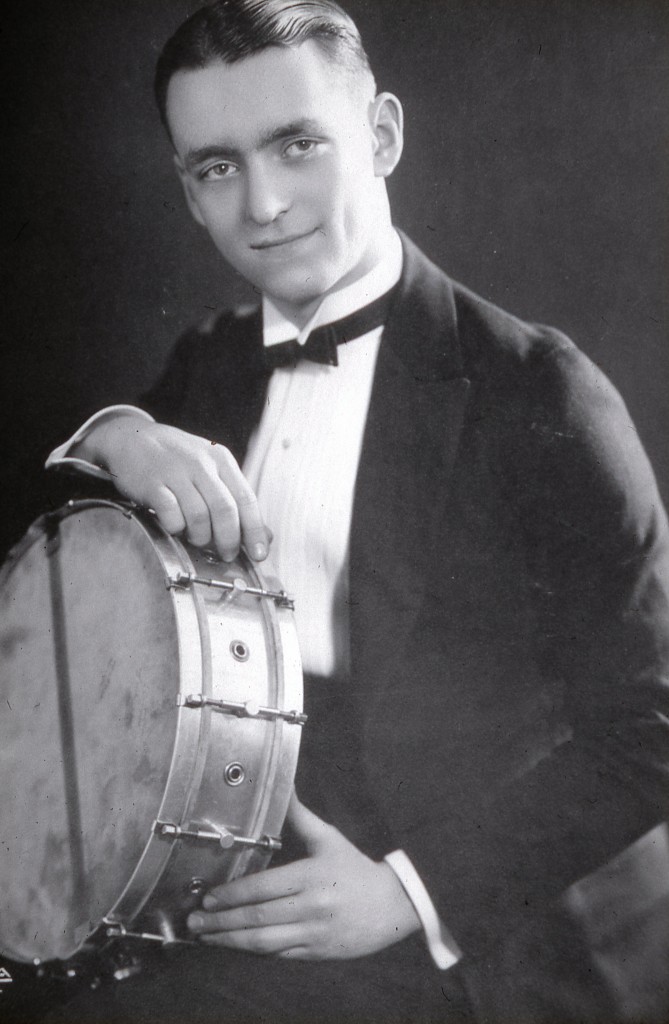
A good friend’s accolades for George Stafford recently got me re-listening to the drummer’s concise but powerful discography. Stafford’s steady beat and way with “the pocket,” even on his earliest sides from the mid-twenties, make him an unsung hero of jazz percussion. His temple blocks and snare ease back and then detonate on “I’m Gonna’ Stomp Mr. Henry Lee” with an Eddie Condon group featuring Jack Teagarden’s vocals and trombone. Yet it’s Stafford’s drums on “Walk That Thing” with the Charlie Johnson band that remain a personal favorite.
The Band’s Homebase
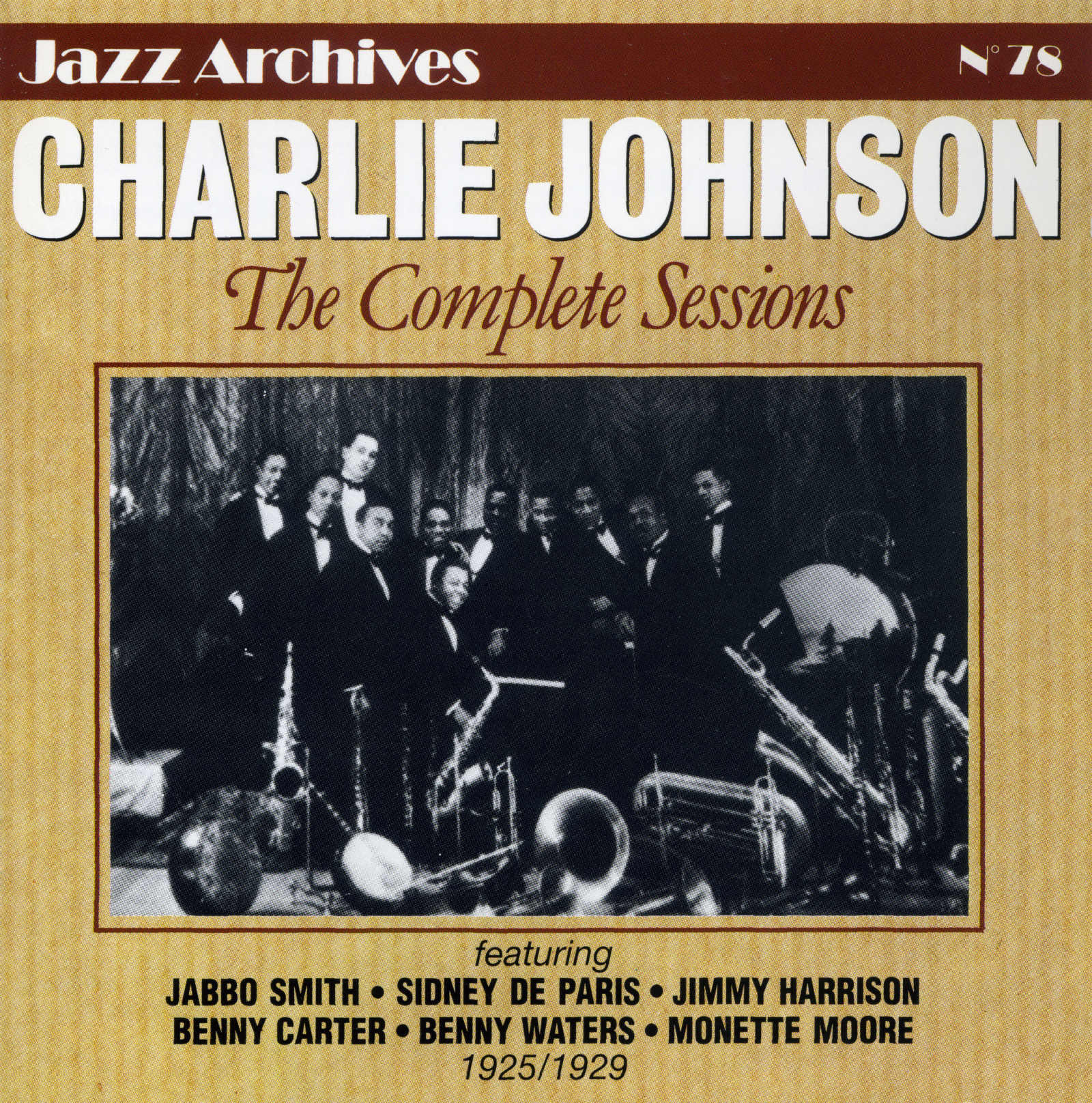
The Johnson band was one of the hottest bands of the twenties as well as a close rival of the early Duke Ellington orchestra. Arranger/tenor saxophonist Benny Waters glows with pride remembering his time with Johnson. Like Stafford, the band also left a tantalizingly short recorded legacy. Through some miracle of fate they were able to record three (!) takes of one of their hottest numbers, a Johnson composition arranged by Waters and deceptively titled “Walk That Thing.” They could have used a lot of other verbs to more accurately describe how they move on this tune.
Take one pumps from the start. The leader hammers away on piano, followed by a snappy introduction for the full band and Waters showing his clear appreciation for Coleman Hawkins:
Waters’ arrangement leaves plenty of room for soloists but includes the type of passages that jazz historians love to point out as some teleological predictor of the swing era. Riffs behind soloists, divided brass and reeds and a shouting final chorus would become standard issue for big bands a few years later. At the same time the rhythm team of banjoist Bobby Johnson, tuba player Cyrus St. Clair and Stafford are more rooted in twenties stomp than thirties swing. Waters also includes unique touches like a tenor sax lead alternating with the more standard alto in the first chorus, and space for wild collective improvisation. It’s easy to dismiss the use of brief solos for the rhythm section as “original for its time.” History lessons aside, they cook. Check out take two:
Waters chops and chugs on the second take like he’s using a cement saxophone. It’s not Basie-style swing but it does have its own percussive energy. Trumpeter Sidney de Paris strolls through his stop-time choruses, varying his solos from take to take but loving the same double-time figure. Jimmy Harrison’s hard, blistering trombone punches through in solo and ensemble, and his breaks resemble smartass quips from the kid at the back of the classroom. This take is effective if a little weighty. By the third and final take, the band is really into it:
That’s more like it! Even if someone hit a clam on the opening chord, a slightly quicker tempo and Waters pushing at the rhythm start things off strong. All of the soloists loosen up their phrases, dancing between the beats but with an intensity that defines the best twenties jazz. The rhythm section spots include a lot of the same notes and phrases, but the band’s energy elevates the familiar to a whole new experience.
The hits keep coming through all of these takes: Johnson cutting through to comp simply but spurringly; Stafford, a true band drummer who fills in between phrases, varies his patterns and plays with balance rather than volume; Ben Whitted (perhaps best known as the clarinetist Fats Waller saw fit to replace for his thirties small group sessions) wailing over and against the ensemble. Through an even stranger twist of fate, none of these takes appear on YouTube or apparently anywhere else on the web. Consider this a public service. What are friends for?
Here’s a case for all the popular music that jazz musicians had to record just to make ends meet during the prewar era.
The following session includes some of the best players in New York at that time, regulars in Ben Pollack‘s band and performing here in one of the many studio groups organized by impresario Irving Mills. Young Benny Goodman sticks to reading alto saxophone parts, and Jack Teagarden’s trombone is barely audible, yet it’s not just commercial dross:
Scholars and purists will probably fast-forward to Jimmy McPartland’s cornet solo. Some might even mention criminally underrated saxophonist Larry Binyon. Yet McPartland is as rich, penetrating and warm on straight lead as he is in his Beiderbecke-inspired improvisation. A typical prewar sax section (two altos and a tenor) has a bright, buttery sound that’s a refreshing change of pace from more modern reeds. Even the unknown, operetta-inspired crooner sounds more than bearable with Dick McPartland’s banjo, Harry Goodman’s tuba and Ray Bauduc‘s drums guarding the beat behind him.
Despite the simple tune and small space given to improvisation, a group of talented musicians makes it beautiful as well as rhythmic. There’s no way to tell if heroes are happy, but these professionals certainly sound good.
This list is more stylistic than chronological, and certainly less than comprehensive, but hopefully it still provides a fair overview of the music’s development. At the very least it shows that good musicians never play “the same old tune.”
Unfortunately, YouTube removed a great clip of Barry Ulanov’s All Stars, featuring Ray Brown, Dizzy Gillespie, Charlie Parker, Max Roach and Lennie Tristano playing “Tiger Rag.
Readers are encouraged to share examples of “Tiger Fusion, Tiger Latin, Tiger Atonal, Tiger Hip Hop” or their own favorite exploration of this perennial favorite.
Released in 1963, and even with its rhythm section and harmonic sensibility soaked in modern jazz, John Coltrane’s album Ballads may be one of the best examples of the prewar jazz aesthetic:
Coltrane’s reliance on pure tone and straightforward lyricism speaks to a style of jazz that can paraphrase melodies (even fast ones) as well as deconstruct them. The “tune proper” isn’t thrown out after the first chorus, but partnered with throughout the performance, channeled to make something recognizable but personal.
Do yourself a favor and click on the following hyperlinks. You will not be sorry.
Coltrane, the symbol of boundary-pushing, technically advanced modern jazz, keeps company with Louis Armstrong and Bix Beiderbecke, as well as Phil Napoleon, Manny Klein and Joe Smith. Trumpeters were usually the ones playing lead in the twenties, thirties and forties, but saxophonist Frank Trumbauer and his way of paring down a melody to its essentials also comes to mind, as does trombonist Kid Ory. Don Murray, with a gorgeously burry sound and distinct personality on baritone sax, also understood that the expressive potential of straight melody. Even Guy Lombardo’s sax section, hated by jazz scholars and beloved by Armstrong for their clean melody statements, might have appreciated Coltrane’s approach on Ballads.
Coltrane’s glistening tenor sax even brings to mind tuba player Clinton Walker on “Frankie and Johnny” with King Oliver:
Walker provides a rich lead for the leader’s punctuations, and while he doesn’t get all of his notes out, its an admirable solo. Modern ears may hear it as a novelty, but the tone, the attempt to control the sound and the refusal to harrumph reveal a player giving both the melody and his own voice their due. Differences of chops, decades and octaves notwithstanding, these musicians were all about the tune.







 The Pop of Yestercentury
