The jazz contrafact, i.e a new composition written on the chord changes of another tune, is usually associated with post-war jazz. Beboppers superimposed dense riffs and angular melodies over popular standards, often adding then “unusual” chord substitutions that would eventually become standard operating vocabulary for jazz as we know it.
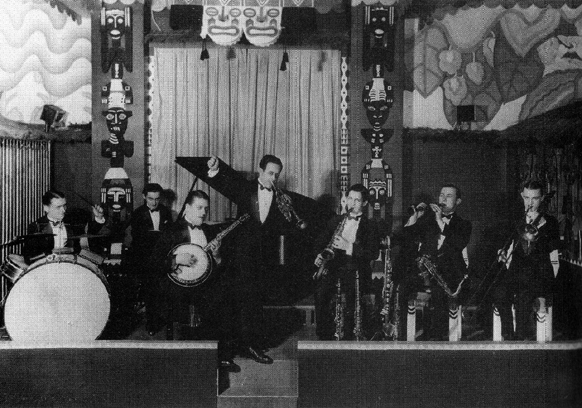
In the same spirit, Adrian Rollini and his colleagues in British bandleader Fred Elizalde’s ensemble get to recomposing “Nobody’s Sweetheart” right from the start of their record, and several years before Tadd Dameron and Miles Davis put pen to stave:
The opening ensemble turns Billy Meyers and Elmer Schoebel’s melody (already all too familiar even by 1929) into a completely new theme constructed out of tight, cool gestures. The format of horns stating a “head” followed by round-robin solos would become formula for the boppers, but at a time when collective improvisation and cross-sectional writing were just as prominent, it has the air of one refreshing approach among many. The solos present a variety of instrumental personalities, starting with Chelsea Quealey abstracting the melody further and ending with Rollini’s bass saxophone muscular and lithe all at once.
The execution is slightly different, but the principle has always remained the same. Contrafacts have been around at least since some band got sick of playing “Tiger Rag” the same way over and over again (but we’ll save that long list for another day).
This is a continuation of an earlier post, which I hope will encourage further discussion. Comments are welcome, greatly appreciated and humbly requested…
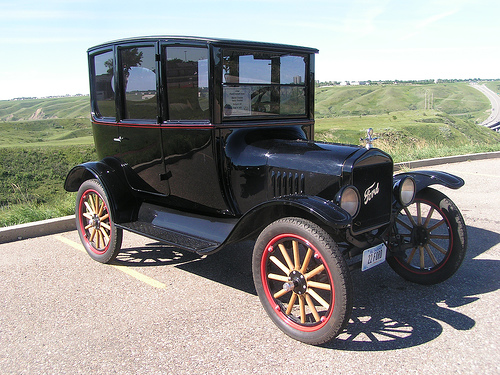
The earliest examples of any musical style, whether it’s hot jazz, Baroque or Bill Haley, live and die by history. The historically-minded listeners comprising classical and jazz audiences readily admit that “early music” got things to where they are now, just like the Model T made the Lamborghini possible. Yet most of them don’t like to drive anything that’s too old. Despite classic music being much easier and cheaper to experience than classic automobiles, it remains just as esoteric, and for many, just as outdated.
Unlike machines (or medicine, the law and late-night comedians), music doesn’t do anything better or worse over time; it just approaches melody, harmony, rhythm, form and other musical considerations differently. For example when it comes to instrumental interplay and tonal organization, Beethoven wrote more intricate chamber works than his predecessors, and Mozart more circumspect operatic works than his contemporaries. Them Austrian boys’ music is “better” for those seeking complexity or dramatic depth.
Boccherini and Paisiello, writing before Beethoven’s innovations and without the blessing or mutation that created Mozart, concern themselves with melody and directness. Using just the meager notes they know, they still manage to make music:
Boccerhini: Sextet, Op. 23 No. 1 in E flat, 1. Allegro (Ensemble 415):
Paisiello: “Mi Palpita Il Cor” from ‘Il Mondo della Luna’ (Gloria Banditelli):
Similarly, Charlie Parker’s rhythm section handles their job in a very satisfying and very sophisticated, very specific manner:
Parker’s band epitomizes a concept of jazz rhythm that can be traced back to the revolution in swing started by Count Basie’s All-American rhythm section, was developed and deconstructed following the bop era and which has influenced jazz through to the present. The texture is spacious and airy, with accents that both support and pull at a smooth, even and relaxed beat. The musicians also interact with and respond to soloists, varying their patterns to add color.
Parker’s group does light and interactive really well, but what if the listener is looking for something else? They could check out The Missourians for some jazz that’s really different:
Pianist Earl Prince, banjoist Morris White, tuba player Jimmy Smith and drummer Leroy Maxey, like so many pre-swing rhythm sections, take their name very literally: they lay out the chords, bass line and ground rhythm, sticking to a punchy background role. Their goal is to create a stage of rhythm for the ensemble and soloists to play over, rather than an accompaniment that’s interesting in and of itself. Musicians who continue to play and find inspiration in this approach explain that supporting the band is the interesting part; locking into a groove and keeping it going for their partners is how they express themselves. That particular groove is not the smooth swing normally associated with jazz. Instead, it’s intense and earthy, based on a very uneven beat, with a chunky feel that give the listener something to bob their head to (sort of like late twenties funk).
In other words, The Missourians have a unique approach to rhythm, just as unique as the Parker rhythm section, or the Basie rhythm section, or the rhythm sections backing Bix Beiderbecke, Albert Ayler or Vijay Iyer. The Missourians’ approach only seems simple, “outdated” or “corny” when judged against a later standard, the equivalent of driving a Model T and expecting a V12 to kick in.
A contingent of the Paul Specht orchestra playing the lounge at the Hotel Alamac in New York, while the full band handled the ballroom, The Georgians were a “band within a band” years before the term first appeared. Record collectors and moldy figs have known and raved about them for decades, but the group remains a secret from even historically open-minded jazz listeners. That’s a shame; they’re missing out on some interesting music and a productive intersection between jazz and pop. Not that those distinctions meant much to the musicians.
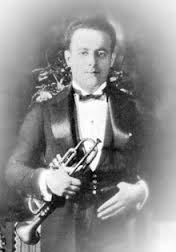
The Georgians channeled a variety of influences, from the New Orleans jazz that the band’s leader, trumpeter and star soloist Frank Guarente absorbed as a youngster, to popular dance music and even the “hokum” sounds modern listeners love to hate. Depending on the date, the group was as large as nine players (not much smaller than the full Specht band), and the arrangements by pianist Arthur Schutt put every possible permutation of instruments alongside a range of exciting soloists. Improvisation and orchestration, solos and ensembles, jazz and pop: all raw material for the band.
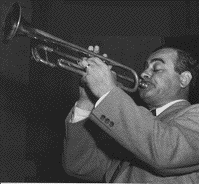
Frank Guarente
“I Wish I Could Shimmy Like My Sister Kate” starts with a seedy minor key episode straight out of a nightclub production, before easing into collective improvisation. The unpromisingly titled “Barney Google” parodies its own wooden sax and squawking mouthpiece effects with a confident brass duet. “Snake Hips” and “You’ve Got To See Mama Ev’ry Night” are fine examples of raucous, wide open twenties jazz, and the New Orleans Rhythm Kings‘ “Farewell Blues” acquires an attractively bitter edge due in part to Russ Morgan’s trombone. Guarente delivers consistently powerful leads on all the Georgians’ sides. As a soloist, he offers everything from mellow, muted and Panico-esque paraphrase on “Way Down Yonder In New Orleans” to the uncluttered blues of “Henpecked Blues.” Chauncey Morehouse‘s drums aren’t always clearly audible, but his feel is undeniable, and he pulls out a kicking stop-time chorus on “Land of Cotton Blues.”
Cherry-picking highlights from this group is as difficult as pinning them down musically. The Georgians were more than a splinter group from some “large/arranged/commercial outfit” jamming out on improvisations. They also didn’t approach jazz the same way their contemporaries King Oliver and Fletcher Henderson did. Ironically, that combination of diversity and originality, supposedly hallmark virtues of jazz, are probably what’s kept them locked in stylistic limbo. Listen first and label after, if at all.
Charlie Johnson led one of the most popular jazz ensembles in Harlem, right around the time some guy from DC was starting his own career as a bandleader. The rest, as they say, is footnotes.
Most historians concentrate on the nascent big band language contained in Benny Waters and Benny Carter‘s arrangements, painting the Johnson band as just another stepping stone in some inevitable teleology of jazz. Listening to the band as its own entirely unique animal, with one foot in Jazz Age stomp and another in Swing Era architecture, is far more rewarding (not to mention fairer to the musicians).
This writer used to experience great satisfaction and great disappointment that the band’s complete, teasingly scant recorded legacy was contained on one French EPMJazz Archives CD he purchased as a teenager, with subpar sound and inaccurate personnel listings (still available for premium price!). Yet it was all that was available and all he needed, until now.
Thanks to the miracle that is the internet, here’s the Johnson band in all of their steaming, unissued and unearthed glory:
Thanks to whoever posted this brand new side on SoundCloud, and to the erudite trumpeter and jazz historian Yves Francois for spreading the news. Keep ’em coming!
Singer Annette Hanshaw’s wholesome good looks and girlish sound are like catnip for lovers of twenties nostalgia. That shouldn’t obscure her strictly musical gifts.
Hanshaw’s voice was definitely of its time: earnest, bright and occasionally a little thin. It was also rhythmic, flexible and sexily sweet yet completely natural. She takes a merely pretty little ditty like “Who’ That Knocking On My Door” and turns it into something personal as well as musical:
Hanshaw’s interpretation clues the listener into why none other than Tommy Dorsey (no pussycat when it came to evaluating singers or sidemen) christened her a “musician’s singer.” Hanshaw’s sense of float and drive catalyzes a dream band of (White) twenties jazz musicians, with Adrian Rollini on bass sax, Joe Venuti on violin, Eddie Lang on guitar and Vic Berton’s barely heard but powerfully felt drums in turn providing a beautifully spacious feel.
They also squeeze a variety of different sounds from this small hodge-podge of instruments. The exchange between Lang, Rollini and Venuti, with Venuti double-stopping harmonies behind Lang’s tight plucking, Venuti strumming aggressively behind Venuti’s violin and Rollini tossing out short bridges between them, feels like a crossed ensemble signal that clicked into something “right.” Along with Rollini’s hot fountain pen (sounding like a clarinet with a steel wool reed) the instruments partner with rather than parody the lead. This isn’t a singer plus an accompaniment; it’s a group of musicians, including Hanshaw on vocals. Hip stuff, even if it’s also a lot of fun.
I’ve hated the word “Dixieland” since I first gathered a few friends from my high school band to play the music of Jelly Roll Morton, the Bobcats and other prewar jazz musicians. No matter how much I insisted that we were playing “traditional jazz,” the label “Dixieland” stuck with teachers, parents and other (unfortunate) listeners.
My distaste for that word had nothing to do with any cultural or chronological connotations. Ironically, as a kid who had spent his whole life in Brooklyn with occasional travel as far as City Island, I had no idea that “Dixie” signified the South, especially some (ridiculous) vision of an idyllic antebellum South. If “Dixie” meant “archaic,” my teenaged reverse conformism just thought, “the older, the better!” No, I hated that five-letter word because it reminded me of an earlier childhood treat that had neither the longevity or nutritional value of jazz.
I had only heard “Dixie” in reference to the circular bricks of processed ice cream that elementary school teachers deposited on my desk as a sign of celebration (read, pacification), food that didn’t merit a spoon but just included a small, dull, wooden plank, a utensil that correctional officers might like because inmates couldn’t carve it into a shank. “Dixieland” reminded me of Dixie Cups, and that was an outrage.
“‘Cause Ice Cream Scoops Are Bourgey!”
Sure, the word “Dixie” could have seemed like a bite of nostalgia, almost the way it did for the lyricists of tunes such as “Anything Is Nice If It Comes From Dixieland” or “There Ain’t No Land Like Dixieland,” anthems to a kinder, simpler time (that was never kind or simple). “Dixieland” bands did reference the early days of jazz through choice of repertoire, collectively improvised ensembles and their preference for blue thirds over flatted fifths. Some Dixielanders paid obvious (sometimes gratuitous) homage to the original artists.
Phil Napoleon Never Played Dixieland.
Yet those artists’ music had to deserve a better label than that of a tiny, soggy, syrupy sweet confection aimed at underdeveloped palettes. By extension, the thin horns and bloodless rhythm sections I heard from many so-called “Dixieland” groups was a far cry from Bix Beiderbecke’s popping ensembles, King Oliver’s dense, earthy polyphony or even the Original Dixieland Jazz Band’s almost frighteningly frantic attack. The music of the “Chicagoans and the best contemporary “trad” players listened back but resounded in the here and now. By contrast “Dixieland” seemed like sugarcoated revision rather than sincere reflection.
Of course the distinction between good music, bad music and bad labels gets clearer as I get older (while straw hats and red suspenders will always be just plain awful): like ice cream or a host of other delights, everyone knows what’s good or bad when they hear it. “Dixie” remains something that’s tolerable in small doses but will eventually make me sick.
In case my little blog about hot jazz and eighteenth century classical music seems unusual, here’s “Autumn Leaves,” arranged as a French air for period instrument orchestra:
In the end, they’re all just tunes.
Incidentally, I’ve been enjoying Patrick Cohen-Akenine’s work with his phenomenal orchestra Les Folies Françoises for years, even purchasing full-length works just to hear the ensemble’s gutty, tense and completely transparent strings. For more on Cohen-Akenine’s meticulous attention to those strings and his latest project, check out this article here.
Dance music of the twenties and thirties: dreary, colorless and filled with musicians diligently playing dull written parts, until an improvised break or solo allowed them to display their individuality and inject a brief moment of “jazz” amidst all that “commercial” music.
Except when it wasn’t.
Comparing Frank Trumbauer leading the sax section on C melody saxophone for “Baltimore”
the difference isn’t just about instrument or arrangement. These are two entirely different approaches to timbre, phrasing and section balance: Trumbauer’s dry tone sliding in and out of the theme from between his reed section colleagues, versus Hazlett’s buttery, vibrato-laden and slightly (deliciously) nasal sound providing a lush melody statement on top of the other saxophones.
Both players fashion entirely distinct and deeply personal approaches despite (perhaps even through!) written parts. Neither tune was the cream of the compositional crop, and the chance to shine with multiple improvised choruses on Rhythm changes was a few years and at least one stylistic revolution away. Yet whatever the difference between “jazz” and “commercial” music, there’s clearly a difference between the music on paper and the music at work in these two recordings.
Woody Walder didn’t so much play the clarinet as deploy it. His solos with Bennie Moten’s band are closer to sonic found art sculptures than the poems, speeches and epigrams of his Jazz Age colleagues. Walder pieced together squeals, squeaks, whinnies, whines and cries, sometimes through the insertion of foreign objects into the bell of his instrument, other times with just his mouthpiece. The effect (Walder seemed all about effect) could be humorous or disturbing, at times grating, but was always surprising.
Walder’s particular sound of surprise hasn’t served his legacy well. Most jazz historians locate Walder’s playing somewhere between a tolerable novelty of the times or a now dated commercial evil, perhaps higher than comb playing and barnyard theatrics, but far below the fine art of plunger-muted brass.
Courtesy of chaka85.wordpress.com
It’s a pity Walder missed out on noise music, the Art Ensemble of Chicago’s experiments or the deliberately nasal, percussive and off-pitch curveballs of the World Saxophone Quartet. The avant-garde as well as Walder and contemporaries such as Fess Williams (and even King Oliver at his onomatopoeic) all relished vocally inflected, “unmusical,” weird and occasionally cacophonous sounds. Apparently Walder’s mistake was doing it for a willing and wide audience.
It’s best to listen to Walder on his own terms, neither as historical victim or stylistic precursor, but simply as a musician playing on a record. Better yet, forget the man and just listen to the wholly unique, singularly “ugly” sounds twisting pitch and time on “Elephant’s Wobble,” “Thick Lip Stomp” and “Yazoo Blues.” If you’re craving context, listen to how Walder’s solo on “Midnight Mama” at times resembles a hybrid of Rex Stewart’s half-valving and Bubber Miley’s gutbucketing, transplanted to Eric Dolphy’s honking, metallic reed. It’s a hell of an act, or art, if you’re into that sort of thing.