Bennie Moten’s Sax Soloists

Here’s the second and final part of my discussion of Bennie Moten’s pre-1930 sax section…

naturalsaxdotcom

The range of ensemble colors is directly proportional to the sum of instrumental voices, so that more players equal more instruments and therefore more orchestral possibilities.

At first glance it seems like simple musical mathematics, borne out by jazz history: big bands developed from Jazz Age tentets to the fifteen-piece plus ensembles that are now industry standard. The saxophone section alone started as a three-man operation. Now five players (two altos, two tenors and a baritone) is the norm. The math says that three horns can’t produce the same variety as five, and history paints these changes as a natural and inevitable evolution. Usually the underlying assumption here is that twenties bandleaders were either bad at orchestral arithmetic or good with a bottom line. The idea that musicians just chose the right sidemen and did a lot with what was only later deemed “a little” rarely enters the equation.

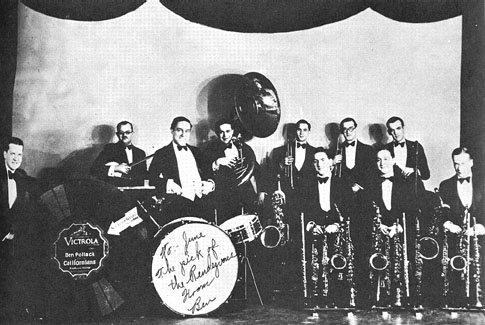
For example, Bennie Moten’s sax section does usually stick to the two altos plus tenor arrangement that was standard for most twenties bands. Yet whatever this section may lack in terms of variety as a concerted unit, it more than makes up for in solo permutations. Harlan Leonard, Woody Walder and Jack Washington each play with distinct, contrasting styles. Factor in different approaches to different types of musical material as well as instrumental doubling, and you get a surprisingly broad musical palette.

Leonard plays both bright lead alto and bluesily rococo solos with a delightfully nasal edge. He tosses in fills between the ensemble on “When Life Seems So Blue,” while “Oh! Eddie” and “Mary Lee” include tantalizingly short but hot bridges:

Leonard’s soprano sax is a refreshing alternative to Sidney Bechet’s towering presence as well as the brass clarinet approach many of his contemporaries took to the instrument.  On “Boot It,” he plays with a with a joyous hoedown feel, recalling early jazz’s intersection with country and other folk art forms:

Clarinetist Woody Walder is often demonized for his novelty solos on the earliest Moten sides. Walder’s arsenal of whinnies, pops and barnyard onomatopoeia might be an acquired taste (personally I think he was just anticipating the Art Ensemble of Chicago) but his clarinet solos with the late Moten band deserve more attention. He plays some simple but direct blues in a sandy low register on “That Too Do,” with a few inflections thrown in as a type of musical signature:

Walder interpolates more passionate blues on the non-blues form of “New Vine Street Blues” and plays jittery, high-octane clarinet on faster numbers such as “Sweetheart of Yesterday” as well as shouting obbligatos to close numbers such as “Oh! Eddie.”

Doubling tenor, Walder seems hell-bent on sounding just as massive and brawny on the larger instrument as he is fleet and piercing on the smaller one. On “Everyday Blues” and the jerky, tongue-in-cheek “New Goofy Dust Rag”, he smears notes in a sweaty, agitated style. There are traces of Coleman Hawkins, but none of his harmonic sophistication. This is greasy saloon stuff without any hint of the conservatory:

Jack Washington is best known for anchoring Count Basie’s sax section, but as a younger man he played second alto with Moten and got much more solo space on baritone sax. He displays a burnished, gargantuan sound on baritone that’s closer to a bass saxophone, even pumping out effective bass lines for “That Too Do.” Washington’s unique tone is already put to effective use at this early stage, for example creating dark contrast behind the flashy trumpet on “Rit Dit Ray” and playing lead on baritone for a few tunes. This effect can be heard in other bands from the time, but Washington adds his own unique density:

Washington’s solos are all bottom and darkness, subterranean parties in a delightfully archaic vein. He takes slap tonguing to a whole new level, for example on “New Vine Street” but never forgets to swing; take his solo on “Mack’s Rhythm” or the way he dances all over “Mary Lee”:

“Mary Lee” also includes another Leonard bridge as well as Walder’s percussive clarinet and tenor honks.  Given its sheer range of colors, Moten’s sax section could have been its own band, a front line unto itself. It’s not a Gil Evans affair but neither is it just three players, or five instruments, or even eight if you include the fact that everyone doubled clarinet. It is simply incredible that this was just one section of a band. Then again, who’s counting?

direct proportion

Tagged , , , , , , , , , , , , , , , , , , , , , , , , , , , , , , , , , , ,

Bennie Moten’s Sax Section

library-umkc-edu

This is the first of a two-part post on one of my favorite musical experiences. As usual, it’s probably not most listeners’ first choice for a good time, but think of it like the first time you tried sushi, or whiskey…

Jazz lovers can debate their picks for “best saxophone section,” but chances are their selections share some similarities: tight unison playing, rich harmonies with the ability to turn creamy smooth or biting at the drop of a dime, and a distinctive sound both as a section and via soloists spinning out of the unit. There is a certain idea(l) of “saxophone section” in place after decades of well-oiled, multi-hued saxophone sections. Given that tradition, Bennie Moten’s three-man, pre-1930 reed team may sound more like a gap in the chain than a link.

For starters, its modest size comes from an earlier and supposedly developmental stage of big band arranging (with the five-man sax section viewed as the final step in the inexorable evolution of the jazz orchestra). Moten’s saxes also play more like a combination than a section, with a less-than-airtight blend and everyone’s part clearly audible. Finally, the Moten section’s lush sound would simply never pass in the modern age of more cutting sax timbres.

Harlan Leonard, Woody Walder and Jack Washington’s ensemble work is actually quite successful, in its own sweet way, because of their inability (refusal?) to ever jell. The Moten sax section sounds like three people playing, in both the musical as well as recreational sense of the word, rather than reading a part or letting muscle memory rehash what they practiced. The ragged sax soli on “That Certain Motion” would probably have most band directors turning red, but it’s hard to imagine such a deliciously gooey, lazy feel arising after hundreds of rehearsal hours:

Moten’s saxes are also incredibly transparent, perhaps to a fault. Missteps are out there for all to hear. Yet they’re also completely earnest and anything but stiff. “When Life Seems So Blue,” is slightly neater, but as if to avoid the monotony of cohesion, lead alto Leonard pipes in some ecstatic filigree between the full ensemble’s statements:

“Small Black” and “Won’t You Be My Baby?” sound much tighter, but the section’s lush, honking sound makes them seem like one of Botticelli’s zaftig figures compared to today’s lean, mean supermodel sax sections:

It’s easy to hear their sound as some vestigial element, but Moten’s saxes provide as unique a reed aesthetic as anything by the World Saxophone Quartet, Bob Mintzer or Dead Cat Bounce. Sound is never old or new; it’s always in the present and has no expiration date. Whether or not the Moten sax section belongs in the pantheon of great saxophone sections, they make room for themselves as a completely unique experience. That has to count more than playing every note at exactly the same time.

More on the Moten sax section, specifically the Moten sax soloists, next time…

Tagged , , , , , , , , , , , , , , , , , , , , , , , , , ,

“Walk” Is An Understatement: Three Takes of the Charlie Johnson Band

A good friend’s accolades for George Stafford recently got me re-listening to the drummer’s concise but powerful discography. Stafford’s steady beat and way with “the pocket,” even on his earliest sides from the mid-twenties, make him an unsung hero of jazz percussion. His temple blocks and snare ease back and then detonate on “I’m Gonna’ Stomp Mr. Henry Lee” with an Eddie Condon group featuring Jack Teagarden’s vocals and trombone. Yet it’s Stafford’s drums on “Walk That Thing” with the Charlie Johnson band that remain a personal favorite.

The Band's Homebase

The Band’s Homebase

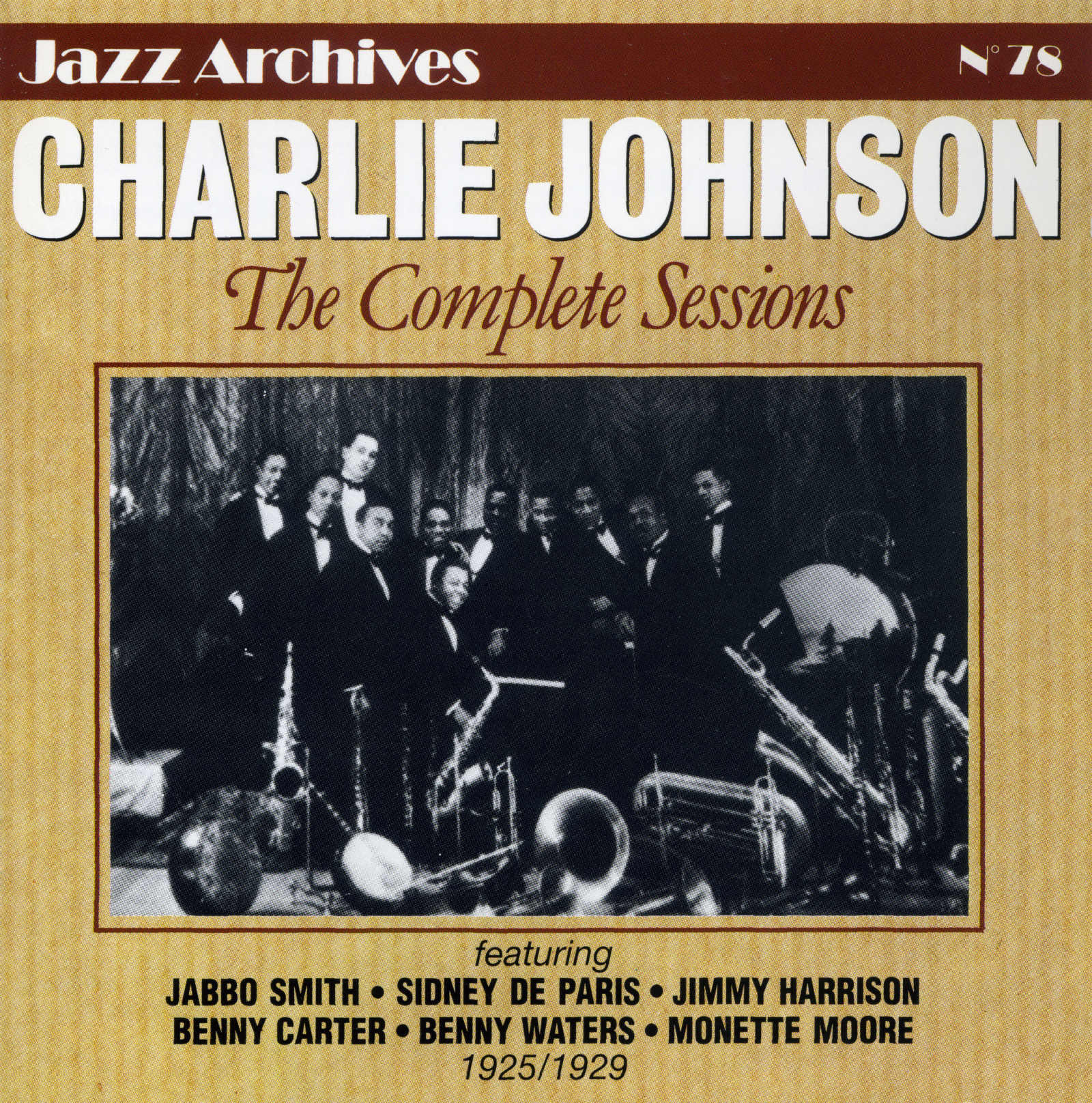
The Johnson band was one of the hottest bands of the twenties as well as a close rival of the early Duke Ellington orchestra. Arranger/tenor saxophonist Benny Waters glows with pride remembering his time with Johnson. Like Stafford, the band also left a tantalizingly short recorded legacy. Through some miracle of fate they were able to record three (!) takes of one of their hottest numbers, a Johnson composition arranged by Waters and deceptively titled “Walk That Thing.” They could have used a lot of other verbs to more accurately describe how they move on this tune.

Take one pumps from the start. The leader hammers away on piano, followed by a snappy introduction for the full band and Waters showing his clear appreciation for Coleman Hawkins:

Waters’ arrangement leaves plenty of room for soloists but includes the type of passages that jazz historians love to point out as some teleological predictor of the swing era. Riffs behind soloists, divided brass and reeds and a shouting final chorus would become standard issue for big bands a few years later. At the same time the rhythm team of banjoist Bobby Johnson, tuba player Cyrus St. Clair and Stafford are more rooted in twenties stomp than thirties swing. Waters also includes unique touches like a tenor sax lead alternating with the more standard alto in the first chorus, and space for wild collective improvisation. It’s easy to dismiss the use of brief solos for the rhythm section as “original for its time.” History lessons aside, they cook.  Check out take two:

Waters chops and chugs on the second take like he’s using a cement saxophone. It’s not Basie-style swing but it does have its own percussive energy. Trumpeter Sidney de Paris strolls through his stop-time choruses, varying his solos from take to take but loving the same double-time figure. Jimmy Harrison’s hard, blistering trombone punches through in solo and ensemble, and his breaks resemble smartass quips from the kid at the back of the classroom. This take is effective if a little weighty. By the third and final take, the band is really into it:

That’s more like it! Even if someone hit a clam on the opening chord, a slightly quicker tempo and Waters pushing at the rhythm start things off strong. All of the soloists loosen up their phrases, dancing between the beats but with an intensity that defines the best twenties jazz. The rhythm section spots include a lot of the same notes and phrases, but the band’s energy elevates the familiar to a whole new experience.

The hits keep coming through all of these takes: Johnson cutting through to comp simply but spurringly; Stafford, a true band drummer who fills in between phrases, varies his patterns and plays with balance rather than volume; Ben Whitted (perhaps best known as the clarinetist Fats Waller saw fit to replace for his thirties small group sessions) wailing over and against the ensemble. Through an even stranger twist of fate, none of these takes appear on YouTube or apparently anywhere else on the web. Consider this a public service. What are friends for?

The Source Material.

The Source Material.

Tagged , , , , , , , , , , , , , , , , , , , , , , , , ,

Jazz Bass Clarinet Before Dolphy

1024px-Bass_ClarinetThis month’s JazzTimes includes a fascinating article on the bass clarinet. From Eric Dolphy through Don Byron up to Todd Marcus, the piece provides a digestible but expansive survey of jazz bass clarinetists, as well as great insights from the musicians about the instrument’s development into a full-fledged solo horn.

It’s no surprise that this article is devoted to players from sixties and later. As James Carter notes, “Until Dolphy came along, the bass clarinet was used in ensemble shading but rarely as a solo instrument.” Still, it was hard to get the sound of the instrument with a Paul Specht small group on “Hot Lips” out of my mind while reading:

Clarinet obbligatos around and on top of the lead are a hallmark of early jazz. In this case the instrument’s bass kin doesn’t just play under the melody. Its shaded, oaky sound is halfway between ensemble coloring and solo. The bass clarinet peeks out ever so slightly because of its timbre, its burbling energy and even its deliberately campy sense of humor, which would be probably be fatally out of place in most modern settings.

The other bass clarinet anomaly that came to mind from outside of jazz’s post-postwar traditions was Buster Bailey on his own tune, “Big Daddy and Baby Sitter”:

[Click here to listen]

This one still has plenty of humor but it comes from a much darker place, both texturally as well as emotionally. Backed by just piano and drums (thank goodness Bailey liked trio settings), the bass clarinet is darker but also oilier. Bailey’s theme statement is also miles away from his usually agitated style. He’s not doing much from a technical perspective, but in terms of sound and phrasing, he dials up a sense of good-natured sleaze.

“Big Daddy and Baby Sister” was recorded in June 1962, less than a year after Dolphy’s deservedly famous unaccompanied recording of “God Bless The Child” live at the Five Spot Café in New York City (unavailable on YouTube but here‘s another great performance). Maybe Bailey had his ears to the ground, or just decided to record something he had been experimenting with for a while. Either way, his playing leaves an imprint on the listener. Isn’t that what a soloist should do? “Rarely” was a very good choice of words by James Carter.

Tagged , , , , , , , , , , , ,

Beauty, Rhythm and Paychecks with Ben Pollack’s Boys

Here’s a case for all the popular music that jazz musicians had to record just to make ends meet during the prewar era.

The following session includes some of the best players in New York at that time, regulars in Ben Pollack‘s band and performing here in one of the many studio groups organized by impresario Irving Mills. Young Benny Goodman sticks to reading alto saxophone parts, and Jack Teagarden’s trombone is barely audible, yet it’s not just commercial dross:

Scholars and purists will probably fast-forward to Jimmy McPartland’s cornet solo. Some might even mention criminally underrated saxophonist Larry Binyon. Yet McPartland is as rich, penetrating and warm on straight lead as he is in his Beiderbecke-inspired improvisation.  A typical prewar sax section (two altos and a tenor) has a bright, buttery sound that’s a refreshing change of pace from more modern reeds. Even the unknown, operetta-inspired crooner sounds more than bearable with Dick McPartland’s banjo, Harry Goodman’s tuba and Ray Bauduc‘s drums guarding the beat behind him.

Despite the simple tune and small space given to improvisation, a group of talented musicians makes it beautiful as well as rhythmic.  There’s no way to tell if heroes are happy, but these professionals certainly sound good.

Tagged , , , , , , , , , , , , , , , , , ,

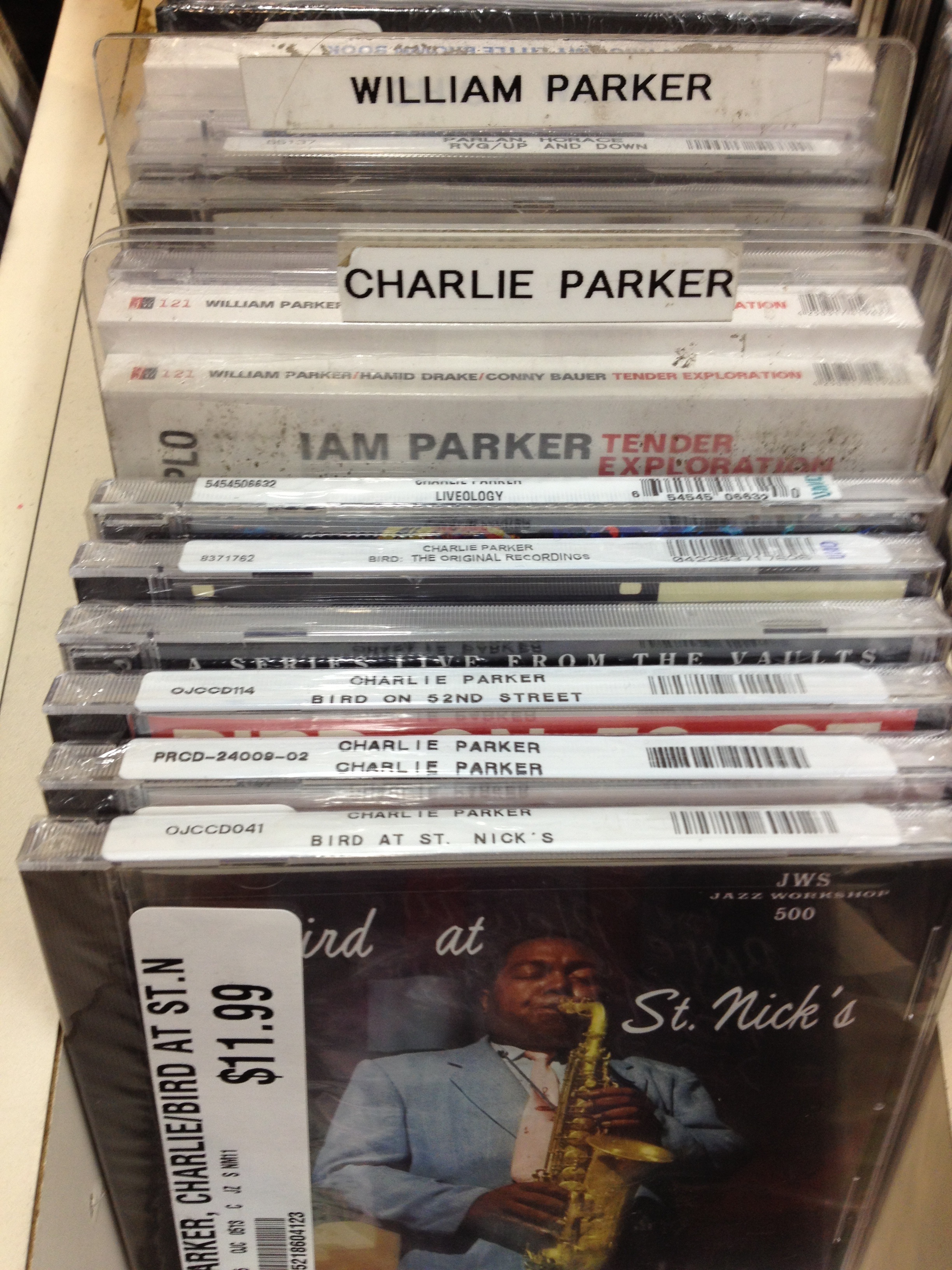
A Long Time Ago In A Record Store

CDTime was that recorded music needed to be stored on some type of circular object (with rectangular objects briefly, and in hindsight laughably, substituted at a few points). If a listener wanted to hear their favorite band, they could insert one of these circles into a machine specifically designed to spark music from out of the circle. Over the years the circles changed in appearance, size, material, sound quality and how much music they stored. As the circles grew more sophisticated, so did their packaging: they might include the names of the musicians providing music for the circle, insight into the music beyond what its promoters had to say or some image that listeners would forever associate with that circle and its music. The principle always remained the same: a physical object that made music possible.

220px-EdisongoldmouldedTo keep hearing recorded music, a listener had to purchase more circles. Entire stores were devoted to selling circles, with aisles of them organized according to labels that weren’t perfect but still gave a general sense of where to look for a particular artist. The circles usually cost money but most listeners didn’t seem to mind; the right circle could provide joy, intellectual stimulation, inspiration, reminiscence or something else that made any price seem like a steal.

Many circle-buyers had a favorite store, a place where they found the circles they wanted or discovered new circles, sometimes a circle that changed their life. It might be some essential building block of a collection (for example The Hot Fives or The Well-Tempered Clavier), something recommended by friends (such as the Luis Russell band or Teresa Berganza singing Rossini) or something completely new to them (maybe Fats Waller playing the organ, perhaps Handel’s violin sonatas). Circle shops combined commerce, personal choice, education, hope, and the thrill of the hunt, with every flip of a cardboard cover or click of plastic cases bridging whole aesthetic universes.

J&R Music World was my favorite source for circles. Its sheer variety for even most esoteric musical tastes and its constantly growing store of music awaiting discovery will never be surpassed. Yet if pressed to explain why J&R really stood out, it would have to be for the train ride home following a shopping spree. The distance between lower Manhattan and southeast Brooklyn isn’t substantial in terms of geography, but the subway warps time in unusual ways. Waiting to switch from the R to the Q at DeKalb Avenue alone could seem like a Chaucerian journey. Yet the anticipation of getting home to hear those circles, packed tightly inside one of J&R’s signature light blue bags, made the wait blissfully unbearable.

2011-06-14-JR_panel

After moving out of New York City, trips to J&R became more sporadic but my appreciation for the experience grew. Aside from nostalgia, going to J&R was a chance to bump into something new rather than simply ordering what I already knew I wanted. Rather than reading a list of new releases cherry-picked by some editor at a magazine, I discovered them on my own, thumbing through them on the rack, browsing covers and often hearing them over the store’s speakers. And of course there was still that ride back home, which changed locations over the years and grew further from J&R, but which always seemed more rewarding after another good haul.

Recorded music slowly began to need circles less and less, and my favorite circle outlet began to change. On my first trip back after starting college, I was surprised that the jazz section was no longer surrounded by car horns and chatter coming from the street on the first floor, but was moved up to the second floor.  Yet the change allowed me to hear the new releases and employee selections over the store speakers that much better, as well as the staff’s answers to my questions and their suggestions based on my inquires. Regardless of what floor housed the circles, there was still ample ground to cover. Poring through the jazz section alone could easily take a few hours.

Over the years the few hours needed to cover the stacks started to diminish. The classical and opera rooms in the back became two parts of the same section, awkwardly squeezed next to other sections (Vivaldi’s vicinity to the karaoke section may not have inspired the same degree of outrage for all consumers). I also began to notice fewer and fewer circles in the overstock cabinets underneath.

IMG_0853On my last trip to J&R, I learned that their entire row of stores (including their electronics, appliance, computer, photography and other divisions) have now been condensed into one building. A sign outside the former spot of the music department directed me to the new omnibus location, where music now occupies two floors. The space is much smaller but things don’t seem very tight. Based purely upon the thumb and pluck method of stock analysis and an overwhelming sense of “is that it?” it seemed like there were fewer circles than ever. I haven’t researched J&R’s sales or plans for the future, and no one sends them more well-wishes than I do, but if the writing isn’t on the wall, it’s only because the download has to finish.

Progress has liberated music from its physical trappings. It has also ensured that future generations will never feel artistic possibilities gliding on their fingertips, or learn music history from a deluge of album covers while a former drug connection for Miles Davis and a retired Metropolitan Opera coach discuss their favorite albums across the aisle. In lieu of circles, music is now this weightless, formless, costless thing, as easy to find and forget as the air we breathe. One person missing his circles might be sad (in several senses of the word), but an entire generation never enjoying those circles seems unfortunate.

IMG_0297

Tagged , , , , ,

Finding Bill Moore

Bill Moore. The name seems like a pun on itself, a homophone inviting literally “more” to be said about it while resisting that urge through its own frequency. The number of birth certificates, census records, coroners’ reports, and gravestones for “William Moore” or “Bill Moore” makes it a daunting prospect when it comes to research. I’m interested in the trumpeter Bill Moore, but there are several players with that name, playing different instruments and kicking up more hay around my desired needle.

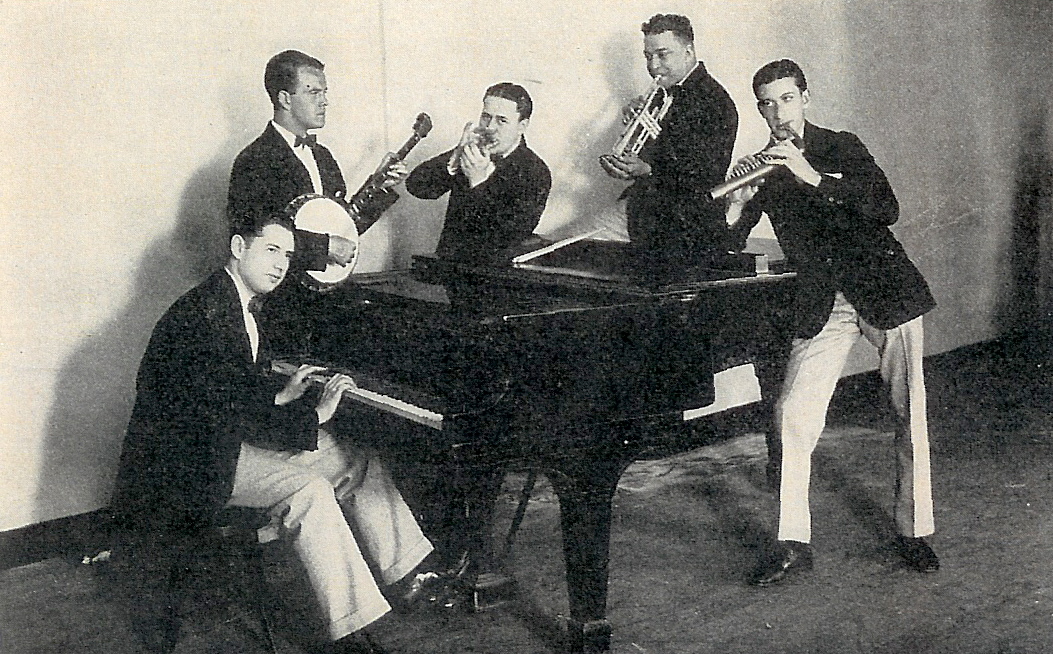
Irving Brodsky - Piano  Left to Right: Ray Kitchingham, Stan King, Bill Moore and Adrian Rollini
Irving Brodsky – Piano
Left to Right: Ray Kitchingham, Stan King, Bill Moore and Adrian Rollini

What I’ve found (so far, based on admittedly perfunctory research) says little and repeats it often: that Moore worked with the California Ramblers in all of their pseudonymous forms as well as with Ben Bernie, Jack Pettis, and many other bandleaders. His unique position as a Black musician playing in white bands also comes up frequently. Howard Rye, quoting Albert McCarthy’s The Dance Band Era in Names and Numbers magazine, explains that “One of the regular personnel [of the California Ramblers] in the mid-20s was trumpeter Bill Moore, a light-skinned Black who ‘passed.'” Discographies confirm that he played with a variety of bands through the Swing Era, with a 1950 Billboard review praising his “Armstrong-inspired” trumpet. There’s not much more to learn about the man, even less when it comes to the musician. Bill Moore is very hard to find.

The sound of Moore’s trumpet during the twenties takes us past the realm of historical ciphers and gigging sidemen. At that time, Moore was a distinctly pre-Armstrong player. His tone is far removed from the rich, brassy sound now virtually synonymous with “jazz trumpet.” It’s narrower and more piercing, like a needle rather than a sword, well suited to tying an ensemble together rather than cutting its own path.

Even through the haze of acoustic records, Moore’s trumpet has a buzzy edge to it, different than the cool quality of his contemporary Red Nichols, the broad, warm tone of Paul Mares or Johnny Dunn’s crisp flourishes.

Moore also frequent played with a mute. Brass players often point out how mutes can be used to hide intonation problems (with King Oliver a favorite example) but the possibility of expressive choice is worth considering in Moore’s case. Moore’s pinched sound was put to good use on a series of sessions throughout the late twenties.

Moore also chatters rather than blasts, maybe to hide an uneven tone, maybe to show off fast fingers. Either way, he lets this brash instrument—seemingly designed for sweeping bursts—speak in tight, concentrated patterns.

Armstrong experimented with what Brian Harker called a clarinet-like approach early on in his career. Nichols used clever, clipped lines throughout his long career. Jabbo Smith and Roy Eldridge frequently employed double-time with the boppers later adding their own phrasing and harmonic ideas.

Moore’s chattering is based on a pre-Armstrong aesthetic that emphasized contrast and variety over continuity and flow. It’s also more of an ornament, as Moore sticks closer to the melody than many modern jazz musicians care to—while Moore knows how to have fun with even the silliest tune, rather than simply throw it out. The emphasis on contrast, paraphrase, and mutes indicates that Moore might have been listening to “novelty” trumpeter Louis Panico.

Listening to Moore reveals more than session dates and personnel listings. It points to influences, musical choices, textures, and his own stylistic vocabulary. In other words, there’s a distinct musical voice at work. Neither a genius granted immortality nor a hack deserving complete neglect, after generations of brash, brassy trumpeters in the Armstrong mode, Moore’s style might seem like a wholly new experience (even if it originated decades before most readers were born).

from The Reading Eagle, November 7, 1929

Jazz purists might dismiss Moore based on his different sense of swing, comparatively restrained improvisational approach, or some other interesting but ultimately illogical bit of teleology. Given his post-ragtime, pre-Armstrong soundscape, criticizing Moore (and his contemporaries) for not sounding like later players is like chastising Renaissance paintings for having too many religious references. Rather than admiring the work in its historical context or apart from the critic’s context, everything is measured against one stylistic endpoint with all “great” works leading up to or issuing from it.

Not that many even take the time to dismiss Moore based on his playing.  As is often the case with the earliest chapters of music history, discussion beyond the session cards and matrix numbers and right to the sound of the music appears infrequently. Maybe reacting to the music itself seems too subjective. Maybe now that Moore and his colleagues are no longer around, maybe the only thing left to do is ensure an accurate record of the past. Hopefully, when the record is complete, we’ll remember why it was assembled in the first place.

Tagged , , , , , , , , , , , , , , , , , , , , , , , , , , , , , , ,

A Very Brief History of Jazz via “Tiger Rag”

everynote.comThis list is more stylistic than chronological, and certainly less than comprehensive, but hopefully it still provides a fair overview of the music’s development.  At the very least it shows that good musicians never play “the same old tune.”

Screen Shot 2014-08-14 at 10.07.30 AM


Unfortunately, YouTube removed a great clip of Barry Ulanov’s All Stars, featuring Ray Brown, Dizzy Gillespie, Charlie Parker, Max Roach and Lennie Tristano playing “Tiger Rag.


Readers are encouraged to share examples  of “Tiger Fusion, Tiger Latin, Tiger Atonal, Tiger Hip Hop” or their own favorite exploration of this perennial favorite.

Tagged , , , , , , , , , , , , , , , , , , , ,

Jacobs on Pergolesi’s Stabat Mater: “What Are There, Like A Million Recordings Of It Already?”

z01839ns2cbRene Jacobs said he is thrilled to start recording modern premiers of several operas by Pergolesi once he finishes work on “another fucking version of the Stabat Mater.

Jacobs also praised Pergolesi’s vocal writing and sensitive style. “Pergolesi became incredibly popular despite such a short life. He left behind just a handful of works but they show so many sides of him. Too bad record labels keep sitting on the same finger and rotating.”

When asked if he thought audiences were ready to hear more from this composer, the esteemed conductor and scholar shrugged and noted, “Who the hell knows? Asking what classical audiences enjoy is like asking where a cat will pee: they could go anywhere, but god forbid you move the same litter box they’ve been using their whole lives.” Currently he is also finishing up the one millionth recording of Vivaldi’s Four Seasons.

denisesisko.com

Tagged , , , , , , , , ,

All About Jazz Is All About Buster Bailey (Today, Kinda’)

Buster BaileyThrilled to see my review of Buster Bailey‘s All About Memphis on All About Jazz. It’s great to see my name on an article, but I’m even prouder of the fact that this underrated clarinetist cut an album as a leader and that he’s getting some attention today, right next to some musicians who just happen to be alive.

Incidentally, the album is available as a (cheap) download on Amazon. Perhaps with the right attention, the only thing that will be a footnote about Bailey will be his death.

Thanks for reading, and keep listening.

Tagged , , , , , , , , , , , , , , , , , , , , , , , ,