Tag Archives: hot jazz

A Stan King Playlist

Photo Care of @onlyapaprmoon

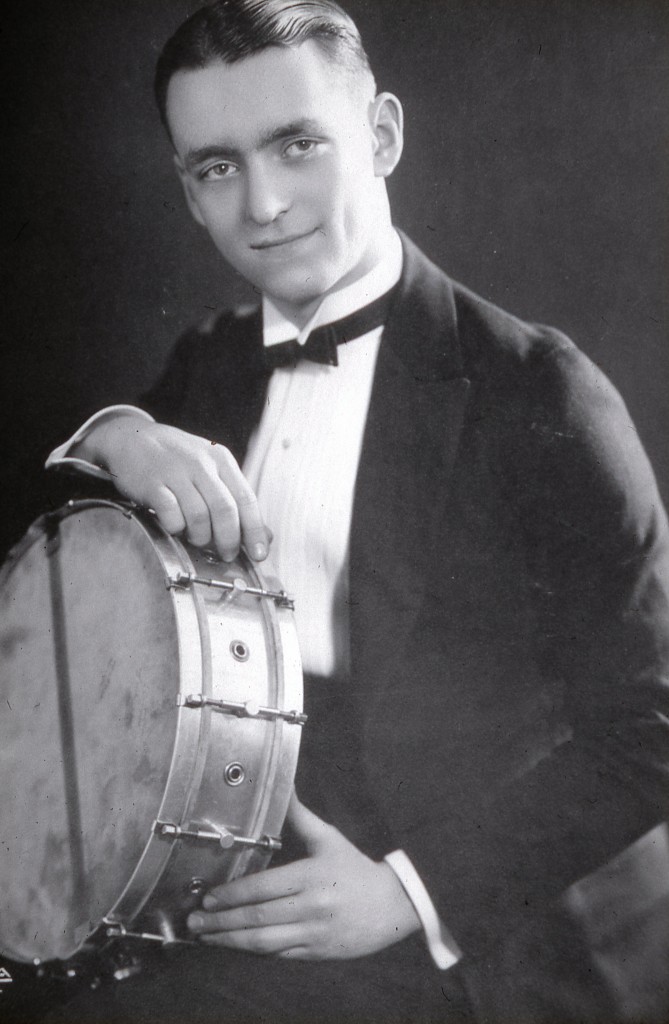
Photo from Timeless CD CBC 1-090 courtesy of @onlyapaprmoon

Like most early jazz drummers, Stan King was not well served by technology. He first appeared on hundreds of sessions with the California Ramblers, including the band’s numerous offshoots for different labels, starting in the early twenties. Acoustic recording techniques at that time limited the equipment that drummers could use, and the technology wasn’t kind to what remained of the kit. King does manage to burst out of the Five Birmingham Babies (a.k.a. the California Ramblers) on “Arkansas” and bang out some springy drum rudiments on Ray Kitchingham’s banjo:

Unfortunately, outbursts like this one were rare. King didn’t use the standard acoustically sanctioned percussion (like cymbals and blocks) as much as his contemporaries Zutty Singleton, Baby Dodds, and Chauncey Morehouse. So despite all the records, it’s hard to hear what or how King was playing early on his career. Either way, it got him plenty of work! He must have been doing something worth hearing.

Based on slightly later recordings, it involved plenty of snare drum. Jazz drumming now often tends to emphasize metal as the primary beat maker. Yet as “Broken Idol” with the Ramblers shows, King could move a band with “just” drum skins. It’s a pity he was so skilled with what amounted to kryptonite for most recording engineers of the twenties:

Aside from a few cymbal crashes, the “exotic” blocks, and tom-toms, King’s main rhythmic medium here is his snare and bass drum. He keeps up a simple but buoyant bounce alongside Tommy Felline’s banjo and then steps out behind Pete Pumiglio’s red hot alto sax solo. The brushes are pure momentum, more than compensating for Ward Lay’s slightly ponderous tuba. There’s none of the military-style heft that so many historians associate with prewar, snare-centric jazz drumming.

King’s work with Frank Trumbauer’s orchestra demonstrates his light but propulsive touch on drum heads while never drawing too much attention to the wheels moving the band. “Futuristic Rhythm” includes a head-bobbing rhythm in the first chorus and percolating accompaniment to the leader’s vocal and cymbals behind Bix Beiderbecke:

King’s airtight press rolls and last chorus backbeat on “I Like That” (a.k.a. “Loved One“) are simple, impeccably timed, and very effective:

Listening to King nearly 60 years later, renowned drummer Mel Lewis pointed to King’s “clean” style with definite praise. A crisp, precise, and utterly unobtrusive approach defines King’s style more than any part of the drum set. He was above all an ensemble player who rarely soloed but always made sure that the band was “well fed” (to paraphrase bass sage Walter Page describing the role of the rhythm section).

With the Charleston Chasers, King leaves most of the rhythmic heavy lifting on “Loveable and Sweet” and “Red Hair and Freckles” (what were these guys thinking about on this session?) to pianist Arthur Schutt and bassist Joe Tarto:

Dancers and jazz aficionados may not be listening for King’s sizzling brushes and tapping rims or how his drums click in with Tarto’s bass to produce a deliciously buzzy sonority or for his simple but firm beat. Listening to those touches reveals how subtly King could color and catalyze a band. It also points to an attention to detail and a knack for musical nuance that might not be heard could be felt. For example, while many drummers use press rolls, and King relied on them throughout his career, the way that he loosens his press rolls up behind Tommy Dorsey’s trumpet solo on “Hot Heels” with Eddie Lang makes a difference:

Audio wizard, historian, and trombonist David Sager recalls an “old-time drummer” he met at a gig in California “who nearly shouted when he said, ‘Stan King had the best press roll in the business!’” King’s press rolls with none other than Louis Armstrong on Seger Ellis’ “S’Posin” might not impress on their own, but Armstrong scholar Ricky Riccardi explains that “Armstrong liked loud, emphatic drumming, and he obviously dug what King was putting down.”

[Listen to “S’Posin” via Riccardi’s outstanding blog here, and subscribe while you’re at it.]

According to Richard Sudhalter, King didn’t read music. His “natural drive and quick ear” were enough to make him one of the most in-demand drummers in New York during the twenties and thirties, performing with Paul Whiteman, Jean Goldkette, the Boswell Sisters, Ben Selvin, the Dorsey Brothers, and Benny Goodman among others. A session directed by bass saxophonist Adrian Rollini finds King with the cream of the New York jazz crop at that time on standards such as” Sugar” and  “Davenport Blues”:

On “Somebody Loves Me,” King lays out behind George Van Eps’s solo, which allows the guitar to get heard and changes up the ensemble texture, but digs in behind Goodman’s clarinet and Arthur Rollini’s tenor saxophone while easing back behind trumpeter Mannie Klein and trombonist Jack Teagarden. It’s a model of sensitive, rhythmic jazz drumming (or “dance band” drumming, depending on one’s preferred pigeonhole):

King could also turn up the heat on his own. On “The Man From The South” with Rube Bloom, he locks in with Adrian Rollini, tossing out fast snappy fills and bearing down just a little harder behind Goodman before making room for Rollini’s solo:

On “Here Comes Emily Brown”—again with the Charleston Chasers but without Joe Tarto’s booming slap bass—King add a sizzle to his shuffle behind Tommy Dorsey’s trombone while his cowbell accents practically kick Benny Goodman from behind. Fills and backbeat on the out chorus also boot the ensemble:

King even gets some spotlight in a call and response episode with the ensemble on “Freeze and Melt” with Lang:

Occasionally, King would get away from a steady beat and toss out unexpected accents and syncopations, for example early on his career behind Bobby Davis’ alto solo on “That Certain Party” with the Goofus Five (a.k.a. the California Ramblers):

or his offbeat rim “bombs” behind Jimmy Dorsey’s alto on “You’re Lucky To Me”:

Yet it’s all within the context of the band. Record after record shows King to be a clean, precise, utterly musical drummer. His preferred instrumentation may have limited his recorded legacy, and his unflashy style may have hindered his historical one. Singer Helen Ward, speaking about King’s tenure with Benny Goodman’s band, said “we called him strictly a society type of musician. Everything he played was ‘boom-cha, boom-cha.’ There was no fire there.” Goodman described King as “merely adequate.”

The entry for King in the Encyclopedia of Popular Music describes “an exceptionally good dance band drummer with meticulous time [whose] jazz work always left something to be desired. Listening to, for example, Goodman’s recordings in late 1934 will reveal how King’s playing never lifts the band in the way Gene Krupa did when he took over as drummer…” John Chilton describes Louis Armstrong’s “I’m Putting All My Eggs In One Basket” as a “typical example of [King’s] somewhat foursquare playing:

King isn’t Krupa, Dodds, Sid Catlett (or for that matter Elvin Jones), but it’s easy to imagine any of those players taking the same approach that King does given the thin material, flimsy arrangement, and the fact that this is really Armstrong’s show. Riccardi astutely points out King’s “tasty” accents during Armstrong’s opening trumpet chorus and the fact that “relaxation is the key” here. There’s a difference between playing stiffly and playing appropriately, a difference King was more than experienced enough to understand.

In the stylistic wake of louder, better-recorded, and busier drummers, it is easy to overlook someone like King, who performed an essential role seamlessly and without drawing attention to his work. What some overlook, others celebrated. Drummer Chauncey Morehouse would praise King for his solid time years after his colleague’s death. When Morehouse led his own date playing his patented N’Goma drums, he chose King to handle traps duty.  Fud Livingston thought King was “the world’s greatest drummer!” Saxophonist and historian Loren Schoenberg noted how King continued to get work despite his well-known status as a “fall-down drunk.” It didn’t seem to matter: King got the job done.

Jazz historian Scott Yanow, who credited King for his “fresh” sound, explains that King’s alcoholism finally did get the best of him. King eventually took a low-key job with former California Ramblers sideman Chauncey Grey before fading from attention and passing away in 1949. King made his last recordings ten year earlier, with pianist (and fellow victim of alcoholism) Bob Zurke. “I’ve Found A New Baby” wasn’t the last thing King recorded but it provides explosive closure:

Fud Livingston’s arrangement gives King and the rest of the band plenty of room. King is a force of nature, crisp and light as always but distinctly forward in the mix, perhaps the influence of what Krupa and Chick Webb were bringing to the table at the time. King still remains his own man, with press rolls in first chorus and rim shots and backbeats egging on Zurke’s contrapuntal flurries and Sterling Bose’s trumpet. At a time when most drummers were emphasizing cymbals and a steady horizontal flow, King stuck to skins and a charging but tight vertical feel. He had something unique to contribute and put the needs of the band first. That certainly sounds like a jazz drummer, or maybe a just a good band drummer, but definitely a drummer worth hiring and hearing.

Tagged , , , , , , , , , , , , , , , , , , , , , , , , , , , , , , , , , , , , , , , , , , , , , , , , , , , , , , , , , , , , , , , , , , , , , , , , , , , , , , , , , , , , , , , , , , , , , , , , , , ,

A Chauncey Morehouse Playlist

539260_10150949855755807_1433896026_nFull drum kits were rarely heard on records made before 1927. Only the most skilled (and confident) audio engineers were able to compensate so that a low frequency “boom” wouldn’t throw off the recording. Drummers were left to work with cymbals, blocks and anything else they were permitted to bring into the studio.

Adding in the already difficult sonics of many early records and the fact that drummers rarely soloed during the twenties, listening to jazz drums on recordings from this period may seem like an arduous, even fruitless exercise. It’s not quite like a needle in a haystack: instead, the needle has been chopped into several pieces, with only a few of the pieces actually getting mixed into the hay, while the haystack itself is kept in a very dark barn.

Smaller kits, smaller technological resources and smaller role notwithstanding, the best twenties jazz drummers produced imaginative sounds and perhaps most importantly in jazz, a lot of rhythm. As Dr. Lewis Porter points out, early jazz drummers were not just timekeepers. Mark C. Gridley notes that they actually had a very high level of interaction with the rest of the band, something usually associated with much later styles. Drummer, bandleader and percussion historian Josh Duffee describes traditional jazz drumming as “an art form that tests how musical a drummer can be with limited and very unique instruments.” It turns out that these needles were actually crafted by talented, imaginative needle makers, and it’s time to start digging.

For my own survey of this art form, I’m starting with Chauncey Morehouse. He’s the most familiar to me, and probably to even occasional early jazz listeners. Anyone who has taken a Jazz 101 course has heard Morehouse’s cymbal backbeat on Bix Beiderbecke and Frank Trumbauer’s seminal “Singin’ the Blues.” His collaborations with “Bix” and “Tram” in the Jean Goldkette orchestra and on numerous studio dates with the famous duo make him one of the most frequently encountered drummers of the twenties. It’s a little trickier to hear his drums but feeling them is no problem, for example on Morehouse’s own composition “Three Blind Mice” with a Trumbauer-led group:

Morehouse doesn’t play all the way through (at least not audibly), yet when he does it’s simply but confidently. Cymbal syncopations such as those in the second chorus kick things forward like a riding crop. He also clearly enjoys supporting and interacting with Beiderbecke during the cornetist’s solo. His approach is different than the Jones/Webb/Krupa via Dodds and Singleton style that would influence the course of jazz. He punctuates and pushes the beat rather than rides it. John Petters chides Morehouse and his contemporary Vic Berton for their “cumbersome choked cymbal beats, which served only to break up the rhythm, instead of laying it down,” yet he judges these drummers according to a later standard, like criticizing the ancient Greek playwrights for not writing any novels. Morehouse is simply his own man rhythmically.

At the same time Morehouse plays with the creativity and sensitivity associated with the best drummers of any era. He varies his patterns, listens to his band mates, fills in between phrases, sets up ensemble hits and lays out when needed to allow instrumental balance as well as textural contrast. The six sides Morehouse made with Bix Beiderbecke and His Gang (a.k.a. the New Orleans Lucky Seven) highlight his taste as well as his resourcefulness with the limited instrumentation available to drummers at that time. In addition to his cymbals popping behind soloists, Morehouse orchestrates the beat using woodblocks and a brassy cowbell on “At The Jazz Band Ball”:

On “Goose Pimples,” Morehouse taps the melody under Beiderbecke’s lead, fashioning a harmony in rhythm and becoming as much of a partner in the collective improvisation as any of the horns:

His rapid-fire “click-clack” perfectly captures the tense, madcap energy of “Original Dixieland One-Step” with a Red Nichols group:

Morehouse’s earliest records with the Georgians may be the best illustration of his doing a lot with very little. The “band within a band” of the Paul Specht dance orchestra, their acoustically recorded performances and dense (but driving) polyphony make it difficult to hear the drums. Yet Morehouse is there for all forty-six sides, the sense of time that earned him lifelong praise palpably, if not always audibly, moving the ensemble. His wood and temple blocks cut through for an especially dynamic impact on “I Wish I Could Shimmy Like My Sister Kate,” “Chicago” and “You’ve Got To See Mama Every Night,” and his playing is half underpinning, half counterpoint on “I’m Sitting Pretty In A Pretty Little City”:

Plenty of soggy Dixieland ensembles have made woodblocks, cowbells, drum rims, and washboards sound corny, yet for Morehouse and his contemporaries, these things were instruments rather than novelties. Morehouse knew how to add color as well as rhythm using equipment that most drummers would now classify under “auxiliary percussion.” “Margie,” once again with Nichols, contains a range of percussive timbres, from wire brush backbeat in the opening ensemble through cymbals behind the mellophone and woodblock “bombs” behind the clarinet, to the panoply of sounds heard during the final chorus:

Less lucid but just as effective, Morehouse’s percussion helps the unpromisingly titled “Add A Little Wiggle” with a Nat Shilkret’s All Star Orchestra pick up considerable heat. It is difficult to hear what he’s doing behind the full ensemble but it clearly works, and his cymbals step out to dialog with the soloists:

Shilkret’s “Chloe” stays pretty commercial and tame, until Miff Mole’s trombone solo and the ensuing hot small group burst out of the orchestra. Morehouse also bears down, this time on drum skins as well as cymbals:

By the time Morehouse recorded his composition “Harlem Twist” with Red Nichols and His Orchestra, there’s a lot more snare and bass drum in his playing. They add plenty “thwack” but without any sense of military-style heft. Morehouse continues to lift and converse with the rest of the band:

Morehouse’s skins on “Bessie Couldn’t Help It” with Hoagy Carmichael’s band are slightly louder and he uses more regularly recurring beats. That may be a sign of changing styles, or technology catching up with the way Morehouse had been playing on a full kit from the beginning. Either way he remains his same effective but subtle self:

Morehouse’s taste, as well as his time and punch, might have been one of the reasons he ended up performing what some consider the first recorded jazz drum solo while he was still a young man playing with The Georgians, on “Land of Cotton Blues”:

It’s not a Chicago-style explosion, and it’s even further removed from an Elvin Jones odyssey. Morehouse’s solo is short, sweet and spurring. Mel Lewis’ description of the “tap dances” that early jazz drummers spontaneously composed comes to mind. At a time when engineers were wary of drummers and audiences didn’t see them as soloists, Morehouse surprised everyone.

c/o impulsebrass.com

c/o impulsebrass.com

Lewis doesn’t mention Morehouse in a discussion of jazz drummers he delivered on radio several years ago. A part from his association with better-known musicians such as Beiderbecke, Morehouse’s name doesn’t come up very often in jazz histories. He was obviously well respected but is rarely listed as an actual influence on any players. Yet it’s that lack of influence that makes his work so unique. There are no stylistic links with later drummers to make his approach sound basic or cliché, no ideas he originated that have become so commonplace as to seem unremarkable. Morehouse played rhythm and did it in his own way, and he made the band sound better along the way. That has to count for something in jazz.

Jazz writer Warren Vaché describes Morehouse joining an impromptu jam session at a New Jersey Jazz Society picnic, drumming with just two spoons on a plastic beverage tray and bringing the house down. He also recalls Morehouse’s joyous playing with a reconstituted Jean Goldkette orchestra concert sponsored by the New York Jazz Repertory Company. Despite the loss of one leg, the drummer left an impression on Vaché over twenty years later. The man really could make rhythm any time and with anything!

Tagged , , , , , , , , , , , , , , , , , , , , , , , , , , , , , , , , , , , , , , , , , , , , , , , , , , , , ,

Beauty, Rhythm and Paychecks with Ben Pollack’s Boys

Here’s a case for all the popular music that jazz musicians had to record just to make ends meet during the prewar era.

The following session includes some of the best players in New York at that time, regulars in Ben Pollack‘s band and performing here in one of the many studio groups organized by impresario Irving Mills. Young Benny Goodman sticks to reading alto saxophone parts, and Jack Teagarden’s trombone is barely audible, yet it’s not just commercial dross:

Scholars and purists will probably fast-forward to Jimmy McPartland’s cornet solo. Some might even mention criminally underrated saxophonist Larry Binyon. Yet McPartland is as rich, penetrating and warm on straight lead as he is in his Beiderbecke-inspired improvisation.  A typical prewar sax section (two altos and a tenor) has a bright, buttery sound that’s a refreshing change of pace from more modern reeds. Even the unknown, operetta-inspired crooner sounds more than bearable with Dick McPartland’s banjo, Harry Goodman’s tuba and Ray Bauduc‘s drums guarding the beat behind him.

Despite the simple tune and small space given to improvisation, a group of talented musicians makes it beautiful as well as rhythmic.  There’s no way to tell if heroes are happy, but these professionals certainly sound good.

Tagged , , , , , , , , , , , , , , , , , ,

Finding Bill Moore

Bill Moore. The name seems like a pun on itself, a homophone inviting literally “more” to be said about it while resisting that urge through its own frequency. The number of birth certificates, census records, coroners’ reports, and gravestones for “William Moore” or “Bill Moore” makes it a daunting prospect when it comes to research. I’m interested in the trumpeter Bill Moore, but there are several players with that name, playing different instruments and kicking up more hay around my desired needle.

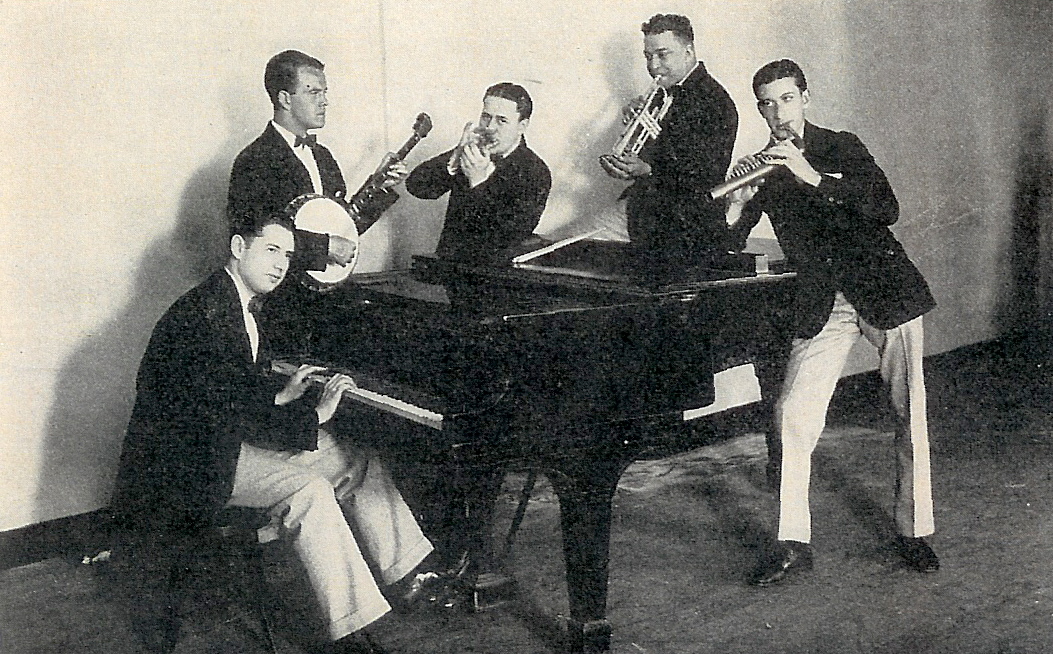
Irving Brodsky - Piano  Left to Right: Ray Kitchingham, Stan King, Bill Moore and Adrian Rollini
Irving Brodsky – Piano
Left to Right: Ray Kitchingham, Stan King, Bill Moore and Adrian Rollini

What I’ve found (so far, based on admittedly perfunctory research) says little and repeats it often: that Moore worked with the California Ramblers in all of their pseudonymous forms as well as with Ben Bernie, Jack Pettis, and many other bandleaders. His unique position as a Black musician playing in white bands also comes up frequently. Howard Rye, quoting Albert McCarthy’s The Dance Band Era in Names and Numbers magazine, explains that “One of the regular personnel [of the California Ramblers] in the mid-20s was trumpeter Bill Moore, a light-skinned Black who ‘passed.'” Discographies confirm that he played with a variety of bands through the Swing Era, with a 1950 Billboard review praising his “Armstrong-inspired” trumpet. There’s not much more to learn about the man, even less when it comes to the musician. Bill Moore is very hard to find.

The sound of Moore’s trumpet during the twenties takes us past the realm of historical ciphers and gigging sidemen. At that time, Moore was a distinctly pre-Armstrong player. His tone is far removed from the rich, brassy sound now virtually synonymous with “jazz trumpet.” It’s narrower and more piercing, like a needle rather than a sword, well suited to tying an ensemble together rather than cutting its own path.

Even through the haze of acoustic records, Moore’s trumpet has a buzzy edge to it, different than the cool quality of his contemporary Red Nichols, the broad, warm tone of Paul Mares or Johnny Dunn’s crisp flourishes.

Moore also frequent played with a mute. Brass players often point out how mutes can be used to hide intonation problems (with King Oliver a favorite example) but the possibility of expressive choice is worth considering in Moore’s case. Moore’s pinched sound was put to good use on a series of sessions throughout the late twenties.

Moore also chatters rather than blasts, maybe to hide an uneven tone, maybe to show off fast fingers. Either way, he lets this brash instrument—seemingly designed for sweeping bursts—speak in tight, concentrated patterns.

Armstrong experimented with what Brian Harker called a clarinet-like approach early on in his career. Nichols used clever, clipped lines throughout his long career. Jabbo Smith and Roy Eldridge frequently employed double-time with the boppers later adding their own phrasing and harmonic ideas.

Moore’s chattering is based on a pre-Armstrong aesthetic that emphasized contrast and variety over continuity and flow. It’s also more of an ornament, as Moore sticks closer to the melody than many modern jazz musicians care to—while Moore knows how to have fun with even the silliest tune, rather than simply throw it out. The emphasis on contrast, paraphrase, and mutes indicates that Moore might have been listening to “novelty” trumpeter Louis Panico.

Listening to Moore reveals more than session dates and personnel listings. It points to influences, musical choices, textures, and his own stylistic vocabulary. In other words, there’s a distinct musical voice at work. Neither a genius granted immortality nor a hack deserving complete neglect, after generations of brash, brassy trumpeters in the Armstrong mode, Moore’s style might seem like a wholly new experience (even if it originated decades before most readers were born).

from The Reading Eagle, November 7, 1929

Jazz purists might dismiss Moore based on his different sense of swing, comparatively restrained improvisational approach, or some other interesting but ultimately illogical bit of teleology. Given his post-ragtime, pre-Armstrong soundscape, criticizing Moore (and his contemporaries) for not sounding like later players is like chastising Renaissance paintings for having too many religious references. Rather than admiring the work in its historical context or apart from the critic’s context, everything is measured against one stylistic endpoint with all “great” works leading up to or issuing from it.

Not that many even take the time to dismiss Moore based on his playing.  As is often the case with the earliest chapters of music history, discussion beyond the session cards and matrix numbers and right to the sound of the music appears infrequently. Maybe reacting to the music itself seems too subjective. Maybe now that Moore and his colleagues are no longer around, maybe the only thing left to do is ensure an accurate record of the past. Hopefully, when the record is complete, we’ll remember why it was assembled in the first place.

Tagged , , , , , , , , , , , , , , , , , , , , , , , , , , , , , , ,

A Very Brief History of Jazz via “Tiger Rag”

everynote.comThis list is more stylistic than chronological, and certainly less than comprehensive, but hopefully it still provides a fair overview of the music’s development.  At the very least it shows that good musicians never play “the same old tune.”

Screen Shot 2014-08-14 at 10.07.30 AM


Unfortunately, YouTube removed a great clip of Barry Ulanov’s All Stars, featuring Ray Brown, Dizzy Gillespie, Charlie Parker, Max Roach and Lennie Tristano playing “Tiger Rag.


Readers are encouraged to share examples  of “Tiger Fusion, Tiger Latin, Tiger Atonal, Tiger Hip Hop” or their own favorite exploration of this perennial favorite.

Tagged , , , , , , , , , , , , , , , , , , , ,

All About Jazz Is All About Buster Bailey (Today, Kinda’)

Buster BaileyThrilled to see my review of Buster Bailey‘s All About Memphis on All About Jazz. It’s great to see my name on an article, but I’m even prouder of the fact that this underrated clarinetist cut an album as a leader and that he’s getting some attention today, right next to some musicians who just happen to be alive.

Incidentally, the album is available as a (cheap) download on Amazon. Perhaps with the right attention, the only thing that will be a footnote about Bailey will be his death.

Thanks for reading, and keep listening.

Tagged , , , , , , , , , , , , , , , , , , , , , , , ,

Fess Williams and Eric Dolphy Playing Their Saxophones

What do Fess Williams and Eric Dolphy have in common? For starters, both played for none other than Charles Mingus.

Dolphy, prophet of the jazz avant-garde, deeply admired by Mingus and considered one of the most galvanizing forces to ever play with the bassist/composer, and Williams, an incredibly popular bandleader during the twenties, now mostly remembered for his gas pipe clarinet that even diehard collectors merely tolerate: both appeared at Mingus’ (in)famous Town Hall Concert of 1962. Dolphy performed most of the show, but Mingus brought Williams, a.k.a. his Uncle Stanley, onstage briefly to show off some circular breathing.

Even more important than a boss or an uncle, Williams and Dolphy share an ear for the humorous and disturbing, a penchant for making their instruments squeak, honk and pop, throwing in plenty of gangly dissonances and other sounds that most musicians leave behind alongside soft reeds and method books.

Compare Williams’ jagged breaks at the beginning of “Playing My Saxophone”:

with Dolphy’s entrance on his groundbreaking “Out To Lunch”:

and it’s easy to hear that both reedmen simply love sound: the more jarring, the better. It’s fun to imagine Dolphy and Williams backstage at Town Hall, not saying a word but merely trading squawks and fractured themes.

Both Williams and Dolphy also snub their noses at the clean lines and cultivated timbres no doubt enforced at the conservatories they trained in. That makes them both rebels, and jazz loves a good rebel! Yet given Williams’ period of activity and the large audiences he played to, his rejection of classical instruction seems more commercial, and therefore more suspect.  Most jazz histories (when they mention Williams at all) relegate him to “novelty.” Williams was out to make a buck, Dolphy sought to change ears and minds. Dolphy is the artist, Williams was merely an entertainer.

It’s a neat little distinction, but it speaks more to cultural interpretation than sheer sound. Dolphy does often display much quicker fingers and harmonic variety, yet that’s as much of a stylistic choice as Williams’ reliance on a percussive sound and bumpy phrases.  Even when the sounds aren’t so similar, both players’ sense of taking the listener to a different, even weirder place is clear. Simply listening to Dolphy’s blurting, burry bass clarinet on “Booker’s Waltz”:

back-to-back with Williams’ ambling slap tongue solo on “Dixie Stomp” illustrates two musicians who liked to play in every sense of that word:

Yet even assuming that Williams was just goofing off to make a buck and that Dolphy was in fact the serious artist pushing boundaries, all the listener is left with is the sound. The sound is out there to be heard.  Trying asking it about its motives, or whether it’s a novelty or work of art.

While We're At It, Rahsaan Roland Kirk (Left) Stole Wilbur Sweatman's Act!

While We’re At It, Rahsaan Roland Kirk (Right) Stole Wilbur Sweatman’s Act!

Tagged , , , , , , , , , , , , , , , , ,

A Contender for John Coltrane’s Favorite Tuba Player

Released in 1963, and even with its rhythm section and harmonic sensibility soaked in modern jazz, John Coltrane’s album Ballads may be one of the best examples of the prewar jazz aesthetic:

Coltrane’s reliance on pure tone and straightforward lyricism speaks to a style of jazz that can paraphrase melodies (even fast ones) as well as deconstruct them.  The “tune proper” isn’t thrown out after the first chorus, but partnered with throughout the performance, channeled to make something recognizable but personal.

Do yourself a favor and click on the following hyperlinks.  You will not be sorry.

Coltrane, the symbol of boundary-pushing, technically advanced modern jazz, keeps company with Louis Armstrong and Bix Beiderbecke, as well as Phil Napoleon, Manny Klein and Joe Smith. Trumpeters were usually the ones playing lead in the twenties, thirties and forties, but saxophonist Frank Trumbauer and his way of paring down a melody to its essentials also comes to mind, as does trombonist Kid Ory.  Don Murray, with a gorgeously burry sound and distinct personality on baritone sax, also understood that the expressive potential of straight melody.  Even Guy Lombardo’s sax section, hated by jazz scholars and beloved by Armstrong for their clean melody statements, might have appreciated Coltrane’s approach on Ballads.

Coltrane’s glistening tenor sax even brings to mind tuba player Clinton Walker on “Frankie and Johnny” with King Oliver:

Walker provides a rich lead for the leader’s punctuations, and while he doesn’t get all of his notes out, its an admirable solo.  Modern ears may hear it as a novelty, but the tone, the attempt to control the sound and the refusal to harrumph reveal a player giving both the melody and his own voice their due.  Differences of chops, decades and octaves notwithstanding, these musicians were all about the tune.

Wonder If He Ever Heard Alberto Socarras?

Wonder If He Listened to Alberto Socarras?

Tagged , , , , , , , , , , , , , , , , , , , , , , , , , , ,

How (Not) To Listen To Early Jazz

All About Jazz has been very supportive of prewar jazz coverage, so I’m thrilled to see my column published on their website. In its latest article, I discuss some of the perceptions that make the music’s early sounds seem so removed from the jazz continuum. Hopefully it’ll inspire some open ears, and maybe a few stuffed stockings.

I also hope you’ll give it a read, right here. Thank you!

Tagged , , , , , , , , , , , , , , , , , , , , , , , , , , , , , , , , ,

Harry Carney’s Admiration Society

Regular readers of Aesthetic, Not Anesthetic know that Buster Bailey and Don Murray are two of its favorite subjects. Both were simply amazing clarinetists, gifted with a bright tone and a beautifully busy style, equally effective in solos, breaks and high-flying lines behind ensembles.  Benny Goodman admired the two of them and even shared a teacher with Buster Bailey.  Unfortunately Bailey and Murray remain amazingly underrated footnotes in jazz history.

Now, for some further critical vindication, here’s Ellington sax section anchor and baritone sax pioneer Harry Carney‘s thoughts on these musicians:

My first influences [on clarinet] were Buster Bailey with Fletcher Henderson, and Don Murray with Jean Goldkette. As a brash kid, I always wanted to play faster than anyone on clarinet, and both Buster and Don Murray were great technicians. Too bad I didn’t stick with them! Perhaps I’d be a clarinetist today. Buster has always sounded to me like a perfect man for the symphony, and on those up-tempo numbers with Fletcher Henderson he always showed what a well-schooled musician he was.

Apparently this blog keeps some sharp company in terms of taste!  More importantly, Carney reminds all of us to stay positive and to not be bashful with sincere compliments.  One never knows who, or when, someone is listening.

Harry Carney.  What an Ear!

Harry Carney

Tagged , , , , , , , , , ,