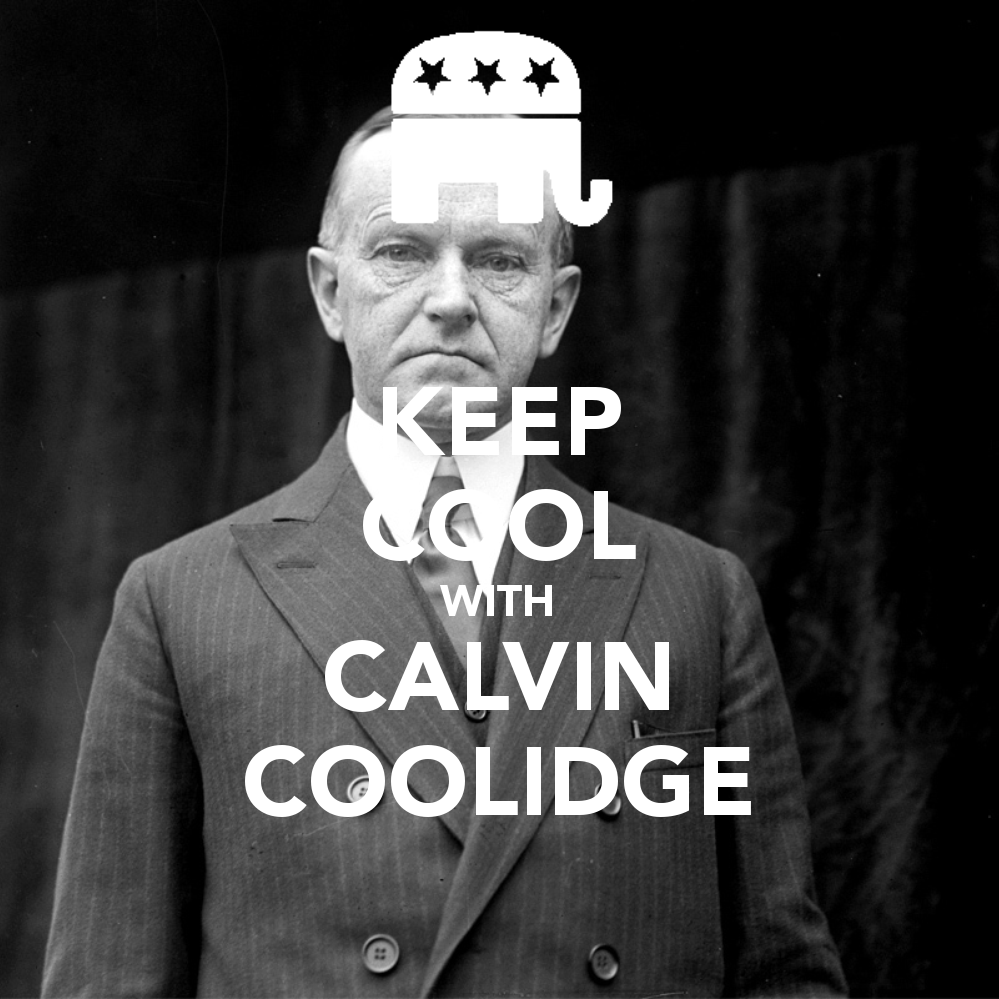
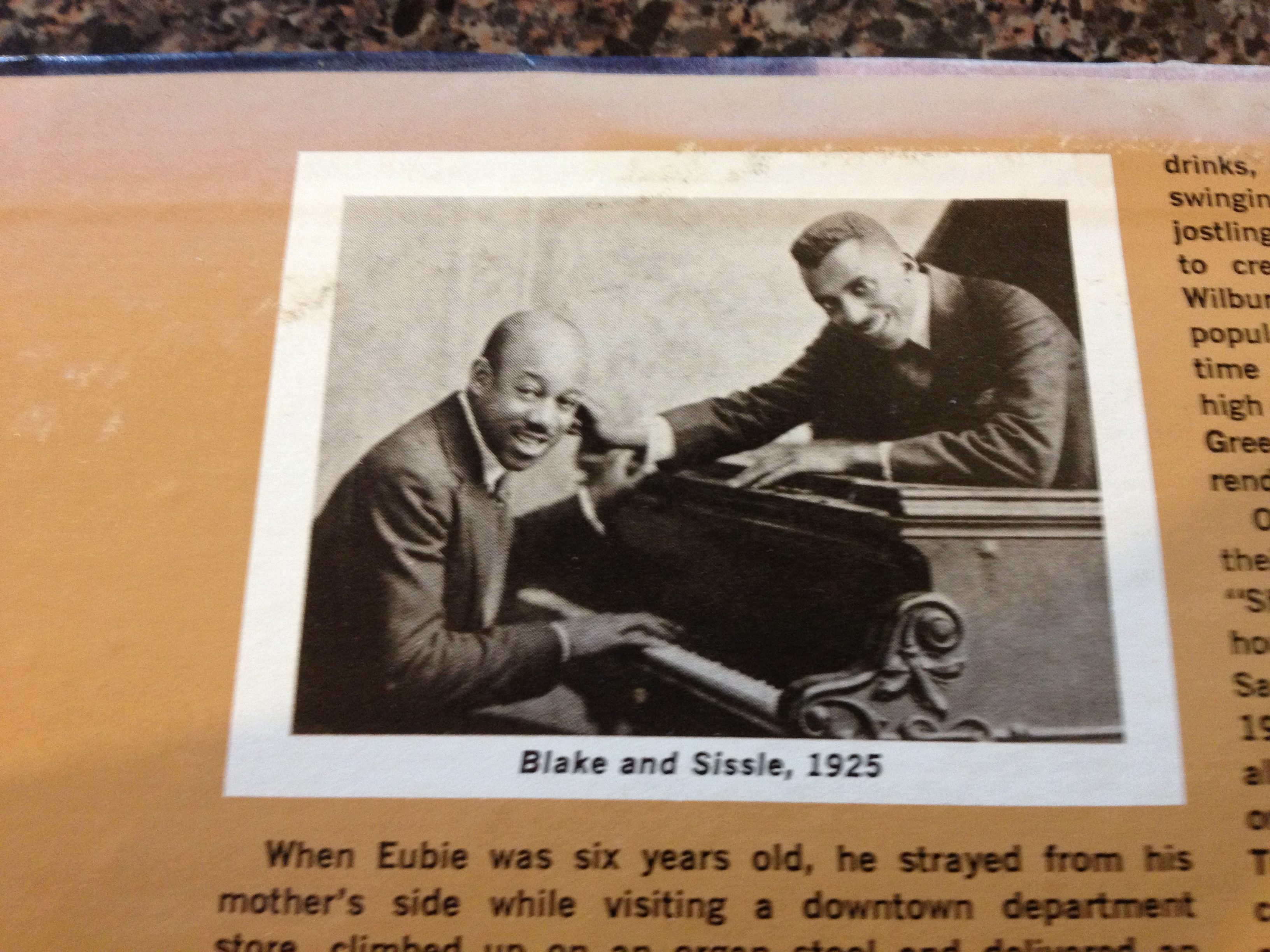
Reason and passion, order and chaos, the Apollonian and the Dionysian, Buster Bailey on the left speaker and Edmond Hall on the right:
Hall is all about consistent tension, like a winemaker wringing every drop of juice out of the same dark, intense grape. From his lines behind the introductory ensemble to his opening salvo with Bailey, he never relaxes that acrid tone or those spiky lines.
Bailey follows Hall with a clever epigram, feigning a simple “cool” to Hall’s “hot” but soon moving onto more controlled but equally cutting displays. Bailey crafts his phrases, putting more space between them but tightly packing a few key ones. He lets Hall have the lead in terms of volume and phrasing for their duet, fashioning a beautiful counterpoint to Hall’s wail. Yet for the closing ensemble, Bailey asserts himself over and against Hall with an incisive repetition. The victor may be up for debate but neither player loses.
Producer Ozzie Cadena may not have had an aesthetic smack down in mind when he assembled two different front lines to joust over this ODJB staple. Of course neither clarinetist is a perfect archetype for Nietzsche’s poles. Bailey never completely sheds instinct and abandon, and Hall doesn’t lack logic and clarity. It’s just a matter of degrees and balance. Everything in moderation.
Detail from “Apollo and Marsyas,” Hans Thoma (1888)
Precisely how Joe Tarto’s tuba became Cliff Edwards’ backing on “My Best Girl” isn’t certain. Barring some unknown corner of twenties pop or avant-garde polka, vocal with tuba accompaniment has never been a very popular format:
Still, it’s easy to believe this partnership developed through the strength of Tarto’s musicianship. His big, dark tone pads all those octaves between him and “Ukulele Ike” without ever overpowering the singer. Things never turn thin or lopsided. The bassist’s steady beat also provides Edwards with a firm footing, which he in turn uses as a springboard as well as a foil for his own vocals and “effin’.” Edwards just sounds better with something solid to push against. Most soloists do. The musicians who play “between the beats” get plenty of attention in jazz history, but they all needed a beat to play between in the first place! Respect the beat, respect the beat makers.
Full drum kits were rarely heard on records made before 1927. Only the most skilled (and confident) audio engineers were able to compensate so that a low frequency “boom” wouldn’t throw off the recording. Drummers were left to work with cymbals, blocks and anything else they were permitted to bring into the studio.
Adding in the already difficult sonics of many early records and the fact that drummers rarely soloed during the twenties, listening to jazz drums on recordings from this period may seem like an arduous, even fruitless exercise. It’s not quite like a needle in a haystack: instead, the needle has been chopped into several pieces, with only a few of the pieces actually getting mixed into the hay, while the haystack itself is kept in a very dark barn.
Smaller kits, smaller technological resources and smaller role notwithstanding, the best twenties jazz drummers produced imaginative sounds and perhaps most importantly in jazz, a lot of rhythm. As Dr. Lewis Porter points out, early jazz drummers were not just timekeepers. Mark C. Gridley notes that they actually had a very high level of interaction with the rest of the band, something usually associated with much later styles. Drummer, bandleader and percussion historian Josh Duffee describes traditional jazz drumming as “an art form that tests how musical a drummer can be with limited and very unique instruments.” It turns out that these needles were actually crafted by talented, imaginative needle makers, and it’s time to start digging.
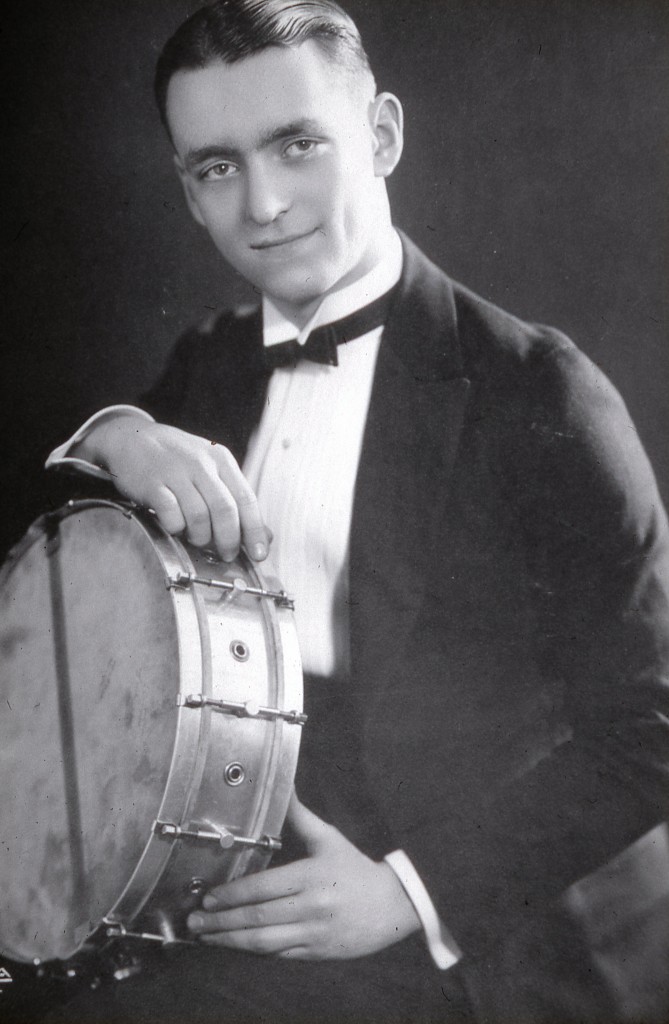
For my own survey of this art form, I’m starting with Chauncey Morehouse. He’s the most familiar to me, and probably to even occasional early jazz listeners. Anyone who has taken a Jazz 101 course has heard Morehouse’s cymbal backbeat on Bix Beiderbecke and Frank Trumbauer’s seminal “Singin’ the Blues.” His collaborations with “Bix” and “Tram” in the Jean Goldkette orchestra and on numerous studio dates with the famous duo make him one of the most frequently encountered drummers of the twenties. It’s a little trickier to hear his drums but feeling them is no problem, for example on Morehouse’s own composition “Three Blind Mice” with a Trumbauer-led group:
Morehouse doesn’t play all the way through (at least not audibly), yet when he does it’s simply but confidently. Cymbal syncopations such as those in the second chorus kick things forward like a riding crop. He also clearly enjoys supporting and interacting with Beiderbecke during the cornetist’s solo. His approach is different than the Jones/Webb/Krupa via Dodds and Singleton style that would influence the course of jazz. He punctuates and pushes the beat rather than rides it. John Petters chides Morehouse and his contemporary Vic Berton for their “cumbersome choked cymbal beats, which served only to break up the rhythm, instead of laying it down,” yet he judges these drummers according to a later standard, like criticizing the ancient Greek playwrights for not writing any novels. Morehouse is simply his own man rhythmically.
At the same time Morehouse plays with the creativity and sensitivity associated with the best drummers of any era. He varies his patterns, listens to his band mates, fills in between phrases, sets up ensemble hits and lays out when needed to allow instrumental balance as well as textural contrast. The six sides Morehouse made with Bix Beiderbecke and His Gang (a.k.a. the New Orleans Lucky Seven) highlight his taste as well as his resourcefulness with the limited instrumentation available to drummers at that time. In addition to his cymbals popping behind soloists, Morehouse orchestrates the beat using woodblocks and a brassy cowbell on “At The Jazz Band Ball”:
On “Goose Pimples,” Morehouse taps the melody under Beiderbecke’s lead, fashioning a harmony in rhythm and becoming as much of a partner in the collective improvisation as any of the horns:
His rapid-fire “click-clack” perfectly captures the tense, madcap energy of “Original Dixieland One-Step” with a Red Nichols group:
Morehouse’s earliest records with the Georgians may be the best illustration of his doing a lot with very little. The “band within a band” of the Paul Specht dance orchestra, their acoustically recorded performances and dense (but driving) polyphony make it difficult to hear the drums. Yet Morehouse is there for all forty-six sides, the sense of time that earned him lifelong praise palpably, if not always audibly, moving the ensemble. His wood and temple blocks cut through for an especially dynamic impact on “I Wish I Could Shimmy Like My Sister Kate,” “Chicago” and “You’ve Got To See Mama Every Night,” and his playing is half underpinning, half counterpoint on “I’m Sitting Pretty In A Pretty Little City”:
Plenty of soggy Dixieland ensembles have made woodblocks, cowbells, drum rims, and washboards sound corny, yet for Morehouse and his contemporaries, these things were instruments rather than novelties. Morehouse knew how to add color as well as rhythm using equipment that most drummers would now classify under “auxiliary percussion.” “Margie,” once again with Nichols, contains a range of percussive timbres, from wire brush backbeat in the opening ensemble through cymbals behind the mellophone and woodblock “bombs” behind the clarinet, to the panoply of sounds heard during the final chorus:
Less lucid but just as effective, Morehouse’s percussion helps the unpromisingly titled “Add A Little Wiggle” with a Nat Shilkret’s All Star Orchestra pick up considerable heat. It is difficult to hear what he’s doing behind the full ensemble but it clearly works, and his cymbals step out to dialog with the soloists:
Shilkret’s “Chloe” stays pretty commercial and tame, until Miff Mole’s trombone solo and the ensuing hot small group burst out of the orchestra. Morehouse also bears down, this time on drum skins as well as cymbals:
By the time Morehouse recorded his composition “Harlem Twist” with Red Nichols and His Orchestra, there’s a lot more snare and bass drum in his playing. They add plenty “thwack” but without any sense of military-style heft. Morehouse continues to lift and converse with the rest of the band:
Morehouse’s skins on “Bessie Couldn’t Help It” with Hoagy Carmichael’s band are slightly louder and he uses more regularly recurring beats. That may be a sign of changing styles, or technology catching up with the way Morehouse had been playing on a full kit from the beginning. Either way he remains his same effective but subtle self:
Morehouse’s taste, as well as his time and punch, might have been one of the reasons he ended up performing what some consider the first recorded jazz drum solo while he was still a young man playing with The Georgians, on “Land of Cotton Blues”:
It’s not a Chicago-style explosion, and it’s even further removed from an Elvin Jones odyssey. Morehouse’s solo is short, sweet and spurring. Mel Lewis’ description of the “tap dances” that early jazz drummers spontaneously composed comes to mind. At a time when engineers were wary of drummers and audiences didn’t see them as soloists, Morehouse surprised everyone.
c/o impulsebrass.com
Lewis doesn’t mention Morehouse in a discussion of jazz drummers he delivered on radio several years ago. A part from his association with better-known musicians such as Beiderbecke, Morehouse’s name doesn’t come up very often in jazz histories. He was obviously well respected but is rarely listed as an actual influence on any players. Yet it’s that lack of influence that makes his work so unique. There are no stylistic links with later drummers to make his approach sound basic or cliché, no ideas he originated that have become so commonplace as to seem unremarkable. Morehouse played rhythm and did it in his own way, and he made the band sound better along the way. That has to count for something in jazz.
Jazz writer Warren Vaché describes Morehouse joining an impromptu jam session at a New Jersey Jazz Society picnic, drumming with just two spoons on a plastic beverage tray and bringing the house down. He also recalls Morehouse’s joyous playing with a reconstituted Jean Goldkette orchestra concert sponsored by the New York Jazz Repertory Company. Despite the loss of one leg, the drummer left an impression on Vaché over twenty years later. The man really could make rhythm any time and with anything!
In honor of Bob Crosby‘s birthday, here’s a side that’s probably not as familiar as “South Rampart Street Parade,” “Big Noise from Winnetka” or other tunes usually associated with his band:
At a time when most big bands were taking their cues from Harlem, Bob Crosby and His Orchestra found inspiration by looking a little further back to Chicago and New Orleans. The band was fairly popular during the swing era despite (or maybe because of) their allegiances to earlier repertoire and styles, yet this side is an intriguing hybrid. The tune was written by Jimmy McHugh for a New York revue and primarily associated with Duke Ellington. The arrangement includes riff choruses, which were more prevalent in charts by Crosby’s more “modern” contemporaries, as well as a lowdown, killer-diller feel vaguely reminiscent of Benny Goodman’s “Sing, Sing, Sing.” Goodman’s famous recording had been released a little over a year earlier. The Crosby band might have been trying to cash in on the continued success of similar numbers.
Whatever influences were at work, Crosby’s ensemble keeps its identity with deliciously reedy textures, a powerful but warm trumpet section and the outstanding rhythm team of bassist/arranger Bob Haggart and drummer Ray Bauduc laying down a beat that’s nothing like Goodman, Basie or any of their contemporaries. Solos from Warren Smith’s blistering trombone and Bob Zurke’s labyrinthine piano, as well as a typically liquid reflection from clarinetist Irving Fazola and criminally underrated tenor saxophonist Eddie Miller wailing away also make this an utterly Crosbyesque performance. Perhaps most importantly, it swings like crazy!
There’s too much here for me to capture in any cogent fashion. Enjoy the music.
The copy of Jazz Gentry: Aristocrats of the Music World on loan from the library of a prestigious music school doesn’t even have a crease across its spine. Every page is crisp, they all rest perfectly flat on top of one another and all of their corners are still sharpened into a prickly point. There’s also no evidence of fingers, or for that matter sunlight or lamplight, blemishing Bobby Hackett’s earnest face on the cover. The virgin stamp card at the back seems redundant; it’s immediately obvious that this book has never been picked up off the shelf, let alone left the building.
Apparently in the fourteen years since it was published, Warren Vaché’s collection of interviews and insights from dozens of prewar jazz musicians hasn’t sparked the interest of any of the students attending this renowned institution. To be fair, most of the musicians that Vaché interviewed weren’t associated with any styles taught in a classroom. They had already faded from jazz’s collective memory by the time he first wrote these pieces for various magazines in the seventies. Yet the musicians themselves were still around. Now esoteric pursuits with names like “Chauncey, Challis, Cork” and “Doc” were still people with brains to pick and memories to mine.
It would be easy to assume that Vaché’s subjects played too many melodies or too few amplifiers to attract contemporary music students. Yet that’s an assumption based on generalization and laziness. History is a hard sell for a lot of people, regardless of age, taste or how many Coltrane tunes they have memorized. Many of the current descriptions of prewar jazz, or lack thereof, haven’t helped matters.
So instead of lecturing on the importance of Bix Beiderbecke or opining on Vic Dickenson‘s singular sense of humor on the trombone, I’ll just offer that young musicians are missing out on stories like this one:
The [Vincent] Lopez orchestra went on tour, and when Joe [Tarto] learned they would play the Mosque Theater in his hometown Newark, he sent word to his mother so she could come see him perform-something she had never been able to do before…Joe had a featured spot on the program doing a slap bass chorus on “Milenberg Joys.” As a finale, and to add a little showmanship while in the spotlight, he got into the habit of kicking the bass into a spin. All the kicking had finally worn a hole into the back of the bass, and between shows at the Mosque a stray alley cat found the hole and crawled in. Nobody was more surprised than Joe during the next rendition of “Milenberg Joys” when the frightened cat began screaming and trying to claw his way out through the F holes of the fiddle. For a moment he thought a ghost had taken up residence in the old bass, but like a real trouper he kept on thumping away right up to the finale. But when he launched the customary kick, the hole in the bass opened up and released the cat, which took off for the pit musicians, knocking over music stands and winding up in the lap of the pianist. The audience howled, thinking it was all part of the act, but the SPCA didn’t think it was funny. Joe had a hard time convincing the humane society representative that the cat wasn’t part of the performance.
Tuba player, bassist, arranger and composer Joe Tarto was about seventy-one years old when he told this story to Vaché, and it is heartwarming to picture him as a young, green musician, excited by the chance to perform for his mother and encountering some harmless bas luck (and also to know that even back then, a diligent member of the SPCA was on hand to look out for that poor animal’s welfare). The image of the Lopez band opening up a chart and letting a rhythm instrument solo is also telling. Bass solos are still relatively rare, so in 1925 this must have seemed postmodern. While a bass is now more likely to walk rather than slap, the bottom line remains musicians making music. Not “commercial music, “serious music,” “art” or “entertainment” but music they enjoy. Reading Vache’s book is less a matter of respecting one’s elders than simply conversing with a colleague. Don’t get hung up on labels like “dead” or “alive,” just get to a library!
Tom Lord’s Jazz Discography lists over one thousand recordings of “Ain’t Misbehavin’.” Pretty good for a song that Ted Gioia explains is ”not quite as important a part of the jazz repertoire nowadays as it once was.”
It is true that beboppers, post-boppers, free-jazzers, fusionites and other modernists never really cozied up to the Fats Waller standard. That still leaves a who’s-who of prewar and prewar-influenced jazz musicians to give it a shot. Yet even with Louis Armstrong’s magisterial interpretations, the composer’s own performances and pianists from Jelly Roll Morton and Art Tatum through Dick Hyman and Jeff Barnhart to choose from, I keep coming back to the Charleston Chasers’ “Ain’t Misbehavin’.”
In fact the the Original Memphis Five working under an alias that Columbia records used for several bands, the Charleston Chasers waxed their version at the height of the song’s popularity. Waller had written “Ain’t Misbehavin’” for the revue Hot Chocolates, where it soon became a feature for Louis Armstrong and eventually the most famous part of the show. The Chasers recorded the tune about a year later, and just a few weeks before Armstrong made his own recording (skip ahead to 0:48 in the following clip to hear the music):
This arrangement never entirely settles, and that’s what makes it so interesting. The Chasers’ two-beat amble has its own magnetic energy, but their rhythm is a little overly delineated. Phil Napoleon’s trumpet is typically crisp yet slightly tense: his high notes during the introduction sound forced while the turnaround notes in the first chorus are hesitant. There’s a carefulness to the Chasers’ playing, the sound of a band feeling their way through a brand new composition.
They’re also figuring out what to “do” with this new song, adding some highly original touches to make it their own. The Chasers feature a standard front line of trumpet, trombone and clarinet, but clarinetist Jimmy Dorsey lays low during the ensembles to let Napoleon and his frequent OM5 partner Miff Mole fashion brass duets. Napoleon and Mole were already seasoned jazz musicians, developing in tandem with the music from its earliest roots in ragtime. The pair displays a refreshingly harder-edged sound and play busier, punchier lines than most of their New Orleans colleagues. Napoleon and Mole even switch roles following the vocal, with muted trumpet decorating the trombone’s burry lead. Eva Taylor’s vocal is charming but Arthur Schutt’s elegant accompaniment behind her is the real find. His classical allusions also turn the minor chords of the bridge into miniature Rachmaninoff preludes. Joe Tarto’s bass keeps snapping throughout while Dorsey’s whinnies add a humorous symmetry to the whole thing.
This performance is a departure from the jamming and stride theatrics now typically associated with “Ain’t Misbehavin’.” It’s also far removed from the weight of history and sense of familiarity attached to even the most relaxed renditions of this song. This was only the fourth recording in the history of Waller’s iconic tune. If it shows its age, that age offers a completely unique experience.
Clarinetist Jimmy Lytell is best known for his recordings with the Original Memphis Five, followed by a lengthy career as a studio staff musician. Canadian company Jazz Oracle now collects all twenty-five recordings that Lytell made with just piano and guitar/banjo for the Pathe label between 1926 and 1928. This format was popular throughout the twenties, with clarinetists such as Buster Bailey, Benny Goodman, Johnny Dodds and Boyd Senter (!) getting the opportunity to put their sound and style front and center. Since Lytell’s legacy is predominantly ensemble-based, this disc sheds some welcome light on his abilities as a soloist.
Speaking about these recordings in his landmark Lost Chords, Richard Sudhalter described Lytell’s playing as “curiously inert rhythmically.” He added that Lytell’s “phrasing is quite foursquare, [with] tidy patterns that always conform to the two and four-bar phrases of the songs and invariably land on the downbeat of a bar…There are moments when the ear longs for a subordinate clause, alternation of phrase lengths, anything asymmetrical.” Lytell may have had a limited rhythmic comfort zone, but his playing within those boundaries is assured and consistently joyful. He displays a bright, distinct tone that occasionally resembles a reedy alto saxophone, as for example on “Old Folks.” There are also plenty of the trademarks smears recognizable from the OM5 sides. He also frequently punches out repeated notes, resulting in a declaratory sound unusual for the instrument at this time, while numbers such as “Davenport Blues” and “Pardon The Glove” include several well-executed saw tooth patterns and finger-busting runs.
This release is also a veritable twenties dance band songbook, including numbers such as “Messin’ Around,” “Stockholm Stomp” and “Missouri Squabble.” It’s illuminating to hear these tunes outside of more intricate big band charts of the time, and they pick up plenty of heat without the extra instrumentation (especially both takes of “Zulu Wail”). Jazz guitar pioneer Eddie Lang appears on several tracks, along with the energetic Dick McDonough, OM5 pianist Frank Signorelli and composer Rube Bloom.
Jazz Oracle’s engineering is typically beautiful, and this disc is worth purchasing for Phil Melick’s liner notes alone: they’re a model of how to blend history, discography and biography into a narrative rather than a list. Lytell may or may not make it into the pantheon of “great” jazz clarinetists yet this release reveals a musician who had taste as well as technique.
Unfortunately I can’t find any YouTube clips from this disc, but here’s Lytell backing the sweet-toned Annette Hanshaw:
In trying to describe what makes Bennie Moten’s saxophone section so wonderfully different from any other in the continuum, I started to think about what jazz listeners have come to expect from the entity known as a “saxophone section.” The following began as an introduction for the Moten posts, went in its own direction and then turned into some random thoughts on this very important part of the jazz orchestra. The reader may be able to extract some larger point, or at the very least enjoy the music and photos.
Paul Whiteman called the saxophone section the string section of a big band. There’s more to his comparison than plush harmonies and fast scales. Just as the string section of a classical orchestra identifies the group as another link in a particular musical tradition, while distinguishing the best orchestras as unique members of that particular musical community, so does the saxophone section of a jazz big band. That’s not to diminish the distinct sound of a particular brass or rhythm section. Yet what instrument signifies “classical” like the violin, or “jazz” like the saxophone?
Think of Benny Goodman’s well-drilled but warm foursome under Hymie Schertzer’s transparent lead, or Earle Warren’s searing alto atop the twin tenors of Lester Young and Herschel Evans, with Jack Washington anchoring it all on baritone. Duke Ellington’s saxophone sections patched together various reeds in different combinations yet remained instantly recognizable despite, or because of, their versatility. Whiteman wasn’t just commenting on notes in a score or crafting good copy: how much does a single note from this instrumental part reveal about the musical whole?
The modern saxophone section lives and thrives by concerted blend and drive as well as the power of its soloists. Woody Herman’s “four brothers” section is best known for solos by Stan Getz, Zoot Sims, Herbie Steward, and Serge Chaloff, but their famous titular number shows how well they work(ed) together as well as individually. The best sax sections are their own band within a band. There’s enough differentiation of register and timbre between the two to three instruments that comprise the section to create a self-contained ensemble. At the same time, solid improvised solos splintering out of the unit are a given. Several “Meets the Sax Section” albums illustrate the idea, as well as how powerful that idea has remained for listeners.
The swing era may not have introduced the concept of a saxophone section (which was already de rigueur for dance bands by the twenties), but it did codify a certain conception of it. From the big, rich sound of Count Basie’s new testament saxes, through the Thad Jones-Mel Lewis band grooving under Jerome Richardson’s greasy soprano, to the thick, ultra-precise reeds directed by Bob Mintzer and other contemporary players, there’s a clear expectation of what a saxophone section should “do,” which still allows individual texture and growth.
Unlike the classical string section, where individual tone is incidental to the “ideal tone” taught and striven for in conservatories, the ideal tone in a jazz band is the musician’s tone. Individual timbres may balance one another but never disappear into the mix. Every metaphor has its limits…
Here’s the second and final part of my discussion of Bennie Moten’s pre-1930 sax section…
The range of ensemble colors is directly proportional to the sum of instrumental voices, so that more players equal more instruments and therefore more orchestral possibilities.
At first glance it seems like simple musical mathematics, borne out by jazz history: big bands developed from Jazz Age tentets to the fifteen-piece plus ensembles that are now industry standard. The saxophone section alone started as a three-man operation. Now five players (two altos, two tenors and a baritone) is the norm. The math says that three horns can’t produce the same variety as five, and history paints these changes as a natural and inevitable evolution. Usually the underlying assumption here is that twenties bandleaders were either bad at orchestral arithmetic or good with a bottom line. The idea that musicians just chose the right sidemen and did a lot with what was only later deemed “a little” rarely enters the equation.
For example, Bennie Moten’s sax section does usually stick to the two altos plus tenor arrangement that was standard for most twenties bands. Yet whatever this section may lack in terms of variety as a concerted unit, it more than makes up for in solo permutations. Harlan Leonard, Woody Walder and Jack Washington each play with distinct, contrasting styles. Factor in different approaches to different types of musical material as well as instrumental doubling, and you get a surprisingly broad musical palette.
Leonard plays both bright lead alto and bluesily rococo solos with a delightfully nasal edge. He tosses in fills between the ensemble on “When Life Seems So Blue,” while “Oh! Eddie” and “Mary Lee” include tantalizingly short but hot bridges:
Leonard’s soprano sax is a refreshing alternative to Sidney Bechet’s towering presence as well as the brass clarinet approach many of his contemporaries took to the instrument. On “Boot It,” he plays with a with a joyous hoedown feel, recalling early jazz’s intersection with country and other folk art forms:
Clarinetist Woody Walder is often demonized for his novelty solos on the earliest Moten sides. Walder’s arsenal of whinnies, pops and barnyard onomatopoeia might be an acquired taste (personally I think he was just anticipating the Art Ensemble of Chicago) but his clarinet solos with the late Moten band deserve more attention. He plays some simple but direct blues in a sandy low register on “That Too Do,” with a few inflections thrown in as a type of musical signature:
Walder interpolates more passionate blues on the non-blues form of “New Vine Street Blues” and plays jittery, high-octane clarinet on faster numbers such as “Sweetheart of Yesterday” as well as shouting obbligatos to close numbers such as “Oh! Eddie.”
Doubling tenor, Walder seems hell-bent on sounding just as massive and brawny on the larger instrument as he is fleet and piercing on the smaller one. On “Everyday Blues” and the jerky, tongue-in-cheek “New Goofy Dust Rag”, he smears notes in a sweaty, agitated style. There are traces of Coleman Hawkins, but none of his harmonic sophistication. This is greasy saloon stuff without any hint of the conservatory:
Jack Washington is best known for anchoring Count Basie’s sax section, but as a younger man he played second alto with Moten and got much more solo space on baritone sax. He displays a burnished, gargantuan sound on baritone that’s closer to a bass saxophone, even pumping out effective bass lines for “That Too Do.” Washington’s unique tone is already put to effective use at this early stage, for example creating dark contrast behind the flashy trumpet on “Rit Dit Ray” and playing lead on baritone for a few tunes. This effect can be heard in other bands from the time, but Washington adds his own unique density:
Washington’s solos are all bottom and darkness, subterranean parties in a delightfully archaic vein. He takes slap tonguing to a whole new level, for example on “New Vine Street” but never forgets to swing; take his solo on “Mack’s Rhythm” or the way he dances all over “Mary Lee”:
“Mary Lee” also includes another Leonard bridge as well as Walder’s percussive clarinet and tenor honks. Given its sheer range of colors, Moten’s sax section could have been its own band, a front line unto itself. It’s not a Gil Evans affair but neither is it just three players, or five instruments, or even eight if you include the fact that everyone doubled clarinet. It is simply incredible that this was just one section of a band. Then again, who’s counting?
This is the first of a two-part post on one of my favorite musical experiences. As usual, it’s probably not most listeners’ first choice for a good time, but think of it like the first time you tried sushi, or whiskey…
Jazz lovers can debate their picks for “best saxophone section,” but chances are their selections share some similarities: tight unison playing, rich harmonies with the ability to turn creamy smooth or biting at the drop of a dime, and a distinctive sound both as a section and via soloists spinning out of the unit. There is a certain idea(l) of “saxophone section” in place after decades of well-oiled, multi-hued saxophone sections. Given that tradition, Bennie Moten’s three-man, pre-1930 reed team may sound more like a gap in the chain than a link.
For starters, its modest size comes from an earlier and supposedly developmental stage of big band arranging (with the five-man sax section viewed as the final step in the inexorable evolution of the jazz orchestra). Moten’s saxes also play more like a combination than a section, with a less-than-airtight blend and everyone’s part clearly audible. Finally, the Moten section’s lush sound would simply never pass in the modern age of more cutting sax timbres.
Harlan Leonard, Woody Walder and Jack Washington’s ensemble work is actually quite successful, in its own sweet way, because of their inability (refusal?) to ever jell. The Moten sax section sounds like three people playing, in both the musical as well as recreational sense of the word, rather than reading a part or letting muscle memory rehash what they practiced. The ragged sax soli on “That Certain Motion” would probably have most band directors turning red, but it’s hard to imagine such a deliciously gooey, lazy feel arising after hundreds of rehearsal hours:
Moten’s saxes are also incredibly transparent, perhaps to a fault. Missteps are out there for all to hear. Yet they’re also completely earnest and anything but stiff. “When Life Seems So Blue,” is slightly neater, but as if to avoid the monotony of cohesion, lead alto Leonard pipes in some ecstatic filigree between the full ensemble’s statements:
“Small Black” and “Won’t You Be My Baby?” sound much tighter, but the section’s lush, honking sound makes them seem like one of Botticelli’s zaftig figures compared to today’s lean, mean supermodel sax sections:
It’s easy to hear their sound as some vestigial element, but Moten’s saxes provide as unique a reed aesthetic as anything by the World Saxophone Quartet, Bob Mintzer or Dead Cat Bounce. Sound is never old or new; it’s always in the present and has no expiration date. Whether or not the Moten sax section belongs in the pantheon of great saxophone sections, they make room for themselves as a completely unique experience. That has to count more than playing every note at exactly the same time.
More on the Moten sax section, specifically the Moten sax soloists, next time…