This is a continuation of an earlier post, which I hope will encourage further discussion. Comments are welcome, greatly appreciated and humbly requested…
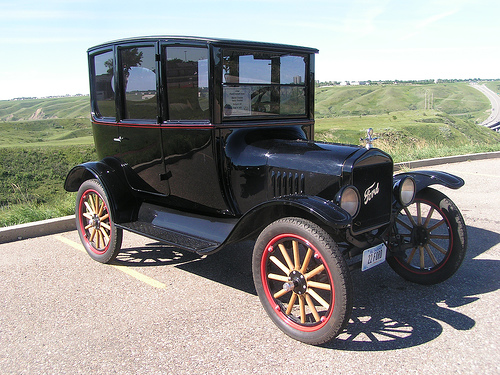
The earliest examples of any musical style, whether it’s hot jazz, Baroque or Bill Haley, live and die by history. The historically-minded listeners comprising classical and jazz audiences readily admit that “early music” got things to where they are now, just like the Model T made the Lamborghini possible. Yet most of them don’t like to drive anything that’s too old. Despite classic music being much easier and cheaper to experience than classic automobiles, it remains just as esoteric, and for many, just as outdated.
Unlike machines (or medicine, the law and late-night comedians), music doesn’t do anything better or worse over time; it just approaches melody, harmony, rhythm, form and other musical considerations differently. For example when it comes to instrumental interplay and tonal organization, Beethoven wrote more intricate chamber works than his predecessors, and Mozart more circumspect operatic works than his contemporaries. Them Austrian boys’ music is “better” for those seeking complexity or dramatic depth.
Boccherini and Paisiello, writing before Beethoven’s innovations and without the blessing or mutation that created Mozart, concern themselves with melody and directness. Using just the meager notes they know, they still manage to make music:
Boccerhini: Sextet, Op. 23 No. 1 in E flat, 1. Allegro (Ensemble 415):
Paisiello: “Mi Palpita Il Cor” from ‘Il Mondo della Luna’ (Gloria Banditelli):
Similarly, Charlie Parker’s rhythm section handles their job in a very satisfying and very sophisticated, very specific manner:
Parker’s band epitomizes a concept of jazz rhythm that can be traced back to the revolution in swing started by Count Basie’s All-American rhythm section, was developed and deconstructed following the bop era and which has influenced jazz through to the present. The texture is spacious and airy, with accents that both support and pull at a smooth, even and relaxed beat. The musicians also interact with and respond to soloists, varying their patterns to add color.
Parker’s group does light and interactive really well, but what if the listener is looking for something else? They could check out The Missourians for some jazz that’s really different:
Pianist Earl Prince, banjoist Morris White, tuba player Jimmy Smith and drummer Leroy Maxey, like so many pre-swing rhythm sections, take their name very literally: they lay out the chords, bass line and ground rhythm, sticking to a punchy background role. Their goal is to create a stage of rhythm for the ensemble and soloists to play over, rather than an accompaniment that’s interesting in and of itself. Musicians who continue to play and find inspiration in this approach explain that supporting the band is the interesting part; locking into a groove and keeping it going for their partners is how they express themselves. That particular groove is not the smooth swing normally associated with jazz. Instead, it’s intense and earthy, based on a very uneven beat, with a chunky feel that give the listener something to bob their head to (sort of like late twenties funk).
In other words, The Missourians have a unique approach to rhythm, just as unique as the Parker rhythm section, or the Basie rhythm section, or the rhythm sections backing Bix Beiderbecke, Albert Ayler or Vijay Iyer. The Missourians’ approach only seems simple, “outdated” or “corny” when judged against a later standard, the equivalent of driving a Model T and expecting a V12 to kick in.
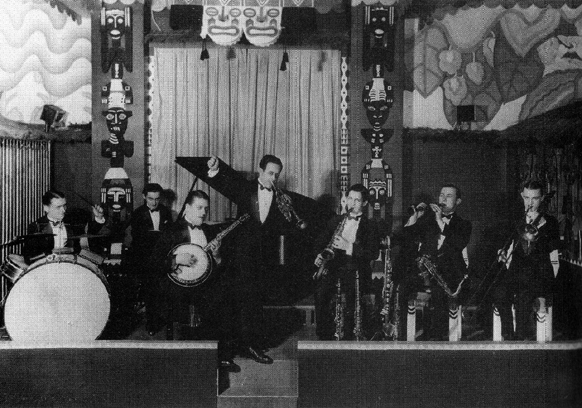
A contingent of the Paul Specht orchestra playing the lounge at the Hotel Alamac in New York, while the full band handled the ballroom, The Georgians were a “band within a band” years before the term first appeared. Record collectors and moldy figs have known and raved about them for decades, but the group remains a secret from even historically open-minded jazz listeners. That’s a shame; they’re missing out on some interesting music and a productive intersection between jazz and pop. Not that those distinctions meant much to the musicians.
The Georgians channeled a variety of influences, from the New Orleans jazz that the band’s leader, trumpeter and star soloist Frank Guarente absorbed as a youngster, to popular dance music and even the “hokum” sounds modern listeners love to hate. Depending on the date, the group was as large as nine players (not much smaller than the full Specht band), and the arrangements by pianist Arthur Schutt put every possible permutation of instruments alongside a range of exciting soloists. Improvisation and orchestration, solos and ensembles, jazz and pop: all raw material for the band.
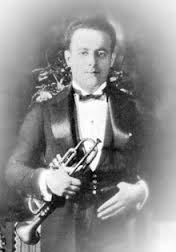
Frank Guarente
“I Wish I Could Shimmy Like My Sister Kate” starts with a seedy minor key episode straight out of a nightclub production, before easing into collective improvisation. The unpromisingly titled “Barney Google” parodies its own wooden sax and squawking mouthpiece effects with a confident brass duet. “Snake Hips” and “You’ve Got To See Mama Ev’ry Night” are fine examples of raucous, wide open twenties jazz, and the New Orleans Rhythm Kings‘ “Farewell Blues” acquires an attractively bitter edge due in part to Russ Morgan’s trombone. Guarente delivers consistently powerful leads on all the Georgians’ sides. As a soloist, he offers everything from mellow, muted and Panico-esque paraphrase on “Way Down Yonder In New Orleans” to the uncluttered blues of “Henpecked Blues.” Chauncey Morehouse‘s drums aren’t always clearly audible, but his feel is undeniable, and he pulls out a kicking stop-time chorus on “Land of Cotton Blues.”
Cherry-picking highlights from this group is as difficult as pinning them down musically. The Georgians were more than a splinter group from some “large/arranged/commercial outfit” jamming out on improvisations. They also didn’t approach jazz the same way their contemporaries King Oliver and Fletcher Henderson did. Ironically, that combination of diversity and originality, supposedly hallmark virtues of jazz, are probably what’s kept them locked in stylistic limbo. Listen first and label after, if at all.
Charlie Johnson led one of the most popular jazz ensembles in Harlem, right around the time some guy from DC was starting his own career as a bandleader. The rest, as they say, is footnotes.
Most historians concentrate on the nascent big band language contained in Benny Waters and Benny Carter‘s arrangements, painting the Johnson band as just another stepping stone in some inevitable teleology of jazz. Listening to the band as its own entirely unique animal, with one foot in Jazz Age stomp and another in Swing Era architecture, is far more rewarding (not to mention fairer to the musicians).
This writer used to experience great satisfaction and great disappointment that the band’s complete, teasingly scant recorded legacy was contained on one French EPMJazz Archives CD he purchased as a teenager, with subpar sound and inaccurate personnel listings (still available for premium price!). Yet it was all that was available and all he needed, until now.
Thanks to the miracle that is the internet, here’s the Johnson band in all of their steaming, unissued and unearthed glory:
Thanks to whoever posted this brand new side on SoundCloud, and to the erudite trumpeter and jazz historian Yves Francois for spreading the news. Keep ’em coming!
Singer Annette Hanshaw’s wholesome good looks and girlish sound are like catnip for lovers of twenties nostalgia. That shouldn’t obscure her strictly musical gifts.
Hanshaw’s voice was definitely of its time: earnest, bright and occasionally a little thin. It was also rhythmic, flexible and sexily sweet yet completely natural. She takes a merely pretty little ditty like “Who’ That Knocking On My Door” and turns it into something personal as well as musical:
Hanshaw’s interpretation clues the listener into why none other than Tommy Dorsey (no pussycat when it came to evaluating singers or sidemen) christened her a “musician’s singer.” Hanshaw’s sense of float and drive catalyzes a dream band of (White) twenties jazz musicians, with Adrian Rollini on bass sax, Joe Venuti on violin, Eddie Lang on guitar and Vic Berton’s barely heard but powerfully felt drums in turn providing a beautifully spacious feel.
They also squeeze a variety of different sounds from this small hodge-podge of instruments. The exchange between Lang, Rollini and Venuti, with Venuti double-stopping harmonies behind Lang’s tight plucking, Venuti strumming aggressively behind Venuti’s violin and Rollini tossing out short bridges between them, feels like a crossed ensemble signal that clicked into something “right.” Along with Rollini’s hot fountain pen (sounding like a clarinet with a steel wool reed) the instruments partner with rather than parody the lead. This isn’t a singer plus an accompaniment; it’s a group of musicians, including Hanshaw on vocals. Hip stuff, even if it’s also a lot of fun.
I’ve hated the word “Dixieland” since I first gathered a few friends from my high school band to play the music of Jelly Roll Morton, the Bobcats and other prewar jazz musicians. No matter how much I insisted that we were playing “traditional jazz,” the label “Dixieland” stuck with teachers, parents and other (unfortunate) listeners.
My distaste for that word had nothing to do with any cultural or chronological connotations. Ironically, as a kid who had spent his whole life in Brooklyn with occasional travel as far as City Island, I had no idea that “Dixie” signified the South, especially some (ridiculous) vision of an idyllic antebellum South. If “Dixie” meant “archaic,” my teenaged reverse conformism just thought, “the older, the better!” No, I hated that five-letter word because it reminded me of an earlier childhood treat that had neither the longevity or nutritional value of jazz.
I had only heard “Dixie” in reference to the circular bricks of processed ice cream that elementary school teachers deposited on my desk as a sign of celebration (read, pacification), food that didn’t merit a spoon but just included a small, dull, wooden plank, a utensil that correctional officers might like because inmates couldn’t carve it into a shank. “Dixieland” reminded me of Dixie Cups, and that was an outrage.
“‘Cause Ice Cream Scoops Are Bourgey!”
Sure, the word “Dixie” could have seemed like a bite of nostalgia, almost the way it did for the lyricists of tunes such as “Anything Is Nice If It Comes From Dixieland” or “There Ain’t No Land Like Dixieland,” anthems to a kinder, simpler time (that was never kind or simple). “Dixieland” bands did reference the early days of jazz through choice of repertoire, collectively improvised ensembles and their preference for blue thirds over flatted fifths. Some Dixielanders paid obvious (sometimes gratuitous) homage to the original artists.
Phil Napoleon Never Played Dixieland.
Yet those artists’ music had to deserve a better label than that of a tiny, soggy, syrupy sweet confection aimed at underdeveloped palettes. By extension, the thin horns and bloodless rhythm sections I heard from many so-called “Dixieland” groups was a far cry from Bix Beiderbecke’s popping ensembles, King Oliver’s dense, earthy polyphony or even the Original Dixieland Jazz Band’s almost frighteningly frantic attack. The music of the “Chicagoans and the best contemporary “trad” players listened back but resounded in the here and now. By contrast “Dixieland” seemed like sugarcoated revision rather than sincere reflection.
Of course the distinction between good music, bad music and bad labels gets clearer as I get older (while straw hats and red suspenders will always be just plain awful): like ice cream or a host of other delights, everyone knows what’s good or bad when they hear it. “Dixie” remains something that’s tolerable in small doses but will eventually make me sick.
In case any producers were wondering, “The Complete Sudie Reynaud” would fit on one compact disc.
A whole CD devoted to an obscure Jazz Age bassist might require some snappy marketing, and many collectors already own this collection via reissues under Reynaud’s more well-known collaborators. Sudie Reynaud will undoubtedly, and thankfully, remain unknown in every sense of the word.
“Maybe Brass Bass, or Bass Sax, On My Next Album…”
His discography lists him as playing both string bass and tuba, which evidences a basic, and therefore all the more impressive, skill needed to gig in Reynaud’s time. “Bass” meant both “string” and “brass” varieties during this transitional period in jazz and American pop, so “bass player” meant someone who could double both instruments. Steve Brown did so reluctantly, preferring his bull fiddle and the chance to unleash a signature slap technique. Cyrus St. Clair on the other hand preferred to puff rather than pluck: he stuck to brass bass well into the forties, developing jazz tuba into an art decades before Howard Johnson or Bill Lowe. John Kirby split the difference through clean, fast and clever bass lines on both instruments. Chink Martin doubled without drawing too much attention to himself on either instrument, yet his foundation and lift can be heard on dozens of recordings.
Reynaud cut just sixteen sides in his life, recorded sporadically between 1926 and 1933 in Chicago. Like Martin, he serves a functional but spurring role (except for two barely audible sessions on tuba with Fess Williams that can be heard here). On “High Fever” with Doc Cook’s band, Reynaud catches all the ensemble hits and resonates under the band without overwhelming it, even through a stomping final chorus:
While Freddie Keppard‘s ranging cornet dominates this side as well as “Sidewalk Blues,” Reynaud’s part is simple and well-defined: provide ground rhythm and outline the harmonic skeleton (while doing so musically, as Tom Smith’s comment below explains). That role doesn’t allow any insight into Reynaud’s influences, his style, or his personality. All that’s left is pure music, which makes the strutting atmosphere on Jelly Roll Morton‘s tune possible:
If Reynaud were known for nothing other than contributing to “Here Comes The Hot Tamale Man” he’d have an enviable legacy. It remains one of the most rhythmic, confident examples of “hot” artistry from this or any other era, and it’s hard to imagine without those roots and fifth punching away underneath:
Five years later Reynaud was back in the studio under the direction of trumpeter and would-be Louis Armstrong rival Reuben Reeves. The antiphonal lines of reedman Franz Jackson‘s arrangements and the loose, declaratory, Armstrong-inspired language of the soloists illustrate the evolution from hot jazz to nascent big band swing, as do the four steady beats of Reynaud’s string bass, which never steals the show but does make it possible.
He’s felt rather than heard through the swirling darkness of “Zuddan.” He nourishes the stream of solos on “Mazie” and “Screws, Nuts and Bolts” (which includes the simply dirtiest growl imaginable, courtesy of Reeves). Only on “Yellow Five” does Reynaud peek out from the curtain, with thwacking strings and a strong four beat slap towards the end of the side:
There’s no way now to understand him as an artist, no recorded innovations or theatrics to shed some light on him as a human being as well as a sideman (for this listener, his tone isn’t even as distinct as that of Country Washburne, Pete Briggs or John Lindsay). There aren’t any memoirs, interviews or even biographical entries pertaining to Reynaud, either because no researchers have bothered to look or he died without leaving any to find. Whoever Sudie Reynaud was, he did his job. In other words, “Sudie Reynaud,” historical enigma, biographical cipher and musical everyman, is now pure music. There are far worse fates.
Though known for his humbleness, Domenico Cimarosa was probably proud to never accomplish the same feats as his contemporary Wolfgang Amadeus Mozart.
Cimarosa didn’t compose a variety of complex, emotionally probing works. He wasn’t misunderstood or criticized for his music. He didn’t even inspire passionate stories about dying sick, young and penniless. Instead, Cimarosa’s comic operas made him immensely rich and popular, and were still well-known after he passed away ten years later and seventeen years older than Mozart.
Cimarosa’s Il Matrimonio Segretoactually received the most famous encore in operatic history, when Leopold II requested the whole work be repeated directly after its premier. Tuneful, catchy and a little bawdy (even without the risqué stage direction below), no wonder His Majesty couldn’t get enough:
In addition to a Holy Roman Emperor and the Austrian wunderkind himself, Cimarosa’s other fans included Haydn, who staged several of Cimarosa’s operas for his own patron, French realist writer Stendahl, who actually preferred Cimarosa’s music to that of you-know-who and Rossini, who apparently couldn’t stop whistling the Cimarosa arias he heard as a boy. Yet aside from Il Matrimonio Segreto, most of Cimarosa’s works are rarely if ever performed. At some point in history Cimarosa’s modest goals and immense success came to be classified as shortcomings.
While the current critical script is that even second-rate Mozart is preferable to the best efforts of a composer like Cimarosa, fresh listening is never a bad idea. For starters, it’s helpful to hear Cimarosa as Cimarosa, rather than “not Mozart” or some other composer i.e. as a musician who enjoyed straightforward harmonies, rounded melodies and bright textures, with a lot of woodwinds thrown in for added color. Atene Edificata doesn’t offer any intricacies in terms of music or story: the “characters” (really just allegorical mouthpieces for Cimarosa’s onetime employer Catherine the Great) praise god and country in lyrical phrases [just click “Play” below to listen]:
and runs that fall easily on the ear, with good momentum and without chromatic surprises [skip ahead to 2:40 in the following clip]:
Cimarosa was best known for his comedies, but tense drama and psychological insight were never really priorities in any of his works, nor were they as important to his contemporary listeners as they are for current operagoers. Cimarosa’s opera seria graft his bright style onto the vocal acrobatics and highfalutin stories eighteenth century audiences craved. “Superbo Di Me Stesso,” from Cimarosa’s setting of Metastasio‘s warhorse L’Olimpiade does provide a novel musical treatment for this well-worn text [starting at 0:39 in the following clip]:
The minor chords and wide intervals proclaiming “Superbo di me stesso, andrò portando in fronte” (“I’ll proudly go, bearing in front”) and the sweeter curlicues for “quel caro nome impresso, come mi sta nel cor” (“that beloved name, as it’s written in my heart”) convey how seriously this speaker takes the task of competing under a friend’s name to earn that friend a prize, and how dear that friend’s name is to the character. The skipping variation on “quel caro nome impresso” just reinforces his sentiments. Not a bad bit of character painting, especially for a libretto that had been set dozens of times previously and a composer now known for his “short, bubbly, and easily digestible” music.
On the other hand many of L’Olimpiade‘s arias are pure vocal exhibition. “Mi sento, O Dio, Nel Core” (“I feel, oh gods, in this heart”) for soprano with obbligato oboe is a magnificent traffic jam of an aria [which starts at 1:38 in the clip below], with an overly long, tacked on introduction, an impossibly high tessitura (even for a pro like Patrizia Ciofi) and gratuitous (even for eighteenth century audiences) coloratura. It also seems to go on forever, but makes for a hell of a show. In Cimarosa’s time, even serious opera was rarely “drama,” and “high art” only well after the final curtain: it was was vocal showpiece, spectacle, an athletic event and even a competition, a night of ” can they make it?”
As for that “short, bubbly, and easily digestible” sound, YouTube user Thrax1982 (who posted the above videos and whose dedication to lesser known operas is invaluable) offers the best analysis of Cimarosa’s music as “often (not [always]) seem[ing] like it’s put together of Lego blocks.” While that description might imply simplicity, sameness and a lack of emotion, it also suggests the use of familiar materials to create vivid, recognizable structures. Cimarosa’s compositional process is pretty transparent; no advanced theories or formal curveballs lurking under all those glistening surfaces. That might just be artistic choice on the composer’s part. Besides, Legos are fun, and they can make some pretty impressive stuff.
Gli Orazi e I Curiazi, a tale of political duty, romantic love and familial loyalty set in ancient Rome, leaves lots of room for big choruses, lush eroticism and deadly serious situations. Cimarosa flexes his theatrical chops at several key moments (including an unusually grim ending) and the second act’s oracle scene is as far removed from Cimarosa’s comedies as possible [Thrax’s commentary in the following clip is especially informative]:
Yet Cimarosa’s musical instincts for a sheerly beautiful effect enhance even stock scenes. Three-part harmony between the heroine, her Roman brother and an enemy of Rome that she just happens to be in love with depicts a brief truce as a moment of peace and celebration between siblings, lovers and nations [skip ahead to 3:44 below]:
It’s not dramatic verisimilitude or advanced music theory, but it does make for some great music. Shortly after, the brief duet between the couple, “Ti giura il labbro e il core amore e fedeltà” (“My lips and heart swear love and fidelity to you”), is so pure it brings the narrative to a halt:
Taken on its own terms, this simple, perhaps “superficial” writing works for Gli Orazi, due in part to Cimarosa’s knack for a distinct melodic hook. The lovers’ quarrel that opens Act II features some particularly juicy strings in the accompanied recitative, expressing this scene’s intensity in a highly stylized but effective manner:
The violins behind the ensuing duet “Se Torni Vincitor” (If You Return Victorious,” starting four minutes into the above clip) are touching, memorable and in musical terms, just plain gorgeous. Occasionally “beautiful” is enough, as is building with blocks rather than marble or watercolors. Cimarosa, as well as other musicians stuck on the historical unemployment line, remind us that it might be time for some prepositional reversal to the old adage “good, but not Mozart.”





 The Pop of Yestercentury