Tag Archives: Red Nichols

A Song By Any Other Name: The Right Amount of “Deep Henderson”

“Deep Henderson” illustrates one pop tune that became just popular enough. Tom Lord’s Jazz Discography lists thirteen different bands recording Fred Rose’s composition in 1926, the same year it was published in Chicago, with four other groups cutting the tune the following year (in three different countries, no less). Most bands also used the publisher’s stock arrangement, adapting it to their needs and style rather than starting over fresh as they might with so many other jazz warhorses. Unlike “St. Louis Blues” or “Tiger Rag, ” “Deep Henderson” became a controlled study in the variety of bands and approaches at one small juncture in American popular music.

Bill Edwards describes “…one of the most sorrowful and wistful songs [he’s] encountered,” with “…long sustained high notes leading downwards to the end of each phrase help[ing to] punctuate [his feeling].” Apparently the secret to this song’s success was jettisoning its sad, I-wanna’-go-back-to-the-South lyrics and slow, bluesy feel (which can still be heard courtesy of Edwards here). By the time the Coon Sanders Nighthawk Orchestra hit the studio to give “Deep Henderson” its inaugural recording, the tune was gussied up to make it more flapper friendly:

The Nighthawks were an immensely popular group, and their creamy saxes, strutting brass and re-playable shellac introduced a wide audience to “Deep Henderson.” Co-leader and pianist Joe Sanders handles the written solo with enough downhome swagger to offer some reminder of Rose’s original vision. Yet the rhythm is overwhelmingly upbeat (almost coy), aided by Pop Estep’s bumping tuba walking four to the bar behind the trumpet solo. While their reliance on written music and novelty numbers may deny them entry into the hallowed chapters of “jazz” history, the Nighthawks gave many Americans a good idea of how loose and lowdown pop can get.  They sound downright raunchy compared to Mike Markel’s band (follow the arrow to the link):

Deep Henderson

Markel’s block chord introduction and racehorse tempo likely impressed dancers, with robust saxes and clipped brass choreographing their stomping feet. Yet the band’s jerkier rhythm doesn’t leave much space for legs flying off the dance floor. The horn man (Red Nichols? Earl Oliver? An unknown player?) soars to the occasion, as do the saxes behind the brass, recalling society band string sections. In light of sax riffs getting faster, trickier and uniformly high-flying in the years ahead, their sustained harmonies are a nice touch. Markel’s approach has a nostalgic charm, a reminder of when pop music was intense and tight (in feeling if not always execution). Yet the recording does make the “New Orleans effect” even more apparent when listening to King Oliver and some neighborhood colleagues:

Oliver’s cornet immediately presages a much earthier, more personal account of the tune. The Dixie Syncopators’ tempo isn’t much slower than the Nighthawks, but their easygoing inflection and subtle backbeat make it sound like they’re taking their time. The saxophone section parts way for Barney Bigard’s slap-tonguing tenor, perhaps dated but undeniably percussive (and as texturally original as prepared piano or distorted guitar). Even the soprano sax adds a howling, haunting dimension to the clarinet trio.

Drummer Paul Barbarin’s “Oh, play it Mr. Russell!” during Luis Russell’s solo plays up the informal air, yet such exclamations may or may not reveal the insidious, timeless hand of marketing. Improvisation and swing are the breaking news here: Oliver’s greasy responses over the saxes (especially heroic in light of his aging embouchure), and Kid Ory’s lurching, sly trombone over the closing chorus make this, the second recording of “Deep Henderson” pressed, a very distinct chapter of the tune’s short but hot history.

Of course Miff Mole adds his smoother, more rounded yet equally punchy trombone over the chirping clarinets that close Markel’s recording, and even the drummer gets in some solo syncopations. The way each group, section and soloist navigates this arrangement points to a difference of delivery with a shared intent. The “same old stock” can never be the same, not if you’re a musician with something to say or a record consumer with a paycheck. At a time when pop is reticent to market covers (even as the same tune in the same rendition gets beaten into the ground over air and internet), it’s also a reminder that the question of originality often begins with “how” as well as “what.”

Lord lists seventy-one recordings total of “Deep Henderson.” I must admit that in light of Oliver and others’ experiments, Bela Dajos’ rich, buttery society version comes across as either insularity, or the sincerest form of parody:

Last one, I promise: here’s British bandleader Bert Ambrose’s thoroughly modern swing account from 1937:

Well, we can’t end without hearing Vince Giordano do it!  Live, in 3D, with glorious sound and from outside of Lord’ discography:

Want more? Be sure to share your favorites in the comments, and hope you enjoyed the tour.
Tagged , , , , , , , , , , , , , , , , , , , , , , , , , , , , , ,

Nic in Fight: Jazz, “Jazz” and Nicholas Payton as the Savior of Archaic Pop

Nicholas Payton Hates the Word “Jazz” Applied to His Music, and So Did Paul Whiteman

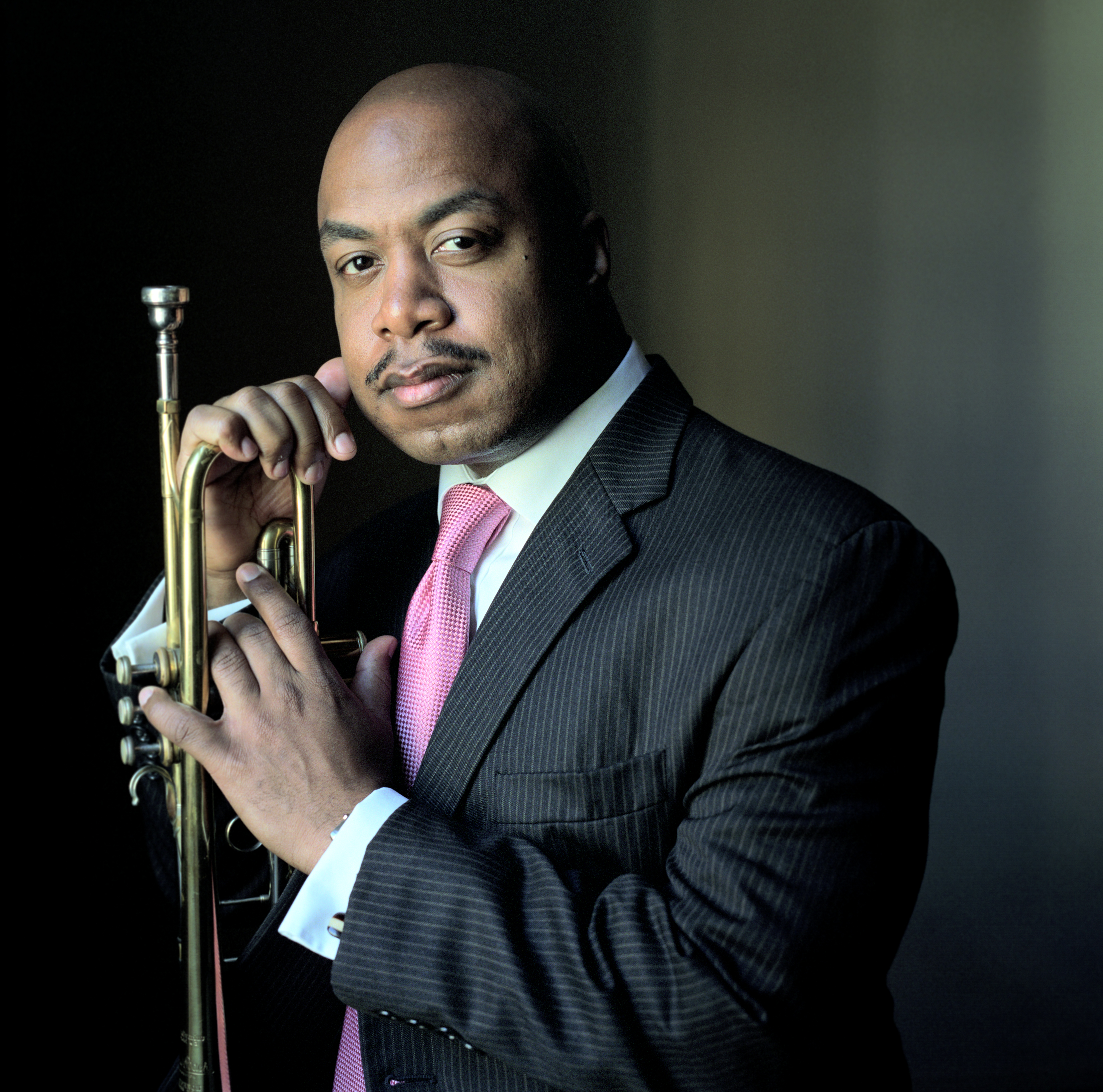
Trumpeter/bandleader/composer Nicholas Payton lit a cyber bonfire recently when he judged “jazz” to be a narrow, outdated, and even racist term.  With so many artists, jazz journalists, “jazz” defenders, label haters and twit heads out there weighing in, I’m going to avoid discussing whether Payton is “Right” or “Wrong.”  He has inspired plenty of thoughts and feelings though, and that’s vastly more important than any value judgments that will come out of this debate.

Most of the discussion hinges upon one very specific word (but given Payton’s commentary on race in America, it’s become just part of the argument).  Payton insists that he is “…not dissing an art form.  [He is] dissing the name [emphasis mine], Jazz.”  Criticizing “jazz” (but not jazz) is a fascinating proposition since this blog spends so much time reconsidering a lot of music that is denied “jazz”/jazz’s street cred.  Many historians and critics don’t know what to call the music of the early Fletcher Henderson band, Red Nichols’ various ensembles, forgotten twenties dance orchestras and musicians such as Buster Bailey, Don Murray and Adrian Rollini.  Letting them all into the proud family tree of “jazz” has proven tricky.

Sorry Red, Hugues Panassie Says You Can’t Be Filed Under “Jazz”

Yet the people who enjoy and care about vintage jazz and early American pop have been eager to extend a branch to their heroes.  For many people (excluding Payton, of course) “jazz” denotes something perennially hip, music requiring flawless technique and a unique voice.  It has a rich history, yet it continuously evolves.  It’s also a proudly American invention, fed from the blues, rhythmic nuances and vocal inflections that could only have appeared in this country with its complex, often troubling cultural and ethnic history (I’ll leave it up to Payton and his interlocutors to discuss where those elements came from and how they define the music).

Adrian Rollini’s Bass Sax Has Found Equal Difficulty Getting Through Doorways and Jazz History Books

Best of all, “jazz” gets played in swank nightclubs, fancy concert halls and prestigious college campuses.  “Jazz” is a passionate, sincere and intelligent “art form,” a much more impressive name than “old pop,” “syncopated concert music” or other sobriquets given to piles of 78rpm explorations.  “Jazz” is respectable, and it’s cool.  It’s no wonder fans want their favorites to get on the tree, even on some obscure branch that never bore fruit.

Yet here’s Nicholas Payton, asserting that “jazz” itself is a rotten root!  According to him, “jazz” died in 1959, and it’s way too limited and self-conscious to be considered “cool” anymore.  Payton also describes the word as an external imposition on the actual music and its voices (who Payton has always expressed vast admiration for, in both words and discography).  Based on Payton’s description, “jazz” doesn’t even seem like it’s worth the fight.

Maybe giving up that fight is what all that old music needs.

Payton’s politics and occasionally confrontational tone aside, what if all us trad fans, moldy figs and hep cats of latter day swing took his suggestion to heart?  What if we simply stopped using the word “jazz?”

Aside from making it much harder to organize our record collections, it might excuse a lot of music we love from taking a stylistic blood test.  Couldn’t we do without yet another debate on whether Bix Beiderbecke and Benny Goodman are “jazz?”  Wouldn’t Gunther Schuller’s verdicts about which bands are not “jazz” seem much less damning?  And whatever it is that Fletcher Henderson, Duke Ellington and so many original New Orleans musicians were doing before they “learned how to swing” might even be respected on its own musical terms, not just some stepping stone to the title of “jazz” bestowed by critics and scholars.

If I’m hijacking Nicholas Payton’s ideas for other ends than he assumed, it demonstrates how powerful those ideas are, but also how simple they turn out to be.  Not to deflate the scope of Payton’s ideas, and the anger and attacks of his critics notwithstanding, all he is doing is criticizing a word; he’s protesting a label.  He’s not even the first artist to do so.  As he points out, Duke Ellington and Miles Davis, not to mention Charlie Parker and Eddie Condon among many others, have expressed varying degrees of reticence about “jazz” and other labels.  Judging from Payton’s commentators, he won’t be the last to get the word out about putting “jazz” out to pasture.

Speaking of which, maybe the pop of yester-century can stay just as exciting and intelligent without having the title “jazz.”  Maybe “jazz” needs to be as open about its past as it does its future.  Or maybe “jazz” is simply as limited as Payton describes.  Words are as powerless or as powerful as we make them.  Nicholas Payton merely points out how powerful we have made one word.

And if he’s reading this he may or may not appreciate my posting a ten year old clip, but good music has no expiration date here.  Here’s Nicholas Payton scorching “Tiger Rag” with ample ‘postmodern’ swagger:

Tagged , , , , , , , , , , , , , , ,

Jimmy Dorsey Tells His Story

In Lost Chords (Oxford, 2001), Richard M. Sudhalter describes a backstage scene from a 1976 Paul Whiteman commemoration that treads the line between heartfelt veneration and chest-beating swagger:

[S]axophonists Al Gallodoro (a Whiteman alumnus), Johnny Mince (soloist with Tommy Dorsey’s 1930s orchestra), and Eddie Barefield (star of the Cab Calloway and Chick Webb bands) astonished fellow-bandsmen by reeling off [Jimmy Dorsey’s full chorus solo from Whiteman’s 1927 “Sensation Stomp”] from memory, in faultless unison. “Why, of course everybody picked up on that one,” was Barefield’s explanation…”

Judging from Dorsey’s original solo [at about 1:27 on the following clip] “everyone” also had a razor sharp ear, not to mention several hours to practice.  This one couldn’t have been easy to transcribe:

Sudhalter goes on to describe Dorsey’s solo as “a model of fleet, assured playing, full of swooping, hill-and-dale phrases, nimble ‘false fingering,’ and other tricks of the saxophonist’s trade.”  Between the manic starts and stops and relentless instrumental shifts that comprise “Sensation Stomp,” unbridling Dorsey’s technique over a steady, racing tempo also provides the perfect sense of balance on this chart. For contemporary listeners, Dorsey’s creamy alto may sound quaint next to the tangier timbres of post-Bird saxophonists, and his jittery arpeggios point to the influence of Rudy Wiedoeft and other classically trained sax virtuosos from outside of jazz.

Did Lester Young seem like the type to get caught up in labels?

On the other hand the false fingerings that Dorsey uses at 1:35 would become a mainstay of tenor saxophonist and bop forefather Lester Young when he began to record in the early thirties.  By playing the same note but using different fingerings, saxophonists can alter the pitch of the note ever so slightly, causing it to wax and wane in the listener’s ear. Dorsey’s false fingering builds up tension until the release of a somersaulting break (that manages to work in still more false fingerings).

Young penned the phrase “tell a story” to describe the best improvisers, and Dorsey’s mix of speed and structure makes for a gripping narrative.  Yet we know that Dorsey worked out this solo in advance, first playing it on Red Nichols’ recording of “That’s No Bargain” the year before.  Putting aside the fact that many musicians from this time (including Louis Armstrong and Coleman Hawkins) similarly “routined” their solos, can we still classify Dorsey’s “party-piece” solo a work of jazz?

Gallodoro, Mince, Barefield and their Dorsey-loving colleagues didn’t seem to care either way.  Improvised or not, they were impressed enough to recall the solo several decades later.  Legendary saxophonist and bona fide jazz soloist Benny Carter didn’t seem to care when he “borrowed” Dorsey’s solo, note for note, on his 1936 recording of “Tiger Rag” with his Swing Quartet.  Several weeks ago I was blessed and blown away by the sound of Vince Giordano’s reed section bending and vaulting in unison over Dorsey’s solo, with the Nighthawk’s crisp beat booting Dorsey’s legacy into the next millennium.  Critics and academics can debate improvisation as a benchmark for jazz.  Apparently, the musicians made up their minds several years ago.

I haven’t done the research to confirm whether Jimmy Dorsey improvised his clarinet work on “Buddy’s Habits” with Red Nichols.  I did spend several hours trying to get his tumbling runs under my fingers.  Either way, I’ve remained hooked since I first heard this side:

Tagged , , , , , , , , , , , , , , , ,

Spelunking: Bix, Red and The Broadway Bellhops

Song titles such “Oh You Lulu Belle,”  “I Found A Round About Way To Heaven” or “There’s A Cradle In Caroline” don’t exactly scream “excitement” from the back of Vintage Music Productions’ CD of the Broadway Bellhops  (a similarly vanilla sounding name).  Even the double entendres of “Don’t Take That Black Bottom Away” or “Tonight’s My Night With Baby” evidence commercial dates, rather than spontaneous, artist-motivated jazz.  Yet after picking this disc up on a recent pilgrimage to J&R, I was still eager to fly home and discover what might pop out from underneath all this corn.   The cover’s promise of “Bix Beiderbecke, Red Nichols, Miff Mole and More” kept me on the edge of my seat, track listings aside.

Early jazz collectors accept the fact that their heroes were more likely to record popular fare, often with well-rehearsed dance bands, than to cut loose in the studio over “Tiger Rag,” “Royal Garden Blues” or other jazz warhorses.  We keep coming back for what those heroes accomplish with (or in spite of) the songs or bands.

For example, both the title and forgettable melody of “There Ain’t No Land Like Dixieland” portend an innocuous listening experience.  Thank goodness for Joe Venuti’s violin making a hot, bluesy mockery of the tune!  His between the beat phrasing makes the jerky interlude and bellowing vocalist that follow almost bearable, until they completely fade from memory next to Beiderbecke’s lyrical solo.  He squeezes and spikes the tune with unique melodic and harmonic nuances, while never completely throwing the tune away.  By contrast, saxophonist Frankie Trumbauer chooses abstraction rather than augmentation, paring the melody down to the bare essentials, making a ballet out of this square dance.

Venuti, Beiderbecke, Trumbauer and even journeyman trombonist Bill Rank put the arrangement and singer on “Dixieland” miles beside the point.  It’s similarly worth putting up with the  unimaginative score of “I Ain’t That Kind of Baby” to hear Red Nichols turns on the snark with some sarcastic scoops and bends, or sit through the plodding rhythm of “Don’t Take That Black Bottom Away” to hear the horns emerge with a tight, witty passage (not unlike the concertino soloists emerging from the orchestra in a concerto grosso).

Red Nichols & His Orchestra, 1933

Of course recordings such as “Collette” are pure market fodder.  It’s a shame that such a pretty title receives a squeezebox melody and vertical arrangement (while apparently getting recorded underwater with a frog vocalist’s imitation of Mario Lanza); on the other hand, perhaps the musicians ate a good lunch with that session’s paycheck.

Early jazz lovers are also used to bumping into pure, dated banality.  Yet even just a few bars of Beiderbecke’s spirit overcoming the collective, or Joe Tarto’s tuba pushing the beat, makes those encounters worthwhile.  Diamonds aren’t valuable because they fall from the sky or get plucked out of flowerbeds; they’re mined, and coal often makes them seem more brilliant.

Tagged , , , , , , , , , , , , , , , , , , ,