 Thomas S. Kuhn’s The Structure Of Scientific Revolutions argues that natural science operates according to, and periodically discards, paradigms unique to a historical and material setting. For Kuhn, the information contained in a chemistry textbook doesn’t represent the objective accretion of truth; it’s a work of its time determined as much by external contingencies and human “idiosyncrasies” as by research and experimentation. In other words, science is constructed, not necessarily discovered, and definitely not already out there waiting for scientists to reveal it.
This complex (even when stripped down to three sentences by a sub-amateur) claim may sound like an odd fit for empirical investigation but might be useful for artistic ones. Kuhn’s idea of a “paradigm,” the “models from which spring particular coherent traditions,” is already standard in a variety of disciplines. When Scott DeVeaux, in “Constructing The Jazz Tradition,” asserts “from textbook to textbook, there is a substantive agreement on the defining features of each style, pantheon of great innovators and canon of recorded masterpieces,” he is essentially describing a paradigm. The way that DeVeaux and other jazz scholars, such as Kenneth E. Prouty, discuss The Smithsonian Collection of Jazz, it may be the first downloadable paradigm.
The word “music” appears only once in Kuhn’s essay. He doesn’t even mention jazz. “Science” is, of course, used many times. “History” is mentioned nearly as often. If Noam Chomsky and Howard Zinn can shed some light on the current state of jazz, then perhaps Kuhn can illuminate its past.
Contents
1. The Structure Of Jazz Revolutions
2. Hearing Inside Bubbles
3. The Jazz Of History
Unsurprisingly, Kuhn also frequently references “revolution.” According to Kuhn, revolutions occur when “existing institutions have ceased adequately to meet the problems posed by an environment that they have in part created,” and they can overtake governments as well as scientific paradigms. Defining “institutions” in a broader sense, for example, as the stylistic and professional practices that a working musician operates within, or replacing “institutions” with “big band arrangements, chordal improvisation, the American popular songbook” or a similar idea, and Kuhn’s scientific or political “problem” could easily be a musical “issue.”
For example, jazz historians have documented the issue of improvisation within swing big bands in the forties. At that time, in that musical setting, musicians who excelled at or enjoyed ensemble work could thrive while aspiring soloists lacked the same opportunities. From its beginnings, jazz has increasingly relied upon rhythmic displacement, paraphrase, variation, and other aspects of improvisation. Jazz also entered American popular music as it coalesced into a recognizable idiom. Yet as Ted Gioia points out in The Imperfect Art, improvisation “has never been the public’s cup of tea, and since [Louis] Armstrong, improvisation has slowly come to dominate jazz.”
Kuhn comes close to describing musicians chafing under what they felt as constraints during the big band era and the feelings that led to musical revolution. When he describes how “individuals become increasingly estranged from political life and behave more and more eccentrically within it,” replace “political” with “big band” or “studio” and you can practically hear Roy Eldridge’s high notes, Art Tatum’s dense runs, or Dizzy Gillespie playing “Chinese music” when Cab Calloway wasn’t around. There was bound to be tension between jazz and popular music, but the consequences of that tension were never written in stone.
Kuhn explains that “as in political revolutions, so in paradigm choice there is no standard higher than the assent of the relevant community.” Within the jazz community of the forties, the needs of a specific group of musicians, those who identified “jazz” primarily with solo improvisation as well as greater harmonic and rhythmic complexity (rather than melodic refinement, collective participation or danceability), were not being met. The bop revolution was not just a rejection of prevailing norms but also a redefinition of “jazz.” For these players, jazz could/should be a vehicle for the soloist, exploring sophisticated technical and musical ideas, playing for listeners and not dancers (perhaps more admirable when it was actually in front of an empty room). That thing caught on, while ensemble conceptions of jazz or ones that eschew progressive harmonic or rhythmic ideas are still often associated with musical archaism or popular concession.
Ted Gioia, writing in The Imperfect Art, summed up the culmination of the forties young lions’ stance on improvisation in 1988:
Yet improvisation, if not restricted to jazz, is nonetheless essential to it. [Jelly Roll] Morton’s music, as well as that of other early jazz masters-Louis Armstrong, King Oliver, Sidney Bechet and their contemporaries-reflects its central role. More than any of these artists’ compositional or technical innovations, improvisation remains today the most distinctive element of a jazz performance-so much that a jazz instrumentalist is evaluated almost entirely on his ability as a soloist.
To most of the jazz community, Gioia’s description no doubt still sounds like a teleological end. Decades of not only experiencing jazz from a specific lens but looking back on its past through that lens can make the music of Fletcher Henderson’s pre-Armstrong orchestra, the Original Memphis Five, the John Kirby Sextet, and others sound frustratingly different rather than refreshingly unique. Contemporary musicians playing in that style may receive praise, but rarely without a sense that they are a niche rather than part of the jazz mainstream. Did Steve Greenlee’s review of The Fat Babies’ new album in JazzTimes have to begin with a reference to “museums”? Is that the only band that draws inspiration from earlier sources?
Kuhn’s description of revolutionary-era societies “divided into competing camps or parties, one seeking to defend the old institutional constellation, the others seeking to institute some new one” is a fair description of the stylistic tug of war in the postwar jazz community (and maybe now). Yet the “old” camp was not simply defending the status quo or taking a reactionary stance. It found great expressive potential in those older/other idioms. If those practitioners ever saw their music as a commercial compromise, that just aligned with their goal of reaching as broad an audience as possible. Reading Thomas Brothers’s explanation that “Natty Dominique believed that all New Orleans musicians were entertainers first” alongside Garvin Bushell noting how Johnny and Baby Dodds both “regarded themselves as artists,” Gioia’s description of “an artistic force freed from the confining bonds of mass appeal” begins to sound subjective, maybe over-determined.
Decades of the soloist-centered, artist-centered concept of jazz as the mostly undisputed norm disguise the fact that it resulted from what one part of the jazz community wanted, aided by extra-musical forces. Kuhn suggests that to understand any revolution one must “examine not only the impact of nature and logic but also the technologically persuasive argument.” In the case of jazz during the forties, calling anything “modern” and therefore defining it in opposition to “traditional, old guard” or just “old” is still a persuasive device. Younger players describing the older New Orleans style as “nursery rhymes,” rebranding jazz musicians as artists rather than entertainers, and the inclusion of social and political themes in the music allowed one musical framing to ascend based on more than pitches and rhythms people heard.
The idea of something other than music shaping the course of music is not groundbreaking. Kuhn noting that “an apparently arbitrary element, compounded of personal historical accident, is always a formative ingredient of the beliefs espoused by a given…community” sounds a lot like Marc Myers’s point that “events unrelated to the music or the artists have influenced the emergence and direction of major jazz styles.” Kuhn’s point may have shocked scientists in 1962, but not historians in 2014. Replace “scientific” with “musical,” and Kuhn might as well be describing innovations in recording technology, the musicians’ strikes of the forties, or other factors now clearly articulated by Myers in his Why Jazz Happened.
Yet beyond those parallels, the arbitrary nature of any change makes it harder to take its results for granted. For example, the fall of the three-minute jazz recording may have been a technological inevitability but not a musical one. Plenty of jazz musicians of the LP era kept their performances under five minutes. There were (and remain) alternatives to the dozen-chorus model of jazz improvisation. Yet the effects of this technological event are now treated as the raison d’être of jazz and viewed as a step in “freeing” jazz musicians to express themselves. Today’s listeners can not only hear chorus after chorus of improvisation from their musical idols but expect as much if the music is categorized “jazz.”
 Discussing the effects of “writing history backward,” Kuhn describes the tendency to “refer only to that part of the work of past scientists that can easily be viewed as a contribution to the statement and solution of the text’s paradigm problems.” Swap “musician” for scientist and “style, genre” or even “listeners” or “critics” for “problems” makes Kuhn’s description resemble the great man, X begat Y model of so many jazz histories. Critics listen to King Oliver to hear what Louis Armstrong learned from him, and historians pick out parts of Don Redman arrangements that dovetail with contemporary understanding of a jazz big band. Vestigial ideas such as Oliver’s novelty effects or Redman’s clarinet trios and creative musicians who didn’t found a school of influence are either ignored or classified as “not jazz.”
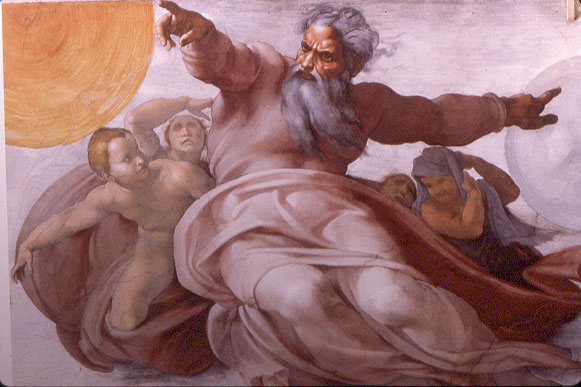
When John McDonough describes Earl Hines’s late twenties band in terms of “thin saxophone voicings and an arthritic two-beat, banjo-tuba rhythm section that trapped soloists (Hines included) in a vocabulary of quarter notes” before its “breakthrough” incorporation of string bass in 1932, McDonough evaluates his subject according to a standard that had not yet been established in its own context. According to this analytical model, early jazz is only worthwhile according to its resemblance to what we recognize in the present day. It’s the equivalent of criticizing Michelangelo’s works because of their religious emphasis and suggesting that he should have done more protest art.
This model overlooks the fact that early jazz musicians were, in Kuhn’s words, not “working upon the same set of fixed problems [i.e. musical concepts] and in the same set of fixed canons” as contemporary jazz musicians. Tubas and three-part sax sections may or may not have been economic or acoustic compromises in their own time. Yet rather than understanding what the early Hines band made possible with those supposed compromises, this critical position tries to locate the point at which the band started to get it “right” by present standards. If this model were applied to discussions of the modern piano’s place in European classical music or pre- versus post-electrically amplified guitar, it would generate a very sleek but one-sided picture of the topic.
Hearing Inside Bubbles
If this type of analysis were limited to jazz critics and textbook writers, it might seem like an academic problem. Yet Kuhn also hints at what musicians play—or don’t play—and what audiences get to hear. Musicians learning on the job and those enrolled in professional music schools draw on a shared set of musical practices and role models. The jazz student “joins men who learned the bases of their field from the same concrete models.” That’s why there are certain expectations for what a gigging jazz musician is expected to do on a bandstand. Yet “subsequent practice will seldom evoke overt disagreement over fundamentals.”
Young jazz players still diligently practice Bird heads and “Giant Steps,” and many explore R&B, hip-hop, world and other genres. Yet the ones practicing tailgate trombone or Coleman Hawkins’s “Stampede” solo are fewer and far between. How much exposure do students at The New School receive to Jelly Roll Morton or Fud Livingston’s works? How many Berklee students play in ensembles for ragtime, classic blues, New Orleans collective improvisation, Chicago style, hot dance or any of the other prewar, so-called “Dixieland” idioms? The “decade-defined periods” and “logical, flowing developmental narrative” that Kenneth E. Prouty critiques in his “Towards Jazz’s ‘Official’ History: The Debates And Discourses Of Jazz History’s ‘Textbooks’” allow a neat package that leaves out a lot of nuance.
 Kuhn even offers some comments about scientists’ work that sound uncannily like many criticisms leveled at contemporary jazz:
No longer will his researches [read one’s own pick of “improvisations, compositions” or “gigs”] be …addressed…to anyone who might be interested in the subject matter of this field. Instead…addressed only to professional colleagues, the men whose knowledge of a shared paradigm can be assumed and who prove to be the only ones able to read the papers [read “hear all of the notes, understand the harmonic sophistication or complex meters”].
The phrase “music for musicians” can seem like a cliché in jazz discussions, but it’s hard to ignore given the specific background and training needed to perform many types of contemporary jazz. Kuhn describes how a scientific diagram can seem like a jumble of lines to a layperson even as a scientist sees a perfectly clear elucidation of some familiar principle. “Only after a number of such transformations of vision does the student become an inhabitant of the scientist’s world, seeing what the scientist sees and responding as the scientist does.” In jazz, how much of the music’s physics should a listener have to study to recognize it as music?
Whether he intended to or not, Kuhn offers an alternative that might serve music historians, studentsm and listeners well. Instead of the accretion model that merely discards older paradigms, Kuhn praises historians who evaluate paradigms within their own framework and understand the needs that those concepts were responding to:
Rather than seeking the permanent contributions of an older science to our present vantage, they attempt to display the historical integrity of that science in its own time. They ask, for example, not about the relation of Galileo’s views to those of modern science, but rather about the relationship between his views and those of his group, i.e. his teachers, contemporaries, and immediate successors…they insist upon studying the opinions of that group and other similar ones from the viewpoint-usually very different from that of modern science-that gives those opinions the maximum internal coherence…
Musical analogs to this approach are easy to imagine, but returning to the earlier example of improvisation, its reduced role in many pieces of earlier jazz may now seem like shortchanging the soloist. Eight-bar hot solos in the midst of countless dance band records cause many listeners to imagine frustrated musicians wishing for more room and to wonder what their idols might have sounded like if they were “really” allowed to perform. The idea that improvisation was an ingredient rather than the substance of jazz at that time and that jazz musicians found value in written parts as well as ad-libbed won’t change contemporary tastes, but it might shift understanding. The question stops being whether Phil Napoleon or Buster Bailey could do what Louis Armstrong or Charlie Parker did, but whether they ever thought to do it or even wanted to.
Assuming that, as Kuhn does, “earlier generations pursued their own problems with their own instruments and own canons,” in other words, treating the past like an end rather than a step, history can seem like its own unique bundle of possibilities. Surprisingly, it begins to resemble Kuhn’s description of a post-revolutionary viewpoint, where one is “transported to another planet where familiar objects are seen in a different light and are joined by unfamiliar ones as well.” Drug companies or rocket scientists might not want to conduct research using past theories, but Kuhn’s approach could be incredibly rewarding for open-minded jazz lovers.
For one last game of wordplay, see Kuhn’s characterization of Robert Boyle:
He was a leader of a scientific revolution that, by changing the relation of “element” to chemical manipulation and chemical theory, transformed the notion into a tool quite different from it had been before and transformed both chemistry and the chemist’s word…”
Try changing “Boyle” to “Armstrong,” “element” to “improvisation,” “scientific” to “musical” and anything related to chemistry with a term related to jazz. Perhaps a silly exercise but one that yields an accurate statement. Unlike science, in jazz there is no need to choose between pre- and post-Armstrong, Parker, Coltrane, Davis, Payton, Iyer, etc. paradigms. You can’t get anything “wrong” in the sense of turning a chemical into a poison rather than a medicine or something literally blowing up. It really is just music.

