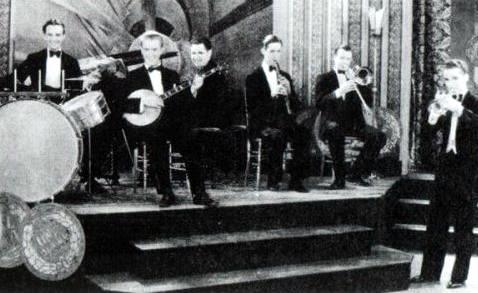
Swing, blues and a completely fresh improvisation at every performance: three common (for some essential) descriptors of “jazz” that were only beginning to take root at the height of Phil Napoleon’s career. Sounds from New Orleans and the Midwest territories were not as widespread when Napoleon was blowing trumpet for the Original Memphis Five. Louis Armstrong’ rhythmic and solo innovations were still to come, and jazz remained a collective experience with strong influences from ragtime. Yet even beyond his musical and historical surroundings, Napoleon always had other priorities.
Those priorities included a brilliant yet inviting tone, given to clipped articulation and rhythmically tense phrasing. That tone usually supported a powerful, balanced lead, but could also supply spare, neatly organized “hot” patterns. “How Come You Do Me Like You Do” features Napoleon’s direct ensemble lead as well as his witty muted obbligato behind Jimmy Lytell’s clarinet:
Richard M. Sudhalter explained, “The Memphis Five appear to have ‘routined’ their arrangements in advance and in detail…A routine on one number doesn’t change from take to take.” This stick-with-what-works ethic makes sense the more one hears (and feels) Napoleon’s overriding concern for balance and blend. If Napoleon knows exactly what he’s going to play next on “He May Be Your Man,” and if the rhythm is more sway than swing, he still conveys spontaneity alongside restraint. He even adds subtle sardonic color to Lem Fowler’s naughty little tune [just follow the arrow to listen]:
The chamber intimacy of these recordings combined with Napoleon’s clean, resilient sound betrays his background as a classically trained player. Even at his most unbuttoned, for example on a later date with Miff Mole, his “Dixieland” sound is perfectly centered, and he executes a tortuous muted passage (in tight harmony with Mole’s trombone!) neatly and convincingly:
Throughout his career, Napoleon never completely absorbed the loose rhythms and bluesy rhetoric of Louis Armstrong, or the coaxing warmth and harmonic palette of Bix Beiderbecke. It’s probably one reason why Napoleon has had a modest presence in most “jazz” histories. Here he is leading a group of other Jazz Age stars, instantly recognizable and dependable as always. Napoleon remained his own man, something even Armstrong and Beiderbecke could have related to:
Nicholas Payton Hates the Word “Jazz” Applied to His Music, and So Did Paul Whiteman
Trumpeter/bandleader/composer Nicholas Payton lit a cyber bonfire recently when he judged “jazz” to be a narrow, outdated, and even racist term. With so many artists, jazz journalists, “jazz” defenders, label haters and twit heads out there weighing in, I’m going to avoid discussing whether Payton is “Right” or “Wrong.” He has inspired plenty of thoughts and feelings though, and that’s vastly more important than any value judgments that will come out of this debate.
Most of the discussion hinges upon one very specific word (but given Payton’s commentary on race in America, it’s become just part of the argument). Payton insists that he is “…not dissing an art form. [He is] dissing the name [emphasis mine], Jazz.” Criticizing “jazz” (but not jazz) is a fascinating proposition since this blog spends so much time reconsidering a lot of music that is denied “jazz”/jazz’s street cred. Many historians and critics don’t know what to call the music of the early Fletcher Henderson band, Red Nichols’ various ensembles, forgotten twenties dance orchestras and musicians such as Buster Bailey, Don Murray and Adrian Rollini. Letting them all into the proud family tree of “jazz” has proven tricky.
Sorry Red, Hugues Panassie Says You Can’t Be Filed Under “Jazz”
Yet the people who enjoy and care about vintage jazz and early American pop have been eager to extend a branch to their heroes. For many people (excluding Payton, of course) “jazz” denotes something perennially hip, music requiring flawless technique and a unique voice. It has a rich history, yet it continuously evolves. It’s also a proudly American invention, fed from the blues, rhythmic nuances and vocal inflections that could only have appeared in this country with its complex, often troubling cultural and ethnic history (I’ll leave it up to Payton and his interlocutors to discuss where those elements came from and how they define the music).
Adrian Rollini’s Bass Sax Has Found Equal Difficulty Getting Through Doorways and Jazz History Books
Best of all, “jazz” gets played in swank nightclubs, fancy concert halls and prestigious college campuses. “Jazz” is a passionate, sincere and intelligent “art form,” a much more impressive name than “old pop,” “syncopated concert music” or other sobriquets given to piles of 78rpm explorations. “Jazz” is respectable, and it’s cool. It’s no wonder fans want their favorites to get on the tree, even on some obscure branch that never bore fruit.
Yet here’s Nicholas Payton, asserting that “jazz” itself is a rotten root! According to him, “jazz” died in 1959, and it’s way too limited and self-conscious to be considered “cool” anymore. Payton also describes the word as an external imposition on the actual music and its voices (who Payton has always expressed vast admiration for, in both words and discography). Based on Payton’s description, “jazz” doesn’t even seem like it’s worth the fight.
Maybe giving up that fight is what all that old music needs.
Payton’s politics and occasionally confrontational tone aside, what if all us trad fans, moldy figs and hep cats of latter day swing took his suggestion to heart? What if we simply stopped using the word “jazz?”
Aside from making it much harder to organize our record collections, it might excuse a lot of music we love from taking a stylistic blood test. Couldn’t we do without yet another debate on whether Bix Beiderbecke and Benny Goodman are “jazz?” Wouldn’t Gunther Schuller’s verdicts about which bands are not “jazz” seem much less damning? And whatever it is that Fletcher Henderson, Duke Ellington and so many original New Orleans musicians were doing before they “learned how to swing” might even be respected on its own musical terms, not just some stepping stone to the title of “jazz” bestowed by critics and scholars.
If I’m hijacking Nicholas Payton’s ideas for other ends than he assumed, it demonstrates how powerful those ideas are, but also how simple they turn out to be. Not to deflate the scope of Payton’s ideas, and the anger and attacks of his critics notwithstanding, all he is doing is criticizing a word; he’s protesting a label. He’s not even the first artist to do so. As he points out, Duke Ellington and Miles Davis, not to mention Charlie Parker and Eddie Condon among many others, have expressed varying degrees of reticence about “jazz” and other labels. Judging from Payton’s commentators, he won’t be the last to get the word out about putting “jazz” out to pasture.
Speaking of which, maybe the pop of yester-century can stay just as exciting and intelligent without having the title “jazz.” Maybe “jazz” needs to be as open about its past as it does its future. Or maybe “jazz” is simply as limited as Payton describes. Words are as powerless or as powerful as we make them. Nicholas Payton merely points out how powerful we have made one word.
And if he’s reading this he may or may not appreciate my posting a ten year old clip, but good music has no expiration date here. Here’s Nicholas Payton scorching “Tiger Rag” with ample ‘postmodern’ swagger:
The Bix Beiderbecke Memorial Jazz Festival honors the brilliant, short-lived cornetist with four days of music, memorabilia, lectures and more music in Beiderbecke’s hometown of Davenport, IA. Fans have posted a lot of great footage from this year’s festival online, but clips from the “battle” between Vince Giordano and Josh Duffee’s bands capture something truly special from an already unique gathering.
This double bill was inspired by a legendary battle of the bands on October 13, 1926, between Fletcher Henderson’s “home team” at New York’s Roseland Ballroom, and Jean Goldkette’s Detroit-based orchestra. Contemporary musicians knew this was a gladiatorial occurrence, with Goldkette’s group of “tight assed white boys” and “hicks from the sticks” soundly whooping the venerated Henderson orchestra.
At Bix Bash on August 6, 2011, Vince Giordano’s New York based Nighthawks were the guests in town to play the Henderson book, with Duffee’s group on home turf in the Midwest playing the Goldkette charts. Just hearing these arrangements live and liberated from the constraints of twenties recordings techniques is an event. While it shouldn’t matter how old the charts are, in the age of disposable pop stars and last year’s songs making it onto the oldies station, their age makes this performance all the more miraculous.
Aside from the geographic reversal and the more playful nature of this “battle,” as soon as the Nighthawks light into “St. Louis Shuffle,” it’s obvious that the Roseland throw down is a source of inspiration, rather than recreation:
Giordano is a powerhouse player and erudite musician who illuminates gaps on record with historical knowledge and attention to period detail that are second to none. Yet the tone, imagination and drive of the Nighthawks are entirely sui generis. The Nighthawks also forego their usual practice of playing solos from original recordings; the soloists here are creating in the moment.
Recording techniques in the twenties prevent us from knowing what Kaiser Marshall’s full drum kit sounded like. Arnie Kinsella’s rolling snares on “Shanghai Shuffle” are no doubt historically informed, but more importantly they just get this band moving:
Josh Duffee’s band spends more time with the original solos on record, yet none of his guys or gals (another important difference with the original battle) sacrifice their voice. Jazz, “Jazz,” or “jass” has always been about making even a single note all one’s own. It can be as subtle as the saxophonist playing Frankie Trumbauer’s original lines a touch more staccato, or the band accenting sections that were just an afterthought on the original recording of “Proud of a Baby Like You”:
On “Tiger Rag,” there is no recorded legacy to admire or compare. Goldkette’s arrangement was never recorded (or at least never survived the judgment of a conservative A&R man). The notes on the page are just that, aching for interpretation. Duffee and his band respond with a double-barreled reading, with the leader’s splashing cymbals prominent behind roaring trombone, (sadly inaudible) banjo, and a mirthful chase between cornet and saxophone:
Scroll ahead to 5:35 for Duffee’s “Tiger Rag”
Musicians from the twenties recorded “Tiger Rag” and scores of contrafacts based off of its chord changes. Duffee and his sidemen could have easily resorted to reusing these solos (though they do interpolate Jimmy Hartwell’s jittery clarinet chorus from Beiderbecke’s recording with the Wolverines). Without hearing every single cover of “Tiger Rag” from the period, the Duffee band simply sound like they’re improvising. Even if they’re not, that sense of spontaneity and wild abandon is the whole point.
People don’t cross miles or decades for slavish imitation. Just ask the generations of listeners in the audience or across the Internet, or Bixophile Flemming Thorbye, who travelled from his native Denmark to shoot this footage. All four bands on stage, Henderson, Goldkette, Giordano and Duffee, own this music as a communal experience. Things like time, distance or death don’t stop artists from talking.
Special thanks to Flemming Thorbye and “Jazzman Joe” for posting these clips and so much other wonderful jazz on their YouTube channels.
Song titles such “Oh You Lulu Belle,” “I Found A Round About Way To Heaven” or “There’s A Cradle In Caroline” don’t exactly scream “excitement” from the back of Vintage Music Productions’ CD of the Broadway Bellhops (a similarly vanilla sounding name). Even the double entendres of “Don’t Take That Black Bottom Away” or “Tonight’s My Night With Baby” evidence commercial dates, rather than spontaneous, artist-motivated jazz. Yet after picking this disc up on a recent pilgrimage to J&R, I was still eager to fly home and discover what might pop out from underneath all this corn. The cover’s promise of “Bix Beiderbecke, Red Nichols, Miff Mole and More” kept me on the edge of my seat, track listings aside.
Early jazz collectors accept the fact that their heroes were more likely to record popular fare, often with well-rehearsed dance bands, than to cut loose in the studio over “Tiger Rag,” “Royal Garden Blues” or other jazz warhorses. We keep coming back for what those heroes accomplish with (or in spite of) the songs or bands.
For example, both the title and forgettable melody of “There Ain’t No Land Like Dixieland” portend an innocuous listening experience. Thank goodness for Joe Venuti’s violin making a hot, bluesy mockery of the tune! His between the beat phrasing makes the jerky interlude and bellowing vocalist that follow almost bearable, until they completely fade from memory next to Beiderbecke’s lyrical solo. He squeezes and spikes the tune with unique melodic and harmonic nuances, while never completely throwing the tune away. By contrast, saxophonist Frankie Trumbauer chooses abstraction rather than augmentation, paring the melody down to the bare essentials, making a ballet out of this square dance.
Venuti, Beiderbecke, Trumbauer and even journeyman trombonist Bill Rank put the arrangement and singer on “Dixieland” miles beside the point. It’s similarly worth putting up with the unimaginative score of “I Ain’t That Kind of Baby” to hear Red Nichols turns on the snark with some sarcastic scoops and bends, or sit through the plodding rhythm of “Don’t Take That Black Bottom Away” to hear the horns emerge with a tight, witty passage (not unlike the concertino soloists emerging from the orchestra in a concerto grosso).
Red Nichols & His Orchestra, 1933
Of course recordings such as “Collette” are pure market fodder. It’s a shame that such a pretty title receives a squeezebox melody and vertical arrangement (while apparently getting recorded underwater with a frog vocalist’s imitation of Mario Lanza); on the other hand, perhaps the musicians ate a good lunch with that session’s paycheck.
Early jazz lovers are also used to bumping into pure, dated banality. Yet even just a few bars of Beiderbecke’s spirit overcoming the collective, or Joe Tarto’s tuba pushing the beat, makes those encounters worthwhile. Diamonds aren’t valuable because they fall from the sky or get plucked out of flowerbeds; they’re mined, and coal often makes them seem more brilliant.
 Swing, blues and a completely fresh improvisation at every performance: three common (for some essential) descriptors of “jazz” that were only beginning to take root at the height of Phil Napoleon’s career. Sounds from New Orleans and the Midwest territories were not as widespread when Napoleon was blowing trumpet for the Original Memphis Five. Louis Armstrong’ rhythmic and solo innovations were still to come, and jazz remained a collective experience with strong influences from ragtime. Yet even beyond his musical and historical surroundings, Napoleon always had other priorities.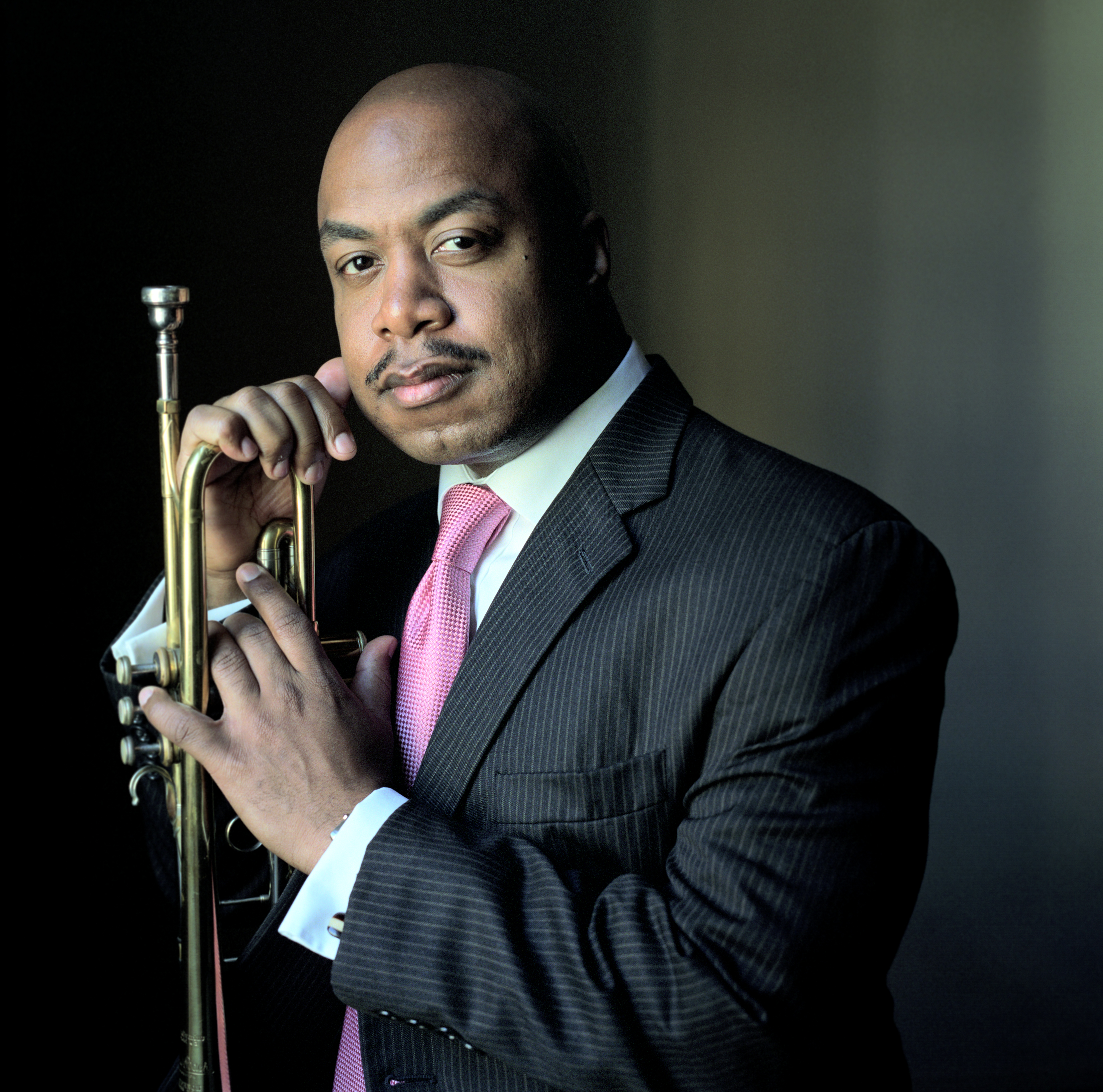


 The Pop of Yestercentury