Tag Archives: Benny Goodman

Random Thoughts On The Sax Section

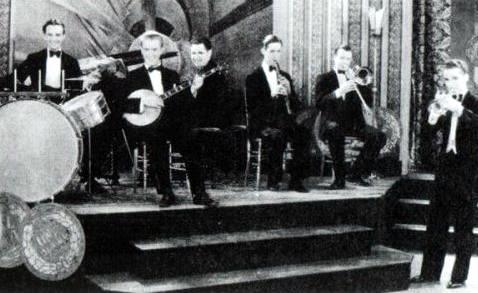
VincentLopezSaxSection1926VerticalIn trying to describe what makes Bennie Moten’s saxophone section so wonderfully different from any other in the continuum, I started to think about what jazz listeners have come to expect from the entity known as a “saxophone section.” The following began as an introduction for the Moten posts, went in its own direction and then turned into some random thoughts on this very important part of the jazz orchestra. The reader may be able to extract some larger point, or at the very least enjoy the music and photos.

jazz-consortium-bandleaderblogdotcomPaul Whiteman called the saxophone section the string section of a big band. There’s more to his comparison than plush harmonies and fast scales. Just as the string section of a classical orchestra identifies the group as another link in a particular musical tradition, while distinguishing the best orchestras as unique members of that particular musical community, so does the saxophone section of a jazz big band. That’s not to diminish the distinct sound of a particular brass or rhythm section. Yet what instrument signifies “classical” like the violin, or “jazz” like the saxophone?
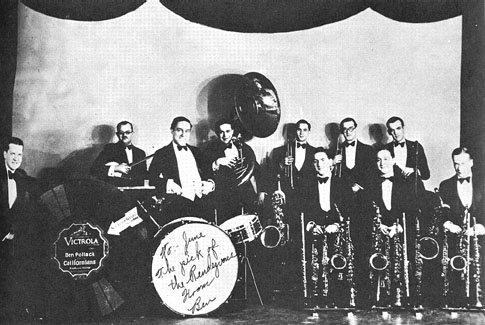
http://archive.org/details/BenPollack-91-100Think of Benny Goodman’s well-drilled but warm foursome under Hymie Schertzer’s transparent lead, or Earle Warren’s searing alto atop the twin tenors of Lester Young and Herschel Evans, with Jack Washington anchoring it all on baritone. Duke Ellington’s saxophone sections patched together various reeds in different combinations yet remained instantly recognizable despite, or because of, their versatility. Whiteman wasn’t just commenting on notes in a score or crafting good copy: how much does a single note from this instrumental part reveal about the musical whole?

Walter Thomas, Andrew Brown Arville Harris, Eddie Barefield in 1934The modern saxophone section lives and thrives by concerted blend and drive as well as the power of its soloists. Woody Herman’s “four brothers” section is best known for solos by Stan Getz, Zoot Sims, Herbie Steward, and Serge Chaloff, but their famous titular number shows how well they work(ed) together as well as individually. The best sax sections are their own band within a band. There’s enough differentiation of register and timbre between the two to three instruments that comprise the section to create a self-contained ensemble. At the same time, solid improvised solos splintering out of the unit are a given. Several “Meets the Sax Section” albums illustrate the idea, as well as how powerful that idea has remained for listeners.

Vanguard Jazz Orchestra c/o nj.comThe swing era may not have introduced the concept of a saxophone section (which was already de rigueur for dance bands by the twenties), but it did codify a certain conception of it. From the big, rich sound of Count Basie’s new testament saxes, through the Thad Jones-Mel Lewis band grooving under Jerome Richardson’s greasy soprano, to the thick, ultra-precise reeds directed by Bob Mintzer and other contemporary players, there’s a clear expectation of what a saxophone section should “do,” which still allows individual texture and growth.

Mingus Big Band JazzTimesUnlike the classical string section, where individual tone is incidental to the “ideal tone” taught and striven for in conservatories, the ideal tone in a jazz band is the musician’s tone. Individual timbres may balance one another but never disappear into the mix. Every metaphor has its limits…
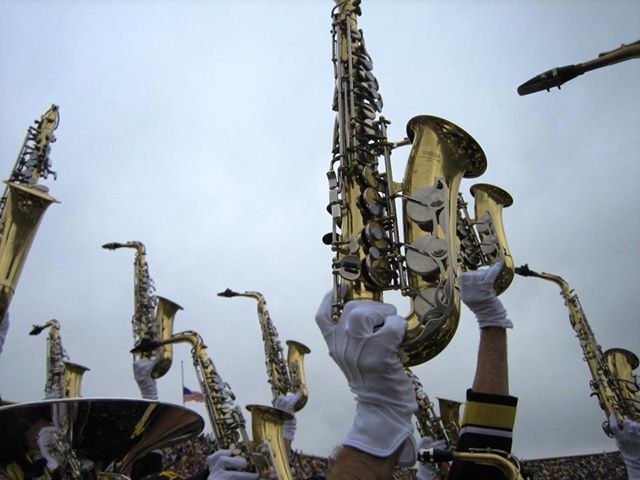
Thomas County Central High School Saxophone Section

Tagged , , , , , , , , , , , , , , , , , , , , , , , , , , , ,

Beauty, Rhythm and Paychecks with Ben Pollack’s Boys

Here’s a case for all the popular music that jazz musicians had to record just to make ends meet during the prewar era.

The following session includes some of the best players in New York at that time, regulars in Ben Pollack‘s band and performing here in one of the many studio groups organized by impresario Irving Mills. Young Benny Goodman sticks to reading alto saxophone parts, and Jack Teagarden’s trombone is barely audible, yet it’s not just commercial dross:

Scholars and purists will probably fast-forward to Jimmy McPartland’s cornet solo. Some might even mention criminally underrated saxophonist Larry Binyon. Yet McPartland is as rich, penetrating and warm on straight lead as he is in his Beiderbecke-inspired improvisation.  A typical prewar sax section (two altos and a tenor) has a bright, buttery sound that’s a refreshing change of pace from more modern reeds. Even the unknown, operetta-inspired crooner sounds more than bearable with Dick McPartland’s banjo, Harry Goodman’s tuba and Ray Bauduc‘s drums guarding the beat behind him.

Despite the simple tune and small space given to improvisation, a group of talented musicians makes it beautiful as well as rhythmic.  There’s no way to tell if heroes are happy, but these professionals certainly sound good.

Tagged , , , , , , , , , , , , , , , , , ,

Clarinetist Lester Young

Responding to an earlier post about the loss of Joe Muranyi, a commenter recalled Muranyi trying out his own “metal Conn clarinet, a horn a more self-conscious player would recoil from.”  The open-minded Muranyi in turn “played the living heck out of it.”  Apparently for some musicians, the instrument is always a catalyst and never a compromise.  For Lester Young, a metal clarinet was a choice, maybe even a necessity.

Gunther Schuller notes that when Young put down his tenor, the influential jazz artist and part-time tragic hero “played a cheap metal clarinet that he picked up somewhere on his travels, but whose tone he loved dearly.”  Young kept the signature lightness of his sax on the smaller horn, and at fast tempos would use the same triplets and encircling, never inundating lines for the “little stories” he had to tell.  At slower tempos and in more reflective settings, he’d come up with a story like the one in “Blues with Helen,” from the 1939 Spirituals to Swing concert organized by impresario John Hammond [starting at 1:47 in the clip below]:

Hammond introduces Young as “switching over to clarinet,” but there is no sense of “switch” or adaptation here: Young is simply playing clarinet.  The tone could be called “thin,” but more like a leaf rather than paper, something likely to tear given the right force but able to support storms and sunlight on its own terms.  Sustained notes let the audience absorb that sound while always unfolding a narrative, never halting the action or merely displaying beauty for the sake of itself.  If anything is different, it’s that the clarinet’s brighter, at times childlike timbre brings out the fragility of the clarinetist.

Benny Goodman mentions purchasing a Selmer (wood) clarinet for Young while in Europe, an instrument fewer clarinetists might recoil from.  While it’s endearing to imagine Young gratefully accepting the gift and sticking to his cheap little instrument, the truth is that it doesn’t matter what kind of clarinet Lester Young played, only that he played clarinet.

Tagged , , , , , , , , , , , , , , , , , ,

Jazz In The Family

Working for my father’s home improvement business during high school taught me to appreciate the hard work supporting our household.  It also paid for the music in my earphones, which were usually on full blast as I swept floors and fetched coffee.  I listened to a lot of music working the family business, but one job still stands out because it introduced me to Eddie Durham.

I had just purchased the Count Basie collection playing on my Walkman as I stuffed insulation.  After a string of bright, up-tempo tunes including “One O’Clock Jump,” “John’s Idea,” “Out the Window” and “Swinging the Blues,” a moodier, minor key piece materialized.  It had the same loose Basie beat and spare but powerful ensemble figures.  Buck Clayton‘s tart-toned muted trumpet was also recognizable.  Yet the chromatic drawl I heard gave the band a more structured, darker persona.  All the dusty, scratched cassette case in my pocket told me was that the song was called “Topsy.”  A lot of curiosity and a little research told me that this was Eddie Durham:

I also realized that I already knew of Eddie Durham without knowing who Eddie Durham was.  He had arranged all those other numbers for the Basie band, and his name would keep coming up in the recordings of Jimmie Lunceford, Artie Shaw, Glenn Miller and Jan Savitt.  Later on I would discover his electric guitar on the Kansas City Six sides he made with other Basie sidemen for the Commodore label.  Eventually I would have to stop counting the number of times I uttered, “Wow, that was Eddie Durham on trombone!”  My career responsibilities and knowledge of jazz have changed since first hearing “Topsy,” but more importantly I keep encountering Eddie Durham.  It’s just a matter of knowing where to look.

Durham doesn’t receive the same attention as contemporary arrangers like Don Redman, Sy Oliver or the legendary Duke Ellington.  His trombone playing never spurred any followers the way Jack Teagarden did, and Charlie Christian’s pioneering work has overshadowed Durham’s electric guitar as well as his influence on the young Christian.  Eddie Durham is easy to appreciate but not always easy to find.

Durham’s children, daughter Marsha “Topsy” Durham and son Eric, are helping to change that.  Their website honors their father with fastidious, loving care. From Durham’s beginnings as a musical director for a wild West shows to his post-retirement comeback, visitors can read about Durham’s life, peruse photos, find links to other sources and even enjoy a concise, informative documentary featuring Dan Morgenstern, Loren Schoenberg and Vince Giordano.  It’s an incredible resource and tribute to their father’s legacy.  In the meantime we’ll all look forward to hearing more of Eddie Durham.

Look, learn and best of all listen at DurhamJazz.com!

Tagged , , , , , , , , , , , , , , , , , , , , , , , , , , , , , , , , , , , , , , , , , , , , , ,

Nic in Fight: Jazz, “Jazz” and Nicholas Payton as the Savior of Archaic Pop

Nicholas Payton Hates the Word “Jazz” Applied to His Music, and So Did Paul Whiteman

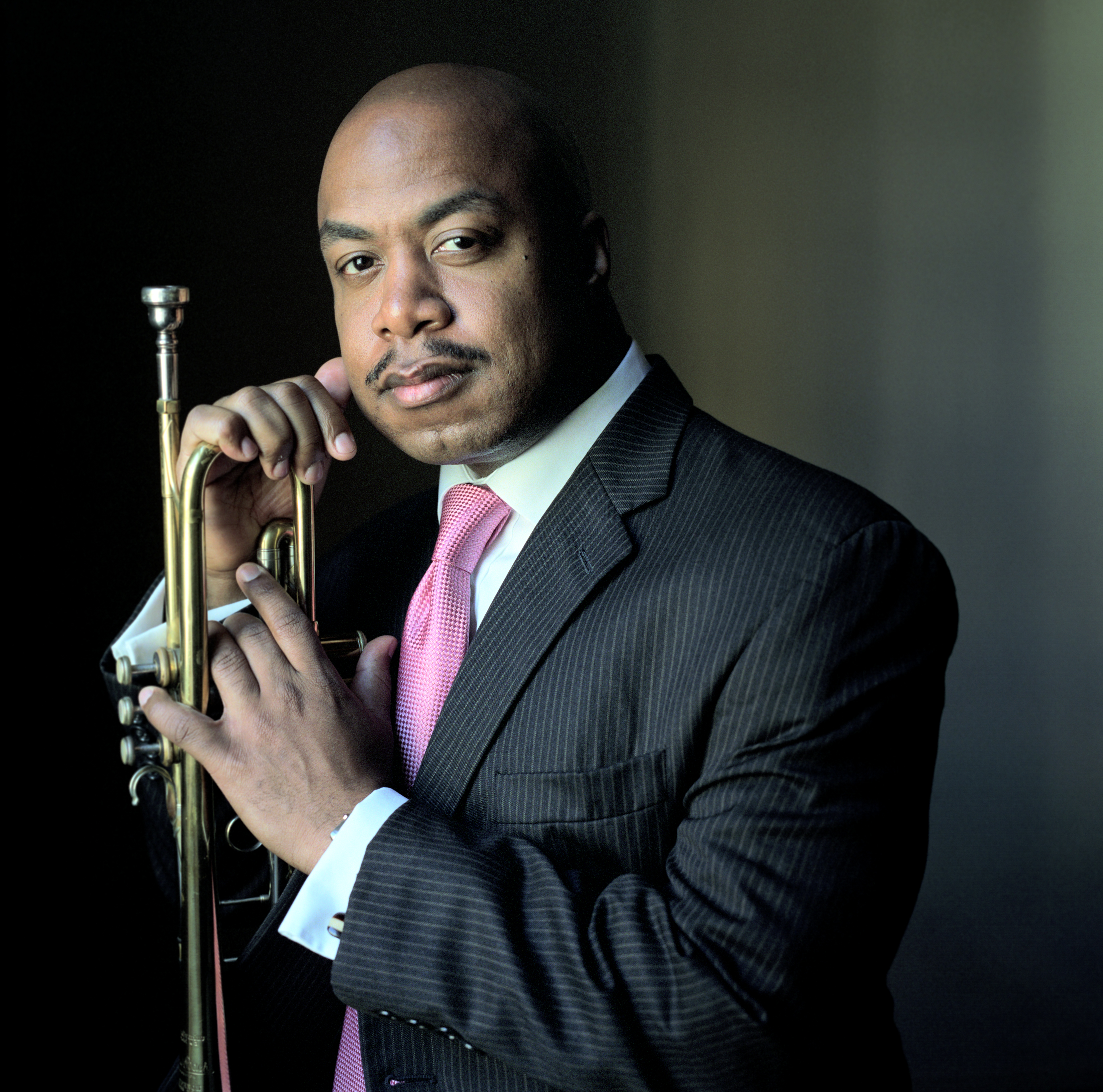
Trumpeter/bandleader/composer Nicholas Payton lit a cyber bonfire recently when he judged “jazz” to be a narrow, outdated, and even racist term.  With so many artists, jazz journalists, “jazz” defenders, label haters and twit heads out there weighing in, I’m going to avoid discussing whether Payton is “Right” or “Wrong.”  He has inspired plenty of thoughts and feelings though, and that’s vastly more important than any value judgments that will come out of this debate.

Most of the discussion hinges upon one very specific word (but given Payton’s commentary on race in America, it’s become just part of the argument).  Payton insists that he is “…not dissing an art form.  [He is] dissing the name [emphasis mine], Jazz.”  Criticizing “jazz” (but not jazz) is a fascinating proposition since this blog spends so much time reconsidering a lot of music that is denied “jazz”/jazz’s street cred.  Many historians and critics don’t know what to call the music of the early Fletcher Henderson band, Red Nichols’ various ensembles, forgotten twenties dance orchestras and musicians such as Buster Bailey, Don Murray and Adrian Rollini.  Letting them all into the proud family tree of “jazz” has proven tricky.

Sorry Red, Hugues Panassie Says You Can’t Be Filed Under “Jazz”

Yet the people who enjoy and care about vintage jazz and early American pop have been eager to extend a branch to their heroes.  For many people (excluding Payton, of course) “jazz” denotes something perennially hip, music requiring flawless technique and a unique voice.  It has a rich history, yet it continuously evolves.  It’s also a proudly American invention, fed from the blues, rhythmic nuances and vocal inflections that could only have appeared in this country with its complex, often troubling cultural and ethnic history (I’ll leave it up to Payton and his interlocutors to discuss where those elements came from and how they define the music).

Adrian Rollini’s Bass Sax Has Found Equal Difficulty Getting Through Doorways and Jazz History Books

Best of all, “jazz” gets played in swank nightclubs, fancy concert halls and prestigious college campuses.  “Jazz” is a passionate, sincere and intelligent “art form,” a much more impressive name than “old pop,” “syncopated concert music” or other sobriquets given to piles of 78rpm explorations.  “Jazz” is respectable, and it’s cool.  It’s no wonder fans want their favorites to get on the tree, even on some obscure branch that never bore fruit.

Yet here’s Nicholas Payton, asserting that “jazz” itself is a rotten root!  According to him, “jazz” died in 1959, and it’s way too limited and self-conscious to be considered “cool” anymore.  Payton also describes the word as an external imposition on the actual music and its voices (who Payton has always expressed vast admiration for, in both words and discography).  Based on Payton’s description, “jazz” doesn’t even seem like it’s worth the fight.

Maybe giving up that fight is what all that old music needs.

Payton’s politics and occasionally confrontational tone aside, what if all us trad fans, moldy figs and hep cats of latter day swing took his suggestion to heart?  What if we simply stopped using the word “jazz?”

Aside from making it much harder to organize our record collections, it might excuse a lot of music we love from taking a stylistic blood test.  Couldn’t we do without yet another debate on whether Bix Beiderbecke and Benny Goodman are “jazz?”  Wouldn’t Gunther Schuller’s verdicts about which bands are not “jazz” seem much less damning?  And whatever it is that Fletcher Henderson, Duke Ellington and so many original New Orleans musicians were doing before they “learned how to swing” might even be respected on its own musical terms, not just some stepping stone to the title of “jazz” bestowed by critics and scholars.

If I’m hijacking Nicholas Payton’s ideas for other ends than he assumed, it demonstrates how powerful those ideas are, but also how simple they turn out to be.  Not to deflate the scope of Payton’s ideas, and the anger and attacks of his critics notwithstanding, all he is doing is criticizing a word; he’s protesting a label.  He’s not even the first artist to do so.  As he points out, Duke Ellington and Miles Davis, not to mention Charlie Parker and Eddie Condon among many others, have expressed varying degrees of reticence about “jazz” and other labels.  Judging from Payton’s commentators, he won’t be the last to get the word out about putting “jazz” out to pasture.

Speaking of which, maybe the pop of yester-century can stay just as exciting and intelligent without having the title “jazz.”  Maybe “jazz” needs to be as open about its past as it does its future.  Or maybe “jazz” is simply as limited as Payton describes.  Words are as powerless or as powerful as we make them.  Nicholas Payton merely points out how powerful we have made one word.

And if he’s reading this he may or may not appreciate my posting a ten year old clip, but good music has no expiration date here.  Here’s Nicholas Payton scorching “Tiger Rag” with ample ‘postmodern’ swagger:

Tagged , , , , , , , , , , , , , , ,