Tag Archives: arrangement

78 Slumming: Yerkes’s Musical Bellhops

From Jacobs’ Band Monthly retrieved online.

Plenty of 78s in my meager collection look like they double as charcuterie boards. In most cases, better-sounding copies are a Google search away. But one recent purchase seemed rare and unique enough to share (even with a crack providing polyrhythmic thumps). I’ve posted this record elsewhere but wanted to share it here for others to listen.

This is a disc on the short-lived Yerkes Dance Records label. Mark Berresford describes this venture—and its “utter and complete failure”—in his liner notes to Rivermont’s disc of Yerkes’s Happy Six recordings.

In a nutshell, bandleader, percussionist, and impresario Harry Yerkes had enjoyed a long, productive recording career before deciding to wax his own path. He severed his ties to major labels, purchased the former Black Swan/Olympic pressing plant in Long Island City, and bought Cameo’s old studio at 102 West 38th Street. Contrary to some sources, Yerkes did not draw from or record at Grey Gull.

Despite a cheaper price and backing by instrument manufacturer Buescher, the scarcity of surviving discs indicates that people weren’t buying what Yerkes had to sell. He just couldn’t compete with the companies he left behind. One internet commenter points out that Yerkes also sold his discs by mail at a time when listeners could try out records in stores.

Yerkes didn’t even have a chance to make much product. Allan Sutton’s Olympic discography lists just eight sides. Based on contemporary reports, Sutton estimates that Yerkes cut these records in November 1923 and released them the following January. They feature familiar band names from other labels: Yerkes’s Famous Flotilla Orchestra, Yerkes’s Happy Six, Yerkes’s Jazzarimba Band, and, on this record, Yerkes’s Musical Bellhops:

This is a hot small band that plays with plenty of improvisation and rhythmic drive as well as ear-catching touches when it comes to arrangement. “Dancin’ Dan” starts with breaks before the trombone and trumpet weave around the saxophone’s lead on the verse—a reversal of the trumpet’s traditional role. The trumpet leads the following chorus while the piano lays down both accompaniment and ornament. A more traditional trumpet/clarinet/trombone front line follows the “excited” vocal—except for the clarinet dipping into a low register obbligato under the trumpet.

Simple but effective changes in timbre, register, and balance are also all over the flip side (and, unfortunately, so is another crack). “Sittin’ in a Corner’ substitutes a sax for the clarinet in the opening verse. For the chorus, sax and trumpet split the tune in a dialog. Another “earnest” vocal reveals a faint violin otherwise lost in the mix. The next chorus is arranged for trumpet, clarinet, and trombone like so many bands of the time—except the clarinetist’s volume and the record’s acoustic make it seem more like a clarinet solo.

To my ears, this doesn’t sound accidental. This clarinetist plays a typical descant role just fine elsewhere. The band is opting for a clarinet solo with brass background. The side closes with a preaching muted trumpet around the sax’s lead (presumably the clarinetist after switching to sax during the trumpet break). In a performance that barely lasts three minutes, this band explores several textures.

It’s too bad we don’t know who they are. Johnson and Shirley’s American Dance Bands on Record and Film mentions that Variety reported the six-man Yerkes Musical Bellhops playing in Bradford, New Jersey, in January 1924. Yet neither Variety nor ABDRF include any personnel. I can’t find these tracks in ABDRF or jazz discographies by Rust and Lord. One knowledgeable commenter points out that pioneering trombonist Tom Brown played with Yerkes and suggests that the group might include Brown’s fellow New Orleanians, like clarinetist Sidney Arodin.

Whoever these musicians are, I hope you enjoy the music. As always, further information and suggestions are welcome!

Tagged , ,

Three Minutes And Plenty Of Style

Here is a fantastic arrangement from the twenties that is not the work of a Challis, an Ellington or a Redman, or even a Hill or Nesbitt:

Discographies show leader/vocalist Arnold Johnson and pianist (as well as legend of the American songbook) Harold Arlen as this band’s arrangers. Lord’s discography and Jazz Oracle list Johnson as the arranger for this particular track.

The chart is not just jam-packed with instrumental and vocal textures; it’s also a stylistic smorgasbord. The introduction spotlights Pete Pumiglio’s clarinet riffing over suspenseful guitar chords, combining hot jazz and modern harmonies for some brief chamber music. Then a lush dance band baritone sax intones the chorus with prominent syncopated brass hits and violin runs mocking society bands: sweet, hot and comic all at once, and barely halfway into the record.

Another modernistic verse and transition feature the unique touch of soprano sax lead, followed by an alto sax break turning into a sax section break in barely two bars. Then, it’s right into a sax soli that is both lyrical and rhythmic, the type of written part sounding like an improvising soloist that would become synonymous with jazz arrangement. Wildman Jack Purvis even gets the hot trumpet bridge.

It all happens before the record even gets to the vocal. That vocal might now be dismissed as “dated,” but that would just be temporal prejudice. Stylistic preferences aside, the choir harmonies move against the lead in some interesting ways and the words are always clear. “Move” is the key word here: thanks to the vocal arrangement and the lightly stepping, resonant guitar and tuba underneath, there is no slackening of momentum. A short shout chorus followed by a vocal coda closes out this odyssey through the sonic landscape of twenties popular music.

arnoldjohnson

Photo from Pinterest user Gus Ynzenga.

Tagged , , , ,

“Walk” Is An Understatement: Three Takes of the Charlie Johnson Band

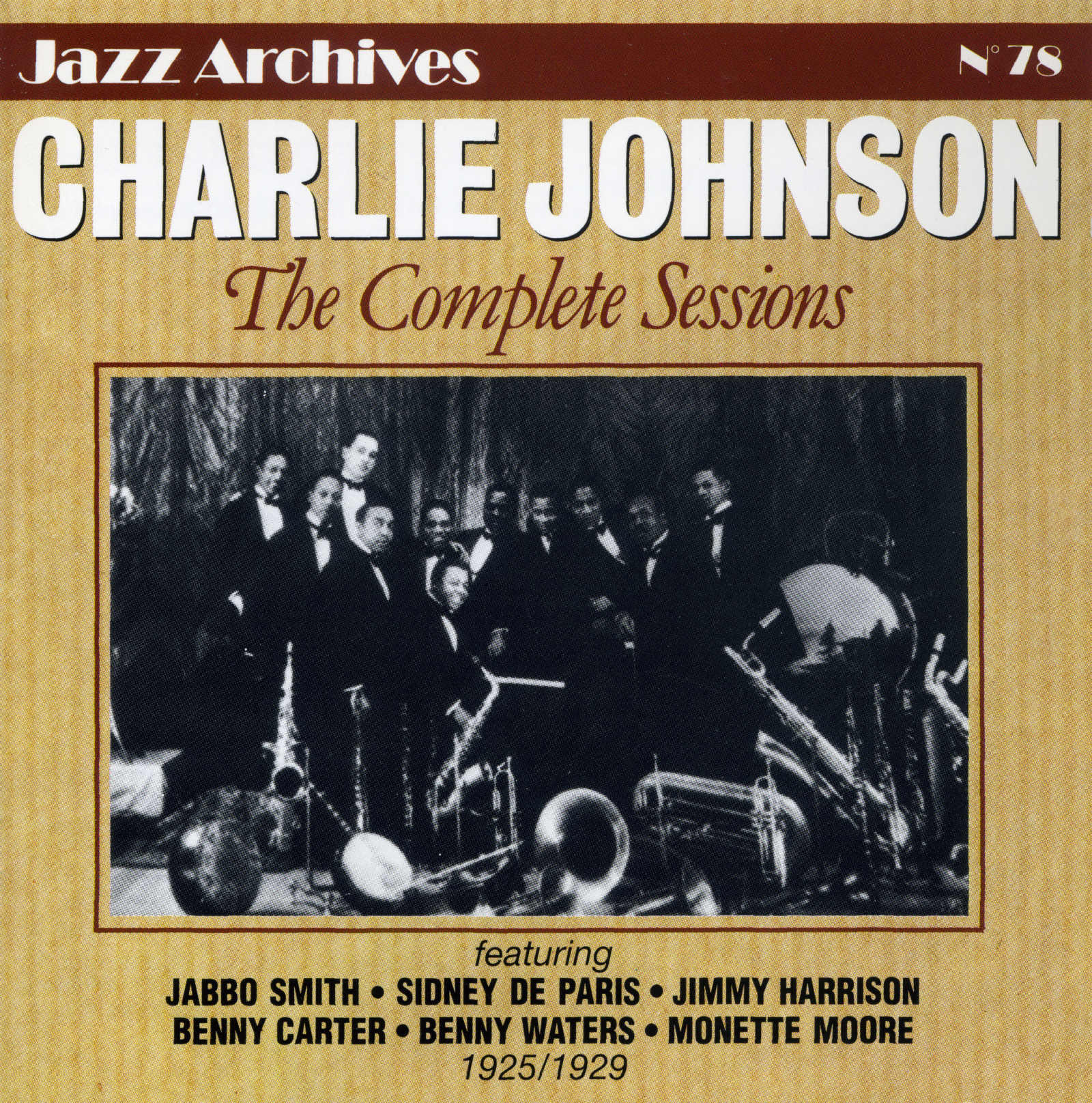
A good friend’s accolades for George Stafford recently got me re-listening to the drummer’s concise but powerful discography. Stafford’s steady beat and way with “the pocket,” even on his earliest sides from the mid-twenties, make him an unsung hero of jazz percussion. His temple blocks and snare ease back and then detonate on “I’m Gonna’ Stomp Mr. Henry Lee” with an Eddie Condon group featuring Jack Teagarden’s vocals and trombone. Yet it’s Stafford’s drums on “Walk That Thing” with the Charlie Johnson band that remain a personal favorite.

The Band's Homebase

The Band’s Homebase

The Johnson band was one of the hottest bands of the twenties as well as a close rival of the early Duke Ellington orchestra. Arranger/tenor saxophonist Benny Waters glows with pride remembering his time with Johnson. Like Stafford, the band also left a tantalizingly short recorded legacy. Through some miracle of fate they were able to record three (!) takes of one of their hottest numbers, a Johnson composition arranged by Waters and deceptively titled “Walk That Thing.” They could have used a lot of other verbs to more accurately describe how they move on this tune.

Take one pumps from the start. The leader hammers away on piano, followed by a snappy introduction for the full band and Waters showing his clear appreciation for Coleman Hawkins:

Waters’ arrangement leaves plenty of room for soloists but includes the type of passages that jazz historians love to point out as some teleological predictor of the swing era. Riffs behind soloists, divided brass and reeds and a shouting final chorus would become standard issue for big bands a few years later. At the same time the rhythm team of banjoist Bobby Johnson, tuba player Cyrus St. Clair and Stafford are more rooted in twenties stomp than thirties swing. Waters also includes unique touches like a tenor sax lead alternating with the more standard alto in the first chorus, and space for wild collective improvisation. It’s easy to dismiss the use of brief solos for the rhythm section as “original for its time.” History lessons aside, they cook.  Check out take two:

Waters chops and chugs on the second take like he’s using a cement saxophone. It’s not Basie-style swing but it does have its own percussive energy. Trumpeter Sidney de Paris strolls through his stop-time choruses, varying his solos from take to take but loving the same double-time figure. Jimmy Harrison’s hard, blistering trombone punches through in solo and ensemble, and his breaks resemble smartass quips from the kid at the back of the classroom. This take is effective if a little weighty. By the third and final take, the band is really into it:

That’s more like it! Even if someone hit a clam on the opening chord, a slightly quicker tempo and Waters pushing at the rhythm start things off strong. All of the soloists loosen up their phrases, dancing between the beats but with an intensity that defines the best twenties jazz. The rhythm section spots include a lot of the same notes and phrases, but the band’s energy elevates the familiar to a whole new experience.

The hits keep coming through all of these takes: Johnson cutting through to comp simply but spurringly; Stafford, a true band drummer who fills in between phrases, varies his patterns and plays with balance rather than volume; Ben Whitted (perhaps best known as the clarinetist Fats Waller saw fit to replace for his thirties small group sessions) wailing over and against the ensemble. Through an even stranger twist of fate, none of these takes appear on YouTube or apparently anywhere else on the web. Consider this a public service. What are friends for?

The Source Material.

The Source Material.

Tagged , , , , , , , , , , , , , , , , , , , , , , , , ,