Jazz On Record Turns 96…

…maybe it does, maybe it doesn’t.  Just for today, let’s put aside the debates, give the Original Dixieland Jass Band credit for getting jazz its earliest attention and enjoy their music in all its raucous, onomatopoeic glory:

Happy birthday to recorded jazz (whenever that may be).

www.thejazzman.com.au

Tagged , , , , ,

Tom Smith Remembers Donald Byrd

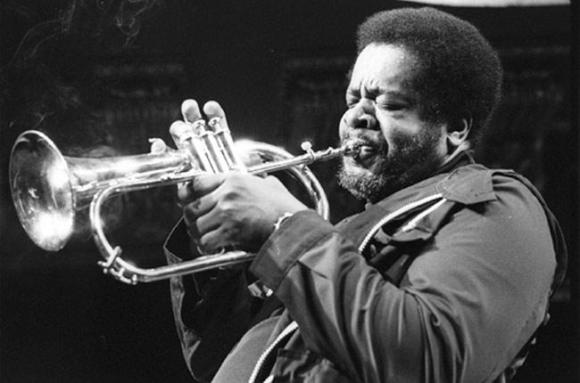
Donald Byrd (Photo Michael Ochs Archive/Getty Images via Billboard)

Donald Byrd (Photo Michael Ochs Archive/Getty Images via Billboard)

The jazz world and music community as a whole were saddened by the passing of Dr. Donald Byrd earlier this month. The trumpeter was known as a mainstay of Blue Note’s classic period and for his work in various soul, funk and pop settings. The numerous obituaries and remembrances for Byrd also speak to his role as an influential educator and mentor to many artists.

One of those mentees, Tom Smith, currently serves as professor and Director of Jazz Studies at Ningbo University in China. In the following piece (appearing in English courtesy of the Romanian website Jazz Compass with photos and hyperlinks added by me), Smith provides a heartfelt recollection of Byrd, especially his prescience regarding the global scope of jazz. Smith’s position as an international jazz educator with his “boots on the ground” as well as someone close to Byrd is worthy of several reprints and translations.

Recalling a Mentor
by Tom Smith

This past week, a great and influential jazz musician named “Donald Byrd” died. He was one of my earliest mentors, and as colorful a man as ever known. I first met him in early 1981 following a terrible six-month road gig that began optimistically in Minneapolis before self-destructing in Central Mexico. I was twenty-three and already burned out, having decided a homebound strategy until alternate plans could be discerned and evaluated. Then by accident, I learned of Byrd’s professorship at North Carolina Central [University], and signed on for an ambiguous term of graduate studies, never planning to finish…only to hang and play with the great trumpeter whenever possible.

I met Byrd (the name we all called him) face to face when two days into enrollment, he bolted into my practice room. “I haven’t heard a straight horn tone since I got here,” he said. Then he introduced himself, followed by my cursory, albeit “hamfisted while trying to be cool.” admirer confession. I think that really threw him off, considering a recent unexplained anonymity, perplexing in light of numerous albums and freshly recalled affiliation with a Blackbyrds’ hit called “Walking in Rhythm.” Then, he took me into his office and we jammed for an hour or so. After that I had Byrd pretty much to myself for any amount of arbitrary brain picking, and with him being the big talker that he was, such exercises were a joy to pursue.

I think Byrd saw me as this enigma who was looking for something he couldn’t find. So, within that context, he tolerated our daily banter, while some of my favorite interims included solitary evenings where he passed along Art Blakey gossip, while sharing Frank Zappa recordings. He was especially fond of the Lather set, and outright stole my copy of Studio Tan.

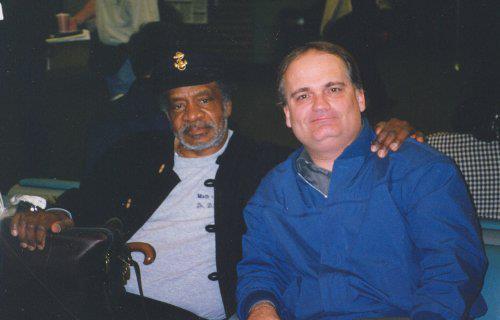
Donald Byrd and Tom Smith (photo courtesy of Tom Smith)

Donald Byrd and Tom Smith (photo courtesy of Tom Smith)

Still, those discussions were never entirely perfect. Truth be known, we fought tooth and nail about any number of things, especially jazz. Back then, I was an unforgiving hard core, which made it easy to sense my loathing for his newer “get some money” approach. Subsequently, he made it abundantly clear that lectures from overreaching kids were beneath his pay grade. In the process, I acquired numerous scars, including his being mad enough to withdraw a prior touring commitment. But that’s the way Byrd was: hot, cold, turn on a dime.

Not surprisingly, he was up on current affairs, while intrigued with Eastern Bloc nations. Byrd was in fact the first musician to tell me about the Romanian curiosity for jazz. He even periodically enlisted diplomats to get him there, an aspiration never realized but always on his radar. His intuitive knowledge of Iron Curtain behaviors always fascinated, and as the years passed those places assumed a greater importance for me. Sometimes, Byrd’s assumptions were downright prophetic.

“Watch what happens when Russia leaves,” he said. “Those people will hook up with the money countries and musicians will get their asses out of there.”
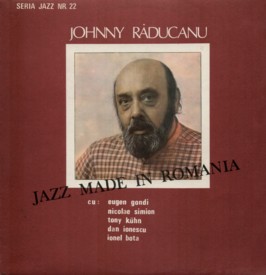
http://romanianjazz.blogspot.com/2008/07/johnny-rducanu-jazz-made-in-romania.html“But what then, Byrd?” I asked. “That’s going to be up to them,” he replied. “But we’ll be deep in the middle of it, you can bet on that. Then later, musicians will return to their cultures, because it’s just too hard to walk away from what you are.” Then he looked me square in the eye and shared another deeply furrowed insight. “The older ones will stay right there, insisting on taking money they will think belonged to them as young men,” a tacit attack on my misdirected indictment of his more human inclinations. After all, I could never in a million years imagine how many different ways Black musicians were robbed in Byrd’s time, any more than I could understand the plight of older Romanians deprived of their own paydays. Still, while most of the past decade unfolded, I diligently fought for contrasting outcomes, while knowing in my heart of hearts that Donald Byrd’s all-encompassing prophecy had indeed come to fruition.

Back in 2004, I wrote a magazine article describing the future exodus of Romanian artists. I called it, “The Reverse Migration,” and was astonished by how some reacted, as if to imply I had manifested something Romanians already knew to be gospel. But nine years ago, with [European Union] ascension just over the horizon, popular wisdom asserted that most, if not all Romanian artists would scurry across Western borders faster than you could say “Ceausescu.” It was further assumed that Romania’s small but massively talented family of jazz musicians would be among those most severely affected, if not irreparably damaged. Romania and Bucharest in particular, was blessed with a good quantity of talented jazz performers, who undertook numerous important tasks, including participation in any number of worthwhile endeavors, while simultaneously creating most of the jazz everyone there took for granted.

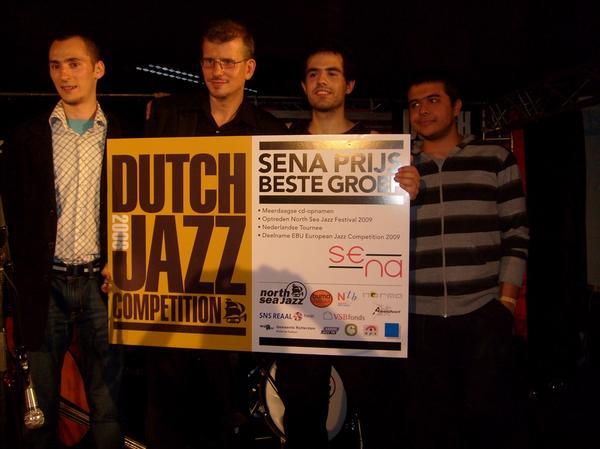
Alex Simu with Srdjan Ivanovic's Quartet at the Dutch Jazz Competition, 2008 (Photo courtesy of Simu)

Alex Simu with Srdjan Ivanovic’s Quartet at the Dutch Jazz Competition, 2008 (Photo courtesy of Alex Simu)

As a Fulbright Professor at the National University of Music, I had the good fortune of teaching Romania’s best young jazz musicians. But in all candor, I was largely disappointed by their diminished sense of artistic nationalism, and perennially dismayed by their unhealthy infatuation for Western art. “Just show us how to play in your manner,” they would say. “If you want to help, show us how to secure Western residencies,” the hook to any admission that preceded a desire to leave Romania. Then just as Byrd had predicted, a Western migration of young jazz musicians did indeed occur. It started six months into my first residency when a young saxophonist named Alex Simu bolted for Holland. After that, the floodgates opened, and few of my class remained, leaving a handful of persistent loyalists, young works in progress, and a core group of older musicians in their stead, with some harboring no desire but to see all work go into their pockets alone.

Due to unforeseen circumstances, the yang of my theory was proved unfounded. Westerners never came to take those jobs abandoned by emigration, seeing as how there were none to take. A great 2008 recession had seen to that.

Following a brief return in 2009, I was very concerned about Bucharest while harboring guarded optimism for the rest of the country. Timisoara was certainly a bright spot, the result of a failed but legacy successful jazz school that rejuvenated Western Romania’s happily optimistic Banat infrastructure. Then Cluj profited from six months with Dave Brubeck’s oldest son Darius, while old Fulbright loyalist Rick Condit reinforced his efforts in Iasi. Soon, I realized that what remained could most likely survive as a non-stagnant national product, deemphasizing Bucharest to some extent, but in turn holding dear old legacies for as long as required, before Romania’s young prodigal sons (now older, more seasoned men) returned single file through Bucharest’s Arc De Triumph. Still, this essential reshuffling could not deter those enterprising and creative souls, both young and old (such as Mihai Iordache, Raul Kusak, Irina Sarbu, Michael Acker, etc.) who have kept Bucharest’s jazz scene alive despite any number of obstacles.

In the meantime, the Alex Simus, Lucian Bans, Catalin Mileas, Petru Popas, Arthur Baloghs and George Dumitrius continue to expand their expat influences, while growing exponentially as savvy, marketable performers, all quality driven and ethical to a fault.

I have also taken note of the current inclination for Romanians to sing jazz in their own language, not because they have to, but because they want to. This in turn seems intertwined with those Romanian folk melodies I currently hear in the motivic expressions of young performers: musicians who see their jazz not so much in terms of Americanized cloning, but as the melding of a relevant and viable name brand that says “We’re from this place and this is our way.” It’s also nice to hear them share how they’re interested in what Alex, Catalin, Lucian or George are doing even if it isn’t in Romania, because like all great diasporas, jazz culture can most certainly achieve highest enlightenment when on the move.

http://www.theage.com.au/national/obituaries/hard-bop-luminary-who-weathered-crossover-controversy-and-inspired-leading-hiphop-artists-20130214-2eg8u.htmlWhile reflecting on the teachings of my old mentor Donald Byrd, I can easily imagine his looking down just long enough to shake his head and say “I told you so.”

[Jazz Compass Editor’s Note] From 2002 to 2008, Tom Smith was a six-time Fulbright Professor of Jazz in Bucharest and Timisoara. He is currently a Professor of Music at Ningbo University, in Zhejiang Province, China.

Tagged , , , , , , , , , , , , , , , , , , , , , , , , , , , , , , , , , , , , , , ,

Bom Chicka Wah Wah, Circa 1727

Even if The Borgias, The Tudors, and Boardwalk Empire have established that people have been getting “nasty” for centuries, Vivaldi’s “Sol Da Te” from Orlando Furiso had to have steamed a few collars and corsets in eighteenth century Venice.

The aria takes place right after the knight Ruggiero swallows a love potion and instantly fixates on the sorceress Alcina. Nothing too racy there, so Vivaldi leaves it up to the music to scandalize his audience:

It’s that dark minor key, combined with a tense, palpitating but teasingly slow momentum, that makes the listener feel like they’re in on a very intimate moment. Flute over muted strings now seems like something for the Easy Listening set, but here the flute alternates between Vivaldi’s seductive melody and rapid bursts, as thought it’s having trouble concentrating. The Italian poetry, sung in cultivated operatic tones (originally written for a castrato!), only seems more “romantic” than “sexy;” don’t treat these lyrics too literally:

Sol da te, mio dolce amore,
Questo core
Avra pace, avra conforto.
Le tue vaghe luci belle
Son le stelle,
Onde amor mi guida in porto.

(In loose English translation:
Only from you, my sweet love,
Does this heart
Find peace and comfort.
The beautiful lights of your eyes,
Are the stars,
That guides my love to harbor.)

It’s beautiful, but it doesn’t take a dirty twenty-first century mind to read into all that talk about “comfort, peace” and being “guided” into the harbor. Barry White wasn’t the first one to use “love” as a code word for a variety of feelings and actions. There’s a long history of guys using the right lines and music to get what they want. So get to happy hour tonight, keep the music of a dead Italian priest in mind and have a happy Valentine’s Day!

Give Him a Powdered Wig and a Harpsichord, Then He Can Sit In

Get That Man a Powdered Wig and Electric Harpsichord!

Tagged , , , , , , , , ,

Fess Williams and Eric Dolphy Playing Their Saxophones

What do Fess Williams and Eric Dolphy have in common? For starters, both played for none other than Charles Mingus.

Dolphy, prophet of the jazz avant-garde, deeply admired by Mingus and considered one of the most galvanizing forces to ever play with the bassist/composer, and Williams, an incredibly popular bandleader during the twenties, now mostly remembered for his gas pipe clarinet that even diehard collectors merely tolerate: both appeared at Mingus’ (in)famous Town Hall Concert of 1962. Dolphy performed most of the show, but Mingus brought Williams, a.k.a. his Uncle Stanley, onstage briefly to show off some circular breathing.

Even more important than a boss or an uncle, Williams and Dolphy share an ear for the humorous and disturbing, a penchant for making their instruments squeak, honk and pop, throwing in plenty of gangly dissonances and other sounds that most musicians leave behind alongside soft reeds and method books.

Compare Williams’ jagged breaks at the beginning of “Playing My Saxophone”:

with Dolphy’s entrance on his groundbreaking “Out To Lunch”:

and it’s easy to hear that both reedmen simply love sound: the more jarring, the better. It’s fun to imagine Dolphy and Williams backstage at Town Hall, not saying a word but merely trading squawks and fractured themes.

Both Williams and Dolphy also snub their noses at the clean lines and cultivated timbres no doubt enforced at the conservatories they trained in. That makes them both rebels, and jazz loves a good rebel! Yet given Williams’ period of activity and the large audiences he played to, his rejection of classical instruction seems more commercial, and therefore more suspect.  Most jazz histories (when they mention Williams at all) relegate him to “novelty.” Williams was out to make a buck, Dolphy sought to change ears and minds. Dolphy is the artist, Williams was merely an entertainer.

It’s a neat little distinction, but it speaks more to cultural interpretation than sheer sound. Dolphy does often display much quicker fingers and harmonic variety, yet that’s as much of a stylistic choice as Williams’ reliance on a percussive sound and bumpy phrases.  Even when the sounds aren’t so similar, both players’ sense of taking the listener to a different, even weirder place is clear. Simply listening to Dolphy’s blurting, burry bass clarinet on “Booker’s Waltz”:

back-to-back with Williams’ ambling slap tongue solo on “Dixie Stomp” illustrates two musicians who liked to play in every sense of that word:

Yet even assuming that Williams was just goofing off to make a buck and that Dolphy was in fact the serious artist pushing boundaries, all the listener is left with is the sound. The sound is out there to be heard.  Trying asking it about its motives, or whether it’s a novelty or work of art.

While We're At It, Rahsaan Roland Kirk (Left) Stole Wilbur Sweatman's Act!

While We’re At It, Rahsaan Roland Kirk (Right) Stole Wilbur Sweatman’s Act!

Tagged , , , , , , , , , , , , , , , , ,

The Problem with “We Had ‘Good’ Music”

Here’s a stirring presentation by playwright and performer Will Power from the National Guild for Community Arts Education’s 2011 conference.  Power touches on several important topics in education and culture, and the entire clip is worth watching, but his comments on romanticizing the past (starting at about 8:20 into this clip) are especially insightful:

Jazz and classical lovers are perhaps more likely to hear, state or at the very least assume that their music focuses on “more important things” than what’s on the radio today.  Yet as Mr. Power reminds us (and this blog tries to show), it wasn’t all Mozart and Louis Armstrong back in the day. Keep listening.

If you’d like to hear more from Will Power and you’re in Boston, stop by Berklee City Music’s Unsung Heroes Breakfast on January 19.  More information can be found here.

Tagged , , , , , ,

A Contender for John Coltrane’s Favorite Tuba Player

Released in 1963, and even with its rhythm section and harmonic sensibility soaked in modern jazz, John Coltrane’s album Ballads may be one of the best examples of the prewar jazz aesthetic:

Coltrane’s reliance on pure tone and straightforward lyricism speaks to a style of jazz that can paraphrase melodies (even fast ones) as well as deconstruct them.  The “tune proper” isn’t thrown out after the first chorus, but partnered with throughout the performance, channeled to make something recognizable but personal.

Do yourself a favor and click on the following hyperlinks.  You will not be sorry.

Coltrane, the symbol of boundary-pushing, technically advanced modern jazz, keeps company with Louis Armstrong and Bix Beiderbecke, as well as Phil Napoleon, Manny Klein and Joe Smith. Trumpeters were usually the ones playing lead in the twenties, thirties and forties, but saxophonist Frank Trumbauer and his way of paring down a melody to its essentials also comes to mind, as does trombonist Kid Ory.  Don Murray, with a gorgeously burry sound and distinct personality on baritone sax, also understood that the expressive potential of straight melody.  Even Guy Lombardo’s sax section, hated by jazz scholars and beloved by Armstrong for their clean melody statements, might have appreciated Coltrane’s approach on Ballads.

Coltrane’s glistening tenor sax even brings to mind tuba player Clinton Walker on “Frankie and Johnny” with King Oliver:

Walker provides a rich lead for the leader’s punctuations, and while he doesn’t get all of his notes out, its an admirable solo.  Modern ears may hear it as a novelty, but the tone, the attempt to control the sound and the refusal to harrumph reveal a player giving both the melody and his own voice their due.  Differences of chops, decades and octaves notwithstanding, these musicians were all about the tune.

Wonder If He Ever Heard Alberto Socarras?

Wonder If He Listened to Alberto Socarras?

Tagged , , , , , , , , , , , , , , , , , , , , , , , , , , ,

How (Not) To Listen To Early Jazz

All About Jazz has been very supportive of prewar jazz coverage, so I’m thrilled to see my column published on their website. In its latest article, I discuss some of the perceptions that make the music’s early sounds seem so removed from the jazz continuum. Hopefully it’ll inspire some open ears, and maybe a few stuffed stockings.

I also hope you’ll give it a read, right here. Thank you!

Tagged , , , , , , , , , , , , , , , , , , , , , , , , , , , , , , , , ,

Harry Carney’s Admiration Society

Regular readers of Aesthetic, Not Anesthetic know that Buster Bailey and Don Murray are two of its favorite subjects. Both were simply amazing clarinetists, gifted with a bright tone and a beautifully busy style, equally effective in solos, breaks and high-flying lines behind ensembles.  Benny Goodman admired the two of them and even shared a teacher with Buster Bailey.  Unfortunately Bailey and Murray remain amazingly underrated footnotes in jazz history.

Now, for some further critical vindication, here’s Ellington sax section anchor and baritone sax pioneer Harry Carney‘s thoughts on these musicians:

My first influences [on clarinet] were Buster Bailey with Fletcher Henderson, and Don Murray with Jean Goldkette. As a brash kid, I always wanted to play faster than anyone on clarinet, and both Buster and Don Murray were great technicians. Too bad I didn’t stick with them! Perhaps I’d be a clarinetist today. Buster has always sounded to me like a perfect man for the symphony, and on those up-tempo numbers with Fletcher Henderson he always showed what a well-schooled musician he was.

Apparently this blog keeps some sharp company in terms of taste!  More importantly, Carney reminds all of us to stay positive and to not be bashful with sincere compliments.  One never knows who, or when, someone is listening.

Harry Carney.  What an Ear!

Harry Carney

Tagged , , , , , , , , , ,

Jazz Compositions and Contrafacts

The jazz contrafact, i.e a new composition written on the chord changes of another tune, is usually associated with post-war jazz. Beboppers superimposed dense riffs and angular melodies over popular standards, often adding then “unusual” chord substitutions that would eventually become standard operating vocabulary for jazz as we know it.

In the same spirit, Adrian Rollini and his colleagues in British bandleader Fred Elizalde’s ensemble get to recomposing “Nobody’s Sweetheart” right from the start of their record, and several years before Tadd Dameron and Miles Davis put pen to stave:

The opening ensemble turns Billy Meyers and Elmer Schoebel’s melody (already all too familiar even by 1929) into a completely new theme constructed out of tight, cool gestures. The format of horns stating a “head” followed by round-robin solos would become formula for the boppers, but at a time when collective improvisation and cross-sectional writing were just as prominent, it has the air of one refreshing approach among many. The solos present a variety of instrumental personalities, starting with Chelsea Quealey abstracting the melody further and ending with Rollini’s bass saxophone muscular and lithe all at once.

The execution is slightly different, but the principle has always remained the same.  Contrafacts have been around at least since some band got sick of playing “Tiger Rag” the same way over and over again (but we’ll save that long list for another day).

Tagged , , , , , , , , , , , , , , , , , , , ,

Archaically Unique and Revealingly Outdated: The Joys of Musical Primitivism

This is a continuation of an earlier post, which I hope will encourage further discussion. Comments are welcome, greatly appreciated and humbly requested…

The earliest examples of any musical style, whether it’s hot jazz, Baroque or Bill Haley, live and die by history. The historically-minded listeners comprising classical and jazz audiences readily admit that “early music” got things to where they are now, just like the Model T made the Lamborghini possible. Yet most of them don’t like to drive anything that’s too old. Despite classic music being much easier and cheaper to experience than classic automobiles, it remains just as esoteric, and for many, just as outdated.

Unlike machines (or medicine, the law and late-night comedians), music doesn’t do anything better or worse over time; it just approaches melody, harmony, rhythm, form and other musical considerations differently. For example when it comes to instrumental interplay and tonal organization, Beethoven wrote more intricate chamber works than his predecessors, and Mozart more circumspect operatic works than his contemporaries. Them Austrian boys’ music is “better” for those seeking complexity or dramatic depth.

Boccherini and Paisiello, writing before Beethoven’s innovations and without the blessing or mutation that created Mozart, concern themselves with melody and directness.  Using just the meager notes they know, they still manage to make music:

Boccerhini: Sextet, Op. 23 No. 1 in E flat, 1. Allegro (Ensemble 415):

Paisiello: “Mi Palpita Il Cor” from ‘Il Mondo della Luna’ (Gloria Banditelli):

Similarly, Charlie Parker’s rhythm section handles their job in a very satisfying and very sophisticated, very specific manner:

Parker’s band epitomizes a concept of jazz rhythm that can be traced back to the revolution in swing started by Count Basie’s All-American rhythm section, was developed and deconstructed following the bop era and which has influenced jazz through to the present. The texture is spacious and airy, with accents that both support and pull at a smooth, even and relaxed beat. The musicians also interact with and respond to soloists, varying their patterns to add color.

Parker’s group does light and interactive really well, but what if the listener is looking for something else? They could check out The Missourians for some jazz that’s really different:

Pianist Earl Prince, banjoist Morris White, tuba player Jimmy Smith and drummer Leroy Maxey, like so many pre-swing rhythm sections, take their name very literally: they lay out the chords, bass line and ground rhythm, sticking to a punchy background role. Their goal is to create a stage of rhythm for the ensemble and soloists to play over, rather than an accompaniment that’s interesting in and of itself. Musicians who continue to play and find inspiration in this approach explain that supporting the band is the interesting part; locking into a groove and keeping it going for their partners is how they express themselves. That particular groove is not the smooth swing normally associated with jazz. Instead, it’s intense and earthy, based on a very uneven beat, with a chunky feel that give the listener something to bob their head to (sort of like late twenties funk).

In other words, The Missourians have a unique approach to rhythm, just as unique as the Parker rhythm section, or the Basie rhythm section, or the rhythm sections backing Bix Beiderbecke, Albert Ayler or Vijay Iyer. The Missourians’ approach only seems simple, “outdated” or “corny” when judged against a later standard, the equivalent of driving a Model T and expecting a V12 to kick in.

Tagged , , , , , , , , , , , , , , , , , , , , , , , , , , , , , , , , , ,