The Oxford English Dictionary doesn’t list any antonyms for “founder.” Merriam-Webster lists the closest terms as“disciple, follower, supporter” or even “student.” The opposite of an “originator” is, apparently, a “copycat” or “mimic.” There is no exact word for someone who takes over for the “inaugurator” of a role or institution.
So, what do we call Louis Armstrong? He didn’t just have a “predecessor” in Fletcher Henderson’s band, but effectively replaced one of the founding members of one of the most important bands in jazz history. Elmer Chambers wasn’t the first trumpeter to work for Fletcher Henderson, but he was the first trumpeter in Henderson’s band proper. Chambers was on Fletcher Henderson’s first recordings under Henderson’s name with a recognizable Henderson sound, a band that became incredibly popular before Armstrong’s arrival.
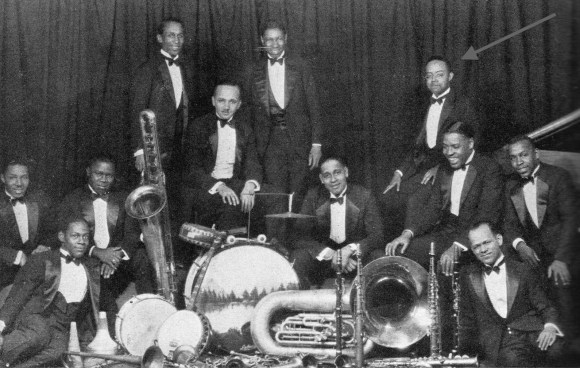
Photo courtesy of oldtimeblues.net
The otherwise beneficent Armstrong berated Chambers’s “nanny-goat sound and ragtime beat” but Henderson knew how to spot talent. Chambers seemed above all to be a lead player, able to confidently read down first trumpet charts, and by virtue of that role, shape the sound of the band. Chambers’s focused, somewhat piercing tone and pinpoint phrasing was likely exactly what was needed to cut through ballrooms and shellac, reading the chart as-is to provide audiences a clean melody and firm beat, and give the band a foundation for its own flights, for example on “Just Hot”:
Chambers’s also gets a solo that is far from the bleating, stiff affair alluded to by Armstrong. On “Ride, Jockey, Ride” with Trixie Smith, Chambers cuts loose, syncopating the lead, inserting some growls and then riffing behind the singer:
The choice of Chambers in a loose small group setting, alongside bona fide jazz players such as Buster Bailey, indicates that his peers likely didn’t see him entirely as a straight player or old-hat. Keeping players such as Chambers in the footnotes of jazz history leads to a sort of perennial history of the avant-garde, a narrative that skips from innovator to innovator while leaving a lot of music out of music history. It’s hard to imagine even modern trumpeters being ashamed of turning out a performance like this one.
“I Don’t Know And I Don’t Care” opens with Chambers on lead with muted obbligato by Howard Scott, now mostly known (if at all) as the poor soul holding the trumpet soloist chair with Henderson immediately before Armstrong’s arrival. Neither player sounds stiff, uncertain or ineffective, demonstrating that “hot” could be a matter of degrees rather than extremes:
Both men were particularly influenced by New York compatriots Johnny Dunn and Tom Morris, incorporating incisive double-time runs and sly wah-wah vocalisms. They seem less extroverted in their playing, easily mistaken for a lack of confidence or swing but perhaps just deliberate restraint meant to fit into the larger big band picture. The placement of notes is crisp, eighth-notes are even (but decidedly not stiff) and tone quality is clear, if not brilliant.
Armstrong’s phrasing and tone would outmode all of these approaches, and his sheer technical prowess as a single improviser would even make these types of semi-improvised duets obsolete. Chambers and Scott became relics, even though neither man could have been that much older than Armstrong.
Armstrong didn’t literally replace Chambers or Scott, but he secured their place in the annals as part of the “pre-Armstrong” Henderson band. The post-Armstrong band became the one referenced in textbooks and lectures. In another one of those fascinating ironies of history, the successor became the legend while the founder marched off into obscurity. Yet Chambers remains the original trumpeter for Fletcher Henderson. It was an important, ultimately thankless job, but he did it quite well, in his own way, and as more than a mere historical curiosity.
“Bugle Call Rag.” It’s right there in the title: military signals getting ragged or swung, something official getting a good destarching by popular culture, the irony of dancing to the sounds of battle. By the time Hal Denman and His Orchestra recorded “Bugle Call Rag,” nine years had passed since the New Orleans Rhythm Kings waxed their tune for the first time but it remained in band books the whole time. It was firmly a jazz number by the time Denman got around to it on record, giving a fresh layer of irony to his band’s para-military colors throughout their performance:
The famous opening break is delivered as a literal bugle call, at first almost seeming like a parody, until the clipped phrasing stays right through to the hot lick before the whole band, and especially the brass, picks it up. The saxophones smooth things out just slightly while the brass soli breaks are straight out of a marching band. So are the clarinet-led reed section and the drummer’s fills.
By comparison, Cab Calloway’s recording of the same arrangement is much looser in terms of rhythm and articulation:
Denman’s band steps while Calloway’s group swaggers. Lammar Wright’s lead trumpet is big and bright, owing more to Louis Armstrong than Herbert L. Clarke. The saxes really sell their phrases with a warmer blend and more pronounced embellishment. From a jazz perspective, the biggest difference may be Calloway’s ample room for soloists. The entire trumpet section has a say, starting with Wright’s lead through Edwin Swayzee’s muted “trickeration” to Reuben Reeves’s high notes. Denman’s trumpet soloist loosens up slightly but holds onto a slight buzz and click. Denman’s tenor saxophonist doesn’t display the same technical facility as Foots Thomas with Calloway, and Arville Harris’s clarinet obbligato with Calloway is far more extroverted than the brief one with Denman. Even Calloway’s spoken interjections add some interesting rhythmic and timbral contrast as well as entertainment.
It is now easy to degrade the Denman band as stiff, archaic, outdated even in its own time, simply ignorant of jazz phrasing or unable to absorb it. Taking the music on its own terms, without resorting to comparisons or hierarchization, Denman’s tight, precise sound makes for an interesting musical experiment. The syncopated lines combined with fairly even (as opposed to uneven, swung) eighth notes make it sound like jazz from a parallel dimension. Jazz and American popular music as a whole have famously drawn upon a number of idioms. At least a few New Orleans musicians would say that the jazz was already familiar with marching and brass bands. The Denman band may have simply had influences in mind other than the Crescent City second line brand of parade.
from THE JAZZ STATE OF INDIANA by Duncan Schiedt
The prevalence, bordering upon insistence, of arranged material over improvisation could have been born of necessity or just a different musical priority. Either way, it lets the Denman band show off a crisp unity of sound that must have spread like a Gatling gun on dance floors. The balances on this Gennett pressing also add transparency to the parts, so that the lead sometimes sound stacked in the middle of the harmonies rather than on top of them. The drummer pounding out percussion rudiments like an ad-libbing drum major is a subversive as well as creative act considering what jazz and dance band drummers were supposed to sound like at the time. This is not Cab Calloway’s “Bugle Call Rag,” nor that of the NORK, Duke Ellington or even Paul Whiteman.
Nearly ninety years later, Cab Calloway’s place in the jazz pantheon is secure. Hal Denman is, at best, a period curiosity, a dance band leader occasionally granted a footnote for trumpeter Jack Purvis’s tenure with his band (years before it even recorded). At first blush, hearing these two records may explain why. In fact, playing Denman and Calloway’s records back-to-back seems like the type of exercise a lecturer might fashion to explain the concept of “swing.” Yet the concept of swing may not explain a particular concept of music. Denman’s band was a popular midwestern territory band in its time, prompting fond recollections even decades later. Did all those Hoosiers, Buckeyes and Corn Huskers never hear the real thing, or were they simply open to several different real things?
Jazz’s social cachet is powerful enough to reincarnate yestercentury’s pop ephemera as today’s history and art. King Oliver thought he was just making dance music but today’s cultural guardians know better. Dancing to “Harlem Air Shaft” is usually an afterthought when Ellington’s composition comes up in academic dissertations.
Purists assume that actual dance music, on the other hand, is meant for oblivion: produced rather than created, intended for undiscriminating mass audiences and containing little-to-no improvisation, they will dig through all that pop pap just to find the jazz, be it a whole record, an eight-bar hot solo or an intriguing chord substitution. For seekers of authenticity, Bunny Berigan’s solo with Fred Rich’s orchestra on a sugary love song must feel like Beef Wellington:
Berigan is, of course, brilliant on his own terms: warm, fulsome tone, phrasing that makes an event out of a Tin Pan Alley tune, just enough variation to make it Berigan’s own and rich, lyrical high notes that would be the envy of even the staunchest modernist. Rich’s band, locked into an arrangement and dainty rhythms, is merely the commercial backdrop one puts up with to get to Berigan’s jazz. Hip listeners know to skip past it.
It might be difficult to make a case for Rich’s orchestra for its jazz content, but a group of twenty or so players not just reading a chart but performing it with good intonation, tight blend and unified phrasing, all with perhaps minimum rehearsal (maybe even sight-reading it) is in itself spectacular. If that ability can be taken for granted, it is a monument to the musicians, not antiquated circumstance.
As for what Rich’s musicians are playing, their simple but beautiful harmonic cushion is what makes Berigan’s flights pop and sweep into grandeur. The tightly muted trumpets leading into Berigan’s vocal add a brief but effective “sweet” contrast to Berigan’s hot opening cadenza and closing solo/coda. Adrian Rollini’s bass saxophone bottoming out the parts is a subtle but powerful touch. For a moment it sounds like someone is doubling bassoon. These are not the justly-celebrated rich, dark colors of an Ellington voicing but a lighter instrumental as well as emotional hue, another approach to musical texture, perhaps not thesis-worthy or even groundbreaking, but novel and imaginative on record. It is not improvised, perhaps not “jazz,” but analyses that stop there leave out a lot of musical content.
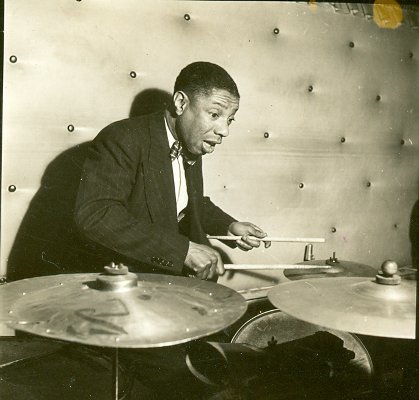
I was all set to write about Kaiser Marshall as yet another ubiquitous presence on jazz recordings from the twenties, one more well-respected musician now left with surprisingly little discussion of his style amidst biographical and discographical minutia. Fletcher Henderson’s drummer, someone occupying such an important historical and musical role, consigned to the annals rather than lauded in the academy and on the web, etc.
It was a fine soapbox but it grew shorter the more I researched Marshall.
Marshall did start his career with Henderson during the dark ages of recorded percussion. Acoustically recorded drummers made due with what audio engineers allowed into the studio and don’t always have the literal recorded presence to generate the same amount of discourse as later, better-recorded percussion. Yet musicologist Jeffrey Magee references Marshall’s spare cymbal hits at length in his book The Uncrowned King Of Swing, not as creative compromises but concise, rhythmic and often witty accents crucial to the arrangement. He singles out “Jiminy Gee” and “Jealous” as two important early examples of Marshall’s contribution to the band:
Decades of scratching my head while reading standard jazz histories, many of which throw a lot of music from history out to forge music history, make books like Magee’s a blessing. It’s not just a case of a credentialed authority validating my own taste (nice as that is), but learning what makes the music distinct from a musical as well as a historical perspective. Whenever a critic, a historian, a scholar or another commentator dismisses a performance out-of-hand, they’re not only leaving something or someone out of the conversation, they’re foreclosing education. How much more is out there for our ears and minds?
Nicholas D. Ball wrote an incredibly detailed musical biography of Marshall in the “Heroes” section of his blog. Ball hears shades of rhythm and timbre that belie the supposedly monochromatic surfaces of 78s. Among several other choice cuts by Marshall with Henderson, Ball highlights “Dicty Blues” from the band’s acoustically recorded days:
He also points out the electrically recorded, ultra modernistic and tortuously orchestrated “Whiteman Stomp”:
“Whiteman Stomp” is usually written off as an over-arranged, pretentious noble failure, so it is vindicating to hear a smart, passionate musician mention it (even in passing) as a serious musical example.
Anyone in front of this lit screen is hereby gently harangued to check out Ball’s post (as well as the dozen or so others devoted to Ball’s other idols). The same goes for Magee’s book, which treats all of the Henderson band’s music and musicians as sincere creative experiences, rather than cherry-picking the recordings that led to the music now canonized as “Jazz” with that capitalized first initial.
Correcting the record, or at least giving it the benefit of the doubt, opens up a lot of new-to-you music as well as hitherto unexplored aspects of the canon. Jazz blogger Michael Steinman takes an example of Marshall playing a bit too loud on “Knockin’ A Jug” as an opportunity to appreciate the drummer behind a full kit:
Steinman singles out Marshall’s sense of time, the variety of his percussive timbres behind different soloists and, above all, the sheer lift and joy of his “simple yet very intense” approach. The reader should check out this post for its appreciation of this performance, well-known to jazz listeners but worth re-appreciating from behind Steinman’s lens. Ditto for his blog‘s loving tribute to hot jazz on record and live from the twenty-first century.
In that same post, and maybe most tellingly, jazz drummer Hal Smith leaves a comment with nothing but praise for Marshall. Mr. Smith, like Mr. Ball, is out there making this music happen, taking Marshall and many other musicians that academia and book publishers don’t have time for quite seriously. It is literally just about the music for its practitioners.
I’ll end this gratefully failed cry of outrage with two of my favorite Marshall sides. First, “St.Louis Shuffle”:
Marshall is a real ensemble drummer who doesn’t draw attention to himself but invites appreciation. His cymbals sound beautiful and pop at just right the moments between and behind the band. His hits are the pinstripes on a designer suit.
Quite literally, lastly there is “Kaiser’s Last Break,” eponymously named by Sidney Bechet after Marshall’s untimely passing:
As if the band knew that opportunities to savor Marshall’s playing were now at a premium, Marshall gets two four-bar solos, syncopated gunshots that proudly march as well as swing, perhaps a callback to Marshall’s formative years.
Thank goodness for Ball, Magee, Steinman and Smith, and so much for my soapbox. Kaiser Marshall sounds better up there anyway.
The above photograph of Kaiser Marshall was found online here.
“Charleston Crazy,” by the Fletcher Henderson band before Louis Armstrong entered its ranks, is the type of performance that would likely be described by later commentators as “choppy” or “cluttered:”
A bass saxophone roars a two-beat bass line under deliciously nasal trumpets, the steady pulse continuously interrupted by exclamations of the Charleston beat as though the band is obsessed or literally “crazy” with the syncopated rhythm. It’s a musical tug-of-war, an ensemble at odds with itself. Even the textures never seem to settle in, fluctuating between smooth saxes, wah-wah trumpet and so many brief breaks. Post-bop hearing aids tell us that the chart is so concerned with ensemble tricks that it never lets the rhythm settle into a steady groove. This music would be unsuited for the soloist, the sine qua non of jazz codified years after this record stopped being pressed, let alone listened to with any regularity.
The subjects and discourses that coalesced into the term “jazz history,” including this recording, are at most little over a century old. Jazz is a baby compared to other historical subjects. Jazz history, however, moves fast. For its purposes, I might as well be looking at cave drawings with The Guggenheim only a block away. According to most jazz histories, Henderson’s band of musically proficient, well-educated, confident, popularly acclaimed and musically well-respected young men were pretty much wasting their time until Armstrong entered the group, first to mocking skepticism, even classist derision, then to awe-filled embrace. There was simply no other way to play, leaving his section mates Howard Scott and Elmer Chambers out-of-date before jazz had even begun its proper history.
Jazz has, of course, changed considerably since this performance was put to shellac in 1923. In addition to introducing the improvising soloist as its centerpiece and in turn completely redefining the scope and possibilities of solo improvisation, jazz has expanded its rhythmic and harmonic vocabulary, created its own melodic language, pushed dissonance to startling boundaries, experimented with meter and form, incorporated myriad influences from a globe’s worth of musical genres and raised standards of musicianship to incredible heights. Henderson’s three-minute number suffers by comparison: its chord changes likely hopelessly bare for generations of musicians nursed on Bird heads, its rhythm clunky and static beside the polyrhythmic careening expected just to get into Berklee.
It is easy to fall into the trap of calling these changes “progress,” but that term implies a destination, an ideal, an eventual completion of some higher goal. A practitioner of music may have some ultimate goal in mind. Maybe they want it to break musical conventions or challenge artistic standards. Perhaps they want their work to change minds, hearts, policies or Billboard charts. Yet while the music may be directed towards goals that go beyond the sound of itself, the sounds themselves can never be made more complete or brought to some conclusion. Otherwise, every single artistic work would need to be experienced as an unanswered question, an endlessly incomplete experiment constantly missing something until the next step. If you’re writing a dissertation or a New York Times column, this may be fine, but imagine if the rest of us had to listen this way?
So I can’t help treating “Charleston Crazy” as an end in itself. Ditto for the pre-Armstrong Henderson band. I keep coming back to this by turns dicty and artfully dirty nonet, with its trumpeters clearly inspired by jazz coelacanth Johnny Dunn in all of their clipped, chattering, squawking and tensely syncopated glory. Ditto the young Coleman Hawkins and his ponderous, jerky arpeggiations. Jazz historians describe the Hawkins from this period as precocious yet in need of a catalyst to become a full-fledged soloist. These records would later on embarrass Hawkins himself, but I always thought that it was unfair of that older player to belittle the work of this young musician, even if they were the same person. Howard Scott has proven more interesting to me as a musical as well as aesthetic subject than Dizzy Gillespie (who would’ve turned 101 this year) and Dixieland chord progressions much more satisfying than most multi-tonal explorations tracing their inspiration back to John Coltrane (a spring chicken at 92). Of course, I try to appreciate everything. In fact, I can’t remember the last time I said I actually did not “like” a piece of music. It is just a matter of what I purchase for my record shelf.
Crypto moldy-figgism? The fig never asked not to be an apple, and none of us are safe from mold. Either way, I suppose I could just ignore all of the discourse, like what I like, pursue what I want, “the music is all that matters,” etc. Except it is hard not to wonder why no one is writing books about that music, why the most well-respected authorities barely go near the stuff, why the things you like seem to fly in the face of the very standards established to define the world they belong to. Am I crazy? Do I have odd or bad taste? Are they the same thing? Also, who wrote the book of taste, and what was in it for them? When the team you’re rooting for never makes the playoffs, even the best of us may start to yell at the referees.
Ear witnesses insist that King Oliver’s Creole Jazz Band had to be heard live to be believed, leaving the thirty-seven extant sides by the band doomed to fall short of historical imagination. Bill Johnson is bass-less, Baby Dodds (more than) makes do with a stripped-down kit and the ensemble balances can sometimes turn frustratingly lopsided. Still, if that’s “all we get,” it could be far worse; the group’s easygoing swing and earthy yet graceful polyphony continue to proselytize for New Orleans jazz. Next to Johnny Dodds’s high-flying clarinet cutting through all of that well-worn shellac, the twin cornets of Oliver and young Louis Armstrong are often the main attraction:
Aside from Oliver wanting the incredible talent of Armstrong in his band, a second cornet allows unison parts, harmonies, counterpoint, trading the lead, call and response, concerted breaks and a range of colors and textures, all within a uniform timbre that opens up subtle gradations of personal tone. Without taking anything away from today’s five-person trumpet sections, Oliver and Armstrong’s miniature brass section attained an ideal balance between arrangement and improvisation, preparation and spontaneity, a unique power and swing that made it famous in its day and beyond.
Creative as well as commercial impulses were bound to inspire others to take something as seemingly simple as two trumpets playing together and make it their own. Armstrong joined the KOCJB in the summer of 1922. By October of the same year, Frank Westphal’s trumpet team is showing off a stop-time duet on “She’s A Mean Job” (though there might be a trombone in the stack too):
Their syncopated break and subsequent variations on it momentarily take the record in a different direction. The rhythm gets more intense while the texture gets lighter, a sort of hot concerto grosso in the middle of Westphal’s big band.
It is possible that Westphal and his sidemen visited the Lincoln Gardens to check out Oliver’s band and crib a few ideas. Yet in “February of 1922, several months before Armstrong joined Oliver, Westphal’s band waxed “That Barkin’ Dog” and featuring its own hot trumpet routine:
It is unclear if trumpeters Charles Burns and Austyn Edward or the arranger were deliberately trying to imitate Oliver’s band. The slightly clipped articulation and shaking vibrato also show traces of Freddie Keppard. Whoever they were listening to, the concluding ride-out remains a hot and clever piece of arranging and performance. The title of this track portends animal onomatopoeia but it instead immediately settles into a medium-tempo, proudly two-beat, fancy and funky early twenties stomp that likely left dancers eager for more.
Hot trumpet duets may seem like the inevitable result of the typical size of bands at the time, with their configuration of two trumpets, one trombone, three saxophones and rhythm section. As another commentator pointed out, the KOCJB was itself only two additional reeds short of being a typical twenties tentet. Hearing two trumpets play hot might not seem like a stylistic event, unless it happens to be a few years later, out in Texas, under Lloyd Finlay’s direction:
Hot trumpet sections spring up throughout all three sessions by this obscure territory band. It’s a musical monument to the incredible cross-pollination between local musical idioms, a time before national dissemination of music could be taken for granted and there were still distinct local traditions that could absorb others, like this group of European American musicians clearly learning from Southern expatriate African American musicians in Chicago. “Ride ‘Em Cowboy” is a telling example: things start out unpromising but pick up as soon as the trumpets join in. The parts aren’t in lockstep but closer to heterophony, with just enough slack between them to add depth and spontaneity. It also sounds like one of the brass players might be muted, adding yet another layer.
A year later in New York, Duke Ellington’s trumpets sound even closer to the King Oliver model:
The syncopation and vocalized inflection point back to the Oliver band while the alternation between open and closed bells has a distinctly Ellingtonian color: darker, more atmospheric than earthy and more incisive. Ellington was a musical sponge savvy enough to synthesize ideas from across several jazz communities and was bound to draw inspiration from hearing the Oliver band (live or on record). Gunther Schuller singled out this section as a deliberate and poor imitation of the KOCJB’s hot trumpet duets, but that description seems a little unfair to Ellington or trumpeters Harry Cooper and Leroy Rutledge. This writer is going to humbly disagree with Schuller’s analysis and suggest that the trumpets bursting in right after Sonny Greer’s comparatively understated vocal actually reignite the side, providing a semi-improvised variation on the tune proper and building tension before the full band comes back in.
Critics and historians have completely ignored Hoagy Carmichael’s trumpet section on “Friday Night,” cut one year later than the Ellington side and coming across like a sock time rendition of the KOCJB sound:
[Thanks to the commenter below for finding that clip!]
Carmichael played cornet on a few sessions in addition to his usual role as a pianist. Byron Smart was the sole cornet on several sides with Emil Seidel, meaning he would have been able to hold down the trumpet chair on this Carmichael session on his own. Yet Carmichael adds his horn alongside that of Smart for this date, indicating a specific sound that he wanted for the tune. This was not just a happenstance of instrumentation but a deliberate musical choice that opened up new possibilities.
As for the line between sincere tribute, outright imitation or shameful knockoff, descriptions like Schuller’s appear throughout jazz criticism, right back to accusations (by others and not by this writer) that the Original Dixieland Jazz Band was playing a crude, commercialized caricature of “real” New Orleans jazz. Suffice it to say that there is little reason to expect every jazz band recorded during the twenties to sound like a handful of musicians from New Orleans at that time (or every musician playing now to sound like the Blue Note catalog circa 1961). If none of these groups had ever even heard of King Oliver, let alone focused on his cornet parts, their shared efforts would be all the more remarkable. In the right musical hands, two of the same instrument can make a world of difference!
There isn’t as much improvisation, and the blues notes are few and far between, but the rhythm sections really move and there is plenty of collective ensemble playing. I like to think of it as the hot jazz of the eighteenth century. If you’re interested, check out my coverage of some outstanding Baroque music in Early Music America online.
Original Memphis Five, 1923: left to right: Frank Signorelli, Phil Napoleon, Jimmy Lytell, Charles Panelli, Jack Roth. Photo courtesy of redhotjazz.com.
Jack Roth may have ended up with the most thankless job in jazz history.
Lord’s discography lists the drummer on nearly two-hundred record sessions, most of them with either the Original Memphis Five or members of that band. The OM5 left behind a mammoth discography that makes it difficult to cherry-pick Roth’s contributions, and the band is often neglected (or outright disparaged) in most academic jazz histories. Roth was also active on records at a time when technology could be difficult (or downright cruel) when recording percussion. Jack Roth’s drumming simply gets buried in it all.
Still, there he is on “Lonesome Mamma Blues,” immediately turning up the heat when his woodblocks enter the last chorus:
Drummers like Roth punctuated the ensemble, weaving under as well as into the band. This interactive approach would fall out of favor during the swing era (and in some ways was reincarnated in the post-bop era) but in its heyday created both contrapuntal variety and visceral drive. In this case, Roth adds texture and syncopated accents. Drummers from this era have been accused of “break[ing] up the rhythm instead of laying it down” yet, if anything, Roth gives the band some well-placed shoves. The rhythm is just fine in his hands.
Rather than laying down a beat in the sense of a steady groove, Roth’s ricocheting blocks on “Chicago” keeps the ground pulse and act as another line in the ensemble:
Roth’s playing and that of Anton Lada, Chauncey Morehouse, Tony Sbarbaro and other jazz drummers from the early twenties has elements of ragtime drumming and its derivation from marches. Variations on drum rudiments and the harder, tapping timbre of woodblocks, cowbells and rims could cut through a whole horn section. Roth’s “rat-a-tat-tat” works with the ensemble but doesn’t necessarily blend into it like the “chin-chank-a-ding” of later cymbal-based styles.
Close listening also reveals Roth achieving different colors by varying his kit, throwing in a tom-tom backbeat on “31st Street Blues” for the Emerson label or looking ahead to the swing era with riff-like backgrounds on the last chorus of “Big Boy” for the Plaza company. It’s no accident that Roth’s contributions are often stored up until the closing moments of the OM5’s three-minute musical smorgasbords. Perhaps the best example of the way the OM5 would deploy Roth’s drums at key points is “Gypsy Blues” on Arto, one of the OM5’s earliest sides.
Letting the percussion loose for the finale is at least as old as Rossini’s bass drum outbursts. Nonetheless, the difference is immediate upon Roth’s entry. Features for actually turn on multiple OM5 sides such as “Papa Blues, That Red Head Gal” and “Runnin’ Wild”:
A drummer getting solos on record during the twenties might perk up historians’ ears but, nearly a century after these records were produced, Roth might sound like he’s just playing a drum beat. Modern listeners are used to hearing drum beats (some of them even taking for granted the skill and feeling needed to play one well).
On its own terms, as music in the moment, the band frames Roth’s swishing cymbals as an event in itself, a pause in the phalanx of horns to highlight one of their own and build up tension before the ride-out. Count Basie knew the power of such simple pauses when his brass and saxes parted ways to let Walter Page’s walking bass get some spotlight. Many rhythm section players take pride in being felt rather than heard, but these brief rhythm section solos are like little peeks under the hood of the car: it’s refreshing to hear the engine purring underneath everything else. Buried underneath history, discography and the vagaries of shellac, it’s still possible to hear Jack Roth tapping, clacking, clicking and booming in true hot percussion style. Who needs a ride cymbal?
As for the man behind the drums, cursory internet research indicates Roth was born in 1898 and passed away in 1980. Between those dates, he played with and became close to Jimmy Durante, continuing to play drums for the singer/comedian and clowning around onstage with Durante long after he stopped drumming for the OM5. Roth even got to star in a motion picture, flexing his dramatic range in the part of a bandleader. It is likely Roth himself jumping up from the drums and yelling (with an accent that makes this writer homesick) behind Durante in this clip:
One of the joys as well as frustrations of listening to early jazz is discovering styles or “schools” that were absorbed into others, or just closed down before enrollment got too high. “No one plays like that anymore…” may seem like a challenge waiting to be met, inviting some musicologist to illustrate the unacknowledged influence of an obscure player or a seasoned professional to shout that they’ve listened to that musician for decades…unless you’re referring to Bill Moore or Woody Walder. Some musical styles simply go the way of clothing styles.
The idea of jazz as a perennially forward-thinking, relentlessly hip music seems to go back to the music’s origins. Playing in an old-fashioned manner or even liking the wrong band was a real source of embarrassment, as demonstrated by a young Bud Freeman actually apologizing for playing like Jack Pettis. “Pardon me for playing collegiate, that Northwestern style,” he allegedly said to another musician, “but what can you do on a tenor sax?” Coleman Hawkins would soon answer Freeman, but how did those poor saxophonists fare until then?
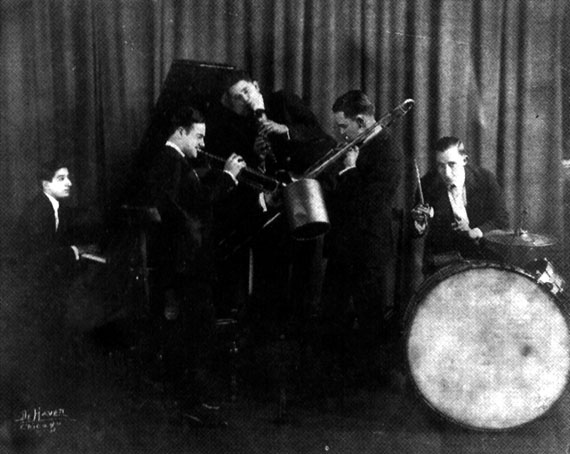
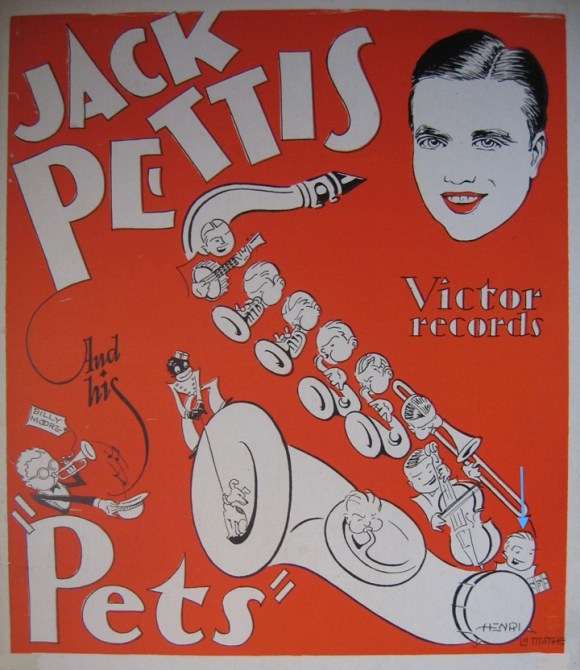
Richard Sudhalter explains that the “Chicago school of tenor, Northwestern style” or “playing collegiate” was the light-toned style popularized by Jack Pettis. Pettis is now known primarily among record collectors and early jazz aficionados, but in his time he was a groundbreaking jazz musician. David Garrick provides extensive details about Pettis’s life and professional career on his website, yet the origins of Pettis’s style are still up for speculation. Squirrel Ashcraft said that Pettis taught himself to play saxophone between work in a government office. The rest is up for speculation. However Pettis did it, he earned himself a seat with the legendary New Orleans Rhythm Kings. His saxophone fits in well with the standard frontline of trumpet, trombone and clarinet, often adding a middle register harmony for the trumpet or sailing into the upper register without crashing into Leon Roppolo’s clarinet.
Pettis would go on to become a star soloist with Ben Bernie’s popular dance orchestra, playing what many consider the first saxophone solo on film with Bernie as well as leading several of his own sessions.
Sudhalter describes the Pettis style as having a light sound and a loping beat, generating momentum through chains of eighth notes. It was far from the wail of Bud Freeman’s other early Chicago saxophone hero, Paul Biese. Pettis also took a vastly different approach from Chicago bandleader’s Isham Jones dark timbre and tendency to stick close to the melody with occasional embellishment. Judging by Bill Richards’s solos on “Choo Choo Blues, She’s A Mean Job” and other sides with Frank Westphal’s popular Chicago band, this plummy, huffing style seems to have been yet another approach to the instrument. Trumpeter Paul Mares described “Chicago style” as “composed of, conventionally, four pieces: piano, drums, banjo, and sax. The sax was played like Ted Lewis plays clarinet and the rhythm beat a tired, heavy, pounding that threatened to splinter the tavern floor. Boy, it was terrible…” So much for the consistency of labels!
As an older man, Freeman seems far more deferential to Pettis and his own Chicago style. His autobiography recalls Pettis as “the first swinging tenor player I ever heard” and the “first guy to become a professional success with that style” as well as “the king of that style.” Yet he needn’t have felt so embarrassed in the first place: Sudhalter points out that the Pettis school was the dominant style among white saxophonists of the early twenties. Several jazz records from that era bear that description out. George Johnson’s solo on “Copenhagen” with The Wolverines is perhaps the most well-known example:
Johnson’s solo would become part of this composition, eventually being transcribed into the sheet music, but other recordings of the tune include saxophonists clearly under Johnson’s spell and by extension the Northwestern style. These include an unnamed tenor soloist with Al Turk as well as Floyd Townes with Elmer Schoebel:
Interestingly enough, Johnson uses a lusher tone for the straight melody reading on “Susie” while swinging out, Northwestern style, towards the end of his solo on “I Need Some Pettin’” and the breaks on “Jazz Me Blues.”
As Sudhalter points out, the Northwestern players built on the arpeggiated figures and legato attack of the clarinet while adding the creamy tone and vibrato of the alto saxophone. The style was something of a hybrid. Clarinetist and historian Eric Seddon points out how saxophones “benefit from knotty phrases which snake and double back on themselves” while the clarinet’s larger range and timbre open up the possibilities of arpeggios. In other words, the two instruments are just that: different instruments lending themselves to distinct technical/expressive routes. Hawkins’s force of musical personality on saxophone as well as his sheer technical confidence would have impressed regardless of instrument. Yet it must have been a revelation for young saxophonists to hear such an idiomatic style for their instrument. Hawkins and other players explored how to play the saxophone without making it sound like a large brass clarinet, a more agile trumpet, a cello, etc.
At the same time, Pettis’s slippery, agitated style was still just plain hot. These solos still resound with their own unique nervous energy, an intensity that characterizes the best jazz of this period (and which would fade in favor of smoother, more laid-back styles coming out of the south).
The use of vibrato as well as the busy vertical lines delineate this style from the sound that Frank Trumbauer and Lester Young would eventually bestow upon the jazz world. Pettis and disciples such as Bostonian Perley Breed may have played lighter but were anything but “cool.” Even at slower tempos, the notes seem to jitter in mid-air.
Perhaps the style caught on at college campuses due to its manic energy, an appropriate sound for the roaring twenties. All of those twenty-somethings probably thought they were far more advanced than Biese and Jones. So much for feeling embarrassed!
Twenties modernist Fud Livingston sounds like he was influenced by Pettis, albeit adding his own slightly acerbic tone and jagged phrasing:
When Livingston left Pollack’s band, Larry Binyon played in a similar yet somehow less busy style. Binyon received much less solo space than Livingston (due, in part, to the ascendancy of Goodman and Teagarden as the primary soloists). Maybe on record he didn’t have as much room to stretch out, or simply lacked the desire to do so. Either way, Binyon sounds closer to Pettis on “Whoopee Stomp” with Irving Mills and on the final bridge to “Little Rose Covered Shack” with Pollack. At other times Binyon plays with a more mellifluous society band sound. This type of musical chameleoning seemed to be all in a day’s work for these musicians, and its ubiquity makes it all the more remarkable.
Sudhalter notes Pettis’s influence as primarily a product of the early twenties. By the middle of the decade, Coleman Hawkins was a firmly established presence within the jazz community, the premier soloist with one of the Fletcher Henderson’s popular and critically admired band. By the time young Max Kaminsky told one of his bandmates that he was a fan of Perley Breed, the trumpeter described being “puzzled and a little hurt when he smiled at my answer.” Nobody wants to be old-hat, and things move pretty quickly in American music.
Thankfully, a few musicians didn’t seem to get the memo. So we have Don Murray’s excellent solo on “Blue River” with Jean Goldkette:
Almost a year later, Pettis himself receives an entire chorus to himself, starting out a dance record with an improvised solo on a pop tune recorded by the more commercially-oriented Bernie band. Pettis may have now been living in Hawkins’s world but he still had things to say on his own terms.
George Snurpus and Ralph Rudder, in their only recorded appearances, still sound like they are learning things from Pettis.
As late as 1944, Boomie Richman’s Lester Youngish bridge on Muggsy Spanier’s “Rosetta” has traces of the Pettis style:
So much for historical benchmarks!
Of course, parsing out influences and tracing styles isn’t a science (and who would want it to be that precise?) At the very least, the “Pettis style” is a helpful concept that opens up vestigial approaches to an instrument now virtually synonymous with “jazz” and a handful of definitive players. Before Hawkins, Young, Parker and Coltrane, there was Jack Pettis, and he played exciting music that influenced other musicians. What could be hipper than that?
Thanks to Sue Fischer for providing that Paul Mares quote!

 I was all set to write about Kaiser Marshall as yet another ubiquitous presence on jazz recordings from the twenties, one more well-respected musician now left with surprisingly little discussion of his style amidst biographical and discographical minutia. Fletcher Henderson’s drummer, someone occupying such an important historical and musical role, consigned to the annals rather than lauded in the academy and on the web, etc.
 So I can’t help treating “Charleston Crazy” as an end in itself. Ditto for the pre-Armstrong Henderson band. I keep coming back to this by turns dicty and artfully dirty nonet, with its trumpeters clearly inspired by jazz coelacanth Johnny Dunn in all of their clipped, chattering, squawking and tensely syncopated glory. Ditto the young Coleman Hawkins and his ponderous, jerky arpeggiations. Jazz historians describe the Hawkins from this period as precocious yet in need of a catalyst to become a full-fledged soloist. These records would later on embarrass Hawkins himself, but I always thought that it was unfair of that older player to belittle the work of this young musician, even if they were the same person. Howard Scott has proven more interesting to me as a musical as well as aesthetic subject than Dizzy Gillespie (who would’ve turned 101 this year) and Dixieland chord progressions much more satisfying than most multi-tonal explorations tracing their inspiration back to John Coltrane (a spring chicken at 92). Of course, I try to appreciate everything. In fact, I can’t remember the last time I said I actually did not “like” a piece of music. It is just a matter of what I purchase for my record shelf.


 The Pop of Yestercentury