A recent blog post about the roots of early jazz drumming includes several examples of ragtime, popular dance, and other pre- and proto-jazz. Among other elements, the writer contrasts the “irreverence and willingness to go rogue and damn the torpedoes” of jazz with the feel of “just too many rules being followed.” It wasn’t even close to the writer’s main point. They focused on musical examples. But I still kept coming back to it.
The contrast between following and saying “fuck it” to the rulebook intrigued me, because a lot of the music on this website doesn’t fall into either category. Take this Eddie Elkins record (in a beautiful transfer):
*Please follow the link to the YouTube video for further discographical and personnel details.
It starts with a brass fanfare answered by a suspension-filled sax response, an immediate contrast between a traditional sound and modernistic dissonance. In the first chorus, the tenor sax punches things up just enough under the alto’s lead—which adds its own ornaments to the melody—and gradually strays further without ever diverging into full-blown obbligato. They even give their fellow saxophonist in the rhythm section some room, introduced with a harmonized ascending phrase leading into his break. But the sax duo essentially sticks to the melody.
The melody also stays clear in the next chorus, a coy muted trumpet with growling syncopations at the break, followed by a smirking pyramid effect. Next, paring things down to alto with just banjo (and maybe faint piano?) provides textural contrast. On the dance floor, it might’ve also allowed a quieter moment to lock eyes with your partner before the big tutti transition into a wild collective finale. The saxes then take even greater liberties. There’s a brief softening immediately after the alto’s ecstatic break, fading into a moment of tender trombone lead, right before things finish unbuttoned and the alto’s dirtiest sound yet.
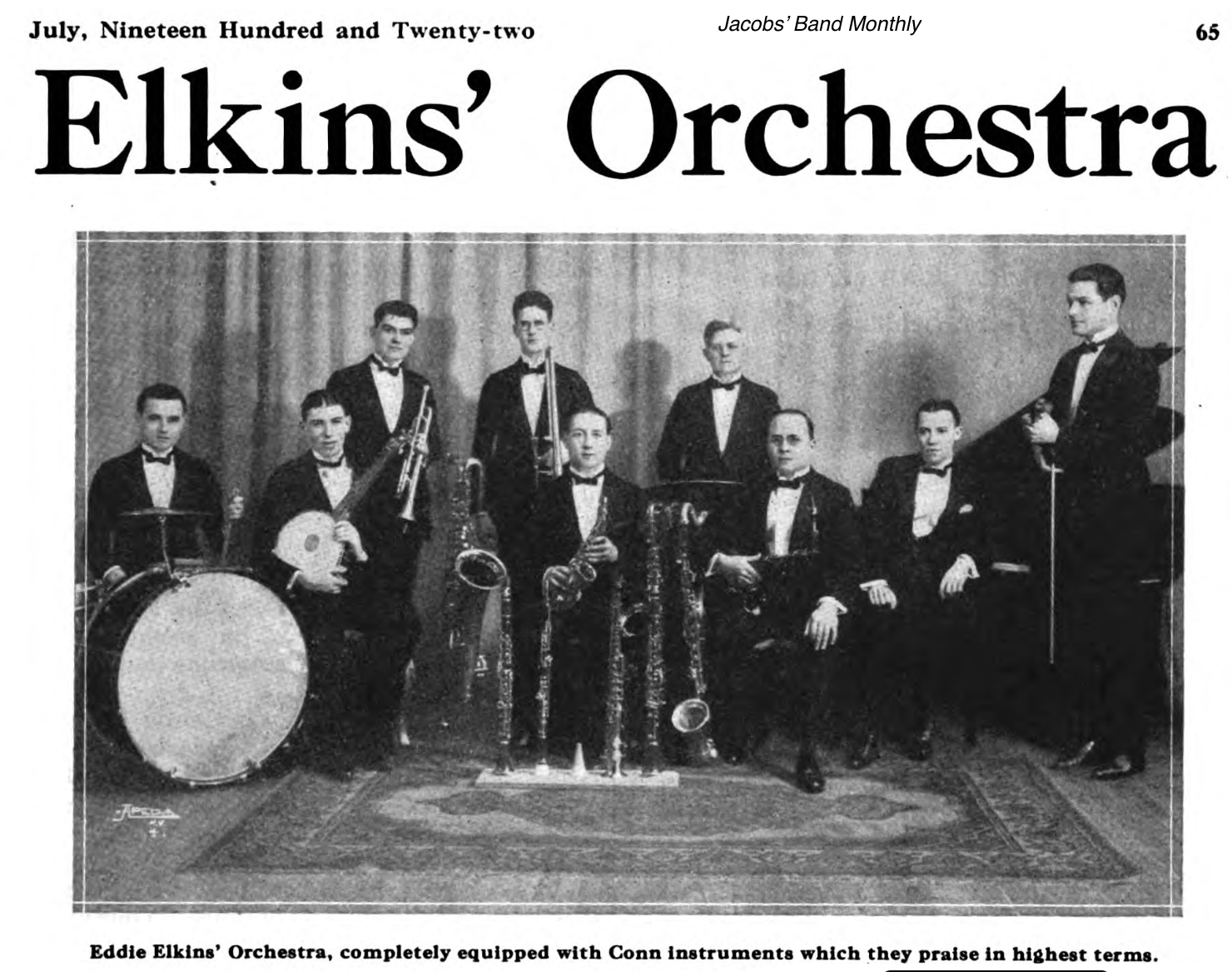
This recording comes from a brief but productive point in the history of American popular instrumental music. The wild small-group style inspired by the Original Dixieland Jazz Band was giving way to larger ensembles that used some degree of prepared music with clearer melodies and smoother rhythms. It was also before New Orleans-style jazz and other Black musical idioms achieved wider impact through more spacious rhythms, blues sensibilities, and improvisational breadth.
The tune is from the musical Bombo, featuring Al Jolson, who made the song and the production a hit. People bought records to hear the hit tune and have fun. But at least a few people dancing at home must’ve actually listened to the record and appreciated the Elkins tentet’s hot deconstruction.
They always keep selling the song, but you can always hear the singers. They tread the line between composition and interpreter, arrangement and improvisation. It’s no stretch to imagine that a few of the musical ideas on this record weren’t even on the sheet music. They may have been thought out on the spot or in advance by the players. The inflection and drive certainly weren’t written down. Either way, it was neither simply following a score (and what good music does?) nor on-site invention of new melodies.
It creates fascinating tension, much like the crisp feel of many of these New York society groups, which are often criticized as “jerky.” That’s a fair description if the only rhythmic rubric is jazz as it’s understood now. Dancers probably heard this number between waltzes, tangos, and all types of music. It would’ve shaken things up for them. It would have been a good time subtly chipping away at convention: subversion, not irreverence. And it had a catchy tune you could dance to.
Apparently, it was also nothing to scoff at in terms of musicianship. Saxophonist and Elkins alumnus Batty DeMarcus described a very specific “New York tempo” or “society tempo” heard at functions such as afternoon tea at the Ritz, the Plaza, or Delmonico’s when he first arrived in New York City circa 1920:
The New York tempos were different from any place else in the country. Unless you played those, you just weren’t going to make it in a nightclub or anywhere else. The recordings, yes, they could make the recordings alright, cause they sold all over the country. But so far as playing in a nightclub or a supper club, or a butter-and-egg joint like the Silver Slipper or [inaudible], you had to play the New York tempos. And the boys didn’t accommodate themselves to this absolute rule. And so they never made it.
*Thanks to the outstanding musician/historian Colin Hancock Esq. for sharing the DeMarcus interview.
DeMarcus notes that this tempo was specific to New York and unlike anything played by bands from New Orleans or Chicago. It even tripped up visiting bands, causing the likes of Isham Jones, Gene Rodemich, Johnny DeDroit, and Paul Ash to flop!
Something as simple as sticking to a strict tempo could make or break a band. The musicians chafing under these conventions are now our heroes. The ones who were content to master them aren’t depicted as villains, but they’re often passed over as also-rans. If the jazz musicians were the rule-breakers, who wants to blog about rule-followers?
Note that the writer quoted above merely said there were “too many rules being followed” for their purposes. Variety is the spice of life. Just listen to that Elkins record. As for whether it constitutes jazz, read that Elkins record. Also, visit Mr. Sperrazza’s blog.
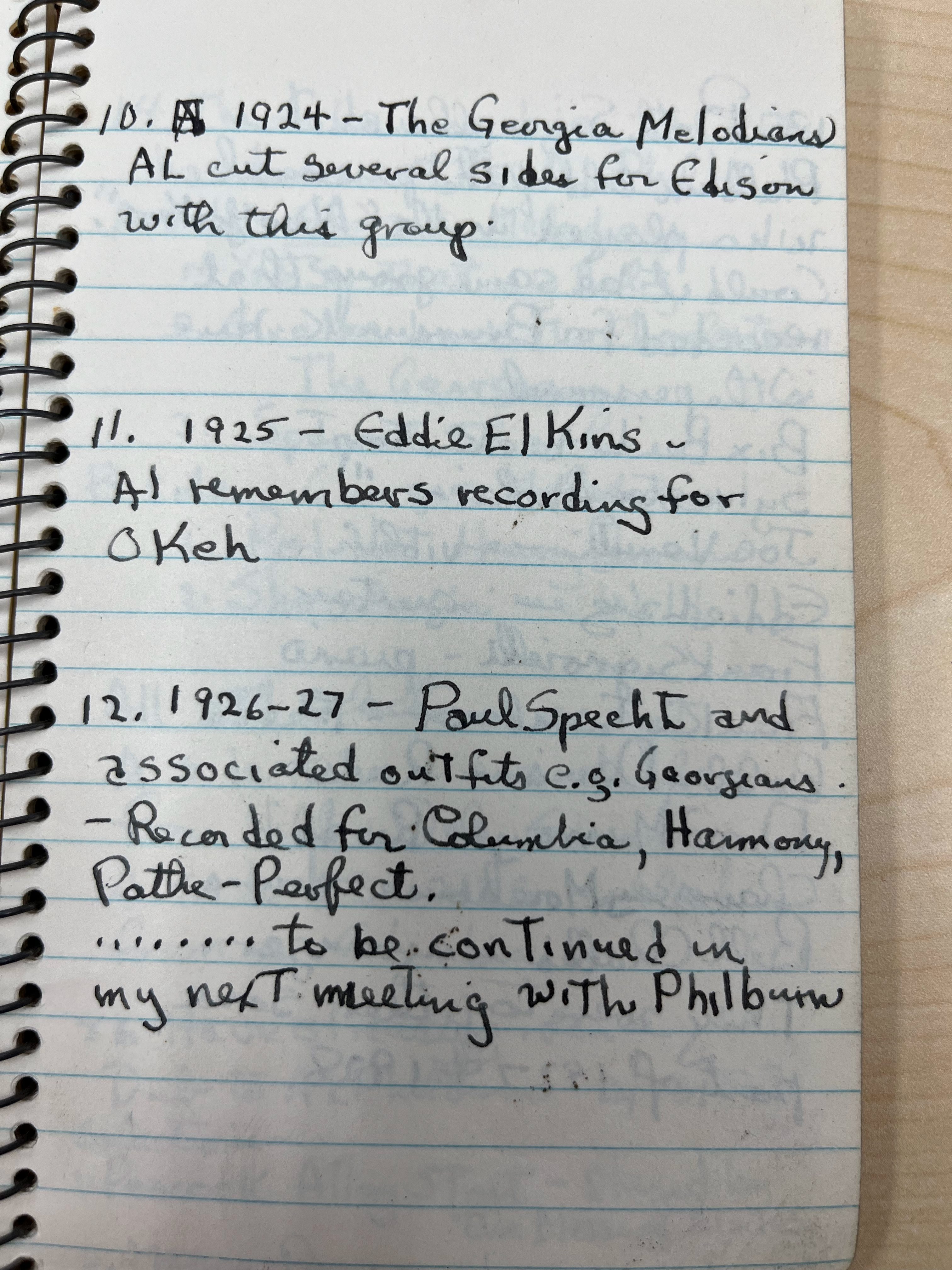


Eddie Elkins’s recording of “Who Cares?” uses the tune’s stock arrangement by Milton Ager nicely doctored up by George E. Crozier (the recording’s trombonist who also arranged for Elkins’s group): https://dpul.princeton.edu/valva/catalog/dc2v23w676x
Nice article, as usual and also the pic of Len Kunstadt’s notebook is a nice insight on his research work as well (no wonder why the folks of Record Research had him on his team)!
Thanks for the information and for reading!
What a rewarding record! It has something for everyone, and if you’d asked me (without filling me in) when this was recorded, I would have said that it was later than 2022, which might say more about my preconceptions than about the music itself, which is superbly done. The tune stayed on in one corner of the “jazz” repertoire, in Red Nichols’ 1929 Brunswick recording, and in this famous or infamous film short: https://youtu.be/gsBJcSLIu5k?si=iKNrKbPsiiS6Lklb. Thank you, Andrew, for once again taking us tenderly by the hand and encouraging us to consider music we would otherwise ignore!
P.S. Al Philburn continued his career, often as a respected player in the Decca studios.