I didn’t worry about my regional accent until I got to college. My speech didn’t change when I got there, but for the first time, I met people who commented on my speech. They never insulted me, but for the first time, I wondered if I “talked weird” or “didn’t speak properly.”
One professor enjoyed repeating certain words I used when answering questions in class, playfully drawing attention to my accent while demonstrating the proper pronunciation. They didn’t correct me on names or jargon. They’d just find some unremarkable word amusingly incorrect. If I dropped an “r,” they’d lodge it back into place. If I slurred a fricative, they’d over-enunciate it (e.g., “THose THings, Andrew?”). They especially liked to sharpen my softened “t’s” (“Yes, in the capiTal…”).
My Spanish professor was more diplomatic. When my regional accent came out—for example, asking “day don-day err-ess” and not “¿de dónde eres?” or accenting the wrong half of “hablo”—they would offer corrections in a neutral tone. They also politely addressed some of the pronunciations I picked up from Puerto Rican and Dominican friends back home. My Italian professor was not as generous when an occasional Sicilian pronunciation slipped into my answers. I grew up hearing some phrases from neighbors. I thought of them as just another way to speak Italian, but this Milanese-born speaker literally didn’t want to hear it.
In their own way, all three teachers were telling me “that’s not the way it should sound.” They were teaching me that proper pronunciation, inflection, and rhythm were just as important as vocabulary and grammar. Without the right sounds, I might be saying something but not speaking the language.
For my Spanish teacher, it was a practical matter. The correct sound allowed students to communicate effectively within that linguistic idiom. My Italian teacher was concerned with authenticity. For them, variations obscured the more refined usage. “People may speak any way they choose, but they’re not speaking Italian.”
My amateur elocution coach’s suggestions didn’t make the same impact. Beyond the fact that they were teaching a political science course and not an English seminar, their guidance pointed toward social convention rather than linguistic precision or cultural pride. It felt like a stylistic preference rather than a claim about cultural authenticity. They objected to how I said what they clearly understood.
“That’s not the way it should sound” could also be a statement of elementary music criticism. The notes, the pitches and rhythms may be correct. But if elements like timbre, articulation, phrasing, or dynamics are off, the music might “sound funny” enough to fall short of some aesthetic threshold. It’s something more than a local derivative or creative choice. Depending on the listener, missing the mark might mean more than disliking the music; they may hear a crass imitation, dilution, or an insult to that tradition and its community.
These distinctions often appear in discussions of all the pre-, para-, and formerly-known-as-jazz recorded during the twenties. Ironically, Jazz Age listeners consumed a lot of music that, today, wouldn’t earn the name even by the loosest standards. A century ago, “jazz” was as much a marketing term as a musical description. It’s now easy to dismiss a lot of this music based on anything even approaching jazz content (which too often leads listeners to dismiss it as music entirely). Yet the twenties also produced a lot of music audibly influenced by what is now commonly accepted as authentic jazz of the time.
Take Joseph Samuels’s “Bugle Call Rag.” The tune is one of the earliest jazz standards. It’s received hundreds of hot treatments, starting from its inaugural recording by the New Orleans Rhythm Kings (two of whose members composed the tune), less than a year before Samuels and his band recorded it in May 1923.
At the time, New Orleans-style jazz (or New Orleans via Chicago-style jazz) was growing in popularity and influence to become the dominant style of jazz. It is an obvious influence in terms of repertoire and instrumentation in Samuels’s “Bugle.” The musicians don’t sound hesitant within these influences. They’re not struggling to play together or maintain musical momentum. Still, in terms of rhythm, inflection, and emotional impact, Samuels’s record may subvert contemporary expectations about what “jazz” was supposed to sound like:
Beyond flatted notes or bent tones, there’s not much of a blues sensibility here. That might be a summary judgment against this record being “jazz.” There are shades of the Original Dixieland Jazz Band without the intense, sometimes manic energy found on their records. The Samuels group is far from the earthy, seamless polyphony of King Oliver’s Creole Jazz Band. Musicologists often discuss jazz musicians doing things “between the beats.” This band thrives on the beat—specifically up-beats and off-beats. Their syncopation is deliberate and intense. Their eighth notes are confidently symmetrical.
Jules Levy Jr.’s clean tone, pinpoint attack, and sheer volume make for a sober lead. With the second trumpet in close harmony, this group revels in the ringing metallic blast of a brass band. Listeners accustomed to the styles of Oliver, Louis Armstrong, or Bix Beiderbecke may dismiss Levy as stiff. Or they might hear his melodic bedrock creating dynamic tension with Samuels and Ephriam Hannaford’s trombone. Oliver, a musician who insisted on a solid lead, might have appreciated Levy’s work for its directness and solidity. Hannaford’s gruff smears border on self-effacing, but they fill out the ensemble while contrasting with Levy’s bright melody and Samuels’s piercing commentary.
The leader’s novelty style—scoops, slurred lines, tone wilting and slicing—sticks out from the start. “Gas pipe” clarinet often prioritizes comedy. Based on recollections by Eddie Condon and other contemporaries, this style already embarrassed some musicians. It’s an obvious departure from the high-flying runs and statelier presence of New Orleanians trained in collective improvisation. For later jazz writers, the style was synonymous with corn and inauthenticity.
It’s easy to hear Samuels as a joker. But disliking the comedy nearly a century later doesn’t mean he was a poor comedian. Plus, his clarinet makes its own musical sense. It’s the only woodwind in the front line, alongside two trumpets and a trombone, atop a voluminous tuba. Those spikes of reed amidst all that brass create a distinct texture. So do the tart notes piercing Jules Levy Jr.’s lead trumpet.
The arrangement includes an improvised solo chorus, now practically an axiom in jazz. Yet this one comes from a pre-Louis Armstrong hot music continuum (an oxymoron for some purists). The soloist’s tone is plush rather than brilliant. There are no spectacular displays of technique tossed out with sweatless ease. At the time, a solo was a facet of the ensemble; it was seasoning but not the main course. Here, the band parting ways for a lone voice creates a novel effect. What trumpeter wouldn’t be proud of this warm, plump tone and wordless couplets briefly taking the regiment in a different direction?
Joseph Samuels and his band did not swing like any of the landmark jazz players of the time or since. Their rhythmic approach coalesced among musicians from other parts of the country with different musical priorities and cultural backgrounds. On paper, there’s no reason to think these musicians would sound like musicians from New Orleans. It might be the equivalent of assuming that New Yorkers should should sound like Bostonians.
But is the difference closer to what my Spanish teacher pointed out, and maybe even what offended my Italian instructor, or is it more like whatever my politics professor was getting at? Is it jazz with a different accent, its own regional dialect, or just linguistic butchery?
I had several courses with that political scientist/diction coach. The more they repeated my words aloud, the more I repeated theirs in my head. People can easily guess the origins of my speech, but it was hard to place this teacher’s vocal mannerisms.
They mostly spoke with a mid-Atlantic, “general American” accent. But they pronounced certain words with a form of what might have been Received Pronunciation, a proper-sounding English accent. But the sound depended more on sentence placement than the word itself. For example, “after” never stood out until it began a sentence and became “Aft-hur.” At other times, words took on a nasal purposefulness. The professor would introduce a contrasting idea with “How-AY-ver…” Random regional inflections materialized during hurried sentences. Something would be “dam-neer im-PAH-Cybil” or “sound an oh-ful lot like” something or other.
Maybe they lived in several different places. Or perhaps they were putting on airs. Was it a genuine expression or a contrived fabrication? If this individual was faking it, but it still sounded interesting, would it matter? Is there more to adopting an accent than just its sound?
If you love jazz but must know who took that two-bar break, or if the identity of the third sax chair enriches your listening, then you’ve probably checked, relied on, doubted, or otherwise consulted Brian Rust‘s works. Rust wrote multiple discographies, books, articles, and more. He’s probably best known for Jazz Records: 1897–1942 and the American Dance Band Discography, 1917–42. These two tomes raised the bar for discographical research and continue to guide listeners’ experiences. Plenty of record collectors and listeners still swear by them.
While many of Rust’s other works focus on a particular record company or musician, Jazz Records and the ADB cover a wide scope. Overlap and contradiction come as no surprise, especially since they raise two tricky questions: what’s the definition of “jazz,” and what’s the difference between a jazz band and a dance band?
The questions may seem so broad as to be meaningless. Few listeners need to classify music to enjoy it. Examining how Rust determined what got into each book may even seem like hairsplitting. But broad questions lead to interesting guesses, and many listeners who don’t seem to care about labels still rely on them. As for Rust, he was a passionate jazz aficionado and a discriminating ear witness to a lot of music. His spilled ink continues to inform many listeners, so it’s worth considering the thought behind the data.
Jazz is Music
While it can sometimes seem that way, Brian Rust did not write the first jazz discography. As Rust told audio engineer and friend Nick Dellow (whom he had known for over 30 years), he knew and admired pioneering works like Delaunay’s Hot Discography and Carey and McCarthy’s multi-edition Jazz Directory(especially the directory’s structure). Still, he felt they didn’t provide enough information about the records and left too many gaps.
Gifted with a memory like a hard drive, Rust had been compiling data for decades. He began thinking about writing his own discography while working as a music programmer for the BBC shortly after World War II. In 1960, he left that position to work on Jazz Records full-time, self-publishing it the following year.
As music historian Elijah Wald notes, “Rust was not trying to create a jazz canon” but “compiling reference works for record collectors.” Jazz Records lists hard data about recording sessions and records but begins with an abstraction right from the title. Stating a precise definition of jazz has been problematic since the word’ introduction, but Rust’s concept isn’t much more exact. He doesn’t even start with one kind of jazz.
From at least the introduction to the second edition of Jazz Records (published a year after the first), Rust drew a clear line between “traditional” and “modern” jazz, noting that his discography focuses on the first. Understandably, Rust wanted to impose limits in terms of space. Those practical boundaries keep the work manageable.
He also explains that this scope is for the sake of readers specifically interested in traditional jazz, and by extension, a timesaver for listeners focused on the modern variety. These are all practical, even considerate reasons expressed in neutral language. Rust may be more interested in traditional jazz, but in Jazz Records, this interest comes off as simply one listener’s preference.
In other works, Rust was more candid about his opinion of modern jazz. “I refuse to accept modern jazz as being any kind of jazz in the real sense of the word,” he told Dellow, going as far as to say, “it actually nauseates me.” Of course, some listeners enjoy both varieties. But Rust was writing a book about music that he classified as jazz to the exclusion of whatever some people had started calling “jazz.” Rust outlines his scope in terms of what’s not there. He relies more on implication and association than description and identity. This approach resembles the suggestion that “if you have to ask what jazz is, you’ll never know”—which suffices until the discussion broaches all the things that are not jazz.
(Many thanks to the preeminent Armstrong biographer Ricky Riccardi for pointing out this phrase as a modified version of Armstrong’s actual quote on the cover of Time, February 1949: “When you got to ask what it [i.e., music] is, you never get to know.”)
By the fourth edition (1975), Rust’s introduction included more musical language. He states the “basic precept of [traditional] jazz” was “improvisation (or what sounded like it) on a melody against a steady rhythmic pattern in 2/4 or 4/4.” For such a “basic” precept, it lays down some firm lines. Excluding things like triple meter, chordal improvisation, and free tempo leaves out a lot of music!
Including music that sounds improvised might expand the boundaries, but how far will vary by listener. “What sounds like improvisation” also describes a lot of music, not just jazz. Arguably, every type of music aims to create an energetic, organic performance that “hides” all the preparation. To take an obvious and broad example, the best performances of European art music, especially chamber works, receive praise for their sense of spontaneity, the way the musicians phrase and breathe together, the naturalness they bring to pieces that may have been performed perhaps thousands of times over multiple centuries. A lot of that music is made on top of a steady duple meter pulse (in many cases by a continuo that resembles a rhythm section in musical function).
Rust refers to something that listeners recognize when they hear it. There are obvious musical differences between what a Baroque violinist plays overLa Folia variations versus a jazz clarinetist on “I Got Rhythm.” Rust isn’t a musicologist, and Jazz Records isn’t a music theory textbook; further elaboration was beyond his scope. But it’s still unclear what makes some examples of jazz “sound like” improvisation enough to be jazz. Rust often singles out his favorite improvised music; he’s less generous in naming exemplary music that sounds improvised. Like most things that are only identified through experience, they’re apparent to the person experiencing them but often remain mysterious to others.
In Jazz Records, Rust says that the impression of improvisation—real or really convincing— defines jazz. Elsewhere, Rust says that jazz doesn’t have to be improvised, but the best jazz is improvised. In The Dance Bands (a different book from ADB), he explains how Paul Whiteman, by trying to orchestrate jazz, failed to grasp a “basic fact” about it: “the most free and spontaneous results were obtained from musicians who knew and understood the idiom and each other.” From this perspective, improvisation may not define jazz, but it is an indicator of the quality of any jazz performance.
Rust was either defining jazz as an improvised music or as music that is best when it’s improvised. That means written music has a higher burden of proof to be considered “jazz,” or it’s at a critical disadvantage when it comes to quality. Either way, there’s an underlying attempt to assess jazz content.
Image by Val Wilmer via The Guardian‘s obituary for Rust.
Degrees of Jazz
In the introduction to the fourth edition of Jazz Records, Rust uses phrases like “jazz, actual or alleged” and “jazz music, or what was regarded as such.” He implies some difference between jazz, jazz-influenced music, and popular music that uses the term with varying degrees of musical accuracy.
Reading between the lines, some broad categories emerge:
“Actual” jazz that people may or may not have danced to after World War I and during the twenties
“Alleged” jazz that people thought was jazz and used for dancing during that period
“Dance music with obvious jazz flavoring” (presumably, as opposed to dance music with other degrees of jazz flavoring)
“Romantic popular music”
Actual jazz “reactivated in modern form” (i.e., music of the big band era)
Rust also makes it a point to include various precursors and offshoots of jazz, such as:
Vocal records and blues singers accompanied by jazz musicians
“Important and interesting” ragtime
Music with syncopated rhythm from 20 years before jazz (presumably meaning the turn of the century, since Rust states that the Original Dixieland Jazz Band “made the first recording acknowledged to be of ‘jass’ [sic] music”)
These are not explicit styles or rigid categories. They probably weren’t even conscious distinctions for Rust. They’re broad associations of different musical and cultural objectives, all of which overlap to varying degrees. They raise more questions about a specific musician or band than they allow neat sorting by general musical qualities. Whether pre- and para-jazz belong in a jazz discography is a subject unto itself.
The point is that jazz is an entity that’s distinct from all that other music, even as that other music capitalizes on it. There is an authentic form of jazz found in increasingly pure forms, and by extension, that may be incorporated in other music to the point of dilution. That other music may contain different degrees of jazz, but it’s still not jazz per se. This assumption allows Rust to admit a lot of records based on their having some amount of “jazz interest,” while leaving the door open to others and slamming it shut on many more.
Joseph Samuels is a useful example. The section on Samuels in Jazz Records begins with a caveat:
The following titles from the vast number recorded under Joseph Samuels’s direction between 1919 and 1925 are of some interest as jazz; others may prove of comparable interest.
Like so many other bandleaders, Joseph Samuels was audibly influenced by the Original Dixieland Jazz Band, one of Rust’s most beloved jazz artists. But Samuels could dial up the novelty effects beyond even the ODJB’s expectations and played a lot of schmaltz all in a day’s work. He often led large combinations with a starched brass band aesthetic that was tensely syncopated and rhythmic in a way that was hundreds of literal and figurative miles from New Orleans. Samuels was also more flexible when it came to instrumentation and the selection of sidemen. Depending on the band’s size, its arrangements were more complex compared to the ODJB and similar groups.
Jazz? Jazz-like dance music? Ragtime with a distinguishable influence on or from jazz? Improvised? Spontaneous-sounding arrangement? Whatever the music is matters less than what readers won’t find if they’re using Jazz Records to shop Samuels’s records: all the waltzes and 6/8 numbers; romantic popular songs with slow tempos and vocalists emoting about love; novelty instrumental solos; and other music we know is not jazz—unless there’s an errant hot solo or collectively improvised ensemble.
Rust wrote Jazz Records for like-minded record collectors. As Wald points out, Rust “thought it most useful to separate jazz recordings from the more general fare included in his equally voluminous ADB. There are several years between the first editions of Jazz Records and ADB. It’s unclear when Rust conceived of or began writing ADB, but he likely distinguished between jazz and jazz-influenced dance bands throughout his life.
But how did he evaluate bands that rely mostly or exclusively on written music with an obvious jazz influence but still don’t make the cut? If they don’t have improv, do they mean anything?
Bands That Played Music
Published in 1975 with a second, presumably expanded edition four years later, ADB is even harder to pin down in terms of musical content. Rust begins by noting that, since many other works already cover jazz, this discography will focus on dance bands “that provided entertainment, pleasure, diversion, and relaxation…from the sweet romantic styles of Guy Lombardo and Wayne King to the vivacious ‘swing’ of the Dorseys, from the performances bearing indelible date-stamps somewhere in the twenties to timeless masterpieces by, often, the same bands during the same or later periods.”
Providing “entertainment, pleasure, diversion, and relaxation…” describes the social and cultural role of different bands. Jazz also accompanied those activities and feelings, but Rust uses musical language to curate it. He focuses on extra-musical considerations for his dance band discography. ADB assembles different bands that played a range of music so broad it’s almost beside the point. A reader might assume that “dance bands” refers to a social phenomenon and that the music was an accessory to other activities (while jazz has an artistic purpose beyond its social dressing).
Rust’s examples add to the musical ambiguity. Jazz Records describes swing as “jazz reactivated in modern form,” so it’s unclear why, by at least the fourth edition, Dorsey’s big band work gets double-booked. To be fair, that might have been a concession since Rust was now using an outside publisher. Earlier editions of Jazz Records stick to Dorsey’s looser small-group dates. Regardless, Dorsey’s swing, King’s waltzes, and Lombardo’s “sweetest music this side of heaven” accomplish very different musical ends.
Things get stickier from there. A waltz by Nathan Glantz like “A Kiss in the Dark” is, of course, found in the ADB. It’s not hot, but it is a beautiful Victor Herbert song showcasing the saxophonist’s mellifluous runs and rich sustained tones—a revelation for anyone who only associates Glantz with laughing effects and a sound like Crisco. It’s music that people happened to have danced to, but for some, it may also reward pure listening.
“San,” on the other hand, is a mostly orchestrated hot number. It’s also an exciting example of what “jazz” meant to Glantz and his fellow New York City studio regulars. Close listening reveals the invention on display when it comes to melodic paraphrase: selling the song while making it one’s own.
Maybe that’s why Rust included it in both the jazz and dance band discographies. “Who Loves You Now”? is another hot rhythmic side with plenty of solos, but it’s only listed in ADB. (One very reliable source attributes this side to Adrian Schubert, not Glantz, but the point stands.)
These inconsistencies don’t invalidate Rust’s work. Humans can still enjoy music even when it’s not correctly categorized, though they may assume things based on where they find the music. It’s still interesting to consider a distinction—one that divides roughly 4,000 pages of music—that might seem like a supermarket having separate aisles for “produce” and “citrus foods.”
The closest musical qualifier Rust provides for dance bands is a distinction between playing dance music “hot” versus “straight.” “Hot style” as allows solo or ensemble improvisation, while the straight approach “does not deviate as much as a quaver from what is written in the score.” In The Dance Bands, Rust explains that the “best kind of dance music…used the ‘hot’ idiom [i.e., improvisation] as flavoring.” He practically brags about how, even as a little boy, before hearing “real jazz,” he still “knew the difference between the best kind of dance music, which used the ‘hot’ idiom as flavoring as an expert chef uses pepper, and the more ordinary kind, which did not. In other words, the best dance music gets as close to jazz as possible.
The best kind of jazz is improvised, and the best dance music uses the hot idiom, which is improvisation. This reductio ad jazz means that, when there is more than one player per part in a band, the bar for meeting that “basic precept” of jazz is much higher. The larger the band, the more it tends to rely on written music, memorization, rehearsal, routined solos, etc. Rust didn’t comment on whether or how much planning is compatible with authentic jazz. But he implies there is such a thing as authentic jazz. His full comment about Paul Whiteman is illustrative:
While it could be scored, the best, most free, and spontaneous results [in jazz] were obtained from musicians who knew and understood the idiom and each other. Any other approach would be at best paying a kind of lip service to the new idiom.
“Improvisation” begins to seem like a shorthand for something real that some musicians may omit, fake, or simply botch. That means understanding “jazz” means watching out for phonies. Jazz can be “contaminated.” It’s music that is vulnerable to misunderstanding; beyond playing jazz poorly, people can get it wrong. Rust wants to get jazz right.
On the other hand, “music for dancing” includes everything from the one-step to the mazurka. ADB is full of waltzes, tangos, Paso Dobles, and fox trots at all ends of the hot spectrum. There’s not enough space to discuss the “best kind” of any one of these kinds of music. Lumping them all together in this way, the reader might assume that such considerations aren’t as important. For Rust and many others, those things are either not as vulnerable to misunderstanding or the errors are not as consequential. The stakes are higher when it comes to jazz.
Musical Value
It’s hard to imagine a writer compiling a 2,200-page discography just to delineate what shouldn’t be called jazz. Rust obviously appreciated both “jazz” and “dance bands” on their own terms. In the introduction to his book on British dance bands, Rust credits Paul Whiteman and Art Hickman for showing his home country “that ‘modern’ dance music was not the general mayhem that detractors of real jazz claimed it to be.” He provides a passionate defense of all that not-jazz against its critics in The Dance Bands:
Interwar-period dance music stemmed from the original jazz…Jazz characteristics or flavoring usually give a more inspired and inspiring performance, [but] the average dance band on either side of the Atlantic was not a jazz band and had no pretensions in that direction. It thus seems a little unfair, if not stupid, for jazz “experts” to dismiss as worthless the work of many of the great bands merely because they do not play music coming within the narrow confines of jazz definition.
“Not jazz” is not necessarily a criticism of (whatever counts as) dance music for Rust. But even the book titles illustrate a hierarchy. One is a discography of recordings of jazz, a (supposedly) specific form of music, while the other collects bands playing all types of music. One frames an art form, and the other frames everything else that helped people dance, relax, forget their troubles, and do other things as music played.
Different references to chronology also suggest his critical priorities. The first two editions of Jazz Records covered jazz through 1931, with later editions expanding through 1942. Rust wanted to keep the book’s length manageable even as he covered more music. He also positions the recording ban between August 1942 and November 1944 as a point of demarcation for “modern” jazz. The scope of time in Jazz Records is a practical and musical consideration.
ADB mentions Rust’s openness to both “timeless masterpieces” and “performances bearing indelible date-stamps” (with the implication that the twenties produced an unusual amount of now-dated music). The assumption seems to be that whatever the dance bands played, their repertoire admits ephemera. Jazz Records doesn’t draw that distinction; the music seems, by nature, transcendent. My Kind of Jazz states his point outright:
There are various kinds of jazz, all coming within the original definition and requirements…but they do not bear date stamps or sell-by dates. If they do, it simply means they are not jazz of the best kind in any variant of the basic idiom, that some contaminating ersatz [italics Rust] element has been allowed to enter into the performance.
It’s unclear if expired jazz is inferior jazz or not jazz, but the point is that the real thing is timeless. Jazz is not a “creature of fashion.” Rust compares the music to “a Mozart divertimento or a Haydn symphony” in that regard.
Referencing Mozart’s divertimenti—as opposed to his string quartets, piano concertos, or operas—is an interesting choice. A divertimento was intended to be light music for easy consumption at a particular occasion. Not every piece of music by the great composers was considered “great” in its time. Yet they’re still with us, and we continue to mine more “great” music from the past. Rust (perhaps inadvertently) illustrates that anything can be “timeless” if we choose to enjoy it.
The Stakes
To illustrate his point about improvisation and jazz, Rust uses the particularly loaded example of Paul Whiteman. For some (like me), the Whiteman band’s crack musicianship—in scoring and playing—makes it easy to forget or at least not overthink the level of preparation behind the music. For others, Whiteman’s music is as close to jazz as Milhaud or Chicago. To many, Whiteman is especially problematic beyond any musical factors. Whiteman was a white bandleader who achieved incredible popular success by incorporating jazz into his music. He also made some condescending remarks about jazz and, by extension, Black American culture.
Yet Rust also surprises us with some loaded examples in the other direction: bands that many would easily classify as “jazz” and which Rust includes in Jazz Records while suggesting they might’ve gone into the other book. In My Kind of Jazz, he differentiates the Duke Ellington band’s work as a jazz group from its work as a dance band. Noting that Ellington recorded many songs he didn’t compose, Rust admires Ellington’s performance of Tin Pan Alley songs and show tunes from Broadway as “light years away” from recordings of the same material by “any other band, British or American.” But to him, that didn’t mean they “at once and automatically became jazz performances.” They are excellent “viewed as dance recordings, which is all most of them were intended to be.”
Although he doesn’t provide any examples, the Ellington band’s 1940 Victor recording of “There Shall Be No Night” is a decent candidate. It’s not an Ellington composition (with lyrics by Gladys Shelley and music by Abner Silver). Aside from Ben Webster’s melodic paraphrase in the bridge of the first chorus and Ellington’s piano obbligato behind Herb Jeffries’s vocals, there are no instrumental solos. There are lush, glistening sax textures; a smooth, medium-tempo beat with light, symmetrical accents that make the rhythm clear enough even for the most rhythmically challenged dancers; and a clean-toned, vibrato-saturated lead trumpet, as well as Herb Jeffries’s crooning.
Jazz scholar and Ellington biographer Mark Tucker described “There Shall Be No Night” as “veering toward the sound of commercial sweet bands.” That’s not damning in itself, and it seems to be in the same taxonomic territory as Rust’s “jazz versus dance band” language. ADB includes Eddy Duchin and Dick Jurgens’s recordings of the song. To some, by comparison, Ellington’s performance might sound like a hell-raiser. All three records are in a similar musical space, which makes the inclusion of Ellington’s version in Jazz Records confusing.
My Kind of Jazz goes on to note that Fletcher Henderson “produced many fine examples of how a big dance band [emphasis mine] could play jazz, due mainly to the abilities of its individual soloists,” specifically during the 1926–27 period. Rust describes McKinney’s Cotton Pickers as a dance band playing pop tunes, though they do “invest each one with real jazz feeling.” Cab Calloway led “a big show band,” and “as with most bands of its size and type, it played jazz only very sparingly.” All of these bands appear in Jazz Records (at least starting with the second edition). None of them appear in ADB.
ADB readers will categorically not find “records by obviously jazz-orientated bands” such as Count Basie, Ellington, and “the other negro units…as they are all covered by the jazz discography.” Yet Willie Bryant, whose smooth sax section earned him billing as “the colored Guy Lombardo” alongside his swing records, is not in ADB and doesn’t appear in Jazz Records until the fourth edition. As for the jazz-oriented white bands of Benny Goodman and Glenn Miller, Rust’s modesty enabled him to dodge collating their extensive work. Instead, ADB directs readers to Connor and John Flower‘s respective “detailed” discographies.
Other white jazz-infused dance bands and/or danceable jazz bands are trickier. Artie Shaw “never produced anything but good quality dance music of the period, flavored with ersatz [italics Rust] jazz” and was not included in the jazz discography—until the third edition. It’s the same for Woody Herman, who Rust thought was merely “cashing in on” bebop with his “loud, brash, show band.” Published eight years after the first edition, the third edition of Jazz Records was also the first one published by a company (rather than self-published by Rust), so these additions may have been a concession to Storyville Publications. These inconsistencies point to something other than the sound on the record.
Whatever worthwhile dance music or “real jazz feeling” meant to Rust, he knew it when he heard it. It’s unclear if seeing the musicians behind it was a factor. Rust frequently said that he was attracted to music by Black musicians on record before he knew they were Black. His comments imply that the sound of the music came before the sight of the players.
The Original Dixieland Jazz Band’s records were his introduction to jazz. Many commentators still dismiss the ODJB as white pop stars cynically cashing in on the authentic artistic creations of Black Americans. Rust remained a lifelong devotee and defender of the group. He insisted that the ODJB recorded what many consider the first jazz record based strictly on musical merit. “There was nothing that sounded like the ODJB before they recorded,” Rust told Dellow, “or at least we have no evidence that there was.”
When it came to Black musicians in New Orleans, who many believe influenced the ODJB, Rust offers another hot take (no pun intended):
The Black pioneers from New Orleans who lived long enough to make records in the revivalist period, musicians like Bunk Johnson, Kid Rena…well, quite frankly, the records they made were appalling. I mean, if they didn’t play any better in 1912 than they did in 1942 or whenever it was, well, I’m not surprised they weren’t more successful. At least you can’t level the criticism at the ODJB that they didn’t play in tune. They always did, spot on the note every time, and that’s despite the fact that, with the exception of Eddie Edwards, none of them could read music.
Claims of musical color blindness often invite criticism. Jazz Records includes several jazz and/or jazz-influenced works by commercially successful white dance bands like the Benson Orchestra of Chicago and Guy Lombardo. On record, the music is pretty hot, yet jazz scholar William Howland Kenney argues that relying on strictly musical elements when defining jazz is too vague. This “essentialist” approach (e.g., Gridley’s Jazz Styles) ignores important historical context.
Commercial dance bands, to Kenney, enjoyed such a privileged social and financial position—in terms of race, industry connections, and social standing among other material factors—that they do not belong in a jazz discography, regardless of the music they played. That goes for Black groups such as Doc Cook and Charles Elgar, bands that mostly played ballroom music and likely recorded “jazz-like material” only under pressure from recording companies. Rust classifies them as jazz records, but Kenney argues that “pair[ing] within the definition of jazz those musicians who specifically rejected the label and those who were not allowed to record anything but jazz does a historical injustice to the jazz musicians.” Kenney suggests that these records by Elgar, Lombardo, and others “might be gathered, with more historical accuracy, into a separate Hot Dance Band discography or into a subsection of a dance band discography, even when a recognized jazz musician soloed.”
Unsurprisingly, it’s harder to peg Rust’s approach to race and social class. The sound on the records played a significant role in Rust’s placement, seemingly overshadowing racial or cultural factors. At the same time, his comments about musical color blindness notwithstanding, Rust may not have been entirely neutral when it came to matters of identity. After all, a huge part of his job was determining who played the music.
His introduction to the second edition of Jazz Records says that “recordings of Negro vocal music, secular and sacred” deserve their own discography, unifying a wide range of music under a racial identity. Elsewhere, Rust singled out Black musicians for bringing “that extra warmth that musicians of their race always [bring] to dance music AND [emphasis Rust] jazz.” He also singled out the Original American Ragtime Octet’s 1912 London visit as a sea change for dance music in Great Britain, specifically for “proclaim[ing] the vitality of syncopated music derived from the American negro.”
These comments suggest that Rust may have heard the players’ background, picking up on musical elements unique to the Black American musical idiom, even if he was truly indifferent to the identity of the musicians on record—assuming that’s ever possible. Rust might have thought that his preferred type of “pepper” was best applied by one group of chefs, even as he felt that everyone could share recipes. Maybe he was less concerned with race in jazz than with the race relations that jazz made possible.
Rust assigned the “basic precept” of jazz primarily to “traditional” jazz. In bop and other modern jazz, “the rhythmic background had become more complex and the improvisation extended to the harmonies,” with the result that “many jazz enthusiasts refused to accept the new form as jazz at all.” Alongside the musical description, by at least the fourth edition, Rust added a lengthy parenthetical comment:
One leading practitioner in the [modern] idiom publicly denied that what he played was jazz, a name he associated with “Uncle Tom-ism” and “Jim Crow” attitudes between the races that had hitherto enjoyed playing a joint contribution to musical culture in the twentieth century without rancor or misgivings.
On paper, the statement may seem like a glib oversimplification of a complex historical period and a range of cultural issues. The description of the “hitherto” period was likely Rust’s addendum to the musician’s critical commentary that seems to ignore the speaker’s experience. Rust may have known there was far more to say but opted for sharing a more general opinion in the interest of brevity (which itself assumes we can ever be brief or rely on one’s opinion when it comes to these matters).
His words also come across as a statement of disappointment. If Rust could demonstrate, beyond any doubt, that traditional jazz was a music defined by its capacity to bring people together and elicit the most authentic form of creativity from musicians, any musical definition would be beside the point. Assuming Rust believed this to be the case, no wonder jazz was so important to him.
“Music that brings people together” would be a hopelessly vague category, so maybe it’s impressive that he even approached the level of specificity found in Jazz Records and ADB—though it does beg the question: if jazz eliminates “rancor and misgivings,” what does that other music do?
Calling any system of musical taxonomy “idiosyncratic” may be redundant. Rust’s categories were deeply personal, just like his love of music. He was also one person taking on a staggering project. The lines between the two subjects were bound to get blurry. Figuring out how he drew them may not define precise borders, but it demonstrates a singular approach to cartography. And if his labels defy precise explanation and raise more questions, may we all leave such a legacy.
Sources (in Abbreviated Format)
Nick Dellow:
Interview with Brian Rust printed in VJM, part one and part two
Special thanks to Nick Dellow for generously sharing his insights into Brian Rust and his thought-provoking conversation as well as copies of multiple editions of Rust’s discographies. Thanks also to Aaron Keebaugh, Ricky Riccardi, and Michael Steinman for their editorial suggestions, encouragement, and eagle-eyed proofreading notes. Special thanks to anyone who took the time to read this long post!
Saying “improvisation is common in jazz” may resemble observing how “stand-up comics often tell jokes.” It might even seem like stating “water usually contains two parts hydrogen to one part oxygen.” For many people, improvisation is a defining aspect of jazz. It may even be the defining feature. Jazz doesn’t simply include improvisation in a unique way; it approaches improvisation unlike any other art form and explores its formal, technical, and expressive potential. Maybe that’s why jazz history seems framed around it. The music’s important composers and arrangers stand out as unique practitioners in a tradition centered on improvising instrumental and vocal performers.
Prepared music—written, memorized or otherwise planned before performance—settles into a complicated position in jazz. Based on a lot of conversations and readings, prepared music might be a silent partner, an active participant, a springboard, an afterthought, a crutch, or a barrier to jazz. Abbey “Chinee” Foster makes it sound like a contradiction. At one point in an interview for Tulane University’s Hogan Archive of New Orleans Jazz Oral History and included in Archeophone’s Cabaret Echoescompilation, the New Orleans-based drummer exclaims that “There’s no music for jazz! There’s no writing for jazz; jazz comes out [of] your head. You never know what you’re going to do until you stumble upon it.”
Foster’s fellow New Orleanian Sidney Bechet expands on this position throughout his autobiography. Treat It Gentle gradually reveals a complicated but overall skeptical view of written music in jazz (what Bechet also refers to as “ragtime” in the book). For example, he tells the reader that “no one can write down for you what you need to know to make the music over again…no one can write down the feeling you have to have. That’s from inside yourself, and you can’t play note by note like something written down.”
Bechet also explains that “we had arrangers back in New Orleans” but advises “you don’t play just because there’s an arranger. He isn’t going to be able to show you how to play…not if you know inside yourself where it is the music has to go.” It sounds like an open-minded and even common-sense point about bringing life to all music, but it follows criticism of the rise of big bands and orchestration:
these [recording] companies got to adding all sorts of instruments. They began adding saxophone in bands: there’d never been a saxophone when we played. About 1921 they even took out the clarinet. And they began having three, four saxophones. And they got arrangers to arrange all these pieces for things like that.
At another point, Bechet implies that written music opens itself up to inauthenticity:
…once you had a thing arranged and down like that, you got to owning it. You could put your name on it and almost believe it really was yours. But you can’t own a thing like that unless you understand a lot more about it than just repeating what’s written down.
Bechet is not saying that every use of prepared music is simply “repeating what’s written down.” But he does imply that written music lends itself to unimaginative or derivative music-making.
The insistence on improvisation as more than an alternative, as an integral conduit to something authentic, becomes both an uplifting call to creative autonomy and a partial dismissal of the expressive potential of prepared music. Even the best transcriber can’t notate feeling, but a skilled musician makes written music moving, individual, and even surprising. Some improvised solos can be predictable, and the best symphonic performances inspire and even surprise audiences. The player, not the thing being played, might be decisive here.
Of course, Foster and Bechet probably weren’t being literal. Bechet even references positive experiences with orchestrated music during his time with Duke Ellington (though he prefers a collective approach where notation follows rehearsal, not the other way around). Even purist musicians and listeners allow some written or rehearsed music.
In a review of McKinney’s Cotton Pickers from the December 1933 issue of Jazz Tango Dancing magazine, critic George Frazier implies a more moderate position. He describes leader and arranger Don Redman’s writing as “over-arranged,” which still makes room for some degree of arrangement. But it better be the right amount of written music.
Frazier unequivocally states that “there is no greater barrier to attaining the true hot than arrangements that are too elaborate. They create a stiffness that is alien to improvisation.” In other words, if you pass a threshold of arranged material, you stifle the potential for improvisation, so intricate scores are anathema to real jazz. He suggests some specific proportion of arrangement to improvisation before a piece of music lost its authorization as jazz. It would have been fascinating to overhear Frazier and Don Redman compare ratios! But the issue here is once again with the written music (and not the musician playing the chart). Written music just impedes the musician’s flow of spontaneously generated music.
Frazier and other purists obviously had a deep aesthetic commitment to the centrality of improvisation in jazz. They had also seen promoters, fans, journalists, and even musicians label almost any form of upbeat popular music as “jazz.” By 1933, maybe enough was enough. For prophets of the “true hot” like Frazier, the insistence on improvisation was one way to kick the pop merchants out of the temple of jazz (even as they also understood that jazz meant more than improvisation).
“Jazz” and Creativity
It’s tempting to associate Frazier and the focus on improvisation as upholding creativity against the crass commercialism of the music business. But if a threshold for written music in jazz seems subjective, so was the word “jazz,” and not just for profiteers. Just as Frazier’s artistic critique may be countering commercial encroachment, the supposedly inauthentic music called “jazz” might have had an aesthetic dimension. There were numerous designs for “jazz” as a commercial product, and there were also ideas about this developing music—including how “jazz and improvisation” was not an inevitability.
Thanks to the person who shared this via Facebook.
In hindsight, categorizing the music of Paul Whiteman, Vincent Lopez, Nathan Glantz, hot dance bands, novelty groups, symphonic jazz orchestras, popular singers, and others as “jazz” might seem funny or frustrating (while reading about Duke Ellington’s “dance band” may seem reductionist). Yet taking these retroactive misapplications at face value creates an interesting parallel history. They contextualize music once referred to as “jazz.” Some will argue it was never anything near jazz, but it does still remain music. This music sheds light on a different aesthetic and things that never left jazz but were redistributed based on different musical priorities in all that jazz-that’s-not-jazz. They also show us the tastes and prejudices—musical or otherwise—of listeners who didn’t think “jazz” needed to concentrate on or even include improvisation.
“Jazz” Doesn’t Need Improvisation
Take George Hahn, writing for Jacobs’ Band Monthly of September 1923 (generously provided by Ralph Wondraschek), who describes how post-World War I-era jazz had too much collective “filling in” (i.e., improvisation or variation of the tune). Thankfully, for Hahn:
…able musicians tamed down [filling in] to one instrument at a time, until today we have it really being done artistically and according to rule…the erstwhile blatant jazz has given way to smoothly flowing beautifully voiced harmony and rhythm…arrangers and directors who took the raw jazz as it came from New Orleans and change it into the aristocratic variety we have today…If jazz was the essence of the noise we experienced in some popular types of music four or five years ago, then we have very little jazz left, as it can be proved with anyone’s ears that noise minus reason is virtually absent in our good orchestras of today.
The class-centric and racially coded language, the reduction of so much music to disorganized “noise,” and Hahn’s condescending approval capture the perfect balance between infuriatingly elitist and comically superficial. Still, in his own way, Hahn was forward-thinking, preferring solo improvisation (i.e., a single player “filling in” at a time) to the collective stuff!
For Hahn, harmony, the orchestrated combination of multiple players presumably based in European classical techniques, stands right next to rhythm in “jazz.” The music only reaches its true potential through scored music. He also singles out the efforts of arrangers and band leaders—the forces some consider responsible for watering down jazz into a mass-produced commodity. It’s like jazz history from an alternate universe.
Many academic jazz histories and mainstream criticisms treat the move toward greater arrangement strictly as a calculation to cash in on the “jazz” craze. But this denies the possibility that some of this music could have been both a commercial and an aesthetic object. For listeners like Hahn, even if we no longer call it jazz, “jazz” was more than just an ephemeral mass product aimed at making a buck.
Don Knowlton’s essay “The Anatomy of Jazz” (from Harper’s Magazine of April 1926) damns “jazz” with faint praise, complimenting the music’s variety within the “simplicity” and “prescribed limitations” in terms of form and emotion. Like Hahn and many other commentators at the time, whatever “jazz” was or would come to be, improvisation was beside the point. In fact, it might just get in the way:
It is the arranger who provides life and color and contrasts and lively dissonances and blasts of indigo harmony and contrapuntal runs…The arranger, while adhering to the formal limitations of jazz, employs in its decoration all of the devices which he can steal from classical music…The ingenuity of the arranger is amazing. For the orchestra, the simplest piece is built up with the utmost care, and jazz orchestrations are as correctly done, as well balanced, and as effective in rendition as are those produced for our symphony orchestras. The days of playing by ear are rapidly passing. Each man must play his part as written, for it has been carefully calculated with respect to every other part…
Excerpt from Etude, August 1924; issue on “The Jazz Problem”
Faithfulness to the score, meticulous rehearsal, arrangers, and bandleaders (not soloists) were finally allowing “jazz” to realize its potential. Instead of hit-or-miss playing by ear, harmony and counterpoint allow jazz to borrow from and compare with symphonic music. In fact, for Knowlton, “jazz’s” true potential was as a road to appreciating European classical music:
The encouraging thing about jazz is that, in its orchestrations, it is initiating countless thousands into sound principles of harmony and counterpoint, and thus definitely raising the average level of musical intelligence. Snort if you will, but the fact remains that the shop girl who has heard Paul Whiteman has taken a step toward appreciation of Beethoven’s Seventh Symphony.
Knowlton makes jazz into homeopathic music appreciation. Eventually, the mature listener will learn to appreciate the indisputable quality of the great European masters (i.e., the handful of German classical composers Knowlton probably swore by).
Paul Whiteman: Musician and Populist
Nearly a century later, using Paul Whiteman as an example may seem hilariously on-the-nose. Whiteman was one of the most commercially successful popular musicians in history based on his work in “symphonic jazz” with its intricate scores, tight ensemble performance, and incorporations of classical techniques and allusions.
Whiteman is still damned with faint praise himself when contemporary historians aren’t outright declaring his work pretentious, shamefully commercial, and racist. In hindsight, his goal of making “a lady out of jazz” seems presumptuous and insensitive. But taking Whiteman’s other comments at face value, he did have an aesthetic mission and creative goals alongside commercial strategies and problematic opinions.
While he may not have liked being called “the king of jazz,” Whiteman confidently called the music he played “jazz.” He collected his views in a 1926 book of the same name. Whiteman highlights the music’s unique rhythmic flexibility by contrasting it with ragtime, explaining that “To rag a melody, one threw the rhythm out of joint, making syncopation. Jazz goes further, ‘marking’ the broken rhythm unmistakably.”
He adds how “jazz” goes even further as combining blues and ragtime “with a certain orchestral polyphony that neither had.” The music’s essential “question and answer, sound and echo…unacademic counterpoint” leave him in awe. A jazz ensemble reaches its full potential in the “counterbalancing of the instrumentation, a realization of tone values, and their placement.”
Whatever Whiteman meant by “jazz,” it was inexorably linked to scored ensemble interplay. In Jazz, he advises that “unless the music is cleverly scored, the greatest musicians cannot make it popular with the public.” But this wasn’t just about selling records and tickets. Perhaps sincerely or self-servingly, Whiteman also suggests trusting audiences, even when they can’t fit in a small club or even a concert hall:
Why should it be supposed that all the good taste in the world is monopolized by a few people? Isn’t it possible that the so-called masses have considerable instinctive good judgment in matters of beauty that they never get credit for? My notion is that beauty is for everybody, that anything too precious for the common gaze is out of place in a world God has created for ordinary people. That’s why I resent the self-assurance of certain high and mighty art circles.
At the same time, Whiteman seemed ambivalent about the word. The concert program for his 1924 Aeolian Hall concert (quoted in Howland’s Ellington Uptown) references “the tremendous strides which have been made in popular music from the day of discordant Jazz [sic]…to the really melodious music of today, which—for no good reason—is still called Jazz.” He told an interviewer for Jacobs Band Monthly of January 1925 that “jazz” was just a word:
I’m not so sure it’s even that. Perhaps it isn’t in the dictionary. I can’t really tell you what jazz is, because we might not understand each other, but I can explain my ideas about music in terms that will mean to you what they do to me. Come to [Boston’s] Symphony Hall tonight and I’ll play some jazz for you. Then you’ll know what I think jazz is. Only I’d just as soon it would be called by some other name.
He also stressed that jazz was still just a “musical treatment”:
With a very few but important exceptions, jazz is not as yet the thing said; it is the manner of saying it. Some critics think this fact establishes the unimportance or even the vulgarity of jazz. I believe it is true that if jazz does not develop its own theme, its own distinctive language, it will fail to be musically valuable. But it will do so.
Knowlton saw “jazz” as the pathway to appreciating European classical music, while Whiteman saw it as a stage in the development of distinctly American music. He sets out his vision in the introduction to Secrets of Dance Band Success, a 1936 compilation of interviews with band leaders and musicians:
Bear in mind that from the dance orchestra will probably be evolved a purely American orchestra that will interpret the emotions of the American people and incidents of American life as accurately and faithfully as the symphonies have done for the old world.
Whiteman had his eyes and ears set on the new world, both geographically and chronologically. In this alternate “jazz” timeline, improvisation was just a stop along the way.
The Dignity of the Written Page
For others, the debate over improvisation in “jazz” (a statement seemingly transmitted from that parallel universe) hinged on upholding tried-and-true values and even cultural dignity against the disorder of new trends. John Howland’s Ellington Uptown provides a musical, historical, and cultural analysis of concert works by Duke Ellington and James P. Johnson. Howland also discusses shifting attitudes toward improvisation among different generations and geographical communities of musicians who had other attitudes toward improvisation.
As Howland explains, with the rise of large show and dance bands like Fletcher Henderson and Erskine Tate during the twenties, some older musicians began tamping down on the greater liberties musicians were taking. Senior Clef Club musicians were especially wary. Howland explains this, in part, as a reflection the New Negro philosophy: self-control and dignity represented in sight-reading and adhering to music written and prepared by trained professionals (over “faking it” and “playing by feeling”).
A speech to Clef Club musicians in June 1921 by Tim Brymn, cited in George Hoefer’s liner notes to The Sound of HarlemLP, puts this philosophy into musical practice. Brymn advises musicians to closely follow the written score and “not try so much of their ‘ad lib’ stuff.” Brymn noticed “a growing tendency to make different breaks, discords, and other things which make a lot of noise and jumble up the melody until it is impossible to recognize it.”
Brymn believed that white musicians “excelled” their Black colleagues because “they are willing to supply novelty music and let it be done by the publisher’s arranger, who knows how to do it.” He goes as far as to say that if musicians find ways to improve the part, “have it done on paper so that the improved way of playing will be uniform and always the same.”
Brymn’s comments are close to the stern warnings from a local musicians’ union published in the correspondence section of The Musical Courier in November 1922:
This correspondence contains bigoted language and assumptions. The insinuation about which musicians do or don’t stick to the score and the cultural assumptions behind those associations is a whole other topic.
Still, for both Brymn and this union official, “jazz” is just fine and maybe even “good” when musicians stick to the printed score. Compare that to today’s jazz lovers who love music that is anything but “uniform and always the same” and love hearing soloists “jumble up the melody.”
Who Needs Musicians
The idea that jazz would be fine if it weren’t for all that pesky improvisation may now seem odd and even insulting. It doesn’t simply leave out some musical element. It distances the improvising musician from the music and disrespects the human being making the sound.
Arthur Lange literally wrote the book on dance band arranging in his time, Arranging for theModern Dance Orchestra. But his column “Instructive Notes on Modern Dance Orchestra,” published in Metronome in February 1925, makes perhaps the most galling and certainly the most professionally self-serving argument for the importance of arranged music.
Lange attributes the superiority of European orchestras to the musicians receiving credentialed formal training from conservatories. He contrasts them with American musicians, who “just pick up an instrument and enter an orchestra.” Thankfully, professional arrangers and instrumental composers like Lange save audiences from instrumentalists; their “ingenuity for obtaining beautiful results for small orchestra” makes up for the “shortcomings of the American musician” and “lack of individual perfectness [sic].”
Ignore the reality that American musicians attend conservatories, formally trained musicians seek opportunities in popular music, and some of the most gifted musicians are autodidacts. As for “just picking up an instrument” and getting to play in a band, it’s an understatement that defies even ironic statement. Instead, note how Lange admires the musical and creative potential of arrangement for “jazz,” jazz, or any genre.
Lange’s book on arranging shows the care and imagination he put into his creative work, even if it was also commercial work that paid the bills. But his statements here ignore what musicians bring to that work. Taking Lange’s argument literally, he uses a trumpet player like that player uses a trumpet. But there are countless anecdotes about musicians making suggestions, adding embellishments, and doctoring arrangements in the studio and even onstage. We’re back to the idea of musicians adding nothing to the written page. Both Bechet and Lange make musicians into passive elements in creating music. Bechet thinks it’s soulless, and Lange calls it progress.
Music Minus Jazz
Lange, Hahn, Whiteman, and others cited here—and in several critical pieces and interviews during the twenties—illustrate a different attitude toward improvisation in “jazz.” They shed light on whatever many musicians and critics meant by that word. But having a critical attitude on improvisation means not taking it as a given (the same way humans don’t have an opinion on oxygen). It recontextualizes a lot of unimprovised popular music. It may not have been Jazz, and it may have made a lot of money, but it was still music.
In music, labels supposedly don’t matter. Yet this ad (shared by a collector via Facebook) might surprise even some of the most liberal non-categorizers:
So would this editorial by George L. Stone in the April 1925 issue of Jacobs’ Band Monthly (from the generous Ralph Wondraschek’s ample library), published in the middle of the “Jazz Age”:
Jazz is not strictly an undesirable type of music. It is a snappy, up-to-date style of music enjoyed by most people, provided it is played right. [Joseph Knecht]’s orchestra (broadcasting from New York) plays music that is enjoyed by thousands. [Don Bestor]’s orchestra of Chicago and Dok Eisenbourg’s “Symphonians” of “Boston” also play likewise.
Most jazz histories do not and probably don’t need to include Knecht, Lombardo, and Eisenbourg. Bestor may get mentioned as the director of the Benson Orchestra of Chicago, which included Frank Trumbauer and other jazz players more likely to appear in those histories. Lewis and Whiteman are more likely to appear in jazz histories because they employed so many important jazz figures.
Yet the general musical output of these bandleaders would no longer be classified as jazz. For some listeners, referring to them as jazz musicians, let alone “masters,” would seem confusing, comical, or even frustrating.
For many, “jazz” is more than a category for sorting music. It refers to an art form synthesizing authentic emotion and technical accomplishment into a historic musical medium. It’s a history of social and cultural achievements and hardships that continues to shape the world. It’s a collection of stories: joyous, hopeful, sad, funny, infuriating, triumphant, and brave.
Using the term “jazz” in a careless way is about more than miscategorizing music (though that’s not inconsequential, either). For some, misapplication reflects racial appropriation, social injustice, and deeper cultural issues beyond the sound of the music. If labels don’t matter, I’d hate to see what does.
Scholars and historians have covered the origins and shifting applications of the word as well as the many misunderstandings of its original meaning. Most recently, Lewis Porter published a detailed and informative (yet clear and succinct) discussion about how a slang term for “lively” developed into such a vital and sometimes controversial signifier.
Yet alongside the socio-political, philosophical, etymological, and artistic debates, there is still the sound of the music played by Lewis, Lombardo, and Whiteman, as well as Nathan Glantz, Sam Lanin, Ben Selvin, and a thousand other examples of “jazz” that’s no longer or supposedly never even was jazz. The varying degrees of jazz influence and presence of bona fide jazz musicians in these bands frequently place them in the vicinity of jazz, proper.
To many jazz purists, actually saying you like the MUSIC (as opposed to just the hot records or the ten seconds of solo improvisation on a single side) is like admitting to a taste for American cheese: something that elitists reject as a supposedly bastardized version of the more authentic item that is purer, created with sincerity, and healthier for you.
Comparing food and music might seem glib, but they’re both important cultural elements that reflect our tastes and even our values. Or they’re both mass-produced products we mindlessly consume as a distraction. Examples of each alignment might seem clear-cut. But I know people with eager tastebuds and discriminating palates who can explain their favorite varieties and culinary uses of American cheese at length. I’ve also met people who don’t know why they only buy imported brie.
Likewise, I’ve had plenty of conversations with audience members at Symphony Hall who have no idea what they’re about to hear or if they liked what they just heard. I’ve also met musicians whose insights into the loudest, grungiest, most impenetrable varieties of metal or the simplest, catchiest pop earworms made me run to the record store.
More often, the history, purpose, design, or simple thought behind popular, mass-produced, commercial works is assumed to be secondary, inferior, or non-existent. A jazz performance is “art,” while whatever the “dance bands” led by Selvin and the others were doing—which jazz players had to suffer through just to earn a living—was mere “entertainment.” Jazz is often framed as a perennially progressive art form that transcends time. Entertainment, popular music, commercial products, etc., are, by definition, of the moment and always on the conveyor belt to historical amnesia. Lawrence Gushee, in his liner notes to the LP Steppin’ on the Gas: Rags to Jazz, 1913–27 (New World Records, 1977) provides an elegant summary:
Ragtime and jazz were both a part of the popular dance and entertainment music of the United States and separate from it. They used many of the same conventions of musical vocabulary and form as popular music and were symbiotic with the vocal and dance styles of an age. But in exploring musical vocabulary and form, and in striving for artistic control and imagination beyond the requirements of a functional music, they transcended the limits we usually set to popular music and have proved durable in a way that most commercial, fashionable music is not.
Maybe Gushee is making a value judgment, suggesting that the “durable” works are inherently better. Or, this might be a historical point: Things that later generations happen to find endurable are often evaluated as “better.”
Some music does focus on musical experimentation. Or, more accurately, some musicians get to or are more interested in various degrees of experimentation. But what about creative variation within a form?
Louis Armstrong’s expressive and virtuosic flights interest me as a self-taught music student and excite me as a human being. But so does something like Mike Markels and his band on “Say, Persianna, Say”:
I’m still grateful to Colin Hancock for introducing me to this side and for his incredible musical and scholarly contributions to this music.
Eddie Davis’s violin on “Say, Persianna, Say” is not a “hot” obbligato, but an interesting second voice that adds both texture and spark to a melody the listener has already heard a few times by that point in the record. Saxophonist Loren McMurray shuffles registers, articulations, and textures for further variety: Compare the rich, coppery, tenor-like middle register variations alongside the high-register violin in the last chorus with his signature percussive slap tongue in the minor-key verse and his silkier upper register in the first chorus. Fred Schilling is a great ensemble trombonist with a broad sound that lets the other parts float through it. Keith Pitman’s bass sax provides such a firm resonant sound, both rhythmically and tonally; I get the impression of tectonic plates letting everything slide effortlessly along on top, until you focus a little and hear the strength under all of it.
These exotica tunes seem like period novelties now, and their broad stereotypes often range from confusing to offensive. But they also offer some interesting musical material with multiple strains, different keys, and different rhythmic feels. On Joseph Samuels’s recording of the tune, Nathan Glantz’s sax turns it into a cantorial aria!
I’m astounded by the musicianship on display, the sense of balance and inventiveness within the convention of verse-chorus variations, how the musicians walk a tightrope between selling the tune and constantly varying it. None of this may be unique, groundbreaking, technically original, or even improvised. I don’t know if this is jazz or how to define the word, but I do believe Richard Feynman when he says that “Everything is interesting if you go into it deeply enough.”
It’s difficult to get past the temporal prejudice that prefers music from the present or music from the past we in the present deem relevant. More importantly, the insistence on timelessness, on transcendence, leaves a lot of music out of the picture. This may be the point, but even if it leaves room for a broad acceptance of what “sends” any listener, what if transcendence isn’t the sole or even the best filter?
Theodore Gracyk, in Listening to Popular Music: Or, How I Learned to Stop Worrying and Love Led Zeppelin, makes a productive point about expecting or only selecting the transcendent:
This fixation distracts us from the possibility that our less intense experiences of music are also aesthetically valuable. Intensity is not the only aesthetic property worth experiencing.
A rarefied definition of “art” often includes a transcendent quality, some ability to take us out of the present and into something supposedly eternal. Popular music can inspire these transcendent moments, but they’re not the most common or even most important aesthetic encounters. Some “good music” can actually be part of the routine, mundane, everyday experience.
Yet fixing art as superior to or constantly having to overcome entertainment already stacks the deck. Gracyk reminds us that “art” has become an honorific, an elevated status that some pop music may or may not reach. But there were also neutral uses of the term as a description for any creative work. The idea that art has to express something about the genius behind it developed in the nineteenth century. Works like R.G. Collingwood’s The Principles of Art differentiated “art” as something that expressed an artist’s emotion versus what is enjoyable or entertaining. Gracyk explains that this was partially a reaction to the expansion of art through commercial avenues. As access to creative works increased and became more common, “art” was associated with something rare, something special, that a genius created to express themselves:
The general theory of expressive genius was originally a reactionary attack on the expanding commercialization of art and culture. If art is the expressive product of genius, deciding that something is art requires recognition of it as something rare and particularly valuable. Entertainment music simply could not count as art, and its lack of genius could be used to make the case against it…
The expressive intent behind a lot of music has always seemed, to me, more a matter of telepathy than musicology. The larger point is that using “art” as an honorific (rather than a classification) has a history; it’s not the only way to define things, and it never was. From another perspective, being “art” doesn’t make a work good or bad; it just means it’s a creative work.
What happens when we listen to all the jazz that’s no longer jazz as a creative work, a musical artifact, as a piece of art (even if it still has no business in Jazz History syllabus)?
For starters, we stop judging it as a jazz performance (or “jazz” as defined decades after the music was performed). Because of its proximity to jazz, a lot of this music is discussed, anthologized, and referenced alongside what historians and musicologists categorize as authentic jazz. That’s no surprise. But it’s also evaluated against jazz.
For example, reading Albert McCarthy discussing the Coon-Sanders Original Nighthawk Orchestra in The Dance Band Era (Chilton, 1982), a reader might conclude that a dance band was not necessarily the same as a jazz band, but the better ones were. It’s a dated example of a still-common way to hear a lot of music:
The [Coon-Sanders] band had no major jazz stylist capable of sustaining lengthy solos. [Arranger and co-leader Joe Sanders] compensated for this by restricting solo space, leaving room instead for frequent breaks…Some of the breaks [may be] fully scored, though they normally give the impression of spontaneity.
Setting aside McCarthy’s verdict on the band’s soloists, the implication is that if the Coon-Sanders band had “better” soloists, it would have sounded different. Soloists were the preferred musical outlet, so reliance on arrangement must have been a compromise.
It’s unclear if McCarthy based his comments on information from Sanders or other band alumni or if he was making an educated guess. So, it’s uncertain whether Sanders was compensating or simply creating the music he and presumably his co-leader, Carlton Coon, wanted to play. It’s even possible that the musicians also wanted to play it regardless of their soloistic capabilities. Whether audiences heard a compromise or even cared is unclear, though Coon and Sanders led one of the most popular dance bands of its time.
Among other reasons for that popularity, McCarthy singles out the group’s “technical expertise and a relaxed rhythm.” Listening to the band’s records, their infectious rhythm and wailing brass and reed sections obviously reflect deep jazz influences. Jazz was an audible influence on dance bands of the twenties and big bands of the swing era (not to mention almost all branches of early- to mid-twentieth-century American popular music).
Defining “jazz” is complicated, involving social issues beyond the notes. However, discussions of the music usually focus on improvisation, blues, and a certain rhythmic flexibility. For McCarthy, Coon-Sanders scores points for its rhythm, but the group’s lack of soloists means it has to lean on scored ensembles rather than improvising soloists. In an ideal musical setting, to McCarthy, a band *should* showcase improvising soloists, but it can end up relying on arrangement and the “impression of spontaneity,” but never the real thing. This is a jazz-centric assumption (which is ironic given the book’s subject).
Twenties “dance bands” like Coon-Sanders, swing era “big bands” in Brian Rust’s American Dance Band Discography (and not in his jazz discography), and similar groups were in the kitchen with jazz, closely watching it cook and borrowing ingredients for a different recipe. But the musical values commonly associated with jazz were just one piece of these non-jazz groups’ music-making. Even in their hottest, jazziest, most swinging moments, there were other considerations, including musical priorities, at play.
The distinction between what does or doesn’t count as jazz and what music or which musicians align with its historical and artistic values involves complex, challenging issues of race, appropriation, economic and social equity, and other cultural-historical issues beyond the sounds heard on the records. The most commercially successful musicians and their fans using “jazz” as a broad label for popular music can seem confusing and even insulting.
Yet here, McCarthy is making a statement about what he hears on a record. He’s considering why a piece of music sounds the way it does and then explaining it based on what he expects jazz to do. Given these groups’ stylistic and historical vicinity to pioneering jazz musicians, often including those artists in their ranks, critics and historians frequently evaluate popular music of the pre-rock era in terms of jazz. They assume bands like Coon-Sanders had (or should have had) the same musical priorities. They either ignore these groups for lacking those musical qualities, reduce their music to a poor attempt at emulating jazz, or dismiss it as cynically adapting jazz’s superficial features for commercial success.
Criticism like this often comes across like evaluating a Chinese restaurant based on its coq au vin. It also presumes a lot about what musicians on the record may have found rewarding or what they thought of written music.
In his dissertation, Written Music in Early Jazz (CUNY, 1997) David Chevan describes how trombonist Clyde Bernhardt sought opportunities that tested his formal musical training alongside playing hot with jazz groups:
By November [1928], [Bernhardt] was more interested in backing shows in clubs than playing dances…Richard Cheatham’s orchestra at the Club Alabam in Newark…excited Bernhardt because of the quality of the ensemble. It “could play behind acts, chorus girls, and full shows. Play in different tempos, different styles, and segue from one to another.”
As part of the Whitman Sisters dance troupe, Bernhardt appreciated the sound of the troupe’s band and a venue’s house orchestra playing together:
When the orchestra played theaters with large house orchestras, the groups were combined, parts were doubled or alternated, and the sound, to Bernhardt’s ears, was “terrific . . . so rich and heavy.”
This was not a musician who just wanted to jam or found orchestrated parts and so-called “commercial music” limiting. Chevan lists several other musicians, including Coleman Hawkins—a crucial figure in the development of improvised jazz saxophone—seeking “environments that would challenge all of their various skills, as readers, interpreters, and improvisers. They did not wish to be confined to a single category of music but thought of themselves, like Willie Humphrey, as ‘musicians.'”
Chevan’s mentioning of Humphrey is a reference to an interview he conducted with the New Orleans clarinetist. When Chevan asked Humphries if Fate Marable hired him based on his skills as jazz musician (presumably meaning some degree of improvisation in up-tempo numbers), Humphreys replied, apparently somewhat annoyed, that “You had to be a musician [Humphrey’s emphasis], ’cause that’s the only way you could get on there; you had to know how to read.” Maybe the Coon-Sanders band just loved being musicians.
Jazz lovers enjoy hunting down an eight-bar hot solo amidst otherwise arranged performances or a wild collectively improvised chorus breaking out in the middle of an otherwise sedate record. Jazz discographies include dance band records based on the proportion of solos heard on the recording. For jazz lovers (like this writer), this approach rewards their focused listening with great music and unexpected instances of a beloved art form. And it’s important for understanding the history of the music now defined as “jazz.” Subjective commentary from nearly a half-century ago about a dance band that may or may not have improvised and might have done it infrequently, poorly, etc. may not matter much when it comes to jazz history. But a critical lens that’s still applied to a lot of music I’m interested in matters to me. For other listeners, maybe the music “speaks for itself.” Music history, scholarship, and criticism enhance my listening. Critical lenses like these foreclose discussion.
How much music has been left out of music (as opposed to cultural) history because it did not sound like jazz as we now understand it? What musicians never made it into jazz history’s halls, and never belonged there even by their own standards, but never found shelter?
For a more recent example of this line of thinking taken to an interesting conclusion, read what Ted Gioia makes of Ben Selvin in his article, “All Bad Music Will Eventually Disappear“:
The biggest hit of 1930 was “Happy Days Are Here Again” by Ben Selvin, but that didn’t match the sales of his most famous song, “Dardanella”—which, by some accounts, was the bestselling tune of the early decades of the twentieth century. How many music fans recognize Ben Selvin—the Taylor Swift of a century ago (I exaggerate, but just slightly). There are still people alive today, who remember those years, but Ben Selvin is already forgotten. Nobody puts “Dardanella” on their playlist. And for a good reason—it’s a piece of lightweight fluff. And the same is true of many other hit songs from the 1920s and 1930s.
Gioia’s larger point is that time sorts the artistic wheat from the chaff of fads, frauds, and mere entertainment:
Time relentlessly destroys almost every artistic reputation. Only a few works survive this brutal process, and they must possess some special merit—something far greater than a newsworthy award or favorable reviews—to gain the allegiance of posterity…We don’t need to destroy the bad stuff, because there’s some kind of quasi-evolutionary process at work that will eliminate it anyway. But goodness is more fragile and needs our support.
I’m not sure what “posterity” means here. Likewise, when Gioia says that “Eddie Fisher might have been a huge star in his day, but today’s musicians are unconvinced of his centrality,” I’m not sure which musicians count or make it onto the committee. Suffice it to say I’m no Ted Gioia, and maybe that’s why I believe “centrality” is not the same thing as “interesting.” I also know people—including knowledgeable musicians and historians—who do put “Dardanella” on their playlist, literally or figuratively, and presumably not their “Lightweight Fluff” playlist or “Music With No Lasting Value” compilation.
About 240K readers subscribe to Gioia’s blog, but we don’t need to review his social media metrics or book sales. It’s safe to say that an impressive amount of people read his work and admire his scholarship and insights. I’m one of them (and I’ll admit to telling him through fan mail). Maybe it’s just more subjective commentary, but some subjectivities make bigger impacts than others. This one makes me wonder if I’m thinking too hard about “fluff.”
Then, I read about the “goodness” that needs our support and realize it’s the other way around: Our support creates the goodness. Gioia says that “These songs have disappeared from the public’s consciousness, and no critic had to lift a finger to make it happen.” But what happens when critics lift their fingers to keep things around?
As for what you call it, I have no idea, but Mark Berresford offers some sound advice regarding labeling:
I prefer the term “syncopated music” because it transcends the rather artificial boundaries that [other labels like early jazz, hot dance, popular music, etc.] imply. It can describe Edgar Cantrell and Richard Williams’s amazing London 1902 banjo/mandolin and vocal recordings, a crossover between minstrel, ragtime, folk and blues. It also includes material by James Europe’s Society Orchestra, George Fishberg’s stomping piano accompaniments to the Trix Sisters on their 1921 recordings and Ory’s Sunshine Orchestra equally well. I think “difference” is a modern concept. At the time it was all the same, just as Paul Whiteman was the “King of Jazz” in the eyes of John Q. Public!
Thank goodness for all the nuanced musical analysis and historical research that independent researchers and historians as well as a few institution-based scholars offer about all that pre-, para-, pseudo-, and non-jazz. I’m flattered knowing that, among my 0.0083% of 240K subscribers, some of them might even be reading this ramble. They understand this music as music. For them, it’s not a compromise, a stylistic stepping stone, or a Bizarro clone.
The broader academic and critical discourse, the books and writers more often found in graduate seminars or national bestseller lists, are not so catholic. That’s unfortunate because they’re missing out. Those conversations seem to go in very different directions depending on whether you mention King Oliver or Earle Oliver, and one road will be rockier. I look for sturdy pavement under both of them.
Quartell’s band in Cuba. Image from The Miami Herald, February 23, 1935.
This blog is thrilled to welcome a guest post from Colin Hancock: a bandleader, multi-instrumentalist, researcher, and sound preservationist who has built his musical career around playing, recording, and documenting early jazz, blues, ragtime, and old-time music.
Colin Hancock has worked as a producer, curator, and researcher on several historical albums, including Grammy-nominated compilations.In 2023, Hancock and Mark Berresford wrote the liner notes for The Moaniest Moan of Them All: The Jazz Saxophone of Loren McMurray (Archeophone, 2023), which received a Grammy nomination for Best Historical Album that year. Hancock’s liner notes for The Missing Link: How Gus Haenschen Got Us from Joplin to Jazz and Shaped the Music Business (Archeophone, 2020) received a Grammy nomination in 2020. In addition to his ongoing research projects, he writes the “Discographical Ramblings” column of Vintage Jazz Mart magazine, the world’s oldest magazine for collectors of vintage jazz and blues records.
Colin Hancock regularly plays with and leads bands nationwide at various venues and events. While studying at Cornell University, he founded the Original Cornell Syncopators—a 12-piece dance orchestra that toured the United States, headlined the San Diego Jazz Festival, and recorded an album for Rivermont—Colin also operates the Semper Phonograph Company, one of the few operations in the world specializing in acoustical cylinder and disc recording.
Please enjoy this typically insightful and vivid piece of scholarship and the accompanying playlist from Colin!
The first time I heard the trumpet playing of Frankie Quartell (1901–1984), I was confused. While perusing the titles of a reissue of Okeh dance band oddities, I heard the 1924 rendition of Elmer Schoebel’s “Prince of Wails” by Quartell’s band, and it wasn’t much like any other rendition of the tune I was familiar with. His sound was not conventional: shaky, almost quavering at times, yet powerful and directional—he knew how to lead a band and shape every phrase. It seemed old-fashioned in some ways, harkening back to Ray Lopez and Louis Panico’s vibrato and subdivision of notes. But it also seemed abstract: those guys often played hot solos and offered the occasional or orchestrated lead. Quartell led in an almost folksy manner, sort of like a pastor or cantor leading a congregation. My confusion eventually turned to intrigue.
Over time, I have accumulated much information on Quartell with the help of many great jazz scholars and friends. Jazz legend Vince Giordano pointed me in the direction of an interview from the University of Texas at El Paso conducted in 1977, which set up a framework to start digging. I compiled a list of bands he played with—Ben Pollack, Isham Jones, Paul Biese, Art Kahn, Nick Lucas, Arnold Johnson, Dan Russo and Ted Fiorito—practically a laundry list of Chicago’s most popular dance band leaders. I heard tales from Kevin Coffey of Quartell’s own tours in Texas, Louisiana, and even Mexico, only adding to my intrigue. A closer look at some of the non-Chicago acts he worked with (like Paul Whiteman, Marion Harris, Paul Specht, and even a Wisconsin territory band) demonstrated that he was not afraid to put down roots in multiple groups. This is a side of musicians far too overlooked by scholars who often vilify musicians’ need to afford a bite to eat. Quartell is a perfect example of how this is woefully unjust and was as much a part of a working musician’s life then as it is now.
So, why does it all matter, and why is Quartell virtually unknown today? I think a lot of people don’t know about Quartell because he is hard to pinpoint. After all, describing him as a “jobbing, ragged, second-generation, Chicago-meets-territory trumpeter-bandleader” is an understatement! He doesn’t just exist as a dichotomy but as a representative of so many things happening in jazz, Chicago, and the world in those days. I think this is where his real value is: his career is like rings on a tree, with each event demonstrative of a milestone in the music and the world of the first half of the twentieth century while still indicative of the unique environment that created him. From confusion to intrigue, my approach to Quartell had finally developed into appreciation. I hope your opinion will follow a similar trajectory.
The Outer Ring: The Quaratiellos
Frankie Quartell’s early years begin like so many Chicago jazz musicians, with a story of immigrants overcoming the near-inconceivable obstacles of moving across the world in that era. His parents, Vincenzo (1864–1944) and Crestina (1868–1941) Quaratiello, were both Italian, moving from the southern Italian hill town of Ruvo del Monte in the province of Potenza to Chicago in the 1880s. The Quaratiello family settled in the city’s 19th Ward on the “Near West Side,” described at the time as the “most desolate part of the city,” notorious as the neighborhood where the treacherous 1871 Chicago fire began. It was a rough part of town, and Vincenzo did what he could as a day laborer to help the family put down roots.
As the years went on, the Quaratiellos welcomed their first child, Anthony, into the world in 1887, followed by another boy, Dan, in 1889. That same year, Vincenzo’s mother Carmela joined the family from Italy, and things seemed to be looking up. A daughter, Carmela Jr., was born in 1893, but tragedy struck the family when she died after only one month. Possibly, two more attempts at bearing children in the 1890s may have had a similar fate.[i] Fortunately, a new century brought new luck to the family. On October 6, 1901, they welcomed their third child, Francesco “Frank” Quaratiello, into the world. The family went on to have at least five other children: Molly (1904–1988), Emily (ca.1905–1987), Joe (1906–1974), Anna (ca.1908–1987), and Ernie (1911–1995).
With eight kids and three generations living in the Quaratiello household, the large family was strapped for resources in a city and country that was usually very unforgiving toward Italian immigrants. Fortunately, the 19th Ward was home to the “Hull House,” a famous Chicago settlement house for all nationalities. Founded by humanitarians Jane Addams and Ellen Gates Starr, it focused on socializing and community growth as well as the sharing of knowledge and the arts. It boasted a strong music program, and many young boys like Frankie and even Benny Goodman got their musical starts in Hull House bands. In 1911, Quartell picked up the clarinet but soon switched to the cornet. He took lessons from fellow resident James Sylvester, and one of Quartells’s older brothers eventually helped him purchase his first cornet, a silver-plated Lyon and Healey horn, for $25.
While Quartell was discovering music, the city of Chicago was experiencing a musical revolution through an explosion of a new form of syncopated dance music taking the city by storm. Though hot music had existed there since at least the 1893 World’s Columbian Exposition, in the first 15 years of the twentieth century, out-of-towners like Wilbur Sweatman, the Original Creole Orchestra, Tom Brown’s Band from Dixieland, Jelly Roll Morton, Johnny Stein, and countless others made their mark on the city by introducing a new way of playing it (it’s entertaining to think that the same year Wilbur Sweatman published “Down Home Rag” in Chicago, Quartell played his first notes!) Indeed, some argue Chicago is where the term “jazz music” was coined. It certainly was in use there as early as 1915, when Bert Kelly’s legendary band began using it to signal potential patrons that his brand of music possessed a certain kind of “pep” that set it aside from regular social dance music. What’s not debatable is that a lot was going on musically and that generations of musicians would be swayed by all the goings on. With the “discovery” of another out-of-town band, the Original Dixieland Jass Band, in 1916 by another out-of-town act, Al Jolson, the city’s fate as a center of jazz music was sealed.
Quartell was instantly bitten by the jazz bug, though whether he heard any of those bands early on is unknown. Ray Lopez did sing Quartell’s praises in later years due to his work with the Oriole Terrace Orchestra but didn’t mention anything earlier.[ii] What we do know is that he started a small five-piece band that played for high school dances starting around 1915. Due to Quartell’s October 1901 birthday, he barely missed the 1917 Selective Service Act’s 1917–18 drafts and instead focused on his music and working as a chauffeur.[iii] By 1919, he was officially a card-carrying union musician (by way of the Alma, Michigan union) and briefly joined a small band called the “Kentucky Five” that went to St. Louis, where he played his first major professional show.[iv] The show was a success, and it’s not a stretch to imagine Quartell must have seen something more promising in the stage lights of St. Louis than on the streets of the 19th Ward. Trumpeter Louis Armstrong, who came from a similarly tough background and similarly discovered St. Louis in this era, described the feeling of seeing the city for the first time:
“There was nothing like that in my hometown, and I could not imagine what they were all for. I wanted to ask someone badly, but I was afraid I would be kidded for being so dumb. Finally, when we were going back to our hotel, I got up enough courage to question [bandleader] Fate Marable. ‘What are all those tall buildings? Colleges?’” [v]
At that time, St. Louis boasted some fascinating music, such as the aforementioned Marable band with Armstrong and the earliest version of Charlie Creath’s famed group. That Quartell heard bands like these during this time and incorporated their styles into his own music is certainly a possibility. Quartell appears to have stayed for an indefinite amount of time in St. Louis before returning to Chicago in the mid-spring of 1921, when he deposited his musician’s union card there for the first time.[vi] Incidentally, the guitarist and banjo player Nick Lucas deposited and removed his union card at the same time, in March of 1921. Could this have also been the beginning of his relationship with Quartell?[vii]
The Second Ring: “Dangerous Blues”
Image from The Fort Wayne Journal Gazette, November 28, 1921.
Sometime around March or April of 1921, Quartell was approached by the tenor saxophonist, bandleader, and Columbia Records recording star Paul Biese. Known for his husky presence and even huskier sound, Biese was instrumental in putting the post-ODJB Chicago jazz scene on the map and attracting the attention of several phonograph companies. While leading a successful band at the city’s College Inn, Biese decided he wanted a new lead trumpeter to replace Henry “Rags” Vrooman and likely hired Quartell sometime in April of 1921.
It was with Biese that Quartell, now going by that Americanized version of his last name instead of “Quaratiello,” probably made his first records, likely traveling with the band to New York City in May.[viii] Among these recordings are three beautiful selections backing Marion Harris where what sounds like Quartell’s distinctively raspy and quavering tone can be heard. However, he is featured very little otherwise. The band’s instrumental sides aren’t much better, though it certainly sounds like he is leading the band on their June recording of “Crooning.” To me, the most obvious candidates are the several sides cut with Biese’s trio, where an unnamed cornetist possessing the same tone and a knack for mutes contributes many fine obbligatos and even a gorgeous open horn solo of the melody of “Sweet Love” interpolated into the Biese recording of “Dangerous Blues.” This four-piece “trio” also backed singer Frank Crumit on some great sides, including a particularly bluesy rendition of “Frankie and Johnny” (incidentally a St. Louis tune.)
In later years, Quartell recalled staying with the band for about six months, substantiated by a clipping in the July 1926 issue of Radio Digest. Given that he is photographed and mentioned as being with the band as late as November of 1921, by the end of the year, his tenure with the band appears to have been complete.
The Third Ring: “Oriole Blues”
In May of 1922, Quartell boarded a train from Chicago headed to New York City. He had been hand-picked by the proprietors of the brand-new Oriole Terrace Ballroom in Detroit and by Gus Haenschen, head A&R man of Brunswick Records, to play hot cornet in a new ensemble that the ballroom and company were putting together: the Oriole Terrace Orchestra. Touted as the “greatest orchestral combination in America,” being “composed of jazz experts from the levees and Chicago,” and “12 jazz mad musicians from the nifty home of jazz,” the band’s personnel was indeed a mix of musicians from cities such as Chicago, New Orleans, and Kansas City, all major influences on the development of jazz. The dozen-piece unit possessed a dreamy sound, with such talents as pianist Ted Fiorito, violinist Dan Russo, lead trumpeter Marty Campbell, New Orleans-born trombonist Roy Maxon, ex-Kansas City accordionist Frank Papilla, saxophonist Clayton Nassett, and later on Nick Lucas, who may have begun recording with the band as early as September of 1922 before joining them full time the following year. In between beautiful sonorities from the reeds, accordion, and strings, the sound was punctuated by hot muted breaks and choruses from Quartell and Maxon, such as on their recordings of “Oriole Blues” and the phenomenal “Serenade Blues.” The whole thing was supported by a steady and sweeping rhythm section. The band’s first gig appears not to have been a gig at all but their first recording session![ix]
Advertisement for the first Oriole Orchestra show. Image from Detroit Free Press, May 26, 1922 (edited by Colin Hancock).
After several days of rehearsals and recording, the band played their first show at the Detroit Arcadia Ballroom on May 30, 1922.[x] Their records became instantly popular, and they quickly secured a contract for a summer engagement at Chicago’s Edgewater Beach hotel, which really became their home base for the next several years despite the Oriole name (they would eventually drop “terrace”). They continued routine trips back to New York to record for Brunswick as well, cutting many fantastic features for Quartell, including “Toot Toot Tootsie,” “Bee’s Knees,” and “Carolina in the Morning,” which Quartell falsely recalled as the first record to feature a “wah-wah” mute sound.
(Author’s note: David Sager and I have concluded that this was likely done by another Chicagoan, Louis Panico, on “Wabash Blues” with Isham Jones’s Orchestra in 1921, also for Brunswick. Of course, the “wah-wah” effect had existed in jazz going back to Buddy Bolden, but that’s a conversation for another time.)
All of the positive attention earned the band a great reputation that slowly worked its way all the way up to the nation’s top bandleaders, including Paul Whiteman. In January of 1923, the band had its first public appearance in New York City at the B. F. Keith Palace. It was a huge success, and Whiteman, who was in attendance, was floored.
Over the next few months, Quartell’s relationship with the Oriole Orchestra seems to have started fizzling. The Oriole Orchestra played a long engagement in St. Louis that spring, during which he and Frank Papilla also moonlighted with the Maxwell Goldman Orchestra. This was followed by a three-month stay in Cleveland, during which Quartell also joined up with the Vernon-Owens Hotel Winton Orchestra. Though he is present on the recordings the Oriole band made in May, it seems that by that summer, Quartell had left the band, at least on stage.[xi]
The Fourth Ring: “You Should Have Told Me”
Around August of 1923, Quartell and Maxon were both offered positions in Paul Whiteman’s band, which Quartell recounted:
“Now, I had an offer from Paul Whiteman in [1923]. I went to New York, I made a recording with him, but he didn’t offer me enough money to stay with his band. Mr. Gus [Haenschen], recording manager for Brunswick Records, asked me if I would like to go back to the Edgewater Beach Hotel with Bennie Krueger for more money, and I did. I didn’t accept Mr. Whiteman’s offer. I came into Chicago with Bennie Krueger, I made several recordings for Brunswick, and I came to the Edgewater Beach Hotel.”
It seems that this recording must have been either the September 20 or 26, 1923 session, given that Maxon’s first confirmed appearance was September 20. The most likely candidate for this recording is “Cut Yourself a Piece of Cake” from that date, which features two cornets in a muted “wah-wah” chorus, presumably Quartell and the orchestra’s regular lead trumpeter, Henry Busse, who is prominent on the other recording from that day, “I Love You.” However, it is quite difficult to tell whether or not Quartell is truly present. Whatever the case, by October of 1923, Quartell was back in Chicago with Krueger at the Edgewater Beach Hotel, likely thanks to Haenschen and Brunswick’s relationship with both the band and the venue.
In early 1924, Quartell traveled again, this time for a brief stint with bandleader Arnold Johnson in Miami alongside fellow Chicagoan Vic Berton. He also began working with the pianist Art Kahn around this time, possibly thanks to his relationship with Berton (a member of Kahn’s Columbia recording orchestra) that went back to the Paul Biese days. It’s not known if Quartell recorded with them at this time (it may be him contributing the hot derby muted solo on “Bahama”), but he would certainly record with them later in 1924 and on the band’s January 1925 sessions. He is particularly well-featured on “You Should Have Told Me” and “Insufficient Sweetie,” the former a fast-paced romp featuring his “dicty” straight lead style and hot improvisations and the latter a low-down affair.
In between Johnson and Kahn, Quartell found his way back to New York again to play with bandleader Paul Specht. Replacing Italian-born trumpet player Frank Guarente, Quartell spent much of the summer with Specht, recording many great sides for Columbia, including a lovely blues waltz entitled “Come Back to Me,” his most beautiful performance on record to date. At the end of this engagement, he took a brief vacation to Wisconsin, where he played with Frank Doyle’s Orchestra in Green Bay.[xii]
The Fifth Ring: The Melody Boys, Isham Jones, and the Mid-20s
The mid-1920s were good to Quartell. Returning to Chicago in the fall of 1924, he began fronting his own band for the first time since joining Paul Biese. Likely road-weary and ready to take a break from being a sideman, he organized “Frankie Quartell and His Melody Boys.” Before long, the band was quickly engaged at the city’s Montmartre Café, the revamped Green Mill Gardens, where the Chicago Cellar Boys and many other groups still hold court to this day. Although his usual reedmen were Al Hyatt, Dave Sholden, and Maurice Morris (how’s that for a name!?), around this time, Quartell also briefly employed Benny Goodman, though the venue made him fire the young clarinetist for his “unconventional” style. I guess they weren’t ready for the sounds coming out of Hull House.
The Melody Boys recorded two sides for the General Phonograph Corporation’s Okeh Records in December of 1924: “Prince of Wails” (which this article begins with) and the even stranger “Heart Broken Strain.” Both feature Quartell’s lead and distinctive mute work, very much up-to-date for late 1924. The rest of the band isn’t quite as tight, although the final chorus of “Prince of Wails” is fantastic, particularly thanks to Morris’ slap tongue saxophone work. Hyatt’s sour clarinet work leaves much to be desired, though some phrases are hip.
In early 1925, Quartell was once again compelled to work as a sideman when he received an offer from Isham Jones to replace Louis Panico as the hot cornetist in his band. Three years Panico’s junior, Quartell was quite similar in style and approach to Panico and was a logical choice. Further, his skills as a veteran recording artist only made him more attractive to the business-minded Jones. Quartell contributed many fine solos to the band’s mid-1920s Brunswick records and even traveled with them to the United Kingdom in 1925 to play the Kit Kat Club, replacing Ted Lewis and Vincent Lopez before that.[xiii] His playing on the band’s “River Boat Shuffle,” “Danger,” “Sweet Man,” and “The Original Charleston” are among the cornetist’s finest recordings.
(Author’s note: One of the more entertaining stories (to me at least…) relating to this era of Quartell’s life was a mix-up I made between Quartell and Frank Cotterell (1903–1940), who Wolverines authority Chris Barry helped explain was another Chicago trumpeter and reedman who preceded Bix Beiderbecke in the Wolverines, and probably is the guy present on the Dudley Mecum’s Wolverines tests for Paramount in fall of 1925, as opposed Quartell, who was either about to leave for Europe with Isham Jones or was already en route!)
After his tenure with Jones, Quartell briefly returned to the Edgewater Beach Hotel in 1926, where he performed with the new Edgewater Beach Hotel Orchestra fronted by violinist Joe Gallicio and directed by pianist Roy Bargy. During this stint, he traveled with the band to play a Kentucky Derby overnight excursion train, which pulled over in French Lick, Indiana, to let patrons use the town’s gambling establishments. During the trip, Quartell had a most interesting conversation with Mr. S. G. Gonzalez of El Paso, Texas, who was a passenger on the train. During the discussion, Quartell recounted that:
“Mr. Gonzalez said, ‘If you ever decide to come to El Paso, I own the Central Cafe in Judrez, Old Mexico, and would like to have you work for me as my orchestra leader.’”[xiv]
Though he did not initially take up Gonzalez, this exchange would change Quartell’s life in later years.
Returning to Chicago, Quartell briefly rejoined his fellow Hull House alum Benny Goodman, this time as a member of Ben Pollack’s famed band, where he contributed some second cornet work to such jazz classics as “Waitin’ for Katie.” Sadly, Quartell is virtually indistinguishable on this lauded recording, but his presence only adds to the magic.
The Sixth Ring: “Way Out West in Texas” and “Way Down ‘Yonder in New Orleans”
Image from Chicago Tribune, September 20, 1927.
In 1927, Quartell founded a new band at the Club Mirador in Chicago that achieved some success. However, it seems Quartell fell in with the wrong crowd at this time as he picked up a bad habit of gambling that eventually led to a nasty separation from his wife, Arvilla.[xv] In the wake of all of this drama, Quartell wanted to get away, and that opportunity soon arrived at the behest of Texas gangster Sam Maceo, who offered Quartell a chance to play a season at the Grotto in Galveston, Texas, a well-known nightclub and gambling casino in that gulf-side city.[xvi] Maceo was an interesting character who rented a suite of rooms in the palatial Hotel Galvez and traveled annually to New York to buy the latest white suits specially tailored for him.
Hiring a band that included Quartell’s brother Joe on trombone, this group was quite popular and generally a good experience for Quartell. He fondly recalled hanging around Galveston Island’s speakeasies and red-light districts as well as at the Hotel Galvez, where he also took up temporary residence and where bandleader Dandy Wellington now leads Jazz Age-style bands at an annual summer soiree.
Following the Grotto engagement, Quartell played a short stint at the Little Club in New Orleans, Louisiana. While there, his band recorded two sides for Brunswick Records, who were on a field trip through the American South to record local talent for local markets. “Sweet Baby” and “Pining,” the two recordings the Quartell Little Club Orchestra waxed, are stylistically quite different from his 1924 recordings, focusing more on rhythmic heat than oddball arrangements. What is consistent, however, is Quartell’s raspy and driving lead tone that shines through on both sides. Unfortunately, the Little Club engagement ended early due to unsatisfied management, resulting in an early departure from New Orleans and a lawsuit from Quartell.[xvii]
Traveling back to Chicago in early 1929, Quartell found work at the Beaumont Club and recorded a couple of sides with Nick Lucas, including the Spikes Brothers’ latest “Someday Sweetheart” knockoff, “Some Rainy Day.” He longed for the road again and booked his band for engagements in Cleveland, Los Angeles, New York, and a six-week engagement at the El Tivoli nightclub in Dallas. During this gig, he began to recall his run-in with Mr. Gonzalez during the Kentucky Derby excursion three years earlier and figured he’d see for himself if it was true. Further, he had recently discovered that his wife had contracted tuberculosis, which a dry climate would help cull. Boarding a Texas and Pacific train, he headed for the border town of El Paso with little more than Gonzalez’s name and address.
The Seventh Ring: “The Voice of the Rio Grande”
Despite its remote location, in the 1920s and 30s, El Paso boasted many fine bands and jazz musicians like the Doc Ross orchestra with Wingy Manone and Jack Teagarden and Dallas trombonist Bert Johnson’s Sharps and Flats, which included a young Don Byas and Milt Hinton as well as Ida Cox on vocals. Its location across the border from Mexico also meant that it was in close proximity to vices that were still illegal in the United States, including alcohol. As such, clubs across the river in Juarez offered steady work for musicians without the competition of larger scenes. Given that Quartell had been working professionally for over a decade and with the nation’s top bandleaders for eight years, it makes perfect sense that El Paso was an attractive option to the trumpeter from a work standpoint.
After locating Mr. Gonzalez, Quartell set up an international band of American and Mexican musicians at the Central Café in Juarez. A trio from the larger band (likely Quartell and the group’s two other American musicians) began broadcasting from the radio station WDAH, “The Voice of the Rio Grande,” on the roof of the El Paso Del Norte Hotel that still stands.[xviii] Quartell recalled that the amateur station only paid the band a weekly salary of $15.00 (only about $285 in today’s money) for daily half-hour shows six days a week![xix] Quartell functioned as emcee, bandleader, soloist, and vocalist, singing his theme, “The Bouncing Baby.” Through these broadcasts and performances, Quartell became the most popular musician in the city and achieved a decent amount of wealth. By the fall of 1929, he was even able to open “Frankie Quartell’s Music Shop” that sold Brunswick records, radios, and instruments.
Quartell’s band ca. 1928. Image from El Paso Herald, October 21, 1929.
Despite the difficulties of the stock market crash, Quartell hustled even more to find steady work through much of the 1930s. Leaving El Paso and his shop due to the Depression, he ended up back in Chicago leading a band called the “Playmates” at the Edgewater Beach Hotel back in Chicago before relocating to the city’s Villa Venice.[xx] He continued playing around Chicago but routinely brought bands back to Texas, including shows in Galveston and Corpus Christi in 1932.[xxi] In 1934, the band traveled to Miami to play New Year’s Eve at the city’s own Bouche Villa Venice. The band also featured his brothers Joe, Ernest, Jack, and George, billed as the “Five Quartell Brothers,” a hot band within the band.[xxii] This, combined with the venue’s other acts, turned into a steady review that was so popular that the band was brought down to Cuba to play the Teatro Nacional in Habana, one of Quartell’s proudest moments and one of the farthest excursions music would take him on..[xxiii]
The Eighth Ring: Later Years and Epilogue
As the Great Depression wore on, Quartell began struggling to find work. He became a sideman again when, in 1936, he reconnected with his old Oriole Orchestra pal Nick Lucas to play a brief stint at New York’s Hollywood Dinner Club and (briefly) marrying 19-year-old Virginia Lee Chew. Relocating to Chicago once more, he led another band that played throughout the Midwest and was based at Colosimo’s café. This band had a steady engagement for a few years and was one of the longest tenures Quartell had in one place. It seemed that years on the road had finally caught up with him.
In 1942, just as World War II began for the United States, Quartell enlisted in the U.S. Air Force. Like so many other musicians who served, he was involved in music leadership, conducting the Air Force Training Command band at the Stevens Hotel in his hometown of Chicago. In between this, he also managed to manage the city’s Morocco Theatre Café until the war ended. In classic Quartell fashion, he was ready to move once again, this time to Los Angeles, where he became manager of the city’s Stowaway Room. Evidently, this didn’t last long. By the early 1950s, he moved back first to Chicago, where he married his last wife, Lois Zuber, and then to Florida, where he managed the Colonnade Hotel auditorium in Riviera Beach. But something in him once again called him back to El Paso, where he eventually retired for good, convincing much of his family to move there in the process. He spent the last two and a half decades of his life there, enjoying the sunshine and fond memories of the days when he was the city’s musical kingpin. It was there that he would eventually pass away on August 22, 1984.
Frankie Quartell’s life story is unique. Like a pinball, he bounced around the country and, indeed, the world during some of the most economically challenging times in American history. Raised from almost nothing, he worked his way into the national spotlight and made an impact nearly everywhere he went. But, like the music he loved, he faded into obscurity with the changing of the tide, and so too did much of his legacy. But thanks to a few scratchy old records, some faded newspaper clippings, and the tireless love of jazz fans from around the world, we can rediscover and revive the legend of Frankie Quartell and the music that captured audiences from the Hull House to Havana one side (or tree ring) at a time.
From Colin Hancock and Dave Bock’s collections.
Acknowledgments
Special thanks to Dave Bock, Kevin Coffey, Ate Van Delden, Vince Giordano, Javier Soria Laso, David Sager, Andrew J. Sammut, and Dustin Wittman for their help in preparing this article and providing precious source materials including recordings, clippings, and photographs.
Thanks to Kevin Coffey and Andrew J. Sammut for their careful edits to this piece. Thanks also to Coffey for his help with establishing an accurate timeline of the Oriole Orchestra. Thanks to Sammut for inclusion of this piece on his Pop of Yestercentury blog.
Thanks to Dustin Wittman for his restorations of “Prince of Wails,” “Sweet Baby,” and “Pining.”
Personnel and discographical information taken from Brian Rust’s Jazz and Ragtime Records, 1897–1942 and The American Dance Band Discography, 1917–1942; Richard J. Johnson and Bernard H. Shirley’s American Dance Bands on Records and Film, 1915–1942; and the Discography of American Historical Recordings with edits, additions, and revisions by Kevin Coffey, Javier Soria Laso, and Colin Hancock.
Endnotes
[i] A birth certificate for Maria Carmela, born July 4, 1894, to Vincenzo and Crestina, exists in the Cook County records but no records appear to exist after that besides an 1896 New York State death certificate that lists Maria Carmela to have been born in 1895 yet is unconfirmed as to whether or not the parents are Vincenzo and Crestina. Another Carmela, aged one and born in 1898, is listed in the 1900 census as a daughter living at the Quaratiello household beneath her grandmother, Carmela Sr. Could this one-year-old be the same as the ca. 1894 Carmela? Could she have been yet another premature death in the family. So far, we do not know.
[ii] Dick Holbrook: “Mr. Jazz Himself: Interview with Ray Lopez, Part II,” Storyville no. 69 (1977)
[iii] In his 1977 interview, Quartell claimed to join the Kentucky Five in 1918. Though there is a Kentucky Five performing in St. Louis in 1918 with the Zeigler Sisters, Kevin Coffey pointed out that it’s unlikely that Quartell would have traveled this early before being a card-carrying union musician. Quartell also misremembered his dates by about two years in the interview (stating, for instance, that he joined the Oriole Orchestra in 1920 rather than the actual date of 1922), which would place his tenure with the Kentucky Five closer to 1920–21.
[iv] 1977 UTEP interview; research by Kevin Coffey.
[v] Kennedy, William Howard: Jazz on the River, chapter 3: Louis Armstrong and Riverboat Culture.” University of Chicago Press, 2005, p. 66.
[viii] Contemporary advertisements for the band specified that each musician was a “exclusive Columbia recording artist.” Judging by the frequency that Biese recorded at this time, aural evidence on the recordings, and photo evidence, Quartell’s presence is almost without question.
[ix] “Fine Dance Hall is to Displace Theatre,” Detroit Free Press, May 7, 1922, p. 45; The Brooklyn Daily Times, Jan 7, 1923, p.16; Brooklyn Eagle, Jan 7, 1923, p.36.
[x] “Arcadia Closes Tonight with Wonder Orchestra,” Detroit Free Press, May 30, 1922, p.1.
[xi] Research by Kevin Coffey. Though Quartell claimed to have been in the band “a year and a half,” Kevin Coffey points out that contemporary press for the Oriole Orchestra stop mentioning Quartell (but keep mentioning Papilla, Lucas, etc.) around June of 1923. Could Quartell have just stayed on for the recording sessions after the Cleveland engagement? It is also worth noting that though the Vernon-Owens band did make records for Gennett that year, their recordings were made in February, and therefore Quartell’s presence is doubtful
Long time, etc. If you’re still reading this blog, I sincerely hope you’re doing well. We live in interesting times.
Possibly also of interest (albeit far less impactful), the latest edition of Vintage Jazz Martmagazine includes my coverage of the Archeophone label’s fantastic compilation of Ford Dabney recordings.
Dabney helped introduce the U.S. to hip, syncopated, blues-inflected dance music through these records from the height of his popularity during the late teens. This is a snapshot of American popular music that’s musically exciting and historically important. Plus, Archeophone is at it again with outstanding selections, sound, and liner notes.
I hope you enjoy the article and, better yet, this music.
Fumi Tomita’s Early Jazz: A Concise Introduction from Its Beginnings to Through 1929 extends some welcome historical olive branches to a lot of music that gets left out of music history. Alongside the familiar canonical names and events, the recently published book covers sidemen, gas-pipe clarinetists, pop singers, and more music that’s often passed over in attempts to distill “art” mere “entertainment” (whatever either word means this week).
The latest edition of VJM includes an article I wrote about Early Jazz, and you can also read Steve Provizer’s thoughtful interview with the author in The Syncopated Times.
This month’s edition of The Syncopated Times includes a small piece I wrote about St. Louis-based banjoist (and apparently quite the charmer) Porter Brown. I got to interview one of his descendants, who shared fascinating images and music with me. The article includes links to hear several home solo recordings Brown recorded later in his life. See and hear more here.
Signature on “Anniversary Song” from Hebrew Actors Union Archives at YIVO (Item RG 1843 Series 2 Box 39 Folder 3)
Plenty of records made during the twenties show “Jack Stillman” on the label. Contemporaries praised his abilities as an arranger and trumpeter. Collectors and hot jazz lovers still enjoy his records. Yet he’s far from the most well-recognized musician of the period. Compared to other studio bandleaders, he’s not even one of the period’s most prodigious recording artists. He wasn’t strictly a jazz musician, so history books left him out of their story.
Still, the man made a lot of great music, which is always enough to spark curiosity. Initial research turned up a modest paper trail. Stillman earned little press coverage or advertising. There are no extant interviews or diaries. No one archived his papers (assuming he had any), produced a career retrospective, or made him a dissertation subject.
A lucky Google search led to his great-grandson, whose father lived with Stillman for the first six years of his life. This gentleman heard stories about his great-grandfather and was happy to shed light on his relative’s life outside the studio and beyond the Jazz Age. He and his father shared a love of music as listeners and performers, a love they traced back to Jack.
Stillman’s passion for music resonated through generations of his family. I felt an echo of that pride talking to his great-grandson. He’d never met Stillman, but he loved talking about “the accomplished musician in the family.” That affection inspired me to keep digging and learn more about those accomplishments.
Studio Dance Bands of the Twenties
Jacob “Jack” Stillman is best known for his records as a bandleader. Musicians like Stillman, his partner Nathan Glantz, Sam Lanin, and Ben Selvin constantly recorded for multiple companies throughout the twenties. Before there were “big bands” touring the country to make swing a household commodity, “dance bands” of eight to ten pieces practically slept in the studio recording thousands of fox trots, one-steps, waltzes, novelty numbers, vocal accompaniments, and everything else a music-loving, dance-crazed public demanded.
The “hot dance” numbers—fast-paced, jazz-infused performances taking greater liberties with the tune while showcasing the players—are probably the most familiar to record collectors. They were just one part of the job, but what a job they did!
Some jazz historians have dismissed hot dance records as poor commercial substitutes for jazz or stylistic rest stops on the way to the real thing. Isolating solos is a popular pastime—like picking the marshmallows out of your cereal. Purists may dump the whole bowl.
Hot dance records didn’t generally set out to alter the soundscape of American music or plumb the human soul; they were made to satisfy a market. They often relied on a circle of versatile ace sidemen. These musicians’ superhuman productivity and the often-lighthearted songs they recorded have emboldened some critic-scholars to reject the music as generic, inauthentic, immature, and maybe even a little seedy. Entertainment may please some people, but they seek art, which should transcend things like collecting a paycheck.
Anyone cashing the checks is long gone, and the pitches and rhythms on the records didn’t earn a dime, so it’s now possible to try the (perhaps socially ignorant or culturally unsophisticated) activity of just listening to the music. With some patience, aesthetic imagination, and suspension of temporal prejudice, there’s a lot to savor.
Some Red-Hot Work by Stillman
This brings us back to trumpeter, arranger, and bandleader Jack Stillman. Hot dance records are his most well-known and accessible historical document. There are hundreds of them, but “Nobody Knows What a Red Head Mamma Can Do” is as good an introduction as any (and it certainly was for this writer). It’s not Stillman’s arrangement, but it’s easy to hear why it earned him a track on this compilation: it’s an exemplary piece of hot dance music under his leadership.
The catchy tune remains clear. Variations and embellishments never get in the way of humming along or selling the song. Historian David A. Jasen describes American popular music “before Elvis Presley made a song’s performance more important than its publication.” This was when “a song’s popularity was determined not by the number of records it sold but by the number of copies of sheet music sold.” If the song was king, it’s hard to fault these musicians for sticking to it. Ditto for audiences wanting to hear it.
Yet things stay tuneful (rather than monotonous) because the musicians deploy an array of syncopations varying from subtle anticipations of the beat to stretched and clipped phrases. Listeners used to a behind-the-beat swing feel and polyrhythmic experimentation may call it “stiff” or “jerky” (terms many postwar critics apply too frequently). Yet the clearly delineated ground beat and unrelenting rhythmic tension on top of it got people dancing in ballrooms and living rooms nationwide.
This was music unapologetically made for dancing. It had little use for rhythmic displacement. If you’re not swaying your hips to it, you’re probably tapping your foot. This music literally moved people. It’s reductive to dismiss it as a second-rate attempt at copying “real Jazz.” There was simply another rhythmic sensibility at play. In other words, we’re just hearing a different style of music.
There’s also the fascinating sound of pre-Armstrong musicians in a post-ragtime, proto-Redman/Henderson wind and brass ensemble. The most common format heard on records then was a three-person brass section of two trumpets and trombone; two to three saxophonists doubling clarinet and other reeds; and a four-piece rhythm section. The emphasis was on arrangement and collective improvisation. There are dialogs between homophonic brass and sax sections, a sound that still defines “big band jazz” even for casual fans. But this size band—essentially a sextet plus rhythm section—allows for those techniques and other interactions between different voices in the ensemble.
In just under four minutes, “Nobody Knows…” offers brass and saxes trading melody and background accents; gruff trombone fills and wailing clarinet obbligatos a la New Orleans polyphony; creamy sax sections alternating with plummy tenor lead; and jazzy breaks. The vocal and harmonica choruses add even more variety. Stillman even takes over lead trumpet right before the vocal as Hymie Farberman switches from muted to open horn, adding still another shift in texture. Farberman’s solo is far removed from the chordal extemporization that came to define jazz solos. Instead, it’s an exercise in melodic paraphrase, sticking just close enough to the melody so it stays clear while still making it his own.
There are different musical priorities at work in this music. It’s one thing to make multiple choruses of harmonic deconstruction into a personal expression. But how do you make an eight-bar melody statement yours? At a time when the tune was the thing and perhaps a dozen other bands may have been recording the same one, how do you create a unique sound that fits one side of a 78 while selling the song?
There’s no way to know if these questions were on Stillman’s mind or occupying anyone else in the studio. But it’s no stretch to assume he wanted to produce a well-crafted performance. That’s clear from this record’s quality, ingenuity, and charm and others (including all the stuff beyond the borders of hot territory).
Old World Meets Hot Music
On paper, nearly a century later, Stillman may seem like an unlikely source for dance music about a “mama” who knows how to get down. As his great-grandson informed me, he was a devout orthodox Jew. He may have had more conservative sensibilities than those of the roaring post-Victorian popular culture around him. He enjoyed his peak recording years in his forties—not old, but maybe a little mature for pop music. He was also born in late nineteenth-century Ukraine, far from ragtime and jazz’s geographic and cultural roots.
Of course, Eastern European Jewish immigrants and their descendants had a significant role in American popular music. Scholars continue documenting that group’s influence and challenges and exploring the complex socio-political questions around them. Focusing on the prevalence of studio bandleaders from this community, several of the most prominent studio dance band leaders of the twenties immigrated from Eastern Europe. Ukraine alone produced multiple names that would go on to ubiquity first in American households and then on collectors’ shelves worldwide:
Bandleader
Birthplace
Year of Birth
Emil Coleman
Odessa, Ukraine
1892
Nathan Glantz
Podolia region, Ukraine
1878
Harry Raderman
Odessa, Ukraine
1882
Lou Gold
Łódź, Poland
1885
Sam Lanin
Russia (location unknown)
1891
Mike Markels
Kyev, Ukraine
Immigrated 1890
Ben Selvin
Son of Russian immigrants
1898
Stillman
Berdychiv, Ukraine
1884
Some of these musicians were born abroad but grew up in the United States. Raderman immigrated when he was 11 years old. Lanin was just three. Others, like Stillman, came as adults. Birthplace does not explain every aspect of an individual’s upbringing or creative influences. The complete cultural context and larger connections are a topic of their own. But this common thread between a handful of names who made thousands of popular records is worth noting. It also shows how Stillman’s story encapsulates an entire generation of American musicians while unfolding from a unique vantage point.
Jacob “Jack” Stillman was born in 1884 in Berdychiv, Ukraine. Though Stillman’s naturalization petition shows Kyiv as his birthplace, his great-grandson and several official documents confirm he was born in this smaller city about 120 miles southwest of the Ukrainian capital. Berdychiv was a center of Jewish cultural and religious life. It influenced the birth of the Hasidic sect of Judaism in the seventeenth century. By the turn of the nineteenth century, Jews comprised about 80% of the population. Several renowned Jewish cultural figures (including novelist Joseph Conrad) were born there.
Image of Berdychiv, Ukraine, from the early twentieth century c/o Internet Encyclopedia of Ukraine
Stillman’s hometown also boasted a thriving musical tradition. Perhaps owing to the large Jewish community and the corresponding number of temples, Berdychiv’s cantors were renowned throughout Ukraine. One of the first choral synagogues in the Russian empire opened there in 1850. Like many other Ukrainian cities, Berdychiv also boasted a rich klezmer scene. It’s unclear how Stillman began his musical training or if he participated in these or similar activities. It’s safe to say he grew up in fertile ground for a musical career. Stillman’s great-grandson recalled hearing he had played in the “czar’s band” or some other state/imperial musical ensemble. Sometime before Stillman left for the United States, he and his family lived in Warsaw, Poland, another thriving Jewish metropolis that probably had ample outlets for gaining experience and making money as a musician.
When Stillman immigrated to the United States in 1913, he listed his official occupation as “musician,” implying he was already working professionally. He and his wife had already started a family: all three of their children were born in Ukraine. Stillman’s family may not have joined him for the 10-day journey on the S.S. President Grant when it set sail from Hamburg, Germany. Claiming just sixty dollars to his name at the time (about $1,900 in 2024) and not included in the ship’s passenger manifest with him, Stillman may have had to send for his wife and children later.
He may have first lived with an uncle on Orchard Street in Manhattan’s Lower East Side. By 1915, the whole family was living together in the same neighborhood at 325 East 13th Street. They were still there when Stillman was naturalized as a U.S. citizen a few days before his birthday in 1921.
Volumes of academic research and personal recollections attest to the significance of the Lower East Side as the “capital of Jewish America at the turn of the twentieth century.” Suffice it to say that, between his residence there and his career in the music industry, Stillman was surrounded by people with similar origins and shared identities. That likely helped him make professional as well as personal connections. At the same time, no group is a monolith, and each individual’s experiences, opportunities, and challenges are their own.
In Stillman’s case—someone practicing Orthodox Judaism in a secular industry— it’s unclear if his position affected how he navigated responsibilities at work or in his community. For example, did observing the sabbath prevent him from taking gigs on Friday or Saturday nights? Would the raucous nightlife associated with the period’s popular music have raised more conservative neighbors’ eyebrows? Stillman was both part of and a unique member of a group of artists that, through their records and radio appearances, would gain national relevance in a country that was often intolerant of their ethnicity and faith. Missing work to observe high holidays would be a disadvantage in an already demanding field.
I’m neither personally nor academically qualified to answer these questions. But they remain fascinating issues. They also allow a more nuanced understanding of the man outside the studio.
A Promising Entry into American Music
How Stillman first got into the studio or when he began recording raises more questions. His musical activities right after he arrived in the U.S. are unclear. There was plenty of work in New York City for a young musician. Live gigs may have led to studio work, either from bandmates recommending him to their studio contacts or bandleaders hiring him for record dates. Stillman’s trumpet might be on any of the records and cylinders made at the time.
He managed to get the spotlight for his earliest confirmed recording. “Jack Stillman, cornet solo” is the only performer listed for “The Sunshine of Your Smile” on Edison 80862, recorded April 27, 1920, at Edison’s Manhattan studios in the Knickerbocker building on 42nd Street and Broadway. Judging by its number of recordings, the British song with lyrics by Leonard Cooke and music by Lilian Ray continued to be popular seven years after its publication. This slow, sentimental, old-world love song must have seemed particularly bittersweet for lovers separated during World War I. The Edison release is one of the few instrumental versions from the time.
Stillman is the featured soloist with a light concert orchestra accompaniment behind him. Listeners have noted the marked vibrato in his tone: a “shaky” sound that would identify him on later hot recordings. One brass player describes Stillman’s style as “operatic, like a lyric soprano.” They also hear roots in the Arban method and similarities with Herbert L. Clarke’s solos. Stillman shapes his notes with “miniature crescendos,” which might be a holdover from vocalists of the pre-modern tradition and their frequent use of portamento and swelling dynamics.
This was the only solo disc issued under Stillman’s name. Maybe his sound didn’t appeal to the infamously critical Thomas Edison. He might have been there just to fill the other side of the record. A blurb on new releases in The Birmingham News of April 25 refers to Stillman’s performance as “a companion number” to “When You and I Were Young, Maggie” by Edna White, billed at the time as “the only woman solo trumpeter in the world.”
Either way, from that point, Stillman was mainly associated with dance music on record. He had already published several arrangements. His charts from this period ranged from romantic songs like “I Found a Rose in The Devil’s Garden” and waltzes such as “In My Tippy Canoe” to fox trots poised for hot treatment like “Daddy O’Mine” and “Sweet Mama, Papa’s Getting Mad.” Stillman also arranged novelties with humorous titles ( “”) and exotic-sounding tunes (e.g., “Silver Sands Of Love” and “Cairo Moon”). Several of these compositions were written and published by Fred Fisher, whose numerous song credits include the record-breaking “Dardanella” and still popular “Chicago.” The Tin Pan Alley mover would have been a useful connection early in Stillman’s career.
Stillman first appears in discographies around November 1921 with the Club Royal Orchestra under Clyde Doerr’s leadership. As part of Art Hickman’s San Francisco-based band, Doerr and section mate Bert Ralton were instrumental in developing the format and sound of larger dance ensembles using concerted sax sections. After rising to prominence with Hickman, Doerr led the house band at the Club Royal. The job at the swank New York restaurant and a good word from Paul Whiteman (Doerr’s acquaintance from San Francisco) led to signing the band to make records with Victor.
Working in Doerr’s Club Royal Orchestra was probably an instructive experience in writing for and playing with dance bands. The records focus on Doerr’s saxophone, but “All That I Need Is You” from December 1921 offers a good Stillman spotting. The clear, bright lead trumpet with the buzzy tone is a good example of what may have earned him work. Stillman ties together the ensemble without blaring over them. He also projects through the acoustic surface of the record. Discussing trumpeters of the time, historian and musician Andrew Homzy lists “good intonation, consistency, and endurance [as] qualities very much in demand when trumpeters played in clubs and dance halls for hours end-to-end, night-after-night, and were then expected to play perfectly for a recording session the next morning.”
The Hebrew Standard of October 20, 1922, reported him “rendering” musical selections at a party at the Institutional Synagogue on the west side. This may have been a one-off job, but Stillman may have provided similar entertainment at other venues.
He seems to have left Doerr by the middle of 1922. Working with Bob Haring throughout 1923 was likely another enlightening gig. Haring was already one of the most in-demand arrangers of the twenties. In addition to producing hundreds of orchestrations in several styles, he would eventually become music director for Cameo Records—a prodigious and now beloved source of “dime store dance” records. Metronome even gave him a regular column to provide guidance on arranging. Stillman must have learned a few things from their “modern orchestra specialist.”
In addition to these sides, Stillman subbed on a pair of sides with New Jersey-based bandleader Paul Victorin for his Edison session in June 1923. He delivers another clear, firm lead with a noticeable shake at phrase endings. On “Louisville Lou,” we hear his take on low-down “dirty” tone effects. It’s more a flutter than a growl, but it adds color and personality beyond just reading the chart. He stretches out even more on the last chorus of “Carolina Mammy,” propelling the ensemble while varying the theme and preserving the pulse and the tune. If these variations were written into the arrangement, he made them his own
Stillman’s straight eighth notes, arpeggiated fills, crisp phrasing, and tense rhythmic feel show obvious ragtime influences. Historians sometimes reduce the “rag-a-jazz” of Stillman and similar players to a transitional style or write it off as “old-fashioned.” There’s a tendency to treat jazz history as a fast-moving vehicle: musicians were either hip enough to ride or got left behind. Progress may help organize narratives, but the concept doesn’t necessarily reflect the reality of working musicians.
About a month before Stillman and Victorin recorded together, King Oliver’s Creole Jazz Band with young Louis Armstrong waxed their first records. Those musicians and their fellow New Orleanians living in Chicago were already having a huge impact on the continuum of regional styles and musical idioms that would be defined as “jazz.” The formation of jazz into a distinct art form is another rich topic far beyond this article or writer. Louis Armstrong’s influence alone is worth endless appreciation. Suffice it to say that, in subsequent histories, that music would supplant anything else previously called “jazz.”
Yet Stillman arrived in the United States in 1913. He witnessed ragtime’s heyday and its decline. He was probably still playing ragtime or ragtime-influenced repertoire even as the blues craze was in full effect during the early twenties. It’s safe to say that Stillman and other musicians of the time were exposed to a wide range of music. They synthesized nascent jazz and blues alongside other genres in their professional portfolio on top of other musical foundations. But they didn’t necessarily discard what they already heard. A century later, Stillman may not sound like what we expect from a “jazz trumpeter.” Disliking how a Ukrainian immigrant in New York during the twenties plays the trumpet is a matter of taste, which everyone is entitled to. Yet expecting them to sound like a New Orleans transplant working in Chicago is unfair.
Discographer and musician Javier Soria Laso (who compiled a definitive Jack Stillman discography alongside this article) points out that Stillman joined trombonist Harry Raderman’s group as trumpeter and staff arranger by late 1923. He stayed with the trombonist and bandleader through November of the following year.
Odessa-born Raderman was active in the thriving New York Yiddish music scene before becoming popular through his “laughing trombone” and work with Ted Lewis. His recordings as a bandleader include fascinating examples of different musical influences cross-pollinating. As just one example, musicologist Henry Sapoznik points out “Song of Omar” with Raderman playing the doina—“the DNA of Yiddish music”—in a duet with clarinetist Pinchas Glantz (a relative of Stillman’s future partner).
Stillman’s arrangements for Raderman feature novel ensemble touches that don’t seem part of the publishers’ stock arrangements, such as the brass and saxes in humorous stuttering dialogs on “Ev’rything You Do.” “Louise,” from the same session, shows off warm reed textures. Ascending chromatic figures add momentum and texture to “Mandy, Make Up Your Mind.” That arrangement also integrates Raderman’s signature trombone sound as a lead voice and in background riffs, while“ Driftwood” assigns the laughing lines to the saxes alongside cascading phrases answering the vocalist. These may have been “special” arrangements for the Raderman band or examples of Stillman doctoring arrangements with new ideas. Either way, they sound like the work of a skilled arranger who knew how to tailor music for the band.
With Raderman, Stillman also began showing his knack for arranging waltzes. Waltzes are sometimes a tough sell for jazz-focused collectors and listeners, but audiences at this time enjoyed a varied musical diet. Benny Goodman recalled older couples requesting waltzes well into the swing era. Like any other musical genre, if we don’t expect them to “do” the same things as jazz records, dance band waltzes reveal interesting musical ideas.
Stillman’s charts for Raderman capitalize on the contrast of Larry Abbott’s golden soprano sax wrapping countermelodies and obbligatos around Raderman’s gruff trombone. “Kiss Me Goodnight” plays wah-wah brass effects against the more straight-laced waltz. The side also features a floating, broad-toned “hotel band” tenor in the lead, a simple but effective voice that comes up in both fast numbers and waltzes arranged by Stillman. It sounds like he really enjoyed the sound of tenor sax with a clarinet or soprano sax providing harmonies and counterpoint above it.
Work with Raderman must have benefitted Stillman in several ways. Recording with a popular bandleader probably paid well. It likely also provided valuable experience as an arranger and a trumpeter. Raderman might have shown Stillman how to organize and direct record sessions. At the same time, most of these sides were made for Edison, allowing him to make further inroads with the label. Raderman likely introduced Stillman to his cousin, saxophonist Nathan Glantz. Glantz and Stillman became close musical partners, frequently playing on each other’s sides with the same circle of studio musicians, using Stillman’s arrangements.
Hot Dance, Stillman Style
Jack Stillman’s first record session under his name took place on November 25, 1924, for Edison. He kicked off his long career as a studio bandleader with a pair of exemplary hot dance sides.
Hymie Farberman’s snappy lead trumpet boots both pop tunes into hot territory. Helen Clark and Joseph Philips’s vocal duet on “To-morrow’s Another Day” may have been lifted straight from the revue Artists and Models of 1924, but the rest of the arrangement sounds like it was made for this session; it’s unlikely the pit band banjoist went this hard or the instrumental soloists got this much space on Broadway.
“That’s My Girl” is just as melodic and danceable. Its stop-time banjo chorus bursts into a wild collective improvisation before Arthur Hall’s vocal.
Somehow, it all fits together. The jazzier elements of the record sound less like subterfuge and more like an exchange of approaches to the source material. This is an eight-minute musical variety show for people spending their hard-earned money on a record.
Stillman and his family had moved to Brooklyn at some point before 1925. Jack and Lena would stay in their home on 54th Street off 11th Avenue for the rest of their lives. The Borough Park neighborhood already included a large population of Orthodox Jews (and is now home to the largest Hasidic community in the United States). Music kept Stillman busy, but he and Lena still found time to volunteer at their synagogue frequently.
By the mid-twenties, Stillman was leading, arranging, and playing trumpet for his recording bands, on Glantz’s sessions, and with other groups. Abel Green’s record reviews column for Variety of March 1926 mentions Stillman as one of the “staple recording orchestras” in the business. Just a year earlier, in the same column, he was a “new Edison recorder!”
It’s unknown how many professional commitments Stillman had outside the studio. Stillman’s daughter told his great-grandson that Jack led a band in the Lower East Side of Manhattan, “where he also recorded,” suggesting he had a regular gigging band. But the timeline is uncertain. The only record of a live performance from this time is the Jewish Daily News reporting Stillman’s band providing music for a dance hosted by Young Judea of New York at the Waldorf Astoria in October 1926.
As the discography shows, Stillman didn’t record daily, but he came close—and was often waxing sides for more than one label in a day! A survey of Stillman’s prodigious recorded output is beyond the scope of this article. It would require a book of its own. Yet a few sounds and individuals stand out—starting with his trumpet.
By the mid-twenties, Louis Armstrong was introducing a virtuosic approach to jazz trumpet while revolutionizing American popular music’s concept of rhythm. But Stillman’s seemingly unflashy style has its own merits. His prominent vibrato and bright tone are distinct even through century-old, acoustically recorded surfaces.
“Charleston of the Evening” reveals a strong, confident lead. Phrases throb over the ensemble. A slight but deliciously nasal edge to his sound adds intensity and color. Tweedle-Dee, Tweedle-Doo with pianist-arranger Bill Perry shows off Stillman’s ringing middle register in a small group setting. It’s also an excellent example of how New York-based combos approached the New Orleans small group style. Stillman’s clipped attack dials up the intensity of records like “I’d Rather Be the Girl in Your Arms.” Critics sometimes pan the staccato articulation of pre-Armstrong players as a holdover from military bands. But it’s as valid as any influence and adds a distinctly tense feel.
He wasn’t the only bandleader of the period to perform on records. He was clearly more than just competent. Yet there’s less of Stillman’s trumpet on record as the twenties progressed. Other players got most of the audible space on record, with a few names popping up regularly in the studio with Stillman and his co-director Nathan Glantz. Their technical skill and ability to turn out performance after performance in various styles—as hot or sweet as the music demanded—with polish and efficiency is impressive. But each was a unique stylist.
Trumpeter Earle Oliver’s big steely sound, slashing articulation, and distinct growl are an intriguing foil for Hymie Farberman’s approach. Listen to Oliver’s zig-zagging paraphrase of “Dreaming of a Castle in the Air” or how he shreds through the funny little ditty “The King Isn’t King Anymore.” Compare it with Farberman’s crisp attack and subtler sense of syncopation. When Stillman shares lead or solo responsibilities with other trumpeters on the same side—like Farberman for “Nobody Knows What a Red Head Mamma Can Do” or alongside Andy Bossen’s careening lines on “I’m Knee Deep in Daisies” with Charlie Fry—it adds even more color and contrast.
Larry Abbott’s reed doubling and hours in the studio were Herculean even by the period’s high standards. He displayed golden tone and mellifluous phrasing across soprano, alto, and tenor saxophones (for example, respectively, on “Louise,” “Italian Rose,” and “I Found A Way To Love You). But he could turn just as hot on any horn. His tumbling clarinet obbligatos enlivened perhaps hundreds of collective ensembles, and he made the bass clarinet a compelling solo instrument.
Nickname aside, reedman Ken “Goof” Moyer was a solid hot player, even with obvious novelty touches. His cavernous, burbling baritone saxophone is instantly recognizable—for example, following his clarinet outburst on the Stillman original “Come On and Do Your Red Hot Business” or floating into his lead on “I’d Rather Be the Girl in Your Arms.”
Radio Wave [Tulsa, Oklahoma] on February 13, 1936
Banjoist Harry Reser was a bona fide virtuoso playing with a rocksteady beat and an array of string textures. He could become a rhythm section unto himself: listen to the percussive strokes and cross accents on “I Want You Back Old Pal.” John Cali was Stillman and Glantz’s other preferred banjoist, adding his light but propulsive roll and strum. Banjoists like these exemplify why musicians wanted that instrument in their rhythm section (beyond practical considerations of acoustics and recording technology).
Trombonists Ephriam Hannaford and Sammy Lewis had the disadvantage of being born outside New Orleans and playing at the same time as Miff Mole. They’re virtually forgotten outside of twenties music aficionados. So much for the verdict of posterity! Lewis’s blustery paraphrases and well-timed fills between the top voices show a gifted ensemble player, like on “By the Light of the Stars” or “Show Me the Way to Go Home.” Ten years Lewis’s senior, Hannaford plays with a more ragtime-influenced rhythmic sense, for example, in his lines under the ensemble on “Alabamy Bound.” His darker sound also gives an august feel to straight melody statements like those on Gennett’s instrumental version of “I’m in Love with You.”
from Jacobs Band Monthly of May 1921
Several other musicians were often in the studio with Stillman, but Nathan Glantz appeared on more records with him than anyone. He frequently played multiple instruments on the same side, including all the standard saxophones, clarinet, and bass clarinet plus flute on occasion and even oboe. A hundred years later, it’s easy to pick out Glantz’s ripe, bright, vibrato-laden saxophone. History has not been kind to his distinct sound. If he even gets mentioned, it’s often as a joke, and the speaker is usually laughing at—not with—Glantz. When I mention enjoying Glantz’s playing, responses range from incredulity to disgust (like telling someone you savor a good olive loaf).
There’s no point arguing taste, but it shouldn’t be a factor in historical analysis. The fact is that Glantz gives a fascinating peak into the intersection of ragtime, jazz, show music, light classical and parlor repertoire, possible conservatory training, klezmer, and everything else a Russian immigrant born over twenty years before the turn of the century who lived and performed in New York City might have been exposed to. Nearly a century later, we can dismiss him as a poor facsimile of an art form just beginning to crystallize around him. Or we can try to hear a whole other musical artifact, neither able to nor interested in sounding like the names now chiseled onto anthologies and syllabi.
Walter Kahn, trumpet; David Raderman, drums; Nathan Glantz, saxophone; “Papa” Glantz,bass; Harry Giantz, trumpet; Lou Raderman, violin; Harry Scharf, piano; Harry Raderman, trombone. From New Amberola Graphic of summer 1980
Despite appearing together on many records, not much is known about Stillman and Glantz’s professional relationship. They might have met through Glantz’s cousin, Harry Raderman. The details of their partnership—who booked which sessions for what labels, whether they worked on arrangements in the studio or beforehand, what happened to the thousands of pages of sheet music that crossed their stands—are now lost to history. Glantz received much more press coverage than Stillman, but it rarely mentions Stillman.
Billboard magazine of February 1926 sheds some light on their partnership:
“Comedy recorders split: A lot of the lads who record are mourning the split of a famous team: Jack Stillman, the trumpet-arranger, and Nathan Glantz, he of the laughing saxophone. The ‘boys,’ often referred to as the ‘Weber and Fields of the recording laboratories,’ decided to steer clear of each other after an altercation in one of the cutting rooms recently. They provided many laughs for musicians on the date with them, and the boys are hoping they’ll patch up their differences real soon.”
Besides their position as major employers, the report describes Stillman and Glantz maintaining a pleasant atmosphere in the studio. That’s not an easy task in session after session, take after take. Their split may have only temporarily troubled studio players. Judging by the sound of the records, Stillman and Glantz seem to have quickly patched things up and gotten back to work.
Bridgeport Telegram [Connecticut] of October 22, 1924
Above all, these musicians were ensemble players. Solos were an extension of the group (not the centerpiece of the performance). The different permutations of personnel led to spirited playing and intriguing sounds. These records belie the image of faceless studio drones operating a musical assembly line or creative artists straitjacketed by written music. In fact, the records range from charming to lush to wild. They’re always melodic and rhythmic in their own fashion.
There are too many ear-catching touches to catalog here, but here are a few (personal) highlights from Stillman’s dance band discography:
Hot brass introduction to and register shifts between sections on “Zulu Sue”
“Hello, Aloha” with Moyer’s Hawaiian guitar effect on soprano sax followed by Stillman’s powerful lead and Moyer’s hot bass clarinet
Writing for soprano sax duo behind the vocal on “When You Do What You Do”
Farberman’s raspy tone and Glantz’s dirty clarinet imparting society band bluesiness on “I Ain’t Got Nobody To Love”
Saxes leading a stop-time chorus in Charleston rhythm on “One Smile”
Soprano sax and violin adding an ethereal sound, which also shows off the ensemble’s balance and dynamics, on the waltz “Silver Moon”
In addition to writing his own arrangements, Stillman often revised music publishers’ stock arrangements and added new material. “Doctoring” stocks could set the band apart, while others stuck to the often straightforward published chart.
Musicologist Jeffrey Magee lists instrumental substitution, adding sections for soloists, and rhythmic variation as some “typical doctoring techniques” used by arrangers. Stillman used these techniques while also writing new introductions, codas, and modulatory passages. He also skillfully moved around sections of the stock arrangement for greater impact. Stillman’s care for his work and ear for showcasing the band are on display in touches like bumping up Arthur Lange’s final chorus on “Paddlin’ Madelin’ Home” to the middle of the chart, making room for Earle Oliver’s hot trumpet for the conclusion.
In addition to his prodigious arranging, Stillman also composed several original tunes. Perry Armagnac (in “An Introduction to the Perfect Dance Series and Race Series Catalog” from Record Research 51/52 of June 1963) singles out Stillman’s compositional output on Pathé and Perfect:
“This Perfect catalog includes a considerable number of tunes (many of them quite listenable) not to be found on any other company’s labels. Often the composer credits of these unfamiliar tunes reveal them to be ‘originals’ by members of the band that made the recordings. The largest single contributor in this class may have been Jack Stillman with D. Onivas [an alias for Domenico Savino] a possible runner-up.”
Many tunes weren’t copyrighted, suggesting they may have been written specifically for the record date. Sometimes, the composer is listed as “Tronson” or “Fronson.” Stillman was equally gifted writing peppy but sweet pop songs like “Give Me Your Heart” and “Rainy Day” as well as catchy dance numbers like “Charleston of the Evening.”
The labyrinth of labels, record companies, band aliases, matrices, control numbers, and other data can be another obstacle to decoding the world of twenties hot dance music. However, public demand for dance music and a recording industry that didn’t demand exclusivity from artists meant musicians like Stillman were heard in homes nationwide—even if residents didn’t always know who was creating the music.
It also means modern listeners can appreciate multiple performances from the Jack Stillman songbook. In some cases, there are different arrangements with varying alterations between recordings. Other records offer slight but effective differences, such as the unique sound of hot sleigh bells on Gennett’s “Cooler Hot” or the slightly faster version of “Any Blues” on Oriole swapping clarinet for Reserphone in the last bridge. Multi-instrumentalist, bandleader, and historian Colin Hancock’s compilation of Jack Stillman’s Red Hot Recording Bands features many Stillman originals, and it’s an ideal playlist for appreciating Stillman’s talents.
Versatility was crucial in Stillman’s business. In addition to leading and arranging for dance bands, he worked in multiple genres. His granddaughter recalled Stillman arranged for Sophie Tucker, though the tunes and circumstances are unclear. He also published arrangements of folk and Yiddish stage music (which he may have had some personal connection to) for the general public. In 1928, the Kammen brothers sheet music firm published Stillman’s folio of Jewish dance arrangements. He also arranged a collection of themes by comic actor Ludwig Satz. There are likely other examples of Stillman’s work in this area awaiting discovery.
In Film and Theater
According to Henry Levine, Stillman concentrated on arranging by the end of the twenties. An advertisement for a show at the RKO Theatre on October 3, 1930, includes his name. It’s one of the few printed mentions of him at a live performance. Red McKenzie’s Mound City Blue Blowers shared the bill, but Stillman was likely conducting the orchestra accompanying dancer Ann Pennington.
By the next decade, Stillman may have sought other musical opportunities for his talents. With the Great Depression in full force, he might have wanted an additional source of income. Motion pictures would have satisfied both goals. He’d been involved in film music as far back as 1926 when he arranged “Tramp! Tramp! Tramp!” for a cartoon of the same name from pioneer animator Max Fleischer. Film preservationist Ken Regez notes that this synchronized sound short predates Walt Disney’s “Steamboat Willie” by two years. Stillman also conducted the Harold Veo orchestra as it played for viewers to “ follow the bouncing ball” and sing along with the pro-Union Civil War anthem. He handles the same responsibilities in “Pack Up Your Troubles”:
Stillman also turns up as an assistant director and organist (!) for the 1929 Columbia Krazy Kat short “Slow Beau.” He likely contributed to other animated shorts. When queried, a Fleischer Studios archivist explained that early cartoons rarely included detailed credits and most records from this period are lost. Stillman’s versatility as an arranger, knack for concise peppy instrumentals, and ability to efficiently deliver them while directing bands would have made him a shoo-in for this work. Relatives told Stillman’s great-grandson that Jack also wrote scores for silent live-action films, though the titles are unknown.
Records of his film work start appearing after the introduction of sound in movies. In September 1934, trades began reporting that Stillman was heading the newly founded “Sov-Am [likely a portmanteau of ‘Soviet’ and ‘American’] Film Corporation,” a Manhattan-based production company specializing in Yiddish films. Stillman must have thought this market was promising enough to try the production side of the business. He may have also appreciated another way to entertain his community. Filmmaking turned out to be a short-term venture. Stillman would oversee just two movies with Sov-Am.
Di Yungt fun Ruslund (“The Youth of Russia”) was the only Yiddish talkie released in 1934. It opened at the Clinton Theater, which film critic James Hoberman described as one of the first Manhattan theaters to show Yiddish feature films (and a “run-down, cavernous” venue in “one of the most congested and clamorous areas of the Lower East Side”). Di Yungt fun Ruslund ran for just two weeks with limited showings at other theaters. Stillman was also credited as the film’s music director. He likely arranged and conducted the movie’s 20-minute montage of “traditional prayers, Russian dances, and folk ballads.” The film is now lost.
The following year, Bar Mitsve didn’t fare much better despite featuring Yiddish theater star Boris Thomashefsky in his only onscreen speaking role. Hoberman cited this film as a good example of shund: “an inept mishmash, vulgar display, mass-produced trifle, or sentimental claptrap” (though theater historian Nahma Sandrow described this subgenre as “the first artform to express the distinctively American Yiddish community”). Bar Mitsve lasted just two weeks in U.S. theaters but made it to Poland, where Yiddish talkies were rare. It was still playing two years later. Bar Mitsve featured plenty of diegetic music likely scored and conducted by Stillman.
After leaving Sov-Am, he continued making music for films including Vu iz Mayn Kind (“Where is My Child”) and Di Heylige Shvue (“The Holy Oath”) in 1937 and his former Sov-Am partner Henry Lynn’s Di Kraft Fun (“The Power of Life”) in 1938.
Stillman’s film credits disappear after this point. Maybe he didn’t enjoy the film business or wanted to pursue more lucrative work. The outbreak of World War II would bring the Yiddish film industry to a close just as it began flourishing. It’s possible Stillman saw the writing on the wall.
On the other hand, Yiddish theater was a beloved part of life for Jews in New York City through the middle of the century. Scholar and historian Edna Nahson explains that “Second Avenue became a ‘Yiddish Broadway’ where over 1.5 million first- and second-generation Eastern European Jewish immigrants came to celebrate their culture and to learn about urban life in the city…via cutting-edge dramas, operettas, comedies, musical comedies, and avant-garde political and art theater.”
Stillman and his family probably attended shows. He may have worked in some of the theaters. But on May 10, 1940, when the National Theater reopened as “America’s only Yiddish vaudeville house,” “Jack Stillman’s orchestra” was part of the bill. The venue on East Houston Street off of Second Avenue would be his primary gig for the remainder of his life.
Courtesy/copyright of the Fraydale Oysher Yiddish Theatre Collection at Ohio State University
Opened by Boris Thomashefsky in 1912, seating roughly 2,000 in its auditorium plus another 1,000 patrons in its rooftop theater, the National Theatre initially focused on dramatic works. Upon reopening, the venue shifted its programming to comedies, musicals, revues, single acts, and Yiddish films. Thomashefsky might have had Stillman in mind after working with him on Bar Mitsve.
Offering entertainment all day, the National must have kept Stillman busy as both musical director and the composer of several shows. His work was popular enough to earn him billing in ads featuring the stage stars booked at the National. Plus, he kept volunteering. Ads for a victory bond fundraiser dance sponsored by the Berdychiv landsmanshaft (social organization) proudly announce “music by our countryman Jack Stillman and his band.”
Forverts [The Forward] on December 8, 1945
The YIVO Institute for Jewish Research has an extensive archive of records from the Hebrew Actors’ Union. That includes pages from Jack Stillman’s arrangements for the theater from 1945 until his death. Most of the song titles are in Yiddish, and most song folios are incomplete, filled with random parts for various brass, reed, string, and rhythm section instruments. It’s also unclear whether Stillman or a copyist wrote these manuscripts. Yet they’re one of the few original documents left behind by this talented musician.
Stillman’s granddaughter believes the stress of taking care of a wife with Parkinson’s disease may have worsened his health. The death certificate reports that Stillman died of a heart attack on May 10, 1947, at around 11:00 p.m. in a “theater” at 111 Houston Street. Given his prodigious output, varied career, and evident work ethic, it’s no surprise that he passed away at work in the National.
Mount Judah Cemetery in Queens. Image courtesy of findagrave.com
Stillman’s Story
Jacob and Lena Stillman’s headstone inscriptions say it all: a quill pen with paper and a piano flank a trumpet suspended over a pair of hands holding a baton in front of a musical score. Musician and bandleader (as well as living patron saint of this era’s music) Vince Giordano notes that the music on the score is “Hatikvah,” the national anthem of the Zionist movement at the time and then the state of Israel. This was also the couple’s headstone. Lena may have also been a musician or simply shared her husband’s love of music and pride in his heritage.
People don’t mark their final resting place thoughtlessly. Stillman’s headstone is a monument to how much his music and his faith meant to him. It’s also a reminder of the talent and rich lives behind the discographical data. Stillman’s story spans imperial Russia, Tin Pan Alley, and Yiddish Broadway, among other cultural sites. It’s a story about incredible musical gifts and hard work. Given the symbolism of music, faith, and marriage, it’s also a love story.
Music history leaves a lot of music and musicians out of history. That’s the way it goes for many in the business. But latter-day obscurity rarely reflects ability or passion. It certainly doesn’t have to be the whole story. It turns out that Jack Stillman occupied a fascinating place in music history. This is far from a complete story. Many facts still need finding, connections are waiting to be made, and there is always more to say about the music.
Sources and Thanks (in Alphabetical Order)
American Dance Bands on Record and Film by Johnson and Shirley
Bridge of Light: Yiddish Film Between Two Worlds by J. Hoberman
Uncrowned King of Swing: Fletcher Henderson and Big Band Jazz by Jeffrey Magee
Visions, Images, and Dreams: Yiddish Film Past and Present by Eric A. Goldman
Within Our Gates: Ethnicity in American Feature Films, 1911-1960 by Alan Gevinson
Miscellaneous newspapers, magazines, other periodicals, public records, family documents, and other materials accessed through ancestry.com, archive.org, findagrave.com, newspapers.com, and New York City municipal records online
Thank you to Vince Giordano for his advice on sources; “BH” for taking the time to tell me about his great-grandfather; Colin Hancock for his musician’s insights into these players and sharing Stillman sides; Javier Soria Laso for his considerable knowledge and patience while creating the definitive Jack Stillman discography, and “AK” for providing his perspective as a brass player. Thanks to Michael Steinman for all his editorial expertise and encouragement and Nick Dellow for commenting on my early drafts. Much appreciation to Cyrus Bahamie for finding that cartoon.
This month’s edition of The Syncopated Times includes an article I wrote about reed player and bandleader Nelson Argueso. He’s an obscure name (even compared to some other musicians I’ve covered), but his story as a working sideman fascinated me.
By many accounts, Argueso was an incredibly talented musician who worked for Vincent Lopez and Paul Whiteman among others, led his own bands, and boasted an impressive salary to boot. Yet for most of his life, he worked as an accountant who collected clocks in his free time.
What did Argueso leave behind? Why the career change? It’s not entirely a musician’s biography, but I thought this story shed more light on a sideman’s life and some hard choices they sometimes make. I hope you enjoy it.
You can read the article—and more great content in The Syncopated Times—here.


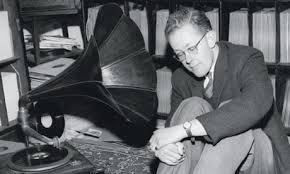

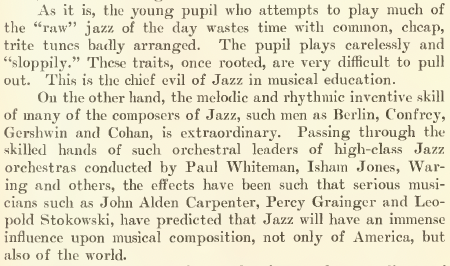


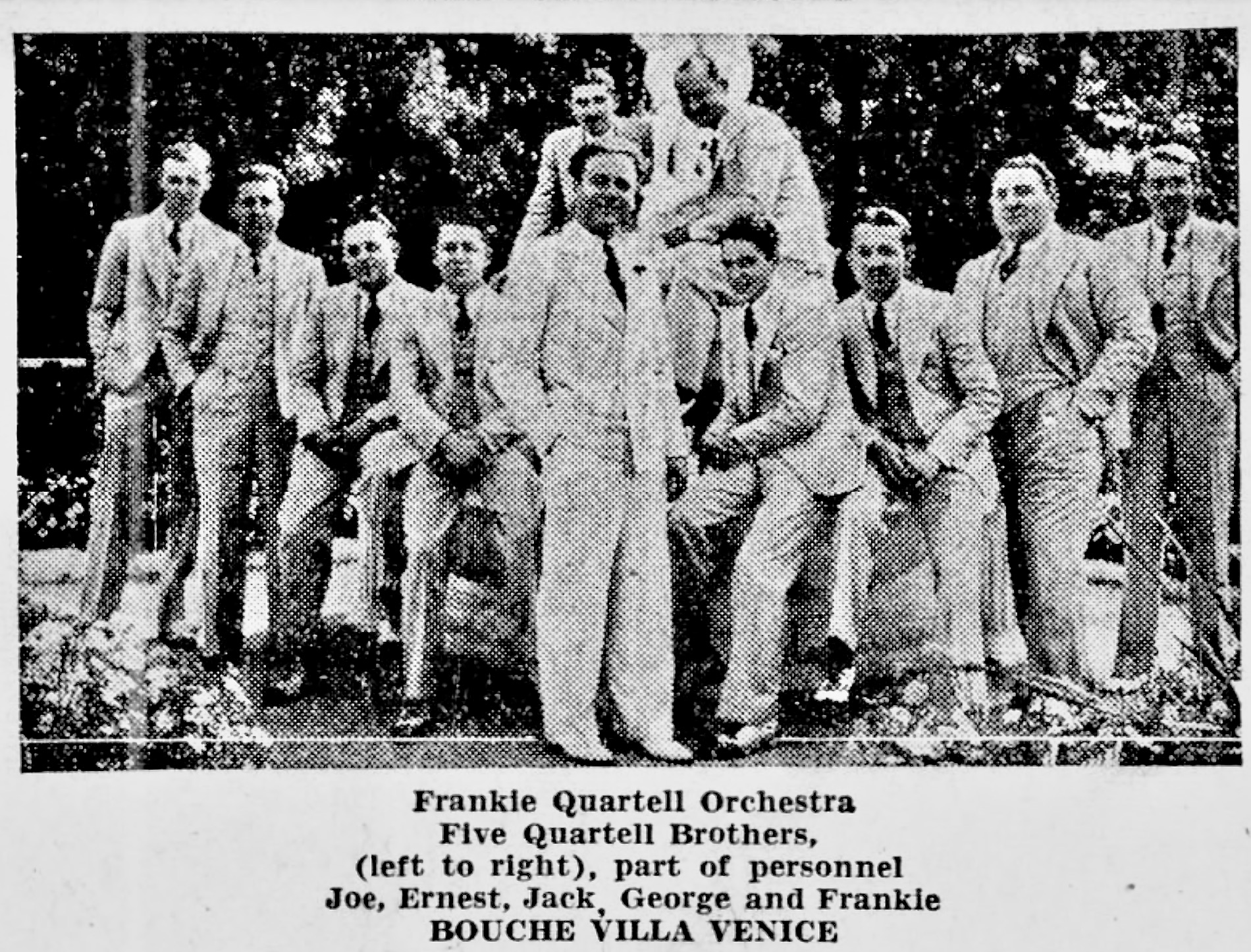
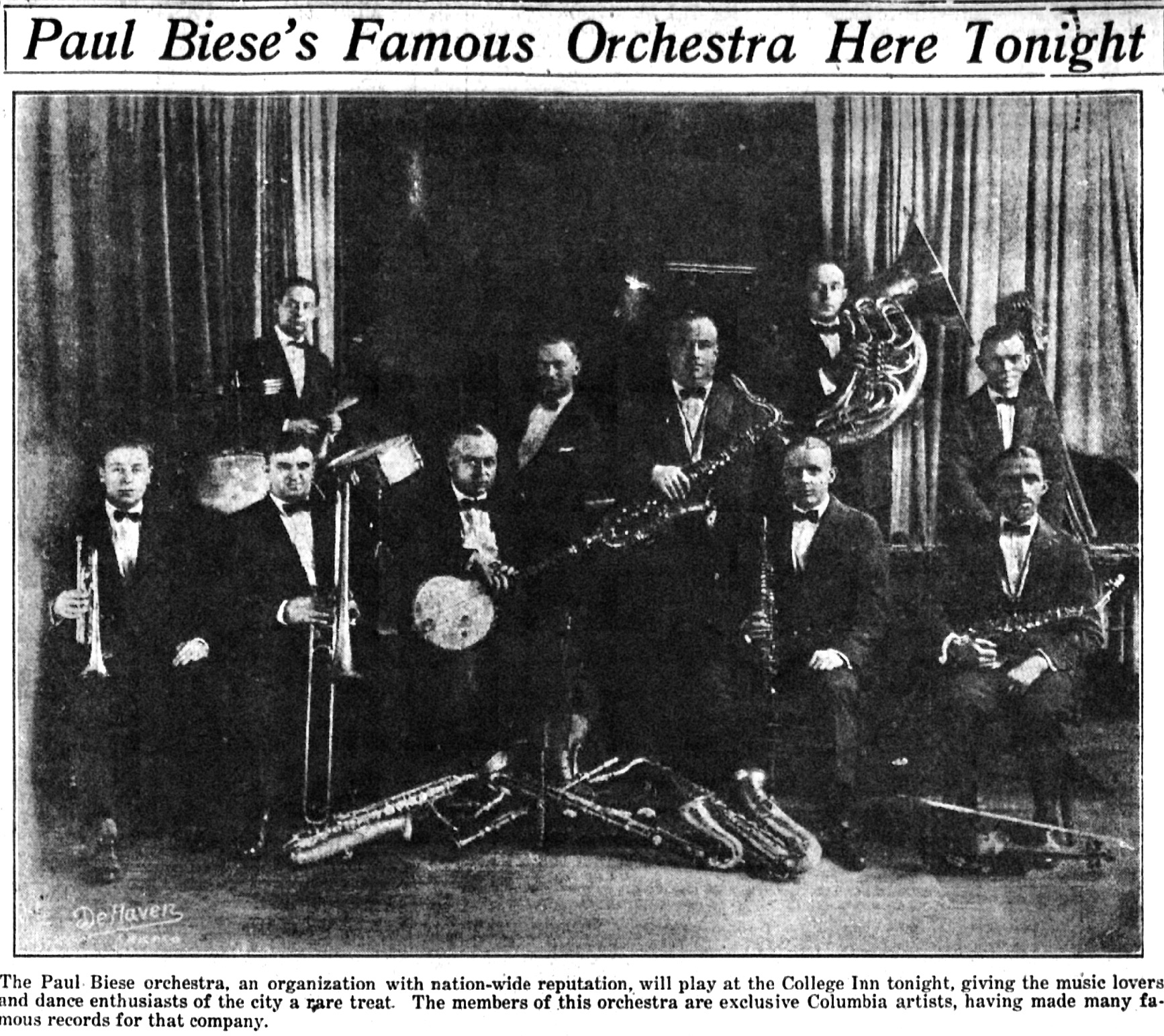

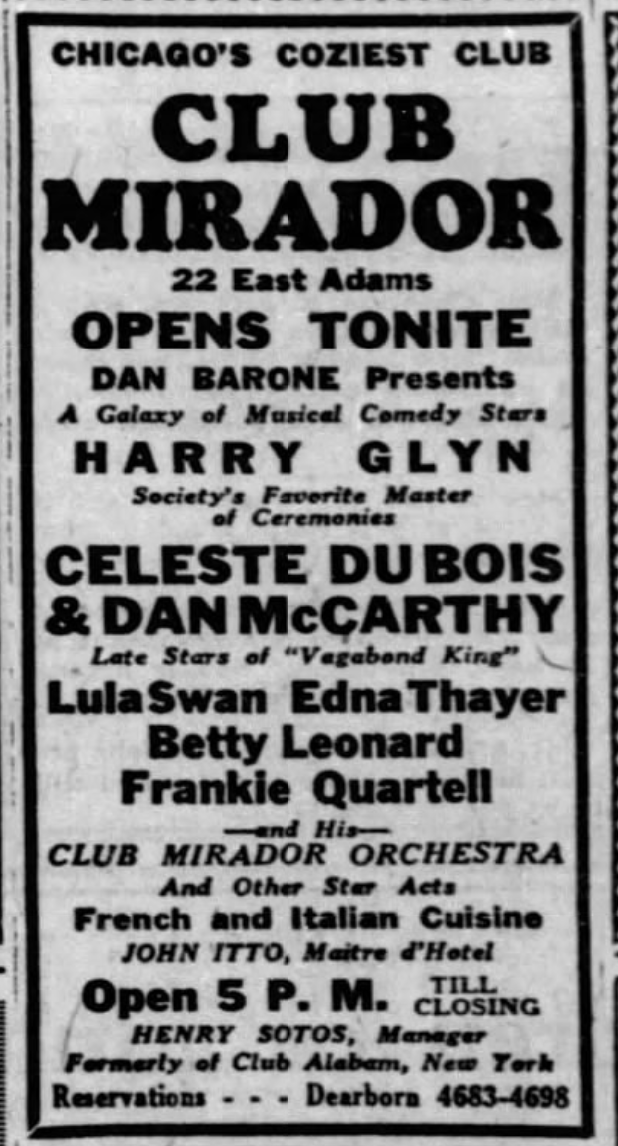
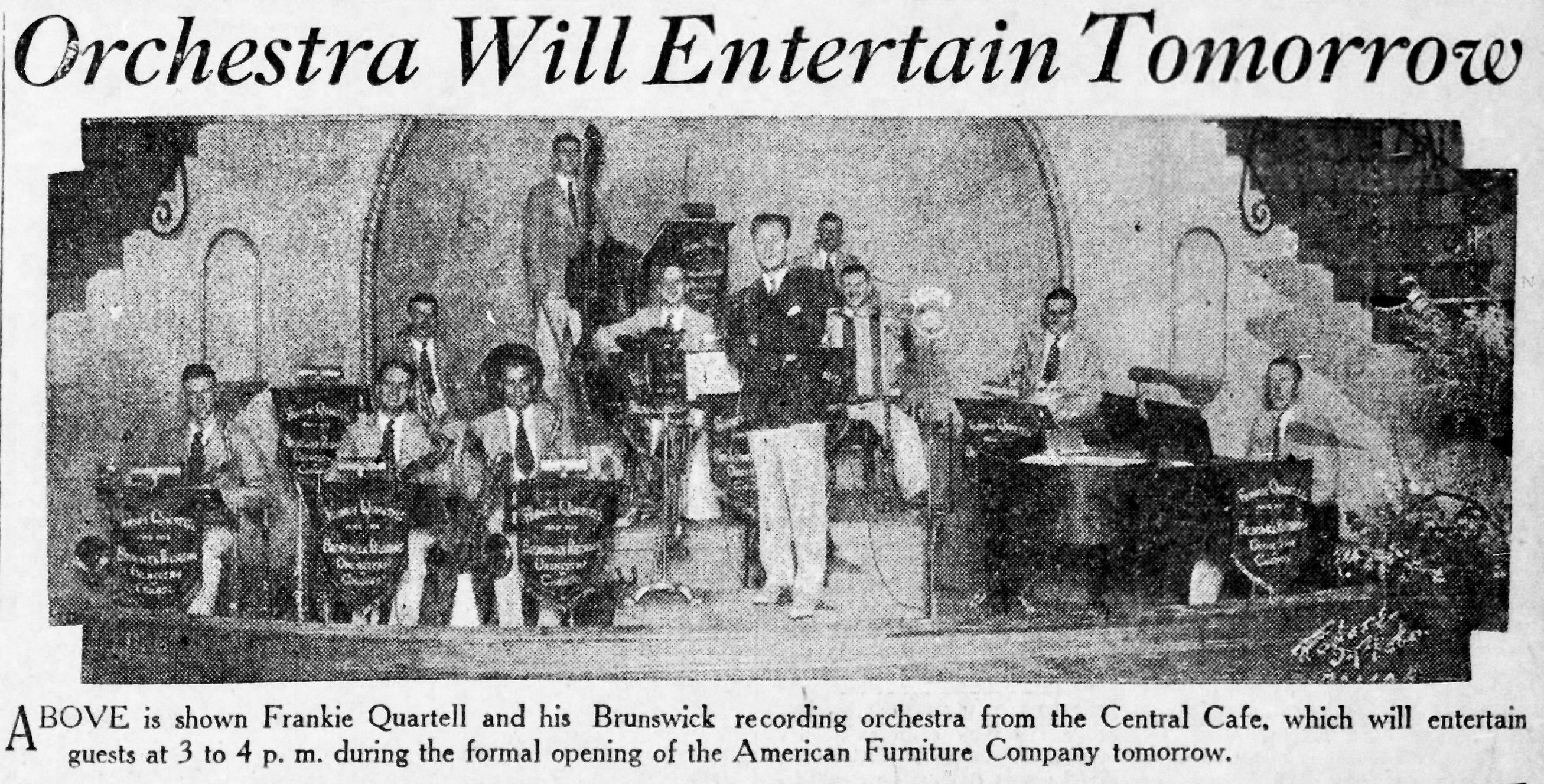

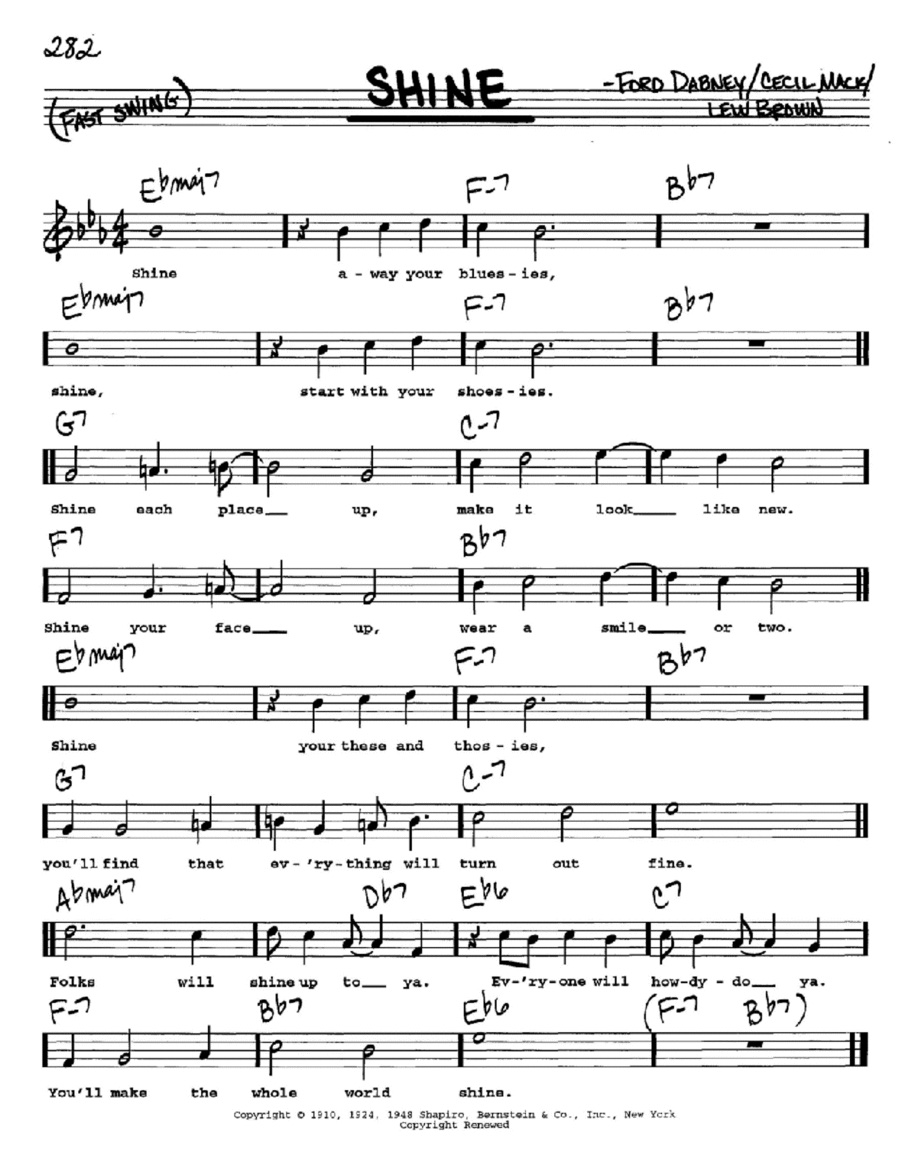


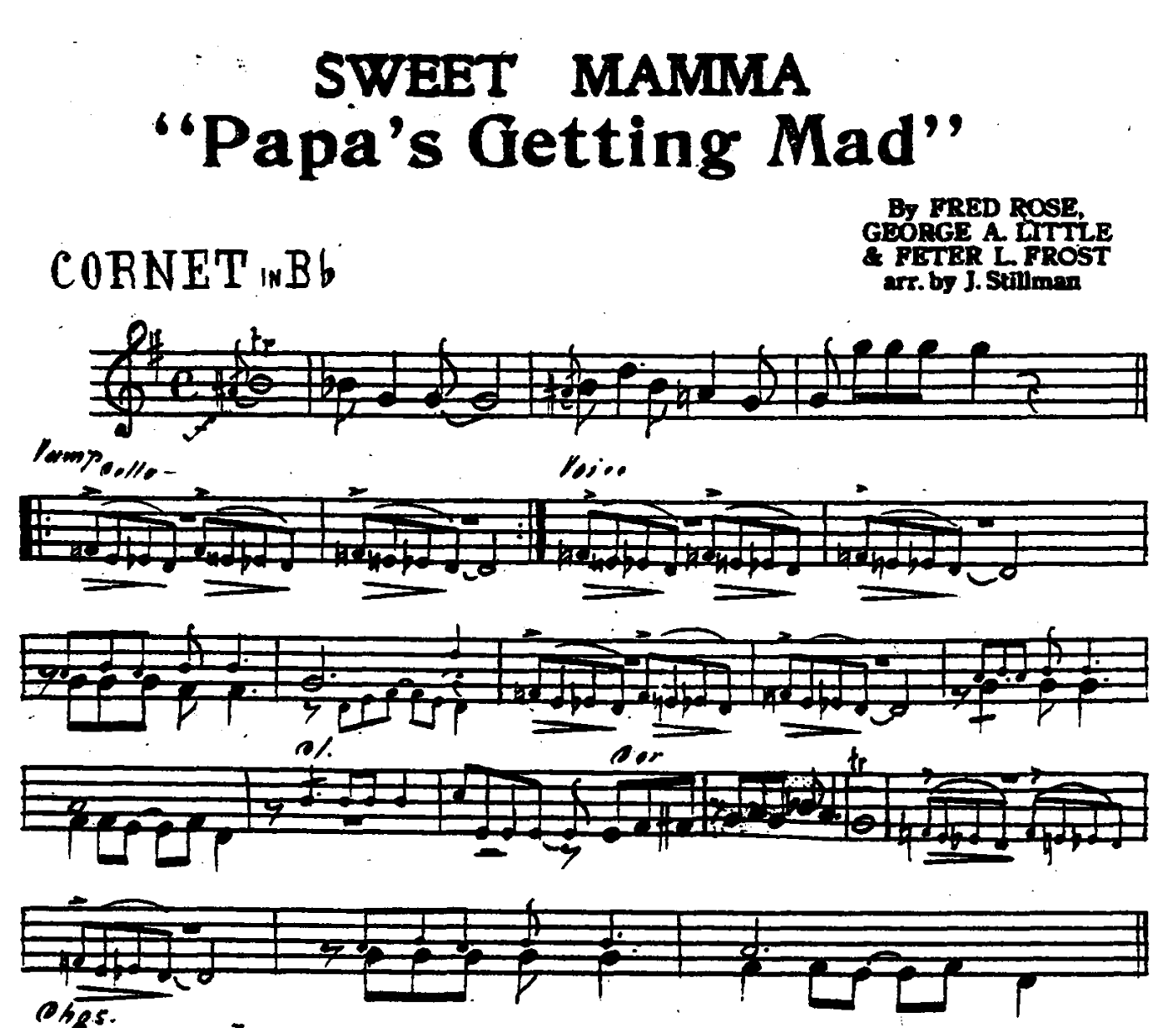
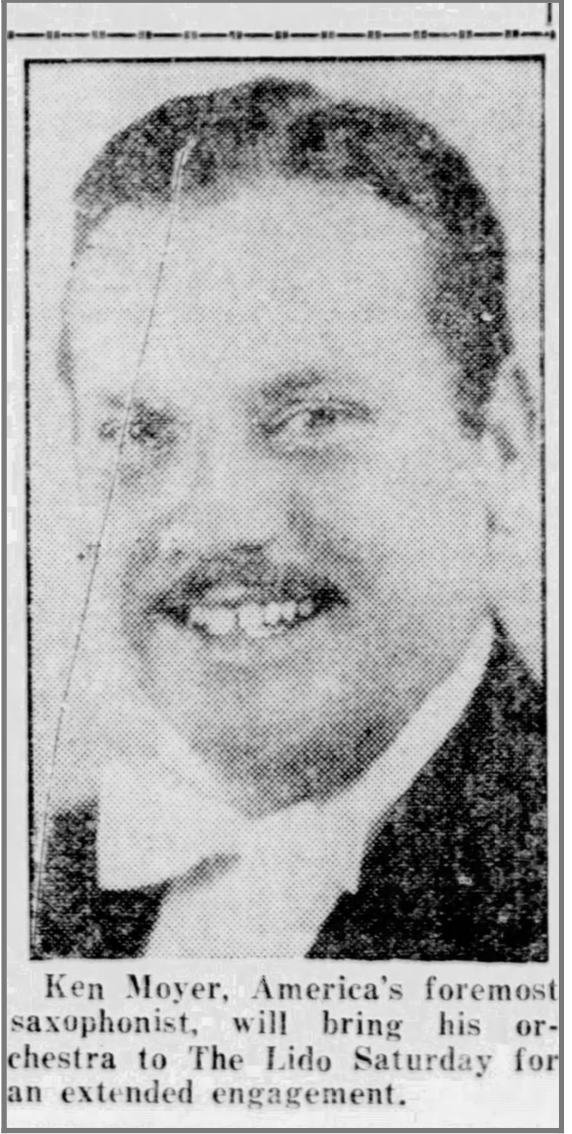
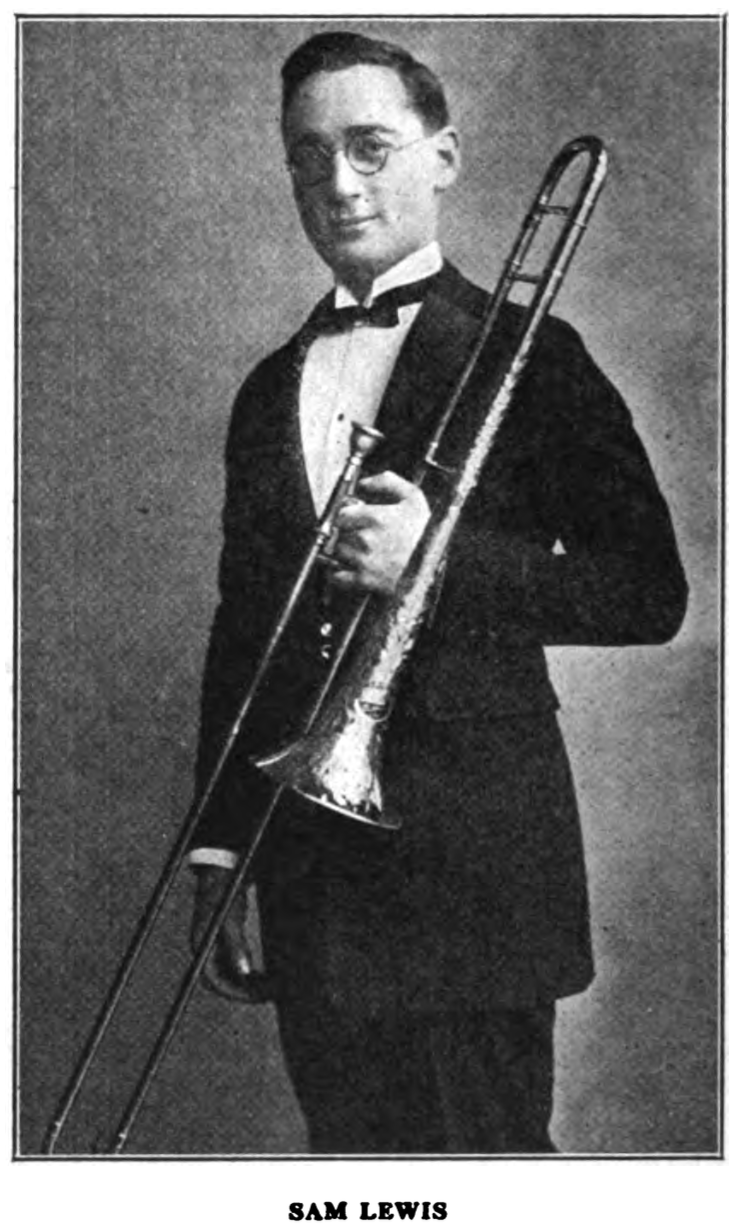
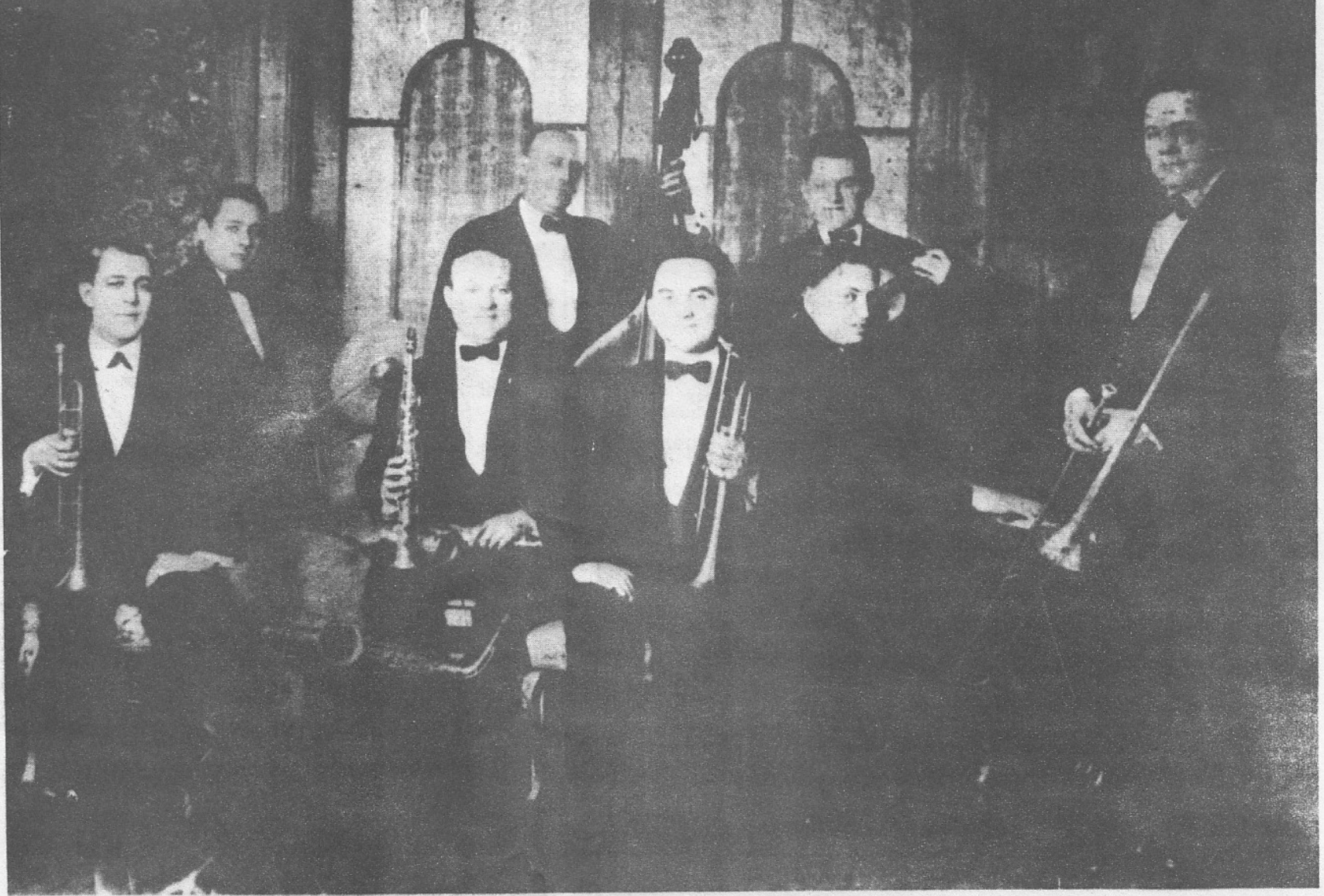
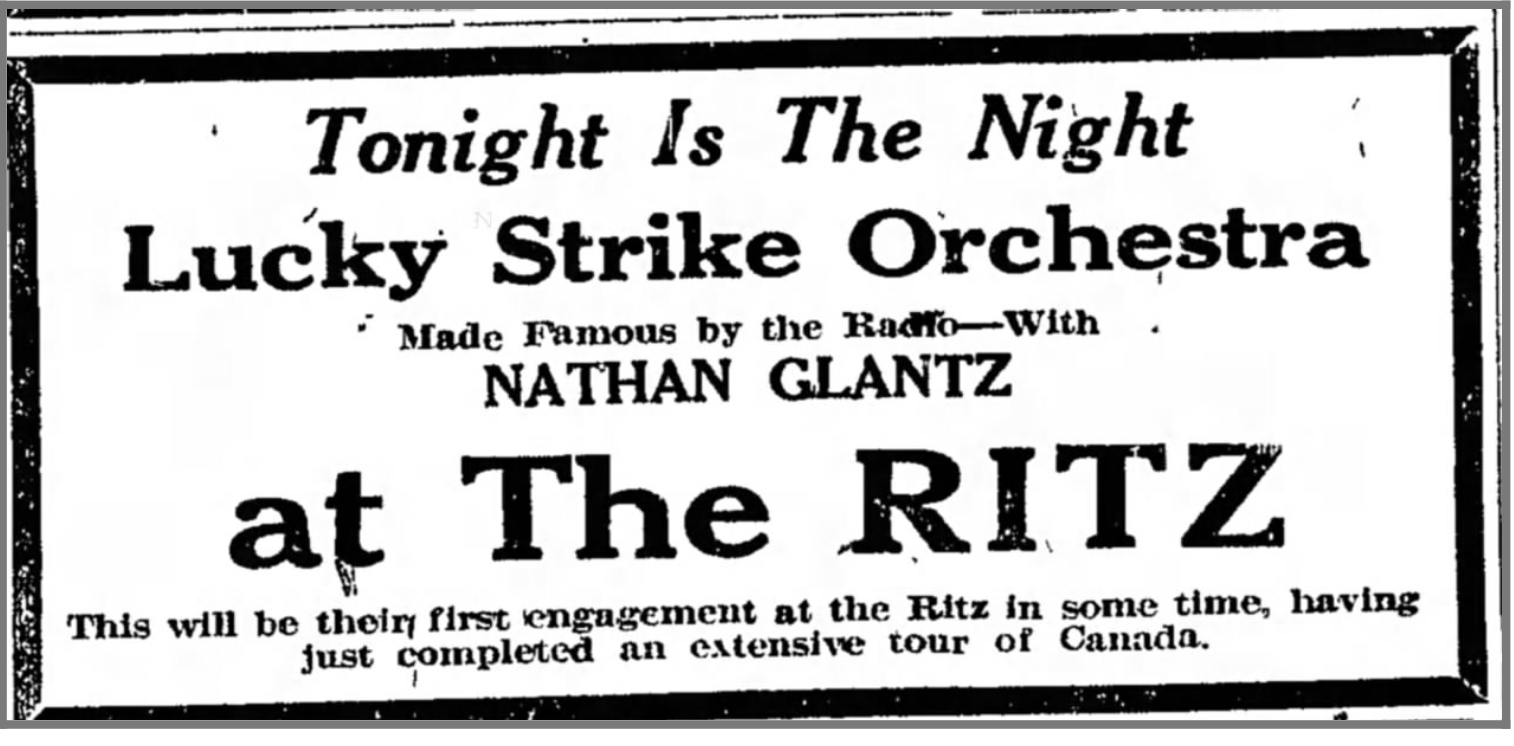
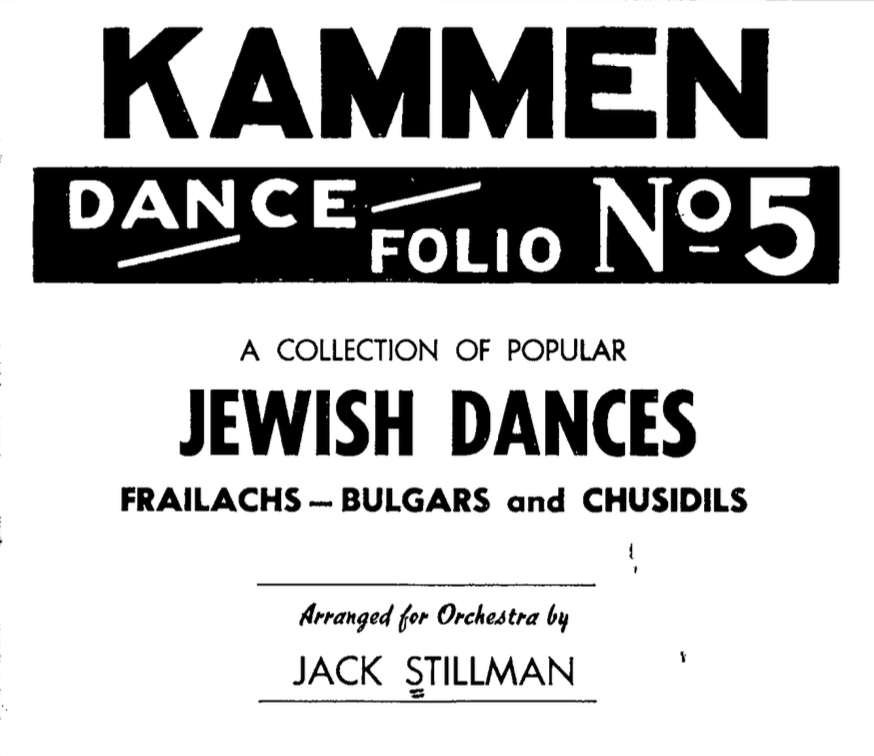
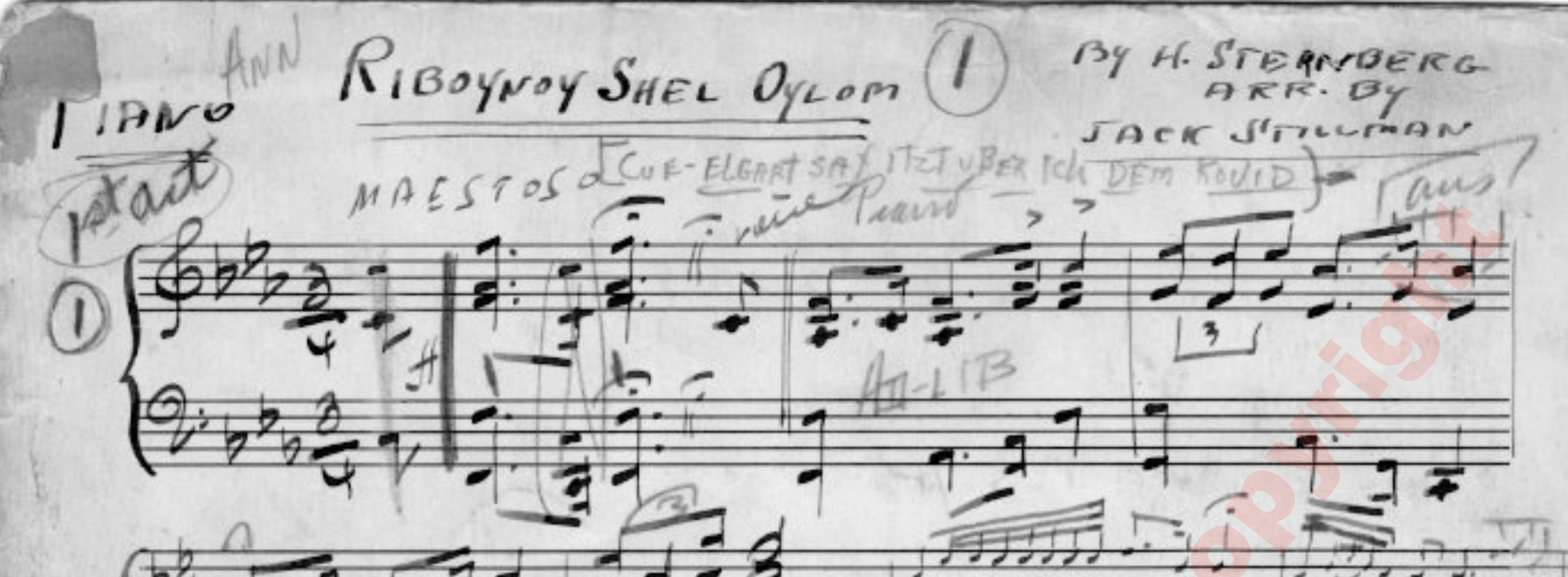


 The Pop of Yestercentury