If you love jazz but must know who took that two-bar break, or if the identity of the third sax chair enriches your listening, then you’ve probably checked, relied on, doubted, or otherwise consulted Brian Rust‘s works. Rust wrote multiple discographies, books, articles, and more. He’s probably best known for Jazz Records: 1897–1942 and the American Dance Band Discography, 1917–42. These two tomes raised the bar for discographical research and continue to guide listeners’ experiences. Plenty of record collectors and listeners still swear by them.

While many of Rust’s other works focus on a particular record company or musician, Jazz Records and the ADB cover a wide scope. Overlap and contradiction come as no surprise, especially since they raise two tricky questions: what’s the definition of “jazz,” and what’s the difference between a jazz band and a dance band?
The questions may seem so broad as to be meaningless. Few listeners need to classify music to enjoy it. Examining how Rust determined what got into each book may even seem like hairsplitting. But broad questions lead to interesting guesses, and many listeners who don’t seem to care about labels still rely on them. As for Rust, he was a passionate jazz aficionado and a discriminating ear witness to a lot of music. His spilled ink continues to inform many listeners, so it’s worth considering the thought behind the data.
Jazz is Music
While it can sometimes seem that way, Brian Rust did not write the first jazz discography. As Rust told audio engineer and friend Nick Dellow (whom he had known for over 30 years), he knew and admired pioneering works like Delaunay’s Hot Discography and Carey and McCarthy’s multi-edition Jazz Directory (especially the directory’s structure). Still, he felt they didn’t provide enough information about the records and left too many gaps.
Gifted with a memory like a hard drive, Rust had been compiling data for decades. He began thinking about writing his own discography while working as a music programmer for the BBC shortly after World War II. In 1960, he left that position to work on Jazz Records full-time, self-publishing it the following year.
As music historian Elijah Wald notes, “Rust was not trying to create a jazz canon” but “compiling reference works for record collectors.” Jazz Records lists hard data about recording sessions and records but begins with an abstraction right from the title. Stating a precise definition of jazz has been problematic since the word’ introduction, but Rust’s concept isn’t much more exact. He doesn’t even start with one kind of jazz.
From at least the introduction to the second edition of Jazz Records (published a year after the first), Rust drew a clear line between “traditional” and “modern” jazz, noting that his discography focuses on the first. Understandably, Rust wanted to impose limits in terms of space. Those practical boundaries keep the work manageable.
He also explains that this scope is for the sake of readers specifically interested in traditional jazz, and by extension, a timesaver for listeners focused on the modern variety. These are all practical, even considerate reasons expressed in neutral language. Rust may be more interested in traditional jazz, but in Jazz Records, this interest comes off as simply one listener’s preference.
In other works, Rust was more candid about his opinion of modern jazz. “I refuse to accept modern jazz as being any kind of jazz in the real sense of the word,” he told Dellow, going as far as to say, “it actually nauseates me.” Of course, some listeners enjoy both varieties. But Rust was writing a book about music that he classified as jazz to the exclusion of whatever some people had started calling “jazz.” Rust outlines his scope in terms of what’s not there. He relies more on implication and association than description and identity. This approach resembles the suggestion that “if you have to ask what jazz is, you’ll never know”—which suffices until the discussion broaches all the things that are not jazz.
(Many thanks to the preeminent Armstrong biographer Ricky Riccardi for pointing out this phrase as a modified version of Armstrong’s actual quote on the cover of Time, February 1949: “When you got to ask what it [i.e., music] is, you never get to know.”)
By the fourth edition (1975), Rust’s introduction included more musical language. He states the “basic precept of [traditional] jazz” was “improvisation (or what sounded like it) on a melody against a steady rhythmic pattern in 2/4 or 4/4.” For such a “basic” precept, it lays down some firm lines. Excluding things like triple meter, chordal improvisation, and free tempo leaves out a lot of music!
Including music that sounds improvised might expand the boundaries, but how far will vary by listener. “What sounds like improvisation” also describes a lot of music, not just jazz. Arguably, every type of music aims to create an energetic, organic performance that “hides” all the preparation. To take an obvious and broad example, the best performances of European art music, especially chamber works, receive praise for their sense of spontaneity, the way the musicians phrase and breathe together, the naturalness they bring to pieces that may have been performed perhaps thousands of times over multiple centuries. A lot of that music is made on top of a steady duple meter pulse (in many cases by a continuo that resembles a rhythm section in musical function).
Rust refers to something that listeners recognize when they hear it. There are obvious musical differences between what a Baroque violinist plays over La Folia variations versus a jazz clarinetist on “I Got Rhythm.” Rust isn’t a musicologist, and Jazz Records isn’t a music theory textbook; further elaboration was beyond his scope. But it’s still unclear what makes some examples of jazz “sound like” improvisation enough to be jazz. Rust often singles out his favorite improvised music; he’s less generous in naming exemplary music that sounds improvised. Like most things that are only identified through experience, they’re apparent to the person experiencing them but often remain mysterious to others.
In Jazz Records, Rust says that the impression of improvisation—real or really convincing— defines jazz. Elsewhere, Rust says that jazz doesn’t have to be improvised, but the best jazz is improvised. In The Dance Bands (a different book from ADB), he explains how Paul Whiteman, by trying to orchestrate jazz, failed to grasp a “basic fact” about it: “the most free and spontaneous results were obtained from musicians who knew and understood the idiom and each other.” From this perspective, improvisation may not define jazz, but it is an indicator of the quality of any jazz performance.
Rust was either defining jazz as an improvised music or as music that is best when it’s improvised. That means written music has a higher burden of proof to be considered “jazz,” or it’s at a critical disadvantage when it comes to quality. Either way, there’s an underlying attempt to assess jazz content.
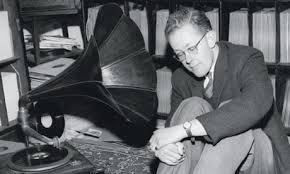
Degrees of Jazz
In the introduction to the fourth edition of Jazz Records, Rust uses phrases like “jazz, actual or alleged” and “jazz music, or what was regarded as such.” He implies some difference between jazz, jazz-influenced music, and popular music that uses the term with varying degrees of musical accuracy.
Reading between the lines, some broad categories emerge:
- “Actual” jazz that people may or may not have danced to after World War I and during the twenties
- “Alleged” jazz that people thought was jazz and used for dancing during that period
- “Dance music with obvious jazz flavoring” (presumably, as opposed to dance music with other degrees of jazz flavoring)
- “Romantic popular music”
- Actual jazz “reactivated in modern form” (i.e., music of the big band era)
Rust also makes it a point to include various precursors and offshoots of jazz, such as:
- Vocal records and blues singers accompanied by jazz musicians
- “Important and interesting” ragtime
- Music with syncopated rhythm from 20 years before jazz (presumably meaning the turn of the century, since Rust states that the Original Dixieland Jazz Band “made the first recording acknowledged to be of ‘jass’ [sic] music”)
These are not explicit styles or rigid categories. They probably weren’t even conscious distinctions for Rust. They’re broad associations of different musical and cultural objectives, all of which overlap to varying degrees. They raise more questions about a specific musician or band than they allow neat sorting by general musical qualities. Whether pre- and para-jazz belong in a jazz discography is a subject unto itself.
The point is that jazz is an entity that’s distinct from all that other music, even as that other music capitalizes on it. There is an authentic form of jazz found in increasingly pure forms, and by extension, that may be incorporated in other music to the point of dilution. That other music may contain different degrees of jazz, but it’s still not jazz per se. This assumption allows Rust to admit a lot of records based on their having some amount of “jazz interest,” while leaving the door open to others and slamming it shut on many more.
Joseph Samuels is a useful example. The section on Samuels in Jazz Records begins with a caveat:
The following titles from the vast number recorded under Joseph Samuels’s direction between 1919 and 1925 are of some interest as jazz; others may prove of comparable interest.
Like so many other bandleaders, Joseph Samuels was audibly influenced by the Original Dixieland Jazz Band, one of Rust’s most beloved jazz artists. But Samuels could dial up the novelty effects beyond even the ODJB’s expectations and played a lot of schmaltz all in a day’s work. He often led large combinations with a starched brass band aesthetic that was tensely syncopated and rhythmic in a way that was hundreds of literal and figurative miles from New Orleans. Samuels was also more flexible when it came to instrumentation and the selection of sidemen. Depending on the band’s size, its arrangements were more complex compared to the ODJB and similar groups.
Jazz? Jazz-like dance music? Ragtime with a distinguishable influence on or from jazz? Improvised? Spontaneous-sounding arrangement? Whatever the music is matters less than what readers won’t find if they’re using Jazz Records to shop Samuels’s records: all the waltzes and 6/8 numbers; romantic popular songs with slow tempos and vocalists emoting about love; novelty instrumental solos; and other music we know is not jazz—unless there’s an errant hot solo or collectively improvised ensemble.
Rust wrote Jazz Records for like-minded record collectors. As Wald points out, Rust “thought it most useful to separate jazz recordings from the more general fare included in his equally voluminous ADB. There are several years between the first editions of Jazz Records and ADB. It’s unclear when Rust conceived of or began writing ADB, but he likely distinguished between jazz and jazz-influenced dance bands throughout his life.
But how did he evaluate bands that rely mostly or exclusively on written music with an obvious jazz influence but still don’t make the cut? If they don’t have improv, do they mean anything?
Bands That Played Music
Published in 1975 with a second, presumably expanded edition four years later, ADB is even harder to pin down in terms of musical content. Rust begins by noting that, since many other works already cover jazz, this discography will focus on dance bands “that provided entertainment, pleasure, diversion, and relaxation…from the sweet romantic styles of Guy Lombardo and Wayne King to the vivacious ‘swing’ of the Dorseys, from the performances bearing indelible date-stamps somewhere in the twenties to timeless masterpieces by, often, the same bands during the same or later periods.”
Providing “entertainment, pleasure, diversion, and relaxation…” describes the social and cultural role of different bands. Jazz also accompanied those activities and feelings, but Rust uses musical language to curate it. He focuses on extra-musical considerations for his dance band discography. ADB assembles different bands that played a range of music so broad it’s almost beside the point. A reader might assume that “dance bands” refers to a social phenomenon and that the music was an accessory to other activities (while jazz has an artistic purpose beyond its social dressing).
Rust’s examples add to the musical ambiguity. Jazz Records describes swing as “jazz reactivated in modern form,” so it’s unclear why, by at least the fourth edition, Dorsey’s big band work gets double-booked. To be fair, that might have been a concession since Rust was now using an outside publisher. Earlier editions of Jazz Records stick to Dorsey’s looser small-group dates. Regardless, Dorsey’s swing, King’s waltzes, and Lombardo’s “sweetest music this side of heaven” accomplish very different musical ends.
Things get stickier from there. A waltz by Nathan Glantz like “A Kiss in the Dark” is, of course, found in the ADB. It’s not hot, but it is a beautiful Victor Herbert song showcasing the saxophonist’s mellifluous runs and rich sustained tones—a revelation for anyone who only associates Glantz with laughing effects and a sound like Crisco. It’s music that people happened to have danced to, but for some, it may also reward pure listening.
“San,” on the other hand, is a mostly orchestrated hot number. It’s also an exciting example of what “jazz” meant to Glantz and his fellow New York City studio regulars. Close listening reveals the invention on display when it comes to melodic paraphrase: selling the song while making it one’s own.
Maybe that’s why Rust included it in both the jazz and dance band discographies. “Who Loves You Now”? is another hot rhythmic side with plenty of solos, but it’s only listed in ADB. (One very reliable source attributes this side to Adrian Schubert, not Glantz, but the point stands.)
These inconsistencies don’t invalidate Rust’s work. Humans can still enjoy music even when it’s not correctly categorized, though they may assume things based on where they find the music. It’s still interesting to consider a distinction—one that divides roughly 4,000 pages of music—that might seem like a supermarket having separate aisles for “produce” and “citrus foods.”
The closest musical qualifier Rust provides for dance bands is a distinction between playing dance music “hot” versus “straight.” “Hot style” as allows solo or ensemble improvisation, while the straight approach “does not deviate as much as a quaver from what is written in the score.” In The Dance Bands, Rust explains that the “best kind of dance music…used the ‘hot’ idiom [i.e., improvisation] as flavoring.” He practically brags about how, even as a little boy, before hearing “real jazz,” he still “knew the difference between the best kind of dance music, which used the ‘hot’ idiom as flavoring as an expert chef uses pepper, and the more ordinary kind, which did not. In other words, the best dance music gets as close to jazz as possible.
The best kind of jazz is improvised, and the best dance music uses the hot idiom, which is improvisation. This reductio ad jazz means that, when there is more than one player per part in a band, the bar for meeting that “basic precept” of jazz is much higher. The larger the band, the more it tends to rely on written music, memorization, rehearsal, routined solos, etc. Rust didn’t comment on whether or how much planning is compatible with authentic jazz. But he implies there is such a thing as authentic jazz. His full comment about Paul Whiteman is illustrative:
While it could be scored, the best, most free, and spontaneous results [in jazz] were obtained from musicians who knew and understood the idiom and each other. Any other approach would be at best paying a kind of lip service to the new idiom.
“Improvisation” begins to seem like a shorthand for something real that some musicians may omit, fake, or simply botch. That means understanding “jazz” means watching out for phonies. Jazz can be “contaminated.” It’s music that is vulnerable to misunderstanding; beyond playing jazz poorly, people can get it wrong. Rust wants to get jazz right.
On the other hand, “music for dancing” includes everything from the one-step to the mazurka. ADB is full of waltzes, tangos, Paso Dobles, and fox trots at all ends of the hot spectrum. There’s not enough space to discuss the “best kind” of any one of these kinds of music. Lumping them all together in this way, the reader might assume that such considerations aren’t as important. For Rust and many others, those things are either not as vulnerable to misunderstanding or the errors are not as consequential. The stakes are higher when it comes to jazz.
Musical Value
It’s hard to imagine a writer compiling a 2,200-page discography just to delineate what shouldn’t be called jazz. Rust obviously appreciated both “jazz” and “dance bands” on their own terms. In the introduction to his book on British dance bands, Rust credits Paul Whiteman and Art Hickman for showing his home country “that ‘modern’ dance music was not the general mayhem that detractors of real jazz claimed it to be.” He provides a passionate defense of all that not-jazz against its critics in The Dance Bands:
Interwar-period dance music stemmed from the original jazz…Jazz characteristics or flavoring usually give a more inspired and inspiring performance, [but] the average dance band on either side of the Atlantic was not a jazz band and had no pretensions in that direction. It thus seems a little unfair, if not stupid, for jazz “experts” to dismiss as worthless the work of many of the great bands merely because they do not play music coming within the narrow confines of jazz definition.
“Not jazz” is not necessarily a criticism of (whatever counts as) dance music for Rust. But even the book titles illustrate a hierarchy. One is a discography of recordings of jazz, a (supposedly) specific form of music, while the other collects bands playing all types of music. One frames an art form, and the other frames everything else that helped people dance, relax, forget their troubles, and do other things as music played.
Different references to chronology also suggest his critical priorities. The first two editions of Jazz Records covered jazz through 1931, with later editions expanding through 1942. Rust wanted to keep the book’s length manageable even as he covered more music. He also positions the recording ban between August 1942 and November 1944 as a point of demarcation for “modern” jazz. The scope of time in Jazz Records is a practical and musical consideration.
ADB mentions Rust’s openness to both “timeless masterpieces” and “performances bearing indelible date-stamps” (with the implication that the twenties produced an unusual amount of now-dated music). The assumption seems to be that whatever the dance bands played, their repertoire admits ephemera. Jazz Records doesn’t draw that distinction; the music seems, by nature, transcendent. My Kind of Jazz states his point outright:
There are various kinds of jazz, all coming within the original definition and requirements…but they do not bear date stamps or sell-by dates. If they do, it simply means they are not jazz of the best kind in any variant of the basic idiom, that some contaminating ersatz [italics Rust] element has been allowed to enter into the performance.
It’s unclear if expired jazz is inferior jazz or not jazz, but the point is that the real thing is timeless. Jazz is not a “creature of fashion.” Rust compares the music to “a Mozart divertimento or a Haydn symphony” in that regard.
Referencing Mozart’s divertimenti—as opposed to his string quartets, piano concertos, or operas—is an interesting choice. A divertimento was intended to be light music for easy consumption at a particular occasion. Not every piece of music by the great composers was considered “great” in its time. Yet they’re still with us, and we continue to mine more “great” music from the past. Rust (perhaps inadvertently) illustrates that anything can be “timeless” if we choose to enjoy it.
The Stakes
To illustrate his point about improvisation and jazz, Rust uses the particularly loaded example of Paul Whiteman. For some (like me), the Whiteman band’s crack musicianship—in scoring and playing—makes it easy to forget or at least not overthink the level of preparation behind the music. For others, Whiteman’s music is as close to jazz as Milhaud or Chicago. To many, Whiteman is especially problematic beyond any musical factors. Whiteman was a white bandleader who achieved incredible popular success by incorporating jazz into his music. He also made some condescending remarks about jazz and, by extension, Black American culture.
Yet Rust also surprises us with some loaded examples in the other direction: bands that many would easily classify as “jazz” and which Rust includes in Jazz Records while suggesting they might’ve gone into the other book. In My Kind of Jazz, he differentiates the Duke Ellington band’s work as a jazz group from its work as a dance band. Noting that Ellington recorded many songs he didn’t compose, Rust admires Ellington’s performance of Tin Pan Alley songs and show tunes from Broadway as “light years away” from recordings of the same material by “any other band, British or American.” But to him, that didn’t mean they “at once and automatically became jazz performances.” They are excellent “viewed as dance recordings, which is all most of them were intended to be.”
Although he doesn’t provide any examples, the Ellington band’s 1940 Victor recording of “There Shall Be No Night” is a decent candidate. It’s not an Ellington composition (with lyrics by Gladys Shelley and music by Abner Silver). Aside from Ben Webster’s melodic paraphrase in the bridge of the first chorus and Ellington’s piano obbligato behind Herb Jeffries’s vocals, there are no instrumental solos. There are lush, glistening sax textures; a smooth, medium-tempo beat with light, symmetrical accents that make the rhythm clear enough even for the most rhythmically challenged dancers; and a clean-toned, vibrato-saturated lead trumpet, as well as Herb Jeffries’s crooning.
Jazz scholar and Ellington biographer Mark Tucker described “There Shall Be No Night” as “veering toward the sound of commercial sweet bands.” That’s not damning in itself, and it seems to be in the same taxonomic territory as Rust’s “jazz versus dance band” language. ADB includes Eddy Duchin and Dick Jurgens’s recordings of the song. To some, by comparison, Ellington’s performance might sound like a hell-raiser. All three records are in a similar musical space, which makes the inclusion of Ellington’s version in Jazz Records confusing.
My Kind of Jazz goes on to note that Fletcher Henderson “produced many fine examples of how a big dance band [emphasis mine] could play jazz, due mainly to the abilities of its individual soloists,” specifically during the 1926–27 period. Rust describes McKinney’s Cotton Pickers as a dance band playing pop tunes, though they do “invest each one with real jazz feeling.” Cab Calloway led “a big show band,” and “as with most bands of its size and type, it played jazz only very sparingly.” All of these bands appear in Jazz Records (at least starting with the second edition). None of them appear in ADB.
ADB readers will categorically not find “records by obviously jazz-orientated bands” such as Count Basie, Ellington, and “the other negro units…as they are all covered by the jazz discography.” Yet Willie Bryant, whose smooth sax section earned him billing as “the colored Guy Lombardo” alongside his swing records, is not in ADB and doesn’t appear in Jazz Records until the fourth edition. As for the jazz-oriented white bands of Benny Goodman and Glenn Miller, Rust’s modesty enabled him to dodge collating their extensive work. Instead, ADB directs readers to Connor and John Flower‘s respective “detailed” discographies.
Other white jazz-infused dance bands and/or danceable jazz bands are trickier. Artie Shaw “never produced anything but good quality dance music of the period, flavored with ersatz [italics Rust] jazz” and was not included in the jazz discography—until the third edition. It’s the same for Woody Herman, who Rust thought was merely “cashing in on” bebop with his “loud, brash, show band.” Published eight years after the first edition, the third edition of Jazz Records was also the first one published by a company (rather than self-published by Rust), so these additions may have been a concession to Storyville Publications. These inconsistencies point to something other than the sound on the record.
Whatever worthwhile dance music or “real jazz feeling” meant to Rust, he knew it when he heard it. It’s unclear if seeing the musicians behind it was a factor. Rust frequently said that he was attracted to music by Black musicians on record before he knew they were Black. His comments imply that the sound of the music came before the sight of the players.
The Original Dixieland Jazz Band’s records were his introduction to jazz. Many commentators still dismiss the ODJB as white pop stars cynically cashing in on the authentic artistic creations of Black Americans. Rust remained a lifelong devotee and defender of the group. He insisted that the ODJB recorded what many consider the first jazz record based strictly on musical merit. “There was nothing that sounded like the ODJB before they recorded,” Rust told Dellow, “or at least we have no evidence that there was.”
When it came to Black musicians in New Orleans, who many believe influenced the ODJB, Rust offers another hot take (no pun intended):
The Black pioneers from New Orleans who lived long enough to make records in the revivalist period, musicians like Bunk Johnson, Kid Rena…well, quite frankly, the records they made were appalling. I mean, if they didn’t play any better in 1912 than they did in 1942 or whenever it was, well, I’m not surprised they weren’t more successful. At least you can’t level the criticism at the ODJB that they didn’t play in tune. They always did, spot on the note every time, and that’s despite the fact that, with the exception of Eddie Edwards, none of them could read music.
Claims of musical color blindness often invite criticism. Jazz Records includes several jazz and/or jazz-influenced works by commercially successful white dance bands like the Benson Orchestra of Chicago and Guy Lombardo. On record, the music is pretty hot, yet jazz scholar William Howland Kenney argues that relying on strictly musical elements when defining jazz is too vague. This “essentialist” approach (e.g., Gridley’s Jazz Styles) ignores important historical context.
Commercial dance bands, to Kenney, enjoyed such a privileged social and financial position—in terms of race, industry connections, and social standing among other material factors—that they do not belong in a jazz discography, regardless of the music they played. That goes for Black groups such as Doc Cook and Charles Elgar, bands that mostly played ballroom music and likely recorded “jazz-like material” only under pressure from recording companies. Rust classifies them as jazz records, but Kenney argues that “pair[ing] within the definition of jazz those musicians who specifically rejected the label and those who were not allowed to record anything but jazz does a historical injustice to the jazz musicians.” Kenney suggests that these records by Elgar, Lombardo, and others “might be gathered, with more historical accuracy, into a separate Hot Dance Band discography or into a subsection of a dance band discography, even when a recognized jazz musician soloed.”
Unsurprisingly, it’s harder to peg Rust’s approach to race and social class. The sound on the records played a significant role in Rust’s placement, seemingly overshadowing racial or cultural factors. At the same time, his comments about musical color blindness notwithstanding, Rust may not have been entirely neutral when it came to matters of identity. After all, a huge part of his job was determining who played the music.
His introduction to the second edition of Jazz Records says that “recordings of Negro vocal music, secular and sacred” deserve their own discography, unifying a wide range of music under a racial identity. Elsewhere, Rust singled out Black musicians for bringing “that extra warmth that musicians of their race always [bring] to dance music AND [emphasis Rust] jazz.” He also singled out the Original American Ragtime Octet’s 1912 London visit as a sea change for dance music in Great Britain, specifically for “proclaim[ing] the vitality of syncopated music derived from the American negro.”
These comments suggest that Rust may have heard the players’ background, picking up on musical elements unique to the Black American musical idiom, even if he was truly indifferent to the identity of the musicians on record—assuming that’s ever possible. Rust might have thought that his preferred type of “pepper” was best applied by one group of chefs, even as he felt that everyone could share recipes. Maybe he was less concerned with race in jazz than with the race relations that jazz made possible.
Rust assigned the “basic precept” of jazz primarily to “traditional” jazz. In bop and other modern jazz, “the rhythmic background had become more complex and the improvisation extended to the harmonies,” with the result that “many jazz enthusiasts refused to accept the new form as jazz at all.” Alongside the musical description, by at least the fourth edition, Rust added a lengthy parenthetical comment:
One leading practitioner in the [modern] idiom publicly denied that what he played was jazz, a name he associated with “Uncle Tom-ism” and “Jim Crow” attitudes between the races that had hitherto enjoyed playing a joint contribution to musical culture in the twentieth century without rancor or misgivings.
On paper, the statement may seem like a glib oversimplification of a complex historical period and a range of cultural issues. The description of the “hitherto” period was likely Rust’s addendum to the musician’s critical commentary that seems to ignore the speaker’s experience. Rust may have known there was far more to say but opted for sharing a more general opinion in the interest of brevity (which itself assumes we can ever be brief or rely on one’s opinion when it comes to these matters).
His words also come across as a statement of disappointment. If Rust could demonstrate, beyond any doubt, that traditional jazz was a music defined by its capacity to bring people together and elicit the most authentic form of creativity from musicians, any musical definition would be beside the point. Assuming Rust believed this to be the case, no wonder jazz was so important to him.
“Music that brings people together” would be a hopelessly vague category, so maybe it’s impressive that he even approached the level of specificity found in Jazz Records and ADB—though it does beg the question: if jazz eliminates “rancor and misgivings,” what does that other music do?
Calling any system of musical taxonomy “idiosyncratic” may be redundant. Rust’s categories were deeply personal, just like his love of music. He was also one person taking on a staggering project. The lines between the two subjects were bound to get blurry. Figuring out how he drew them may not define precise borders, but it demonstrates a singular approach to cartography. And if his labels defy precise explanation and raise more questions, may we all leave such a legacy.
Sources (in Abbreviated Format)
Nick Dellow:
- Interview with Brian Rust printed in VJM, part one and part two
- Interview with Rust, audio version
- Miscellaneous email correspondence
William Howland Kenney, “Historical Context and the Definition of Jazz: Putting More of the History in ‘Jazz History’” in Jazz Among the Discourses, ed. Krin Gabbard, Duke University Press, 1995.
Tom Lord, The Jazz Discography (online)
Brian Rust:
- The American Dance Band Discography 1917-1942, second printing (Arlington House, 1979)
- British Dance Bands on Record, 1911 to 1945
- The Dance Bands (Arlington House, 1974)
- Jazz Records, 1897–1931
- Second edition (Self-published, 1962)
- Third edition (Storyville Publications Ltd., 1969)
- Fourth edition (Arlington House, United States, 1978)
- My Kind of Jazz (Elm Tree Books, 1990)
Mark Tucker, liner notes to Duke Ellington: The Blanton Webster Band (RCA Bluebird, 1986)
Elijah Wald, “Louis Armstrong loves Guy Lombardo! Acknowledging the Smoother Roots of Jazz” in Jazz Research Journal, May 2007
Gratitude
Special thanks to Nick Dellow for generously sharing his insights into Brian Rust and his thought-provoking conversation as well as copies of multiple editions of Rust’s discographies. Thanks also to Aaron Keebaugh, Ricky Riccardi, and Michael Steinman for their editorial suggestions, encouragement, and eagle-eyed proofreading notes. Special thanks to anyone who took the time to read this long post!
 The Pop of Yestercentury